
Medications
History of Generic Drugs in the United States: How Cheaper Medicines Became the Norm
Before generic drugs became the default choice for most prescriptions in the U.S., people paid far more for the same medicine. Today, over 90% of prescriptions filled are for generics. But how did we get here? It wasn’t luck. It was decades of law, scandal, innovation, and hard-fought policy changes that turned generics from an afterthought into the backbone of American healthcare.
The First Steps: Standardizing Medicine
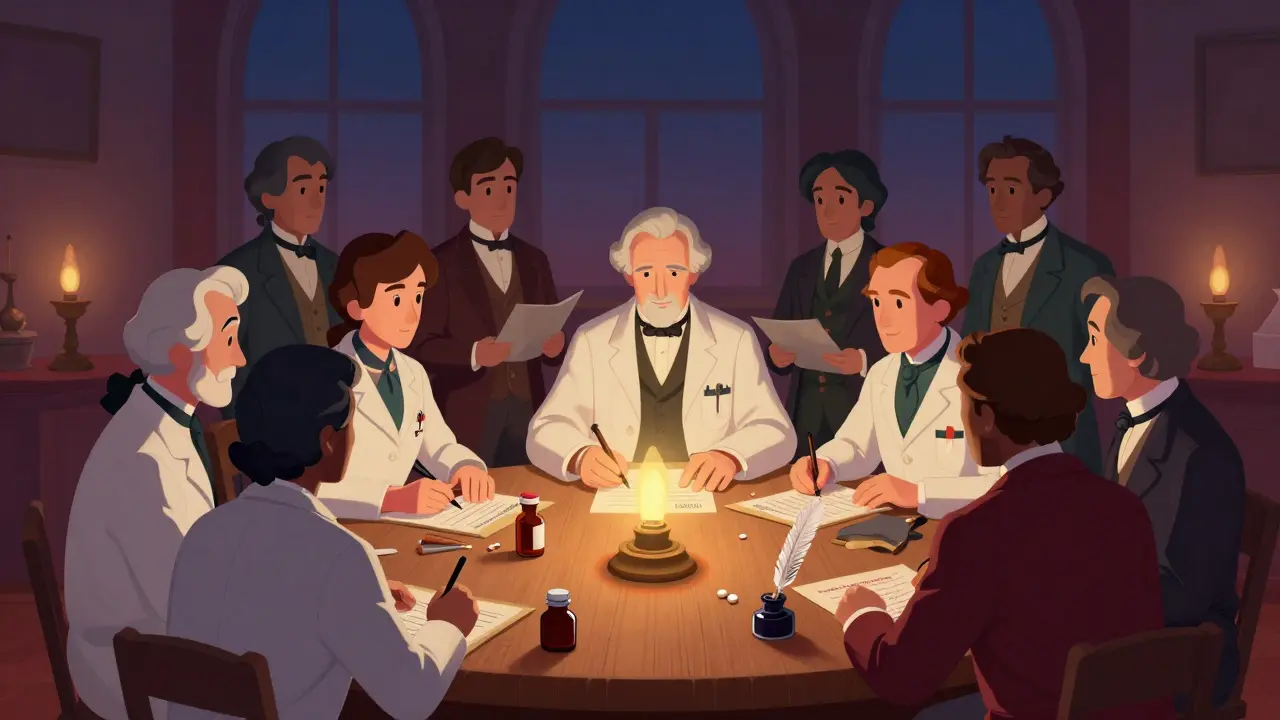
In 1820, eleven doctors met in Washington, D.C., to write down what a real medicine should look like. They created the U.S. Pharmacopeia - the first official list of drug standards. Back then, medicine was a mess. Pills made in one town might be stronger, weaker, or even poisonous compared to the same name in another. No one knew what they were getting. This wasn’t just inconvenient - it was deadly. By 1848, the government stepped in with the Drug Importation Act. It gave U.S. Customs the power to stop fake or contaminated drugs from crossing the border. That was the first real federal action to protect patients. Then, in 1888, the American Pharmaceutical Association released the National Formulary, a second official guide to drug quality. These weren’t laws yet, but they set the tone: medicine had to be reliable.When Poison Became Law
The real turning point came in 1937. A company marketed a new antibiotic called Elixir Sulfanilamide - dissolved in a solvent called diethylene glycol. It tasted sweet, so people didn’t suspect anything. But diethylene glycol is antifreeze. Over 100 people, mostly children, died. Public outrage was immediate. Congress had no choice. In 1938, President Roosevelt signed the Federal Food, Drug, and Cosmetic Act. For the first time, drug makers had to prove their products were safe before selling them. The FDA, which had been around since 1906, finally got real power. This law didn’t require proof of effectiveness - just safety. But it laid the groundwork for everything that followed.Prescription Rules and the Efficacy Crisis
In 1951, the Durham-Humphrey Amendment split drugs into two categories: prescription and over-the-counter. That’s still how it works today. It kept dangerous drugs out of drugstores and put them under doctor control. But a bigger problem remained. Thousands of drugs had been on the market since 1938 - with no proof they even worked. By the early 1960s, doctors and scientists were sounding alarms. Some drugs were useless. Others were dangerous. In 1962, Congress passed the Kefauver-Harris Drug Amendments. This time, companies had to prove their drugs worked. And they had to go back and prove it for every drug sold between 1938 and 1962. That review took years. Many drugs were pulled. Others were reformulated. But the biggest effect? It made new drug development slower and more expensive. And that’s when the door opened for generics.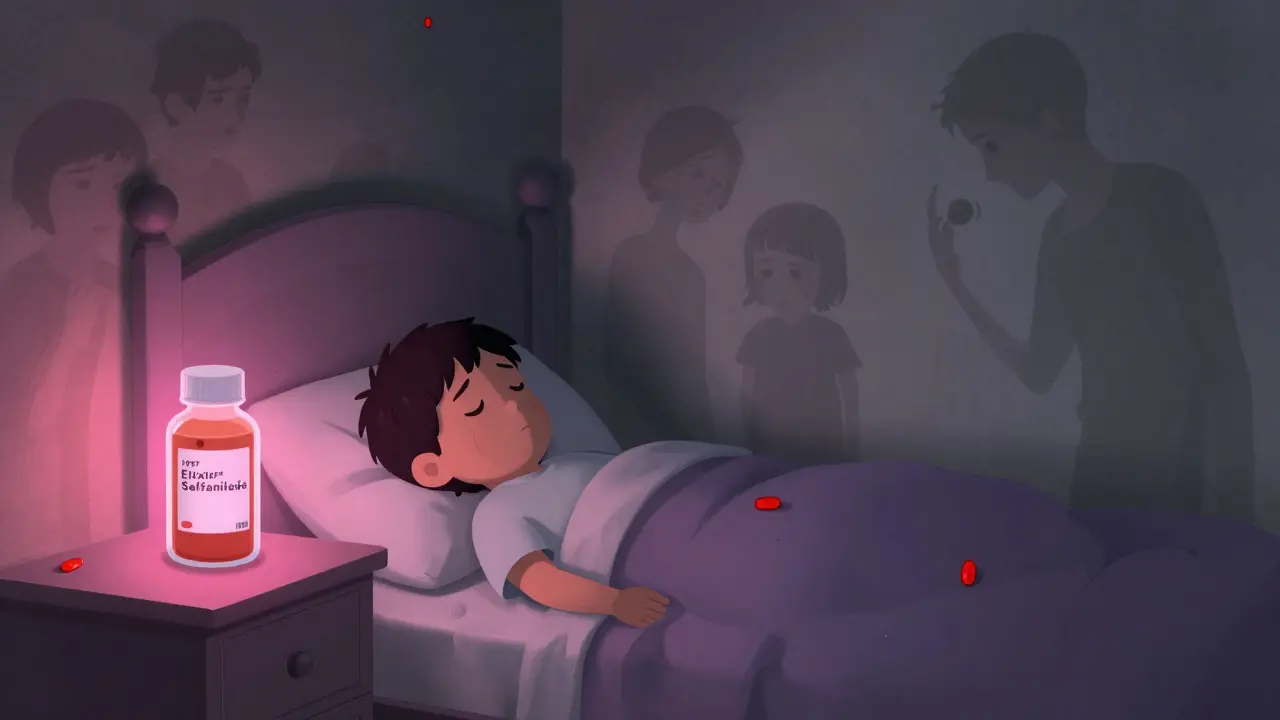
The Birth of the Modern Generic System
By the 1970s, healthcare costs were rising fast. Medicare and Medicaid - created in 1965 - were spending billions on brand-name drugs. Congress looked for ways to cut costs. One idea: use cheaper versions of the same drugs. But there was no legal way to approve them. That changed in 1984 with the Hatch-Waxman Act. Officially called the Drug Price Competition and Patent Term Restoration Act, it created the Abbreviated New Drug Application (ANDA). Before this, a generic company had to repeat every clinical trial the brand-name maker did - a process that cost millions and took years. Hatch-Waxman said: if you can prove your drug is bioequivalent - meaning it works the same way in the body - you don’t need to repeat the trials. The law also gave brand-name companies a short patent extension (up to five years) to make up for time lost during FDA review. It was a deal: innovation gets protected, competition gets a fair shot. The results were dramatic. Before 1984, only 19% of prescriptions were for generics. By 1990, it was over 40%. Today, it’s 90.5%.How Much Money Did Generics Save?
The numbers speak for themselves. In 2021, generic drugs saved the U.S. healthcare system $373 billion. Over the past decade, total savings passed $3.7 trillion. The Congressional Budget Office found generics cut drug spending by 80-85% compared to brand names. And here’s the kicker: in 2022, generics made up 90.5% of prescriptions but only 23.4% of total drug spending. That means for every dollar spent on medicine, less than a quarter went to generics - even though they were used in nine out of ten cases. That’s not just efficient. It’s revolutionary.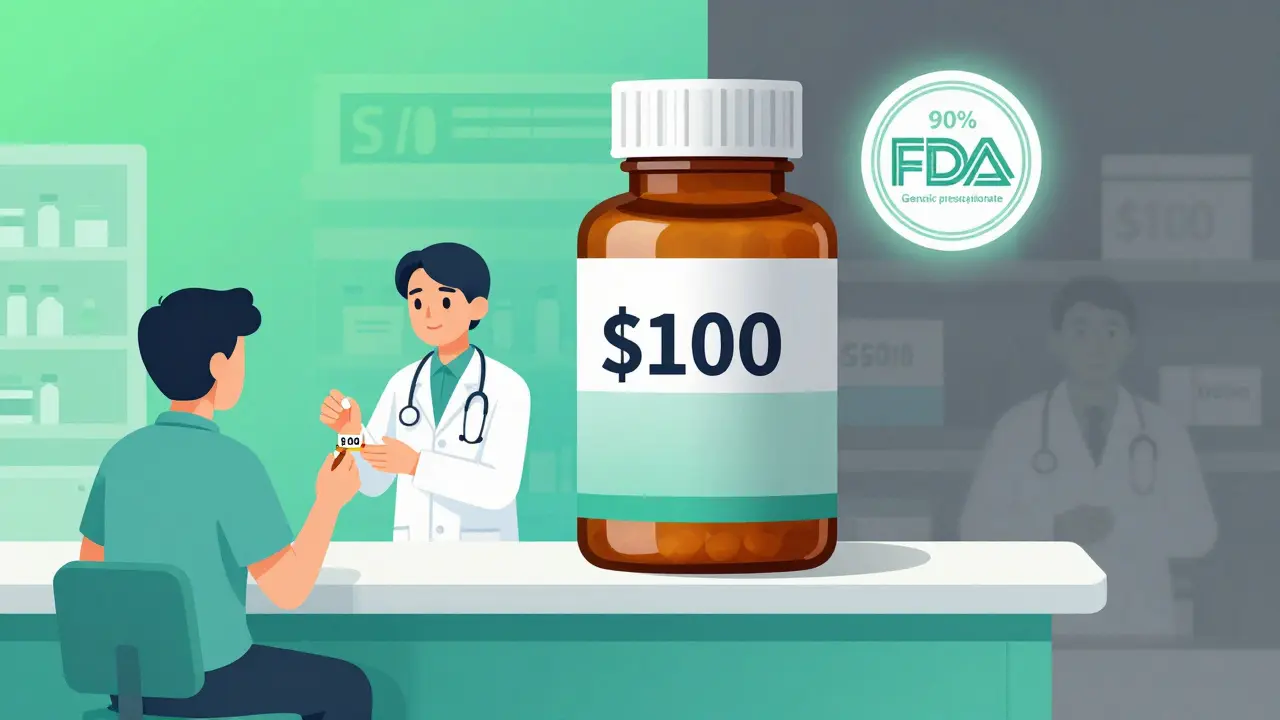
Problems Behind the Success
But the system isn’t perfect. One loophole in Hatch-Waxman lets brand-name companies sue generic makers just to delay entry. When that happens, the FDA must pause approval for up to 30 months. Many companies use this tactic - not because they believe their patent is valid, but to buy time. Between 2010 and 2020, over 70% of new brand-name drugs faced at least one such lawsuit to block generics. Then there’s the supply chain. About 80% of the active ingredients in U.S. generics come from just two countries: China and India. When a factory in India gets shut down for safety violations - or when a natural disaster hits a Chinese supplier - shortages follow. Between 2018 and 2022, the FDA recorded 1,234 drug shortages. Two-thirds of them involved generic drugs. Even worse, prices for some generics have spiked. Between 2013 and 2017, 15% of generic drugs saw price increases of over 100%. Some of these were old, cheap pills - like doxycycline or nitrofurantoin - used for common infections. Why? Because only one or two companies made them. When one quits, the other raises prices. It’s a broken market.Fixing the System
The FDA tried to fix the backlog. In 2007, it launched the Generic Initiative for Value and Efficiency (GIVE). Then, in 2012, it introduced the Generic Drug User Fee Amendments (GDUFA). Under GDUFA, generic companies pay fees to fund FDA reviews. The result? Review times dropped from 30 months to 10. Approval rates jumped from 45% to 95%. In 2019, Congress passed the CREATES Act. It stopped brand-name companies from refusing to sell samples of their drugs to generic makers - a tactic used to delay testing. As of late 2022, the FDA had taken 27 enforcement actions under this law. Today, the FDA oversees more than 22,000 generic products and 13,000 manufacturing sites worldwide. About 900 new generic applications get approved every year.What’s Next?
The next frontier is biosimilars - generic versions of complex biologic drugs like Humira or Enbrel. These drugs cost tens of thousands of dollars a year. Until now, no one could make a cheaper copy. But new rules and technologies are changing that. Analysts expect biosimilars to make up 10-15% of the biologics market by 2027. The goal? Keep prices down. Keep supply stable. Keep patients alive. The history of generic drugs isn’t just about science. It’s about who gets to live - and how much they pay for it. From a list of 11 doctors in 1820 to a global supply chain today, the fight for affordable medicine never ended. It just got smarter.about author

Lisa Cozad
Can’t believe we used to pay $200 for a 30-day supply of amoxicillin. My grandma used to split pills just to make them last. Generics saved my family’s budget more than once.
Ian Cheung
Remember when you’d go to the pharmacy and the pharmacist would ask if you wanted the brand or the generic like it was a moral choice? Now it’s just automatic. The system works even when the people running it don’t deserve credit
Saumya Roy Chaudhuri
Let me tell you something nobody else will - the real reason generics took off wasn’t Hatch-Waxman, it was the FDA’s silent alliance with Indian manufacturers. They turned a blind eye to GMP violations for years because they needed cheap pills. Now we’re stuck with a supply chain that could collapse if one monsoon hits Hyderabad. And no one’s talking about it because everyone’s too busy thanking Congress
Jay Amparo
I grew up in a small town in Rajasthan where the local pharmacy sold generics made in the US - same pills, same factory, different label. It’s wild how the same medicine can cost 10x more just because of where it’s sold. We need to think global on this. The fight for affordable meds isn’t just American - it’s human.
My uncle in Delhi takes the exact same doxycycline my cousin in Ohio takes. He pays $0.12 a pill. She pays $3.50. Same chemical. Same packaging. Same expiration. That’s not capitalism. That’s theft dressed up as intellectual property.
And don’t get me started on how brand-name companies hoard samples to delay generics. It’s not legal maneuvering - it’s medical sabotage.
I wish more people understood that every time a generic gets approved, someone’s life gets extended. Not just cheaper - lifesaving. And we treat it like a footnote in a textbook.
It’s not about politics. It’s about dignity. You shouldn’t have to choose between insulin and rent.
I’ve seen people cry because their insurance denied the brand and they couldn’t afford the generic. That’s not healthcare. That’s punishment.
Generics didn’t happen by accident. They happened because people refused to accept that medicine should be a luxury.
So next time you pick up a bottle of generic lisinopril, don’t just take it - thank the system. And then demand it gets better.
anthony martinez
90% of prescriptions are generics and yet we still have CEOs on yachts buying private islands with the profits from the other 10%
Mario Bros
Just had my first generic metformin refill - $4 at Walmart. I used to pay $80 for the brand. I’m not just saving money, I’m staying alive. Thank you to everyone who fought for this.
Jake Nunez
India’s generic industry isn’t just a business - it’s a public health movement. They make more than half the world’s generics. And yet we treat them like villains when they’re the ones keeping us from dying of a $10 pill.
Christine Milne
While I appreciate the sentiment, one must acknowledge that the erosion of patent protections has undermined American pharmaceutical innovation. The United States once led the world in drug discovery - now we import our cures. This is not progress. It is surrender.
Bradford Beardall
Wait - so the FDA approves generics based on bioequivalence, but the active ingredient often comes from China? That means the same pill I take could be made in a factory with different safety standards than the one my cousin takes in Texas. Isn’t that a risk?
McCarthy Halverson
Generics saved billions. Supply chain’s a mess. Fix it.
Michael Marchio
Let’s be honest - the entire generic system is a house of cards built on regulatory loopholes and corporate greed. Hatch-Waxman was sold as a win for consumers, but it was really a deal between Big Pharma and Big Generic to divide the pie without actually competing. The 30-month litigation stays? That’s not law - it’s a cartel. And the fact that we celebrate this as a victory is the most tragic part. We’re not saving money - we’re just paying it to a different set of people who know how to game the system better.
And don’t even get me started on the fact that some generics are made in the same factories as the brand names, just with a different label. So we’re not even getting a cheaper version - we’re getting the exact same thing with a different name and a lower price tag because the manufacturer decided to stop pretending they’re special.
The real scandal isn’t that generics exist - it’s that we ever thought brand names were worth the price in the first place.
And now we’re outsourcing the entire supply chain to countries with zero accountability because we don’t want to pay for domestic production. We’re not innovating - we’re just outsourcing our ethics.
And yet people cheer? We’ve normalized exploitation and called it efficiency.
Next time you pick up a $3 generic, ask yourself - who really paid for it? And what did they lose to make it possible?
Jake Kelly
It’s amazing how something so simple - making the same medicine cheaper - became such a political battleground. Medicine should just be medicine.
Ashlee Montgomery
What does it mean that we’ve built a system where the most essential medicines are treated like commodities - subject to market volatility, geopolitical tension, and corporate negotiation? We treat life-saving drugs like stocks. That’s not healthcare. That’s capitalism with a stethoscope.
neeraj maor
Everything you just read? A distraction. The real reason generics are cheap is because the FDA and the White House are in bed with China. The same people who banned Chinese TikTok are letting them control 80% of our medicine supply. This isn’t about cost - it’s about control. And one day, when the supply chain cuts off during a war or a cyberattack, we’ll all be begging for our old brand-name pills. And they’ll be gone. Forever.
And you think this is about healthcare? No. This is about surrender. We traded our sovereignty for a $4 pill. And we’re proud of it.
Just wait. The next pandemic won’t be viral. It’ll be pharmaceutical. And no one will be ready.