
Generic Prescribing Incentives: How Rewards Shape Provider Decisions
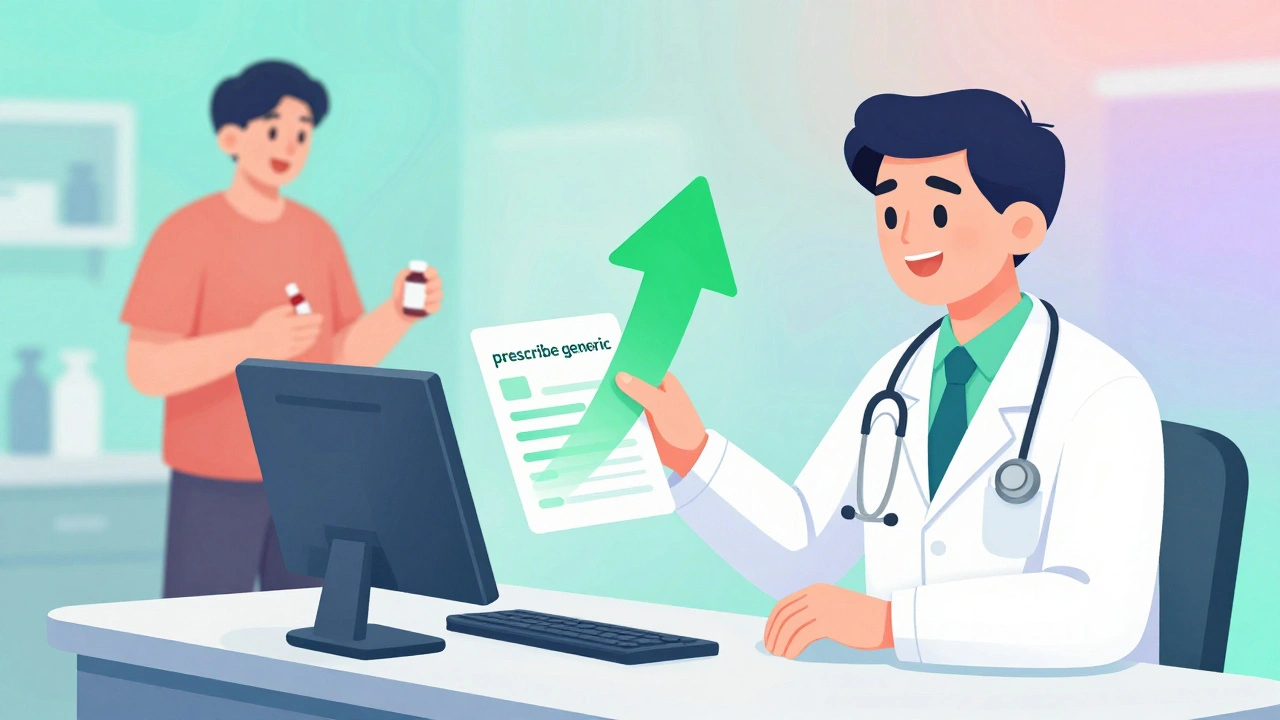
When a doctor writes a prescription, they’re not just picking a medicine-they’re making a decision that affects your health, your wallet, and their own bottom line. For years, the default was to reach for the brand-name drug. But that’s changing. Today, many healthcare providers are being rewarded-financially and otherwise-for choosing generic medications instead. It’s not about cutting corners. It’s about aligning incentives with real-world outcomes: saving money without sacrificing care.
Why Generic Prescribing Matters
| Drug Type | Percentage of Prescriptions | Percentage of Total Spending |
|---|---|---|
| Generic Drugs | 90% | 23% |
| Brand-Name Drugs | 10% | 77% |
Generic drugs aren’t cheap knockoffs. They’re the exact same active ingredients as brand-name drugs, tested and approved by the FDA. The only differences? No marketing budget, no patent protection, and a price tag that’s often 80% lower. In 2023, generics made up 90% of all prescriptions filled in the U.S.-but only 23% of total drug spending. That’s a $253 billion gap between what’s prescribed and what’s paid.
Over the last 15 years, the U.S. healthcare system has saved over $1.7 trillion thanks to generic drugs. That’s not just a number-it’s thousands of patients who can afford their insulin, their blood pressure meds, their antidepressants. But here’s the catch: just because generics are cheaper doesn’t mean doctors automatically choose them. That’s where incentives come in.
How Providers Get Rewarded
There are two main ways providers are encouraged to prescribe generics: money and convenience.
Financial incentives vary by plan. Blue Cross Blue Shield companies, for example, pay physicians $5 to $15 per generic prescription in certain drug classes. Some programs cap annual bonuses at $5,000. UnitedHealthcare’s Value-Based Prescribing Program gives bonuses tied to overall prescribing patterns-not just one prescription at a time. These aren’t small amounts. One internal medicine doctor in California reported earning an extra $2,800 a year just by sticking to generics where appropriate.
But money isn’t the only lever. Non-financial rewards matter too. Some insurers give providers faster prior authorizations, priority appointment slots, or even public recognition on their provider directories. E-prescribing systems now default to generic alternatives unless the doctor actively overrides them. One study found this simple tweak boosted generic prescribing by over 22 percentage points.
And it’s not just private insurers. Medicare has tested programs like the “$2 Drug List,” where patients pay just $2 for essential generics. The result? A 17.3% jump in adherence among seniors. When the cost to the patient drops, the pressure on the doctor to justify a more expensive option drops too.
What Works-And What Doesn’t
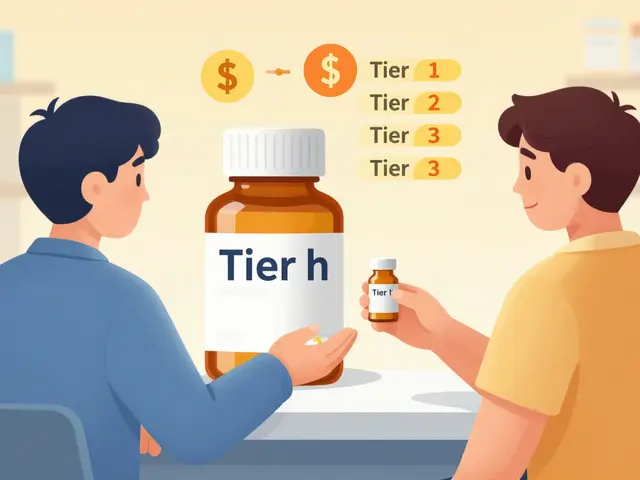
Not all incentive programs are created equal. Formulary tiering-where generics are placed in the lowest-cost tier-is common but weak. It pushes patients to choose generics, but doesn’t directly influence doctors. Studies show it only increases generic use by 8-12%.
Direct provider incentives? They work better. UnitedHealthcare’s program increased generic prescribing by nearly 25% in primary care. Why? Because it changes the behavior of the person writing the prescription, not just the person filling it.
But there’s a dark side. Some programs create unintended consequences. A 2023 study found that doctors who participate in the 340B drug discount program-meant to help safety-net providers-actually prescribed fewer generics. Why? Because they get deep discounts on brand-name drugs through 340B, so prescribing them becomes financially smarter for their practice, even if it’s worse for the patient’s wallet.
And it’s not just U.S. systems. In England, doctors who can dispense drugs themselves prescribe 3.1% more expensive medications per patient. When the provider profits from the drug, prescribing decisions get blurry.
Provider Voices: Real Stories
Doctors aren’t robots. They see the impact of these programs firsthand.
Dr. Michael Chen, an internist in California, says the UnitedHealthcare bonus program “felt fair-like I was being paid for doing the right thing.” He didn’t have to change how he practiced. He just picked generics when they worked.
But Dr. Sarah Williams, a family doctor in Texas, felt differently. “Some programs feel like they’re forcing me to choose between cost and care,” she told Medscape. “What if my patient needs the brand because the generic gives them nausea? What if they’ve been stable on it for years?”
On Reddit, a physician named MedDoc2020 wrote: “Generic incentives work great for high blood pressure or diabetes. But when you’ve got someone with five chronic conditions, allergies, and weird reactions? One-size-fits-all doesn’t cut it.”
A 2021 survey of 1,200 providers found 63% liked incentives when they were voluntary and tied to quality-not just cost. But 78% worried that if patients found out their doctor was getting paid to prescribe generics, trust would erode.
The Hidden Risks
There’s a fine line between smart cost control and dangerous coercion.
Some incentive models have led to therapeutic substitution errors-switching a patient from a brand-name drug to a generic that doesn’t work for them, simply because it’s cheaper. That’s not just a clinical mistake; it’s a breach of trust.
And then there’s the pharmaceutical industry’s role. A 2021 study found that 40-50% of physicians consider small gifts-free pens, lunch sponsorships, even medical equipment-as acceptable incentives from drug companies. The same companies that make brand-name drugs are often the ones funding the very programs that try to reduce their sales. That’s a conflict of interest no one talks about enough.
Doctors who receive payments from pharmaceutical companies are 37% less likely to prescribe generics, especially in the first year after a generic hits the market. That’s not about greed-it’s about relationships, marketing, and subtle influence.
What Makes a Good Incentive Program
The best programs don’t punish doctors. They support them.
According to the American College of Physicians, successful programs have three things:
- Transparency. Doctors know what they’re being rewarded for-and why.
- Flexibility. Exemptions exist for cases where brand drugs are medically necessary.
- Integration. Incentives are built into the workflow, not tacked on as extra work.
Electronic health record systems that show a quick pop-up-“This generic is equivalent and costs $12 less”-are more effective than mandatory quotas. Clinical decision support that flags only when a switch might be unsafe? That’s gold.
Training matters too. Most providers need 8-12 hours to understand how formularies work, how to interpret cost data, and how to explain the switch to patients. One study found practices that skipped training had 52% higher rates of override errors.
Where This Is Headed
Generic prescribing isn’t going away. It’s getting smarter.
By 2028, experts predict 94% of all prescriptions in the U.S. will be for generics. CMS is expanding its “$2 Drug List” to more Medicare Advantage plans. The Inflation Reduction Act is cracking down on patent evergreening, which should bring more generics to market. UnitedHealthcare’s new 2024 contracts don’t just reward cost savings-they tie payments to clinical outcomes too. That’s the future: pay for value, not just volume.
But the biggest challenge isn’t technology or money. It’s trust. If patients believe their doctor is choosing a cheaper drug because they’re being paid, not because it’s right for them, the relationship breaks. The best incentive programs make it easy to do the right thing-without making the doctor feel like a salesperson.
At the end of the day, it’s not about whether providers should be rewarded for prescribing generics. It’s about whether the system is designed so that doing the right thing for the patient is also the easiest and most rewarding thing for the provider.
What You Can Do as a Patient
You don’t have to wait for your doctor to be incentivized. Ask questions.
- “Is there a generic version of this?”
- “Will it work the same way?”
- “What’s the difference in cost?”
Most of the time, the answer is yes, yes, and a lot less. And if your doctor hesitates, ask why. It’s not pushback-it’s partnership.
about author

Evelyn Pastrana
So let me get this straight - doctors get paid $5 to prescribe a pill that costs 80% less and does the exact same thing? And we’re surprised people are confused about why their meds suddenly changed? 😏
Nikhil Pattni
Bro, you don’t understand the global context - in India, we’ve been using generics since the 80s because brand drugs were literally unaffordable. The FDA approval? Same standards. The only difference is the label. Why is America acting like this is some new discovery? 🤦♂️ Also, did you know that 70% of generic manufacturers in the US are owned by Indian pharma companies? So when you say ‘generic’, you’re basically buying Made-in-India medicine. Wake up.
Arun Kumar Raut
Hey, I get it - cost matters. But I’ve seen patients panic when their blood pressure med switched from brand to generic. Not because it didn’t work, but because they didn’t understand why. Maybe instead of just paying doctors, we should pay for better education - for doctors AND patients. A simple 30-second note in the chart saying ‘This generic is equivalent’ goes a long way. No one’s against savings. We just don’t want people feeling like pawns.
precious amzy
One must interrogate the epistemological underpinnings of pharmaceutical incentive structures. The very notion of ‘rewarding’ clinical decisions implies a commodification of medical judgment - a betrayal of the Hippocratic Oath’s implicit covenant. Are we not, then, transmuting the physician into a market actor? The irony is not lost: a system designed to reduce cost has elevated financial transactionality to the status of clinical virtue. And yet - the patient remains an afterthought.
William Umstattd
Let’s be real. Doctors are being bribed. $5 per prescription? That’s not an incentive - it’s a kickback. And now you’re telling me the system is ‘smart’ because it hides the payment behind ‘value-based’ jargon? Wake up. This isn’t healthcare reform. It’s corporate cost-shifting disguised as ethics. And don’t get me started on the 340B loophole - that’s not a program, it’s a tax dodge with a stethoscope.
Elliot Barrett
This whole thing is a scam. Doctors don’t need bonuses to prescribe generics - they need to stop being lazy. If they actually took 2 minutes to check the formulary, they’d know which ones work. And patients? They don’t care if their doctor gets $5. They care if the pill makes them feel worse. So stop pretending this is about ‘care’ - it’s about insurance companies offloading costs onto the front lines.
Tejas Bubane
90% of prescriptions are generic but only 23% of spending? That math is bullshit. You’re not accounting for bulk pricing, hospital contracts, or the fact that most generics are made in China now. And don’t give me that ‘FDA approved’ crap - the FDA inspects 1% of foreign plants. Meanwhile, people are dying because their generic metformin had NDMA in it. This isn’t savings - it’s Russian roulette with your meds.
Maria Elisha
I hate when people act like generics are magic. My cousin switched to generic Adderall and ended up in the ER. It’s not the same. Not even close. So yeah, save money if you want - but don’t pretend it’s risk-free. Doctors aren’t robots. Patients aren’t numbers. And ‘incentives’ don’t fix bad systems.
Andrea Beilstein
It’s funny how we talk about incentives like they’re new but we’ve been doing this since the 1970s with HMOs and formularies. The real question isn’t whether doctors should be paid to prescribe generics - it’s why the system forces them into this moral compromise in the first place. We’ve turned healthcare into a spreadsheet and now we’re shocked when people start optimizing for the numbers. Maybe the problem isn’t the incentives - it’s that we ever let the market decide who gets to be healthy
Sabrina Thurn
From a clinical operations standpoint, the most effective interventions are those embedded in the EHR workflow - not financial bonuses. The 22% spike from defaulting to generics in e-prescribing systems is the real win. Why? Because it reduces cognitive load. Physicians are already overwhelmed. Adding a pop-up that says ‘Equivalent generic available: $12 cheaper’ with a one-click override? That’s behavioral design at its best. Financial incentives alone are noise. Clinical decision support is signal.
Simran Chettiar
It is a profound irony that in a nation that prides itself on innovation, the solution to soaring healthcare costs is not innovation, but the reversion to a prior state - the generic. One must ask, is this progress, or merely the rebranding of austerity as virtue? The patient, in this equation, becomes not a subject of care, but a unit of economic efficiency. And the physician? A reluctant agent of fiscal discipline. This is not healing. This is accounting with a stethoscope.
Olivia Portier
Hey, I just want to say - if you’re a doc reading this, you’re doing your best. And if you’re a patient, asking ‘is there a generic?’ is totally fine. We’re all just trying to get through this mess. No one’s perfect, but if we talk to each other instead of yelling at each other? We might actually make it better. 💛
Tiffany Sowby
So now we’re rewarding doctors for saving money? What’s next? Paying nurses to skip bandage changes? This isn’t healthcare - it’s Walmart with a white coat. And don’t even get me started on how these ‘incentives’ are funded by the same drug companies that spent billions lobbying to block generic competition. This is corporate theater. I’m sick of it.
Jennifer Blandford
I’ve been on 5 different meds in the last 3 years. 3 of them switched from brand to generic. Two worked fine. One made me feel like I was being slowly drained of energy. I asked my doctor why. She said, ‘The insurance pushed it.’ I didn’t say anything. But I cried in the parking lot. I just want to feel okay. Why does that have to be so complicated?