
Provider Education on Generics: How Clinicians Can Improve Patient Outcomes with Generic Medications
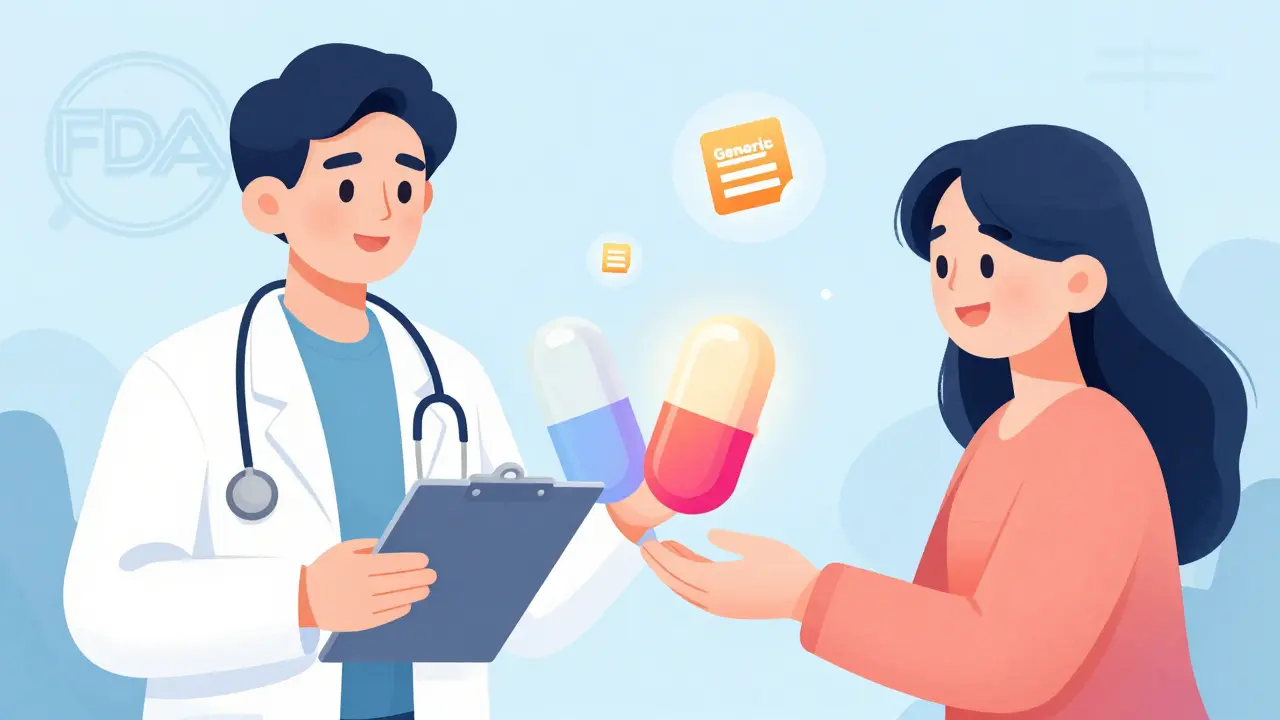
When a doctor writes a prescription for generic medications, they’re not just saving money-they’re helping patients stick to their treatment. But too often, clinicians still hesitate. Why? Because many don’t fully understand how generics work-or worse, they believe myths about quality, effectiveness, or safety. The truth is simple: generics are not cheaper versions of brand-name drugs. They’re the same drugs, approved under the same strict standards. The problem isn’t the medication. It’s the knowledge gap.
Why Clinicians Still Doubt Generics
Despite making up 90% of all prescriptions filled in the U.S., generic drugs account for just 23% of total drug spending. That’s a $2.2 trillion savings over the last decade. Yet, a 2017 study found that 68% of physicians still had concerns about whether generics were truly equivalent to brand-name drugs. That’s not just outdated thinking-it’s costing patients. Many doctors still think generics have less active ingredient, or that different fillers change how the drug works. Neither is true. The FDA requires generics to match the brand-name drug in active ingredient, strength, dosage form, and route of administration. The only allowed differences are in inactive ingredients-like dyes or binders-which can’t affect safety or effectiveness. Even so, a 2020 survey showed 45% of prescribers incorrectly believed generics must have identical inactive ingredients. Another 27% thought bioequivalence allowed up to 25% less active ingredient. That’s not just wrong-it’s dangerous.How Generics Are Really Approved
The FDA doesn’t approve generics lightly. Every generic must prove bioequivalence through rigorous testing. That means the amount of drug absorbed into the bloodstream (measured as AUC and Cmax) must fall within 80-125% of the brand-name version. This isn’t a range of 20% variability-it’s a 90% confidence interval. In plain terms: if a patient takes the generic, their body processes it almost identically to the brand. The FDA’s Orange Book lists every approved generic and rates its equivalence with a two-letter code. An “A” rating means it’s interchangeable. A “B” rating means it’s not. Prescribers need to know this system. But a 2019 survey found 62% of doctors still default to brand names when writing prescriptions-even when a generic is available and appropriate. That’s not habit. It’s ignorance.The Real Impact: Adherence and Outcomes
Patients don’t just save money with generics-they’re more likely to take them. Studies show patients are 35% more likely to start a new medication if it’s generic. Why? Cost. A pill that costs $5 instead of $150 changes behavior. But that only works if the doctor says it’s okay. Harvard Medical School research found that when clinicians explicitly endorsed generic equivalence, patient-reported side effects dropped by 18%. That’s not magic. It’s the nocebo effect in reverse. If a doctor says, “This generic is just as good,” patients believe it. If the doctor hesitates, says “I know this brand works better,” patients assume the opposite-even if it’s untrue. This matters most in chronic conditions. A patient with high blood pressure who stops taking their meds because they can’t afford them isn’t just at risk for a stroke-they’re costing the system thousands in emergency care. A 2021 study showed that when providers were trained to confidently recommend generics, new prescription rates for generics jumped by 29%.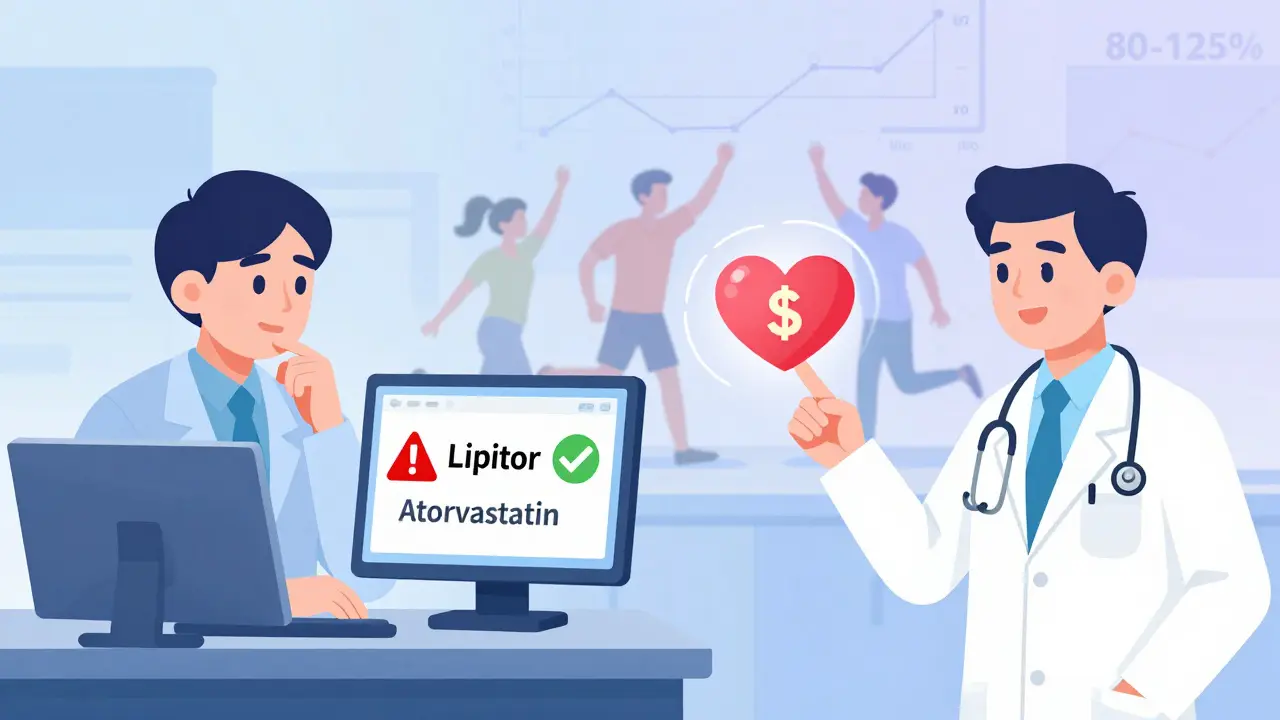
Where Education Falls Short
Most doctors get little to no formal training on generics after medical school. Medical curricula teach generic names, but clinical practice is dominated by brand names. Residents hear “Lopressor” instead of “metoprolol.” They see “Lipitor” on charts, not “atorvastatin.” By the time they’re prescribing, they’ve internalized the brand. Even when education is offered, it’s often passive: a PDF handed out at a conference, a webinar no one attends. A 2021 JAMA study found that clinicians who received interactive, case-based training retained 42% more knowledge six months later than those who just read fact sheets. Engagement matters. Talking through real cases-like a diabetic patient who stopped insulin because the brand was too expensive-changes behavior far more than statistics ever could. And time? It’s the biggest barrier. Eighty-nine percent of physicians say they don’t have time to discuss generics with patients. But here’s the irony: spending two minutes explaining why a generic is safe saves hours later when the patient ends up in the ER because they skipped doses.What Works: Real Solutions
Successful programs don’t just give information-they change workflow. The University of California San Francisco cut brand-name statin prescriptions by 37% by embedding generic prompts into their electronic health record system. When a doctor typed “atorvastatin,” the system showed: “Generic available. Patient cost: $5 vs. $140.” That’s not nagging. That’s smart design. Other effective tools include:- AI-driven alerts: Tools like Medisafe’s EHR integration flag when a brand-name drug is prescribed and suggest a generic alternative. One pilot saw generic acceptance rise by 24%.
- Virtual reality training: The FDA’s 2023 pilot lets clinicians practice conversations with simulated patients who are skeptical about generics. Early results show a 41% boost in provider confidence.
- Academic detailing: Trained pharmacists visit clinics to deliver one-on-one education. It’s time-intensive, but studies show it increases generic prescribing more than any other method.
Special Cases: Psych, Neuro, and Biosimilars
Some specialties resist generics more than others. Neurologists and cardiologists have the highest hesitation rates-79% and 82%, respectively. Why? Because they treat conditions where patients are hyper-aware of side effects: seizures, depression, arrhythmias. A small change in blood levels, even within FDA limits, can feel like a risk. But here’s the data: multiple studies show no difference in seizure control between brand and generic antiepileptics. Yet, many doctors still write “dispense as written” out of habit. Then there’s the confusion around biosimilars. These aren’t generics. They’re complex biologic drugs-like insulin or Humira-that can’t be copied exactly. Only 31% of providers can correctly explain the difference between a small-molecule generic and a biosimilar. That’s a massive knowledge gap. If a doctor tells a patient, “This is just like a generic,” they’re misleading them. Education needs to distinguish these clearly.What You Need to Know
If you’re a clinician, here’s what you need to get right:- Active ingredient: Must be identical. No exceptions.
- Strength and dosage: Must match the brand exactly.
- Bioequivalence: 80-125% absorption range, proven in clinical studies.
- Orange Book: Check the “A” rating before prescribing.
- State laws: 34 states let pharmacists substitute generics without asking you. 16 require you to write “dispense as written” to block it.
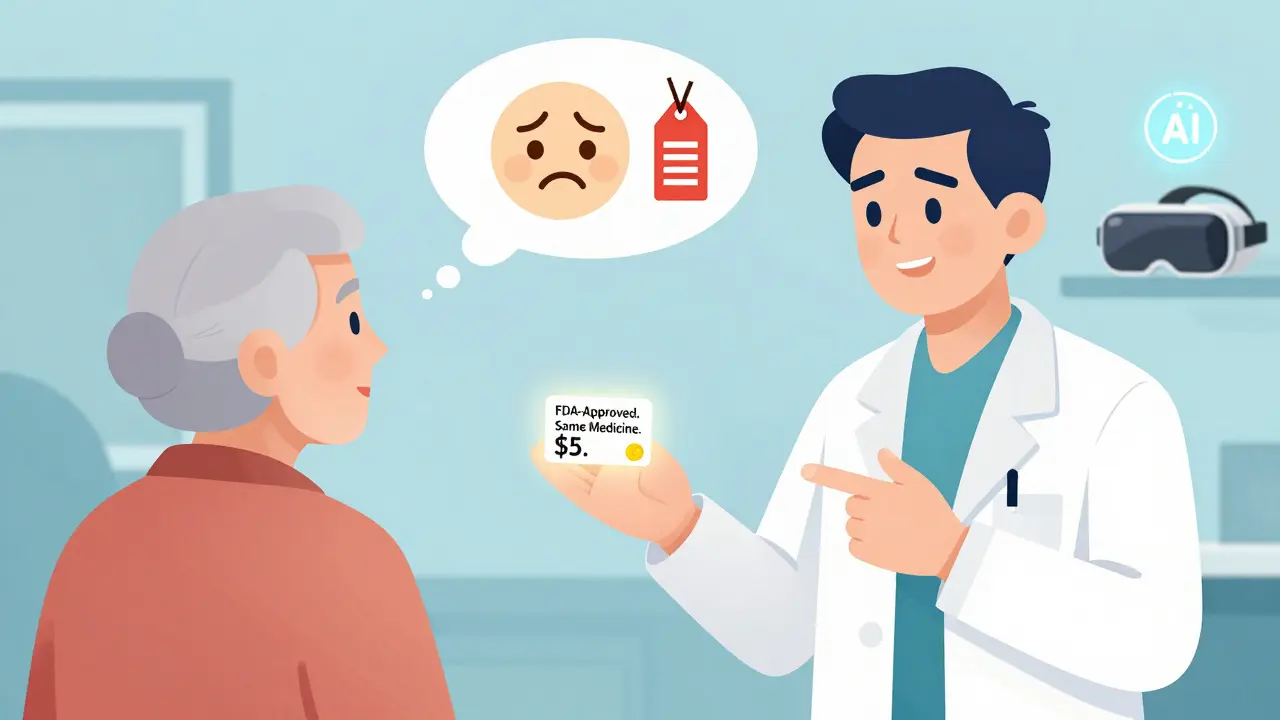
- Communication: Say: “This generic is FDA-approved to work just like the brand. It’s safe, effective, and costs far less.”
The Future Is Here
The system is changing. In 2025, Medicare’s MIPS program will start measuring generic prescribing rates as a quality metric. Health systems that don’t train their staff will lose money. That’s the new incentive. UnitedHealthcare’s 2024 pilot used AI to identify doctors with low generic use and sent them personalized education. Result? A 28% increase in generic prescribing. No lectures. No forms. Just the right message, at the right time. The goal isn’t to replace brands. It’s to use the right tool for the right patient. Generics aren’t second choice. They’re the standard. And when clinicians understand that, patients get better care-and stay healthier longer.Are generic drugs really as effective as brand-name drugs?
Yes. The FDA requires generics to have the same active ingredient, strength, dosage form, and route of administration as the brand-name drug. They must also prove bioequivalence-meaning they’re absorbed into the bloodstream at the same rate and extent, within a strict 80-125% range. Over 90% of prescriptions in the U.S. are for generics, and they’ve saved the healthcare system over $2 trillion in the past decade.
Why do some doctors still prefer prescribing brand-name drugs?
Many doctors were trained using brand names and continue to use them out of habit. Others have outdated beliefs about quality or effectiveness. A 2020 survey found 38% of prescribers incorrectly thought generic manufacturing standards were lower. Some also fear patient complaints or worry about subtle differences in complex conditions like epilepsy or thyroid disease-though studies show no clinical difference in outcomes.
Can pharmacists substitute a generic without the doctor’s permission?
In 34 U.S. states, pharmacists can substitute a generic for a brand-name drug without contacting the prescriber, as long as the generic has an “A” rating in the FDA’s Orange Book. In 16 states, the prescriber must write “dispense as written” on the prescription to prevent substitution. Always check your state’s laws.
What’s the difference between a generic and a biosimilar?
Generics are exact copies of small-molecule drugs-like metformin or lisinopril. Biosimilars are highly similar but not identical copies of complex biologic drugs-like insulin or Humira. Because biologics are made from living cells, they can’t be replicated exactly. Biosimilars require additional testing to prove safety and effectiveness, and they’re not interchangeable by default. Only 31% of providers can correctly explain this distinction.
How can I learn more about prescribing generics correctly?
Start with the FDA’s Generic Drugs Stakeholder Toolkit, which includes free prescriber resources like the Generic Drug Facts Handout. Look for CME courses from the American Medical Association or academic detailing programs from ICER. Many health systems now offer EHR-integrated tools that suggest generics at the point of prescribing. Interactive, case-based training is far more effective than reading PDFs.
about author

Meina Taiwo
Generics work. I’ve been on them for years. No issues. No magic. Just science.
Sarah Williams
My grandma takes six generics and still outlives half the people who insist on brand names. She doesn’t know what bioequivalence means-but her blood pressure does. And so do I.
Brian Furnell
Let’s be precise here: the FDA’s bioequivalence criteria (80–125% AUC/Cmax, 90% CI) are not a ‘range of variability’-they’re a tightly constrained pharmacokinetic equivalence threshold validated across hundreds of clinical trials. The notion that ‘inactive ingredients matter’ is a persistent myth, often propagated by pharma marketing, not pharmacology. And yes, the Orange Book’s ‘A’ rating is the gold standard-don’t ignore it.
Southern NH Pagan Pride
you ever wonder why the same companies make both the brand AND the generic? hmmmm. and why the FDA lets them skip full trials? they’re not the same. just look at the lawsuits. the fillers? they’re not harmless. they’re designed to make you dependent. and the ‘A’ rating? it’s just a suggestion. trust me, i’ve read the documents.
Grace Rehman
So we’re supposed to believe that a drug made in a factory in India with different dyes and binders is magically identical to one made in New Jersey… but only if the FDA says so? Funny how ‘science’ always lines up with corporate profit margins. Maybe we should ask the patients who had seizures after switching. Oh wait-they’re not in the studies.
Jerry Peterson
In my clinic in rural Kentucky, patients choose generics every time. Not because they’re forced. Because they’re smart. And they know $150 isn’t a pill-it’s rent. We don’t need more data. We need more trust. And less jargon.
Siobhan K.
Someone’s clearly never had a patient come back saying their generic antidepressant ‘didn’t work’-then switched back to brand and felt like a new person. Coincidence? Or is the nocebo effect just the polite version of ‘I don’t trust this’? Either way, the data doesn’t lie-but the anecdotes? They haunt us.
Orlando Marquez Jr
It is a matter of considerable empirical significance that the pharmacoeconomic impact of generic substitution has been quantitatively demonstrated across multiple longitudinal cohort studies. The reduction in non-adherence rates correlates directly with decreased hospitalization incidence, particularly in populations with chronic cardiovascular and metabolic conditions. Further, the regulatory equivalency framework established by the FDA constitutes a robust, evidence-based standard that has withstood decades of peer-reviewed scrutiny.
Jackie Be
OMG I just switched my dad to generic Lipitor and he’s been walking around like a zombie for a week!! I’m not saying it’s the drug but… what if it’s the fillers?? What if they’re poisoning us slowly?? I’m gonna post this on TikTok. #GenericDangers #TrustTheProcessButAlsoDont