
Polysomnography: What to Expect During a Sleep Study and How Results Are Interpreted
When you’re tossing and turning every night, waking up exhausted even after eight hours in bed, it’s not just bad sleep-it might be something deeper. That’s where polysomnography comes in. Often called a sleep study, it’s the most detailed way doctors check what’s really happening while you sleep. Unlike a quick home test that just tracks breathing, polysomnography watches your brain, heart, muscles, and breathing all at once. It’s not glamorous, but it’s the gold standard for figuring out why you’re not resting properly.
What Happens During a Polysomnography Test?
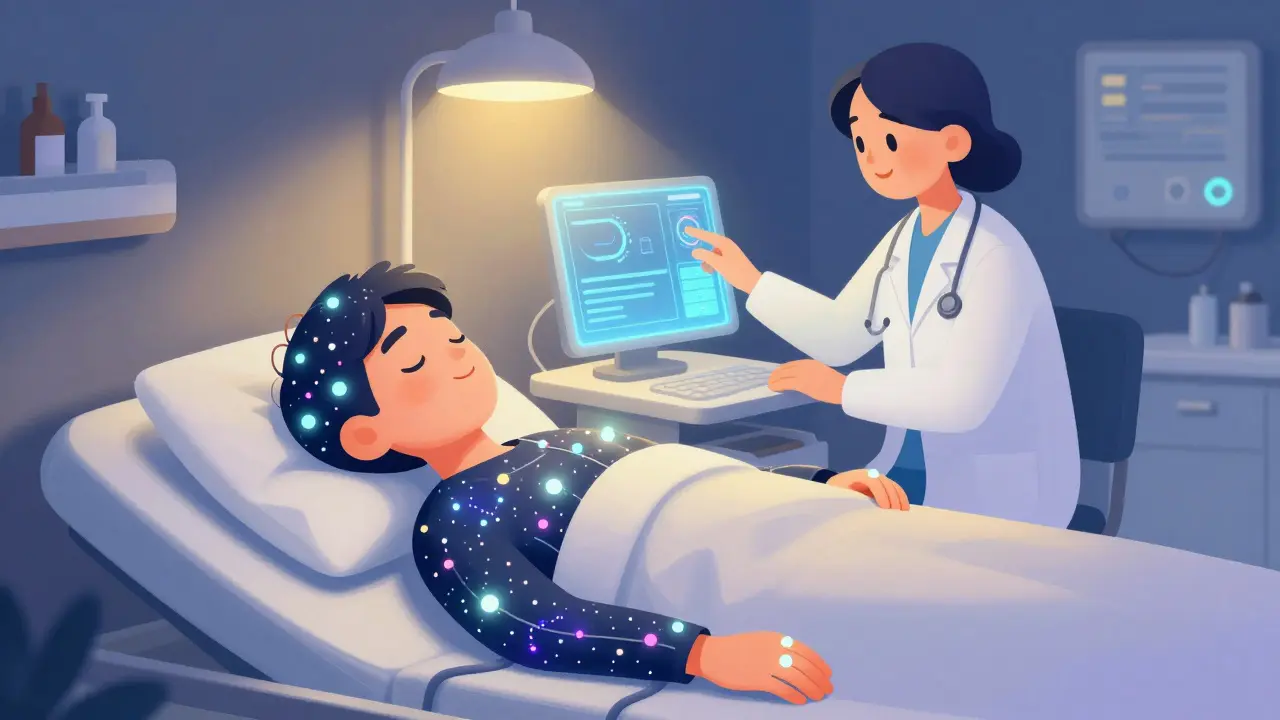
You show up at a sleep center in the evening, usually about an hour before your normal bedtime. The room looks like a hotel room-quiet, dim, with a comfortable bed. But instead of just pajamas, you’re wearing a dozen small sensors. Twenty-two electrodes stick to your scalp, forehead, and chin. Bands wrap around your chest and belly. A tiny probe sits under your nose. A clip on your finger tracks your oxygen. All of it connects to a computer in another room.
It sounds overwhelming, but it’s not painful. The sensors don’t shock you or pierce your skin. They just record what’s already happening in your body. A sleep technologist spends 30 to 45 minutes attaching everything and explaining how the night will go. You can watch TV, read, or relax until you’re ready to sleep. Most people get used to the gear within minutes.
Throughout the night, the technologist watches your data in real time. They can hear you snore, see if you stop breathing, notice if your legs kick out, or catch if you suddenly sit up and scream. If you need to use the bathroom, they’ll unhook a few sensors so you can move freely. You’re never alone. If you’re anxious, they’ll talk you through it. By morning, you’ve been monitored for 6 to 8 hours of natural sleep-no alarms, no interruptions, just your body doing what it does when no one’s watching.
What Does a Sleep Study Actually Measure?
Polysomnography doesn’t just count how long you sleep. It maps your entire sleep cycle. Here’s what it tracks:
- Brain waves (EEG): These show when you’re in light sleep, deep sleep, or REM sleep. Normal sleep moves in 90-minute cycles. If you jump straight into REM-like people with narcolepsy do-that shows up clearly.
- Eye movements (EOG): Rapid eye movements mark REM sleep. That’s when dreaming happens. Abnormal eye activity can point to neurological issues.
- Muscle activity (EMG): Sensors on your chin and legs detect if you’re clenching your jaw, grinding teeth, or having periodic limb movements. These are signs of sleep disorders like bruxism or restless legs syndrome.
- Heart rhythm (ECG): Irregular beats during sleep can signal heart problems or stress from breathing pauses.
- Breathing effort: Belts around your chest and belly measure if you’re trying to breathe even when air isn’t moving-key for spotting obstructive sleep apnea.
- Airflow: A sensor under your nose detects whether air is flowing in and out. No airflow? That’s an apnea.
- Blood oxygen levels: A pulse oximeter on your finger drops when you stop breathing. If your oxygen falls below 90% for more than 10 seconds, it’s a red flag.
- Body position: Are you sleeping on your back? That’s when apnea is worst for many people.
- Audio and video: Snoring, gasping, talking, or even walking during sleep gets recorded. This helps diagnose parasomnias like sleepwalking or night terrors.
That’s 10+ systems being watched at once. No home test does this. Home devices might check breathing and oxygen, but they miss the brain patterns that tell the difference between sleep apnea, narcolepsy, and seizures.
How Are the Results Read?
After the study, you go home. The real work begins for the sleep specialist.
The raw data-often over 1,000 pages of numbers and waveforms-gets reviewed by a board-certified sleep doctor. They don’t just glance at it. They spend 2 to 3 hours analyzing every second. They count how many times you stopped breathing per hour (that’s the AHI-Apnea-Hypopnea Index). They note how long you spent in each sleep stage. They check for leg jerks, heart skips, and abnormal brain spikes.
Here’s what the numbers mean:
- AHI under 5: Normal. No sleep apnea.
- AHI 5-15: Mild sleep apnea. You’re breathing fine most of the night, but pauses happen often enough to disrupt rest.
- AHI 15-30: Moderate. Your oxygen dips, you wake up partially, and you’re likely tired all day.
- AHI over 30: Severe. You’re stopping breathing 30+ times an hour. This increases heart attack and stroke risk.
But it’s not just about apnea. If you fall asleep in under 5 minutes during the test’s daytime checks, narcolepsy is suspected. If your legs jerk every 20-40 seconds, it’s periodic limb movement disorder. If your brain shows unusual activity during sleep, it could be seizures.
Doctors also look at sleep efficiency-how much of your time in bed was actual sleep. If you’re lying there for 8 hours but only sleeping 5, something’s off. And they check if you’re getting enough deep sleep and REM. Without enough of either, you don’t feel rested, even if you slept long.
Split-Night Studies: One Night, Two Purposes
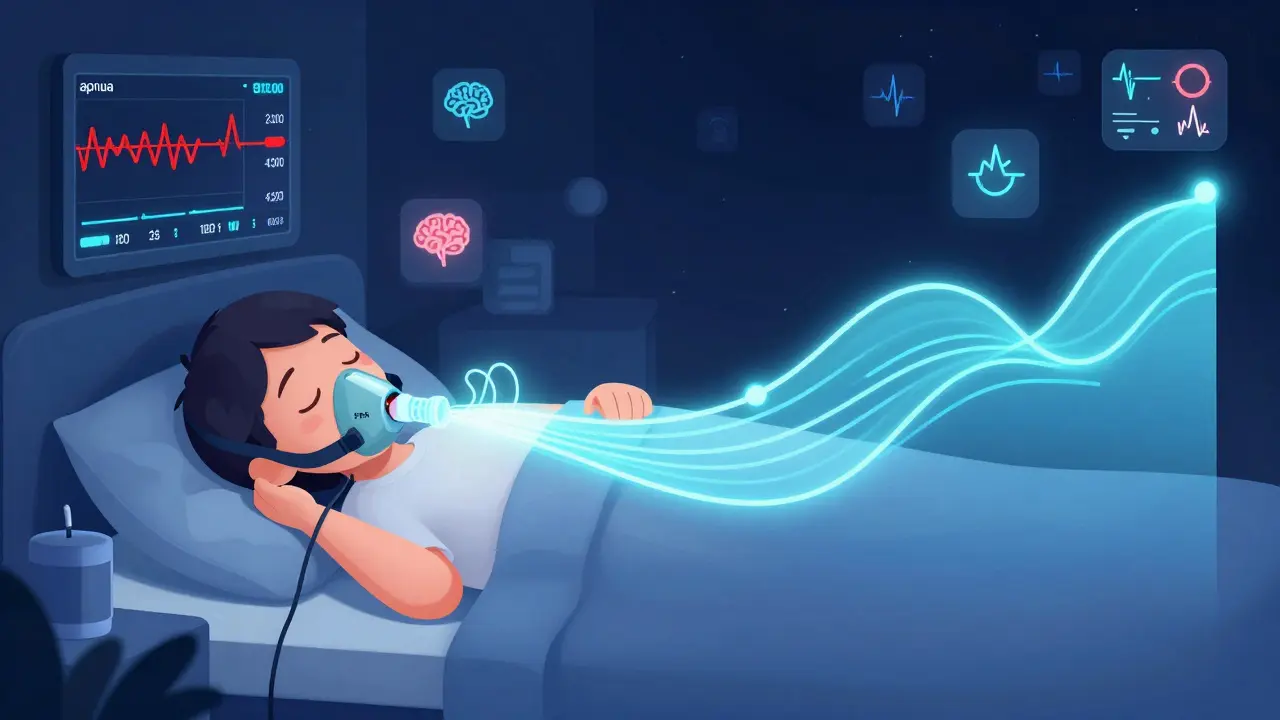
If you’re clearly struggling with severe sleep apnea in the first half of the night, the study might switch to a split-night protocol. That means the second half isn’t just observation-it’s treatment.
A CPAP mask is put on you while you’re still asleep. The machine slowly increases air pressure until your breathing stops being interrupted. The technologist watches the screen, adjusts the pressure, and makes sure your oxygen levels stabilize. By morning, they know exactly what pressure you need to breathe normally.
Split-night studies cut down on repeat visits. About 35% of polysomnography tests in the U.S. now follow this model. It’s efficient, saves money, and gets people on treatment faster. But it only works if the apnea is obvious early on. If it’s mild or unclear, you’ll need a second night just to diagnose.
Home Sleep Tests vs. In-Lab Studies
Home sleep tests are cheaper and more convenient. But they’re not the same thing.
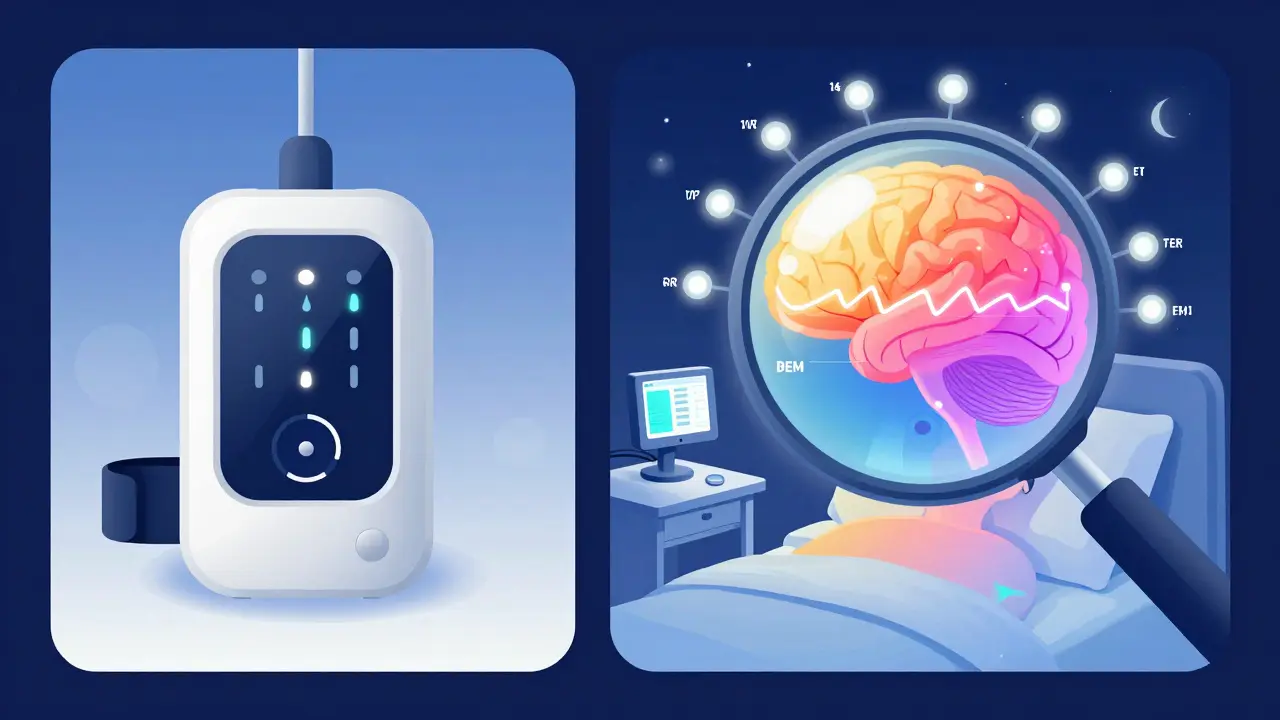
Home devices usually only track three things: airflow, oxygen, and breathing effort. They can’t tell if you’re in REM or deep sleep. They can’t detect leg movements, seizures, or narcolepsy. And they fail about 15-20% of the time because people don’t wear the sensors right, or the device falls off.
In-lab polysomnography fails less than 5% of the time. Technicians fix problems on the spot. You’re monitored. You’re supported. The data is complete.
Insurance often requires an in-lab study if you have other symptoms-like daytime sleepiness without snoring, or sudden muscle weakness. If you’re young, thin, or don’t snore, but still feel exhausted, a home test might miss the real issue. Polysomnography catches those cases.
Who Needs a Sleep Study?
You don’t need to be loud and obese to have a sleep disorder. Here are the top reasons doctors order polysomnography:
- You snore loudly and your partner says you stop breathing.
- You’re always tired, even after a full night’s sleep.
- You fall asleep during the day-while driving, talking, or eating.
- You have morning headaches, dry mouth, or a sore throat when you wake up.
- You’ve been told you kick, scream, or walk in your sleep.
- You have unexplained insomnia that doesn’t respond to sleep hygiene changes.
- You have heart disease, high blood pressure, or type 2 diabetes-conditions strongly linked to untreated sleep apnea.
It’s not just about snoring. It’s about how your body functions when you’re unconscious. Poor sleep affects your brain, your heart, your metabolism, even your mood. Polysomnography gives you the real picture.
What to Do Before and After the Test
Preparation matters. Here’s what works:
- Don’t drink caffeine after noon the day before.
- Avoid alcohol-even one drink can suppress REM sleep and skew results.
- Stick to your normal sleep schedule for at least three nights before the test.
- Don’t nap the day of the study.
- Wash your hair the night before. Don’t use conditioner or styling products-they interfere with electrodes.
- Bring your own pillow if it helps you sleep.
After the test, you’ll get a report in 1-2 weeks. It won’t just say “you have sleep apnea.” It’ll break down your AHI, oxygen levels, sleep stages, and any abnormal movements. Your doctor will explain what it means for you personally.
If treatment is needed-like CPAP, oral devices, or lifestyle changes-you’ll start right away. For complex cases like narcolepsy or parasomnias, you might need more tests. But polysomnography is the first and most important step.
Why This Test Still Matters in 2026
There are apps, wearables, and smart mattresses that claim to track sleep. But none of them can replace polysomnography.
Modern labs now use wireless sensors-fewer wires, more comfort. Some use AI to flag abnormal patterns faster. But the core hasn’t changed: you need to watch the whole body, not just one part.
The American Academy of Sleep Medicine says over 1.5 million polysomnography studies are done each year in the U.S. alone-and that number keeps rising. Why? Because people are waking up to how much sleep affects everything.
It’s not about being lazy. It’s about your body screaming for help. And polysomnography is the only tool that listens closely enough to hear it.
Is a sleep study painful?
No, it’s not painful. Sensors are glued or taped to your skin-they don’t pierce or shock you. Some people feel awkward with all the wires, but most adjust quickly. The technologist checks in throughout the night to make sure you’re comfortable.
Can I sleep with all those sensors on?
Yes. Most people get enough sleep for accurate results-even if it takes an hour or two to fall asleep. The lab is quiet, dark, and temperature-controlled. Many patients say they sleep better than they do at home because they’re not stressed about the next day.
How long does it take to get results?
It usually takes 1 to 2 weeks. The data is complex and reviewed by a board-certified sleep specialist. Don’t expect immediate results. The report includes detailed numbers like your AHI, sleep stages, and oxygen levels, which your doctor will explain in a follow-up appointment.
Does insurance cover polysomnography?
Yes, if it’s medically necessary. Medicare covers 80% of the cost for diagnosed sleep disorders. Most private insurers require a referral from your doctor and documentation of symptoms like snoring, daytime fatigue, or witnessed apneas. Always check with your provider before the test.
What if the test shows I don’t have sleep apnea?
That’s still valuable. Many people assume their fatigue is from sleep apnea, but it could be narcolepsy, restless legs, circadian rhythm disorder, or even a neurological issue. Polysomnography rules out or confirms multiple conditions at once. Your doctor will use the full report to guide the next steps.
about author

clarissa sulio
Finally someone explains why home sleep tests are garbage. I had one last year and it said I was fine. Turned out I was having 40+ apneas an hour. The lab caught it. No way a dumb clip-on device picks up brain activity or leg jerks. This is the only real way to know what’s happening while you’re unconscious.
Ansley Mayson
Polysomnography is overkill for most people. If you snore and are overweight just get a CPAP. No need for 22 electrodes and a hotel room. Insurance should stop paying for this luxury diagnostic.
Bob Hynes
Bro i went through this last year and it was like being a robot at a sci-fi camp 😅
They hooked me up with wires like i was a cyborg from 1987
But honestly? I slept better than i have in years. No stress, no kids, no noise. Just me and the machines. And yeah the techs were chill as hell. One even brought me a blanket cause i was cold. Human touch matters.
Marc Durocher
They say it’s not painful but let’s be real - sleeping with a clip on your nose and electrodes on your forehead feels like being a lab rat who forgot to sign the consent form.
Still… worth it. I thought i was just tired. Turns out i was having mini heart attacks every 90 seconds. CPAP saved my life. Also - no caffeine after noon. Do not ignore this. I learned the hard way.
larry keenan
The clinical utility of polysomnography lies in its multimodal physiological monitoring capability, which enables the differential diagnosis of sleep-wake disorders with high specificity.
Home sleep apnea tests (HSATs) demonstrate limited sensitivity for non-apneic sleep pathologies such as narcolepsy, parasomnias, and periodic limb movement disorder.
Therefore, in patients presenting with atypical symptoms or comorbid neurological conditions, in-lab PSG remains the diagnostic gold standard.
Nick Flake
Imagine your body is screaming into a void every night… and no one’s listening.
Then you get hooked up to 22 sensors and suddenly - your soul gets heard.
It’s not a test. It’s a revelation.
And if you’re lucky? You wake up knowing why you’ve been exhausted for 10 years.
Also - yes, bring your pillow. Your subconscious will thank you. 🌙🫂
Akhona Myeki
As a South African sleep researcher I must emphasize that polysomnography is the only scientifically valid method for diagnosing sleep disorders. Western medicine has perfected this protocol. In developing nations, we lack the infrastructure to replicate this level of precision. This is not a luxury - it is medical necessity. Do not be misled by consumer wearables. They are marketing gimmicks with no diagnostic value.
Chinmoy Kumar
so i did the sleep study last month and honestly thought i was gonna be awake all night cause of all the wires but like… i fell asleep in like 20 mins 😅
the tech was super nice and even adjusted my mask when i was snoring too loud
turns out i had mild apnea and a bunch of leg jerks
cpap is weird at first but now i feel like a new person
also dont drink alcohol before - i did and my results were all messed up
Brett MacDonald
the real question is why do we let machines interpret our dreams?
we used to just accept that some nights are bad
now we need 22 sensors and a PhD to tell us we’re not sleeping right
is this progress or just another way for capitalism to monetize exhaustion?
Sandeep Kumar
Anyone who thinks home tests are good is delusional. Polysomnography is the only thing that matters. You think your Fitbit knows your REM cycles? Please. Only a lab with certified technicians can interpret the data properly. This isn’t a tech startup pitch - it’s medicine. And medicine requires precision not convenience.
Gary Mitts
Woke up after 6 hours of being wired up. Felt like a robot. Got my results. Had apnea. Got a CPAP. Now I don’t hate mornings. Done.
Bridget Molokomme
Okay but can we talk about how weird it is that the same people who hate hospitals love sleeping in one for a night?
It’s like: I hate doctors but I’ll pay $3000 to sleep in a room with a camera watching me snore.
Also - I brought my own pillow. It was the only thing that felt normal.