
Osteonecrosis of the Jaw from Medications: Dental Warning Signs and Risks
Imagine waking up one morning and feeling a strange numbness in your jaw, followed by a tooth that seems to loosen out of nowhere. For most people, this would signal a bad cavity or gum infection. But for the millions taking bone-strengthening medications, it could be something far more serious. Medication-Related Osteonecrosis of the Jaw, often shortened to MRONJ, is a rare but severe complication where the jawbone dies because its blood supply gets cut off. It sounds alarming, and it is, but knowing exactly what to watch for puts you back in control of your health.
The good news is that while this condition exists, it is exceptionally uncommon. Most people taking these life-saving drugs will never experience it. However, ignoring the early signals can turn a manageable issue into a nightmare of surgery and recovery. This isn't about scaring you away from necessary medicine; it's about arming you with the exact checklist your dentist needs to review before starting treatment.
Understanding the Invisible Threat
To spot the warning signs, you first need to understand what is happening beneath the gums. Your jawbone is alive. It constantly remodels itself-breaking down old bone and building new tissue to stay strong. When you take certain potent medications, specifically antiresorptive agents, they essentially hit the pause button on this remodeling process.
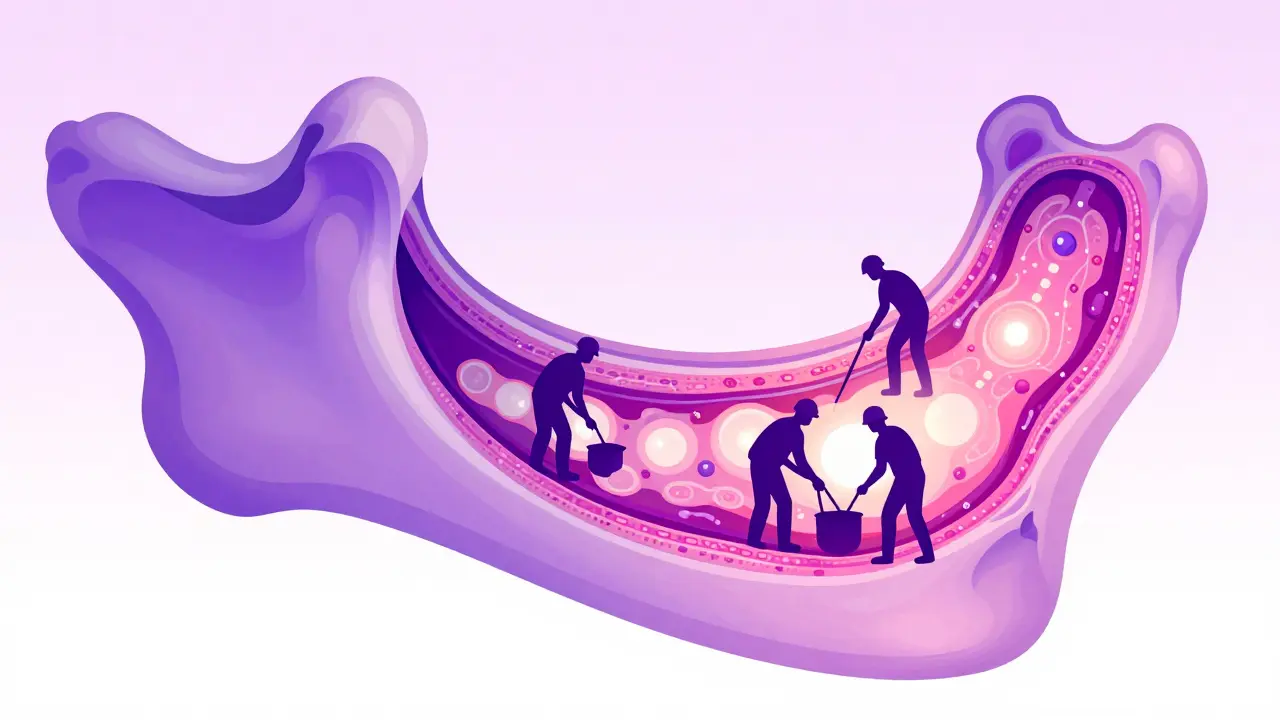
Medication-Related Osteonecrosis of the Jaw (MRONJ) is a condition characterized by exposed bone in the jaw that does not heal after eight weeks. The bones become vulnerable to trauma because the natural repair mechanisms are suppressed. Think of your jawbone like a construction site where the workers have suddenly gone on strike. You still get cracks and damage from daily use, but there's no crew there to fix them.This definition comes directly from the standards set by the American Dental Association. They require visible bone exposure for more than two months to officially diagnose the condition, though early warnings appear long before that stage. Understanding that your bone's healing ability is temporarily dampened changes how you approach dental care.
Which Medications Carry the Risk?
Not all pills pose the same danger. The risk depends heavily on what you are treating and how the medicine enters your body. If you are managing common osteoporosis with a weekly pill, your risk is microscopic. If you are receiving intravenous infusions for bone metastasis from cancer, the stakes are significantly higher.
Bisphosphonates are the class of drugs most commonly linked to jaw complications. They include brand names like Fosamax, Actonel, Boniva, and Reclast.There is also another group of drugs called RANK ligand inhibitors, such as denosumab, sold under brands like Prolia or Xgeva. While they work differently than bisphosphonates, they carry a similar profile regarding jawbone safety. The crucial distinction lies in the dosage and delivery method. Monthly intravenous drips used in oncology settings create a much heavier load on the jawbone compared to oral tablets taken at home.
| Medication Type | Common Brand Names | Approximate ONJ Incidence | Risk Level |
|---|---|---|---|
| Oral Bisphosphonates | Fosamax, Actonel | 0.001% to 0.01% | Low |
| Intravenous Bisphosphonates | Zometa, Aclasta | 1% to 10% | High |
| Denosumab (Subcutaneous) | Prolia, Xgeva | Variable (Compared to IV) | Medium to High |
Note that these percentages come from major clinical studies cited by the American College of Rheumatology. The gap between oral and IV risk is massive-over 100 times greater. This helps explain why routine patients taking weekly alendronate rarely hear their doctors panic, while oncology nurses emphasize dental checks more aggressively.
Silent Warning Signs You Cannot Ignore
You might assume that if the bone was dying, you would see it immediately. That isn't always true. The earliest stages can feel like a vague annoyance. Patients often dismiss these initial symptoms as stress, aging, or minor inflammation. Catching them early, however, prevents the exposure of bone that defines the official diagnosis.
Pay close attention to these specific physical indicators:
- Unexplained Pain or Swelling: About 87% of diagnosed cases report discomfort in the mouth. This isn't just a sharp toothache; it's often a deep ache in the jaw itself that doesn't respond to standard pain relievers.
- Poor Healing After Procedures: If you had a tooth pulled recently and the socket refuses to close after weeks, this is a major red flag.
- Loose Teeth: Sudden mobility in teeth that were stable yesterday occurs in over 60% of cases. The bone grip is weakening faster than normal.
- Gum Infections with Drainage: Pus or discharge coming from the gum tissue around a tooth without obvious decay indicates underlying necrosis.
- Numbness: This is distinct from anesthesia during a visit. Persistent heaviness or loss of sensation (often called "lip numbness") suggests nerve involvement due to pressure from the affected bone.
These symptoms are critical because they precede the "exposed bone" stage. By the time the bone actually pokes through the gum and stays uncovered for two months, the process is already advanced. If you notice persistent issues like loose teeth or failing healing sockets, tell your dentist immediately about your medication history.
The Critical Role of Dental Timing
Your dentist isn't just cleaning your teeth; they are your partner in managing this risk. Research shows that nearly all cases in high-risk cancer patients occurred following a dental extraction or denture trauma. The timing of invasive procedures relative to your medication intake is the biggest factor you can control.
If you are starting a new round of IV bisphosphonates or denosumab, the golden rule is the pre-treatment clearance. You need a comprehensive exam 4 to 6 weeks before you get your first infusion. This gives your dentist enough time to resolve any lurking infections or extractions so your mouth is healthy before the drug kicks in. Once the medication starts, you want to avoid extractions entirely if possible. Routine cleanings are safe and encouraged, but pulling teeth becomes a major event requiring coordination with your prescribing physician.
For those already on therapy, things get trickier. Some specialists recommend a "drug holiday," pausing the medication for a few months before surgery, but this isn't always feasible, especially for cancer patients who cannot stop treatment. In these scenarios, rigorous antimicrobial rinses and antibiotics around the surgical window are often used to lower the risk. The key takeaway is simple: Never walk into an appointment with a root canal or extraction plan without your doctor and dentist talking to each other.

Prevention Strategies for Long-Term Users
If you have been on oral osteoporosis meds for years, you aren't helpless. There are concrete actions you can take to lower your personal risk profile. One study from the University of Edinburgh showed that risk climbs after 3 to 4 years of continuous use. This makes maintenance even more important as time goes on.
- Maintain Impeccable Hygiene: Keep the inflammation low. Chronic gum disease (periodontitis) creates bacteria that thrive when bone turnover stops.
- Avoid Ill-Fitting Dentures: Pressure sores from rough appliances act as a portal for infection leading straight to the bone.
- Stop Smoking: Smoking alone reduces blood flow to the jaw. Combined with medications that do the same, the effect is additive and dangerous.
- Use Chlorhexidine: Medical-grade mouthwash (0.12% concentration) twice daily has been shown to reduce risk by nearly 40% in high-risk patients.
Dr. Sarah L. Booth, an expert in oral medicine, notes that for osteoporosis patients on oral meds, the absolute risk remains extremely low. It is easy to let anxiety take over, but rational management works better than fear. Stick to regular checkups every six months and ensure your hygienist knows exactly what drugs you take.
What Happens If Diagnosis Occurs?
Finding out you have MRONJ is stressful, but it doesn't mean you have lost everything. Early-stage cases (Stages 1 and 2) are surprisingly responsive to conservative treatment. This usually involves gentle debridement to smooth sharp bone edges and aggressive antibiotic therapy. Recent developments in 2023 offer some hope, with research suggesting that adding anabolic agents like teriparatide (Forteo) can accelerate healing by encouraging bone formation again in select cases.
However, late-stage cases with large areas of dead bone may require surgical resection, removing the infected section of the jaw. This is why emphasizing the warning signs above matters so much. Early intervention keeps treatment non-invasive. Always seek a specialist in Oral and Maxillofacial Surgery if your primary dentist flags concerns, as they have the training to differentiate MRONJ from standard dental abscesses or other jaw disorders.
about author

Monique Ball
You really need to pay attention to your jaw health immediately!!! 🦷💊 It sounds scary at first glance but knowledge is actually power for everyone! I personally know someone who had major issues with IV drugs recently!!! 😱😭 They did not check their teeth before starting treatment sadly! It was a huge medical mistake for sure in retrospect! Please get a full dental exam first always before meds! Your dentist needs to see you clearly during this phase! Communication between medical doctors is absolutely vital here! 🤝🏥 Do not ignore the numbness sign ever under any circumstances! Swelling can happen without pain too surprisingly! Keep cleaning your gums daily please for safety! Chlorhexidine rinses help a lot actually according to studies! 🧴✨ Stop smoking completely if you want to stay safe from infection! Bad dentures cause pressure sores very quickly indeed! Regular checkups every six months work best consistently! Prevention is much better than cure usually! Stay vigilant friends! ❤️
walker texaxsranger
Big pharma pushes these bone agents while ignoring the long term biocompatibility data 🚫💊 The systemic suppression of osteoclasts creates a microenvironment ripe for opportunistic pathogens nobody talks about properly! Medical negligence leads to iatrogenic events that insurers deny coverage for frequently! You are seeing the collateral damage of aggressive prophylactic protocols failing to account for individual susceptibility markers!
Eva Maes
The correlation between bisphosphonates and necrosis is statistically negligible for oral formulations unlike your wild assertions! Your conspiracy theories about corporate malfeasance lack empirical backing completely! Real science relies on peer-reviewed longitudinal studies rather than internet speculation!
Poppy Jackson
Hearing about loose teeth terrifies me so much because my mom has osteoporosis right now! It feels like a nightmare waiting to happen anytime soon! I hope you are all safe and sound today friends!
Philip Wynkoop
Stay calm :) Statistics show it is rare :)
kendra 0712
We can totally overcome this risk by being proactive!! Just talk to your oncologist!! Knowledge changes everything!! 💪😊
Richard Kubíček
There is a philosophical balance between living with illness and avoiding its complications entirely.
Sabrina Herciu
The incidence rates vary significantly depending on the route of administration!! Intravenous carries higher risks due to concentration levels!! Oral tablets have lower bioavailability generally!! Always inform providers about drug history!! 📋💉
Sarah Klingenberg
Thanks for breaking that down clearly 😌 Really helpful info for us all!
Sophie Hallam
I appreciate the detailed breakdown of risk factors presented here.
Shawn Sauve
The bone healing timeline is absolutely critical here 😬