Chronic Insomnia Treatment: Combining Sleep Hygiene and CBT-I
The Truth About Sleep Hygiene
We've all heard the standard advice: avoid caffeine, keep the room dark, and don't look at your phone. This is Sleep Hygiene, which involves environmental and behavioral modifications designed to optimize sleep conditions. For a healthy person, these tips are great. But for someone with chronic insomnia, sleep hygiene alone is rarely enough. In fact, experts like Dr. Jack D. Edinger warn that using it as a standalone treatment is minimally effective because it doesn't address the psychological "glue" that keeps the insomnia stuck. That said, the foundation still matters. Your environment acts as a signal to your brain. To get the most out of any treatment, you should aim for a bedroom temperature around 65°F (18.3°C) and use blackout curtains or eye masks to kill any light pollution. If you live in a noisy area, a white noise machine can prevent sudden sounds from jarring you awake. When it comes to what you consume, timing is everything. To keep your sleep drive strong, you should cut off caffeine at least 6 hours before bed. Alcohol is a common trap; while a glass of wine might help you drift off, it destroys the quality of your deep sleep. Limit yourself to one or two drinks and finish them at least 4 hours before you plan to sleep. Also, try to stop drinking water after 7 PM to avoid those frustrating midnight trips to the bathroom.How CBT-I Actually Works
Unlike a sleeping pill that forces sedation, CBT-I is a multi-component approach usually delivered over 6 to 8 weeks. It works by addressing three factors: what made you prone to insomnia, what triggered it, and what is currently keeping it alive. The goal is to break the association between your bed and the feeling of frustration. One of the most powerful tools in this kit is Stimulus Control Therapy. Most people with insomnia spend hours in bed tossing and turning, which teaches the brain that the bed is a place for worrying, not sleeping. The rule is simple: only lie down when you are actually sleepy. If you're not asleep within 15 to 20 minutes, get out of bed. Go to another room, do something boring in dim light, and only return when the sleepiness returns. This forces your brain to associate the bed exclusively with sleep. Then there is Sleep Restriction Therapy. This sounds scary, but it's actually about efficiency. If you spend 9 hours in bed but only sleep 5, your sleep is fragmented. CBT-I limits your time in bed to match your actual sleep time. For example, if you only average 6 hours of sleep, you're only allowed in bed for 6 hours. This creates a mild "sleep debt" that increases your homeostatic sleep drive, making you fall asleep faster and sleep more deeply. As your efficiency improves, you slowly add 15-minute increments back to your window.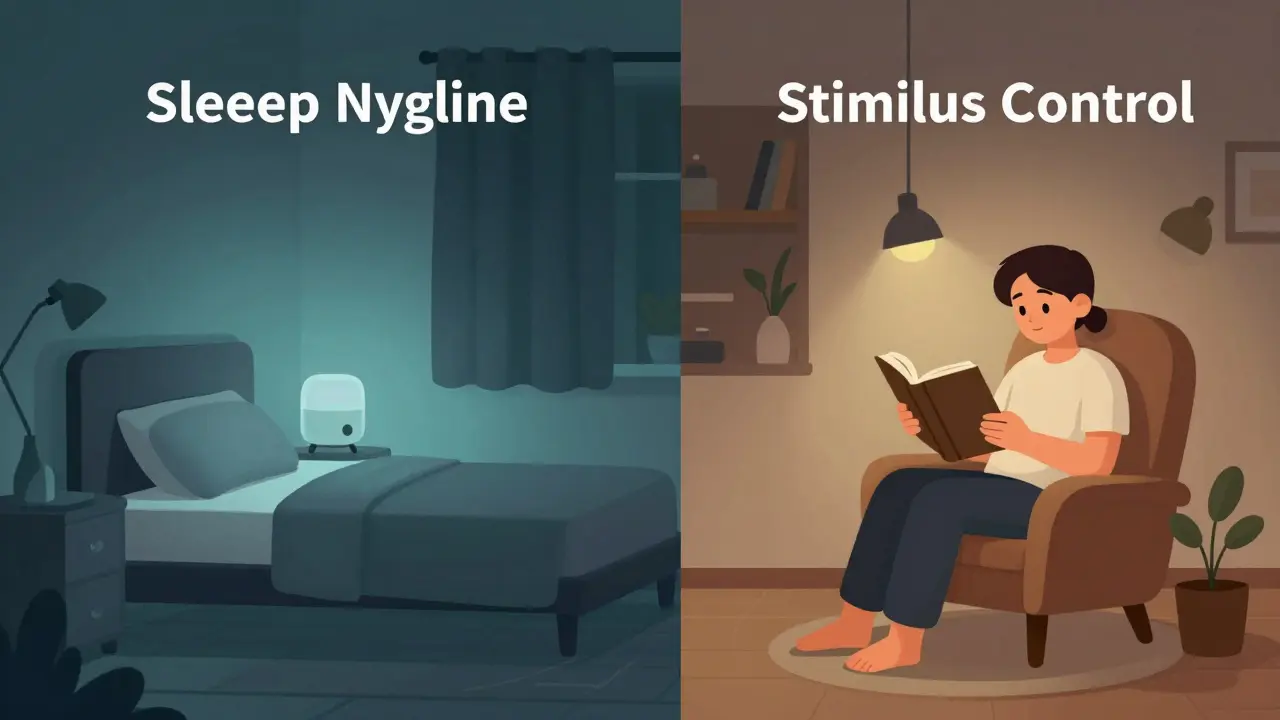
Changing the Mental Narrative
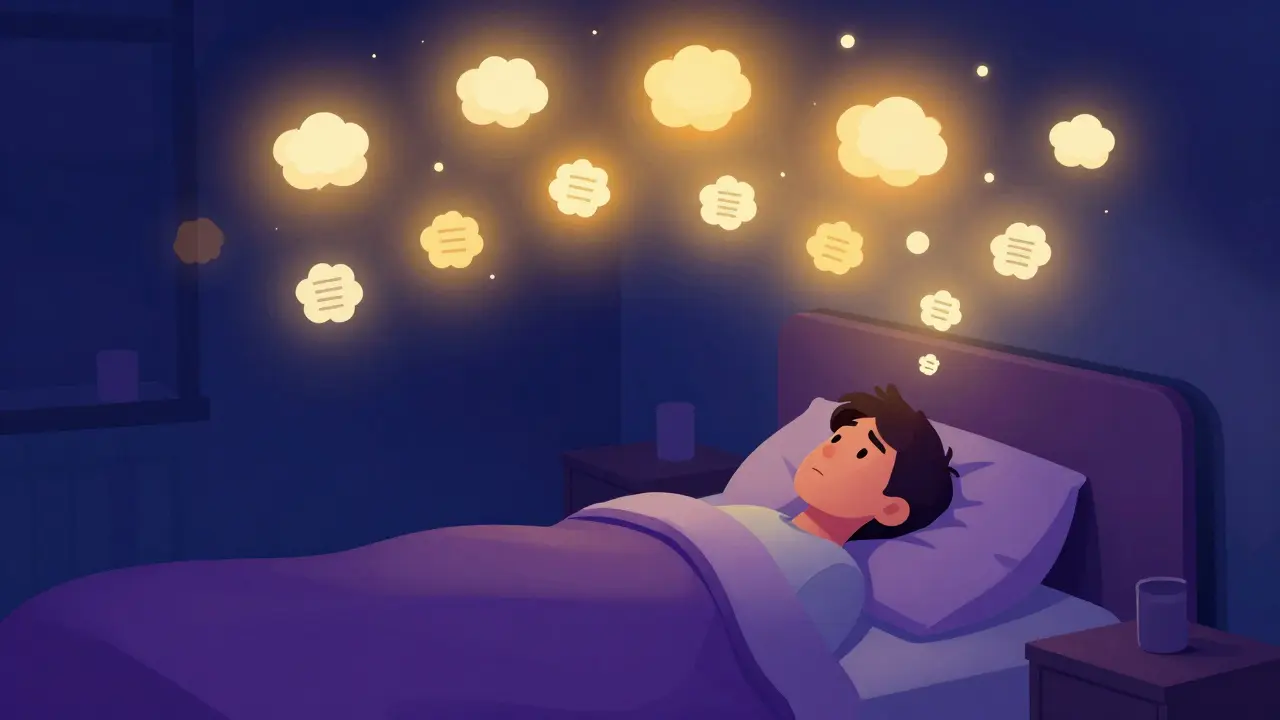
Insomnia isn't just a physical struggle; it's a mental one. Cognitive Restructuring is the part of therapy that deals with the "sleep anxiety" that kicks in at 2 AM. You might tell yourself, "If I don't get 8 hours tonight, I'll fail my presentation tomorrow." This thought creates a stress response, releasing cortisol and adrenaline, which practically guarantees you'll stay awake. By identifying these maladaptive beliefs, you can replace them with more realistic ones. Instead of obsessing over a perfect number of hours, you learn to accept that while a poor night is unpleasant, you've survived them before and can still function. This shift reduces the performance anxiety surrounding sleep, which is often the very thing keeping the insomnia cycle spinning. For many, this mental shift is the missing piece that makes the behavioral changes actually stick.CBT-I vs. Sleeping Pills: The Long Game
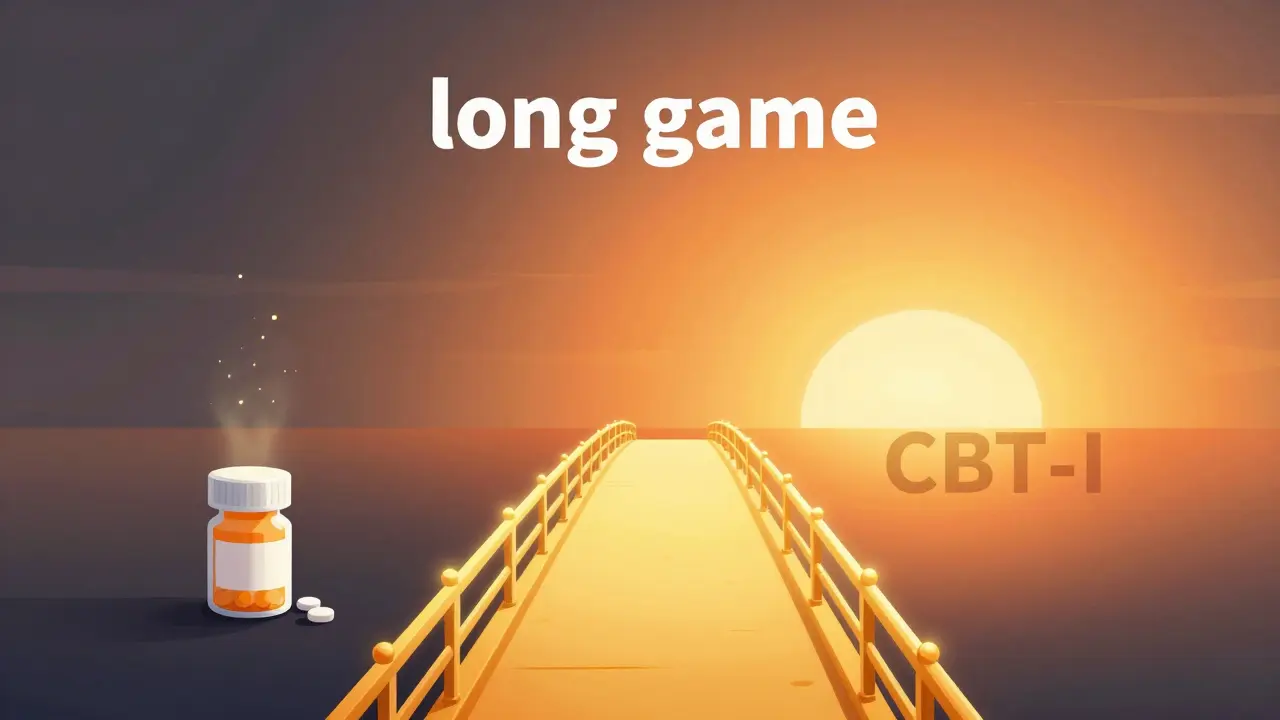
When you're exhausted, a prescription seems like the fastest route to relief. Medications like Zolpidem or Eszopiclone can be useful for short-term crises, but they come with a steep price. After 4 to 6 weeks, the body often builds a tolerance, meaning you need more of the drug to get the same effect, or you find yourself unable to sleep without it entirely. In contrast, CBT-I provides a permanent skill set. Data shows that CBT-I is significantly more effective for long-term management. For instance, research indicates that while medications provide an immediate but temporary fix, CBT-I results in a greater reduction in the time it takes to fall asleep and the amount of time spent awake during the night. Most importantly, these benefits persist long after the treatment ends, whereas medication benefits often vanish the moment you stop taking the pills.| Feature | CBT-I (Behavioral) | Pharmacotherapy (Medication) |
|---|---|---|
| Onset of Action | Gradual (2-4 weeks for initial improvement) | Rapid (Immediate) |
| Long-term Efficacy | High (Benefits persist after 12 months) | Low (Efficacy drops after 4-6 weeks) |
| Side Effects | Initial daytime fatigue (during sleep restriction) | Dependence, grogginess, memory issues |
| Primary Goal | Changing the sleep-wake relationship | Suppressing wakefulness/inducing sedation |
| Success Rate | 70-80% significant improvement | High short-term / Low long-term |
Overcoming Common Hurdles
CBT-I isn't a magic switch; it's more like training for a marathon. The first two weeks of sleep restriction can be brutal. You'll likely feel more tired during the day, and the urge to nap will be overwhelming. However, napping is the enemy of sleep restriction because it "steals" the sleep drive you need for the coming night. If you nap at 2 PM, you've just signaled to your brain that it doesn't need to be fully exhausted by 11 PM. Another challenge is the weekend trap. Many people strictly follow their wake-up time Monday through Friday, then sleep in until noon on Saturday. This creates "social jetlag," essentially shifting your internal clock and making Sunday night a nightmare. To make CBT-I work, your wake-up time must be the same every single day, regardless of how much sleep you actually got. If you can't find a certified therapist-which is common, as specialists are often scarce in rural areas-digital options have stepped up. Apps like Sleepio and Somryst have shown significant remission rates, offering the same structured protocols through an interface. These tools make the process more accessible, though they require more self-discipline than working with a human coach.Can I just do sleep hygiene and ignore the CBT-I part?
For chronic insomnia, the answer is generally no. While good sleep hygiene (like a cool room and no caffeine) supports sleep, it doesn't fix the underlying behavioral and cognitive triggers of chronic insomnia. Most clinical guidelines state that sleep hygiene should be a complement to CBT-I, not a replacement for it.
How long does it take for CBT-I to start working?
Most people notice initial symptom improvement within 2 to 4 weeks, but the full benefits-such as a complete reset of sleep efficiency-usually take 8 to 12 weeks of consistent application. Be prepared for a temporary dip in daytime energy during the initial sleep restriction phase.
Is sleep restriction safe for everyone?
While highly effective, sleep restriction isn't for everyone. People with certain medical conditions, such as bipolar disorder (which can trigger mania with sleep deprivation) or severe untreated sleep apnea, should only perform this under strict medical supervision. Always consult a doctor before limiting your sleep window.
What is the '15-20 minute rule' in stimulus control?
The rule states that if you are awake in bed for 15-20 minutes and feel frustrated or anxious, you must leave the bedroom. The goal is to stop the brain from associating the bed with wakefulness and anxiety. You return only when you feel truly sleepy.
Will I eventually need to go back to sleeping pills if I use CBT-I?
Actually, the opposite is true. Because CBT-I treats the root cause rather than the symptom, the effects are durable. Long-term follow-ups show that people who complete CBT-I are much more likely to remain insomnia-free than those who rely on pharmacotherapy, which often leads to dependence.
Next Steps for Better Sleep
If you're ready to stop the cycle, start by tracking your sleep. For the next 14 days, keep a sleep diary. Note exactly when you got into bed, roughly when you fell asleep, how many times you woke up, and when you finally got out of bed. This data is essential for calculating your sleep efficiency and setting your initial sleep restriction window. If you have a high score on the Insomnia Severity Index (ISI)-specifically between 22 and 28-you likely need an intensive intervention. Start by searching for a certified CBT-I provider or exploring an FDA-cleared digital therapeutic. Remember, the goal isn't to force sleep tonight, but to build a system where sleep happens naturally again. Consistency is your only path forward; stick to your wake-up time, keep the bedroom for sleep only, and be patient with the process.about author