
Grapefruit and Statins: Understanding Drug Interactions and Safety Risks
Statin & Grapefruit Safety Checker
Interaction Checker
Select your medication and current diet to see potential risks.
Your Result
Select your options above
Please select your medication and fruit habits to see analysis.
Symptom Watch List
Signs of serious reactionTap symptoms below to see if you need immediate help.
Beyond soreness
Tea-colored
General fatigue
Unexplained
Imagine taking your cholesterol medication every morning without thinking twice-until you discover your breakfast juice could quietly raise drug levels in your body by up to 16-fold. That's exactly what happens when grapefruit meets certain statins.
In 2023 alone, approximately 39 million Americans were prescribed statin medications. With such widespread use, understanding potential hazards becomes critical for anyone managing heart disease risk.
The Basics: Why Grapefruit Changes Everything
When we talk about grapefruit-statin interactions, we're discussing a specific pharmacokinetic relationship where naturally occurring compounds in grapefruit interfere with how your body processes cholesterol-lowering medications. This isn't just theoretical chemistry-it translates directly to clinical consequences.
The real culprit lives inside that orange fruit: chemicals called furanocoumarins. These compounds bind permanently to an enzyme in your intestines responsible for breaking down many medications before they enter your bloodstream.
| Statin Name (Brand) | Grapefruit Risk Level | CYP3A4 Metabolism |
|---|---|---|
| Simvastatin (Zocor) | High - Avoid Completely | Major |
| Lovastatin (Mevacor) | High - Avoid Completely | Major |
| Atorvastatin (Lipitor) | Moderate - Limit Consumption | Moderate |
| Pravastatin (Pravachol) | Low - Generally Safe | Minimal |
| Rosuvastatin (Crestor) | Low - Generally Safe | Minimal |
| Fluvastatin (Lescol) | Low - Generally Safe | Minimal |
A landmark study published in Clinical Pharmacology & Therapeutics showed something shocking: consuming double-strength grapefruit juice three times daily could increase simvastatin peak concentrations by 9-fold on average, with some individuals experiencing up to 31-fold increases. That's equivalent to accidentally taking nearly three times your prescribed dose.
How Your Body Normally Handles Statins
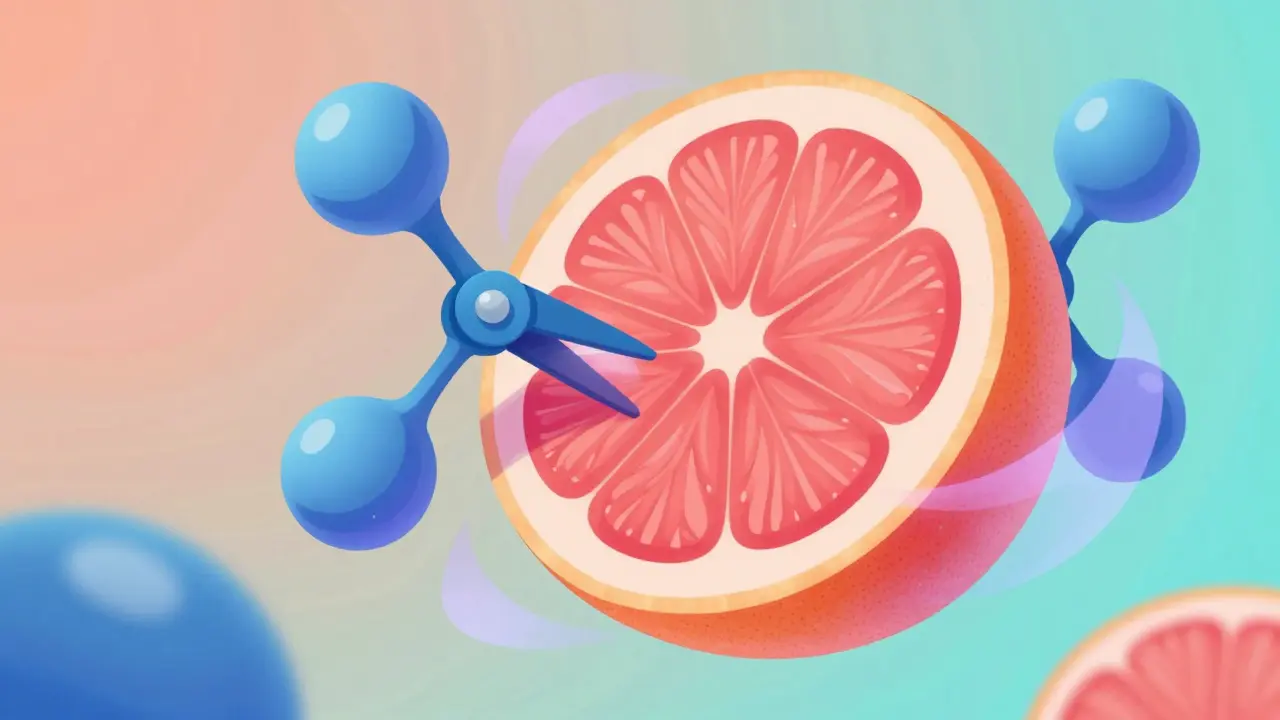
Before understanding the problem, you need to know normal function. When you swallow a tablet, your intestinal cells contain special enzymes called cytochrome P450 3A4 (commonly abbreviated as CYP3A4). Think of these as molecular scissors that trim drugs into smaller pieces so your liver can process them safely.
About 30% to 50% of all prescription medications depend on CYP3A4 for proper metabolism. Statins aren't unique-they're part of a large family of drugs using this same pathway. However, not all statins rely equally on this enzyme system.
Here's what happens normally:
- You take your statin pill
- Your intestine absorbs some of the medication into your bloodstream
- Remaining medication gets processed by CYP3A4 enzymes
- Your liver filters out excess amounts
- Treatment reaches steady, therapeutic levels
Grapefruit throws a wrench in step 3. The furanocoumarins disable the CYP3A4 enzymes irreversibly-your body literally cannot fix them until new enzyme molecules grow back. That takes approximately 72 hours. So one glass of juice can keep affecting drug levels for three full days.
Which Medications Need Caution?
Not everyone faces the same risk. Your particular statin determines whether you need worry.
Simvastatin shows the highest vulnerability. According to FDA requirements starting in 2014, all simvastatin labels must warn patients against grapefruit coadministration. Research indicates even moderate consumption creates measurable changes in blood concentrations.
Lovastatin carries similar warnings. If your doctor prescribed either of these two medications, complete avoidance becomes necessary-not "occasional" consumption, not "small amounts." Any intake risks elevating toxicity.
Atorvastatin sits in the middle zone. While less sensitive than simvastatin, significant grapefruit consumption still affects levels enough to warrant caution. Most cardiologists recommend limiting to no more than one small fruit or eight ounces weekly if you absolutely must consume it.
Happily, several popular alternatives avoid this problem entirely. Pravastatin and rosuvastatin bypass the CYP3A4 pathway almost completely. You can enjoy your Sunday brunch mimosa without concern. Fluvastatin and pitavastatin also demonstrate minimal interaction potential.
Recognizing Dangerous Side Effects
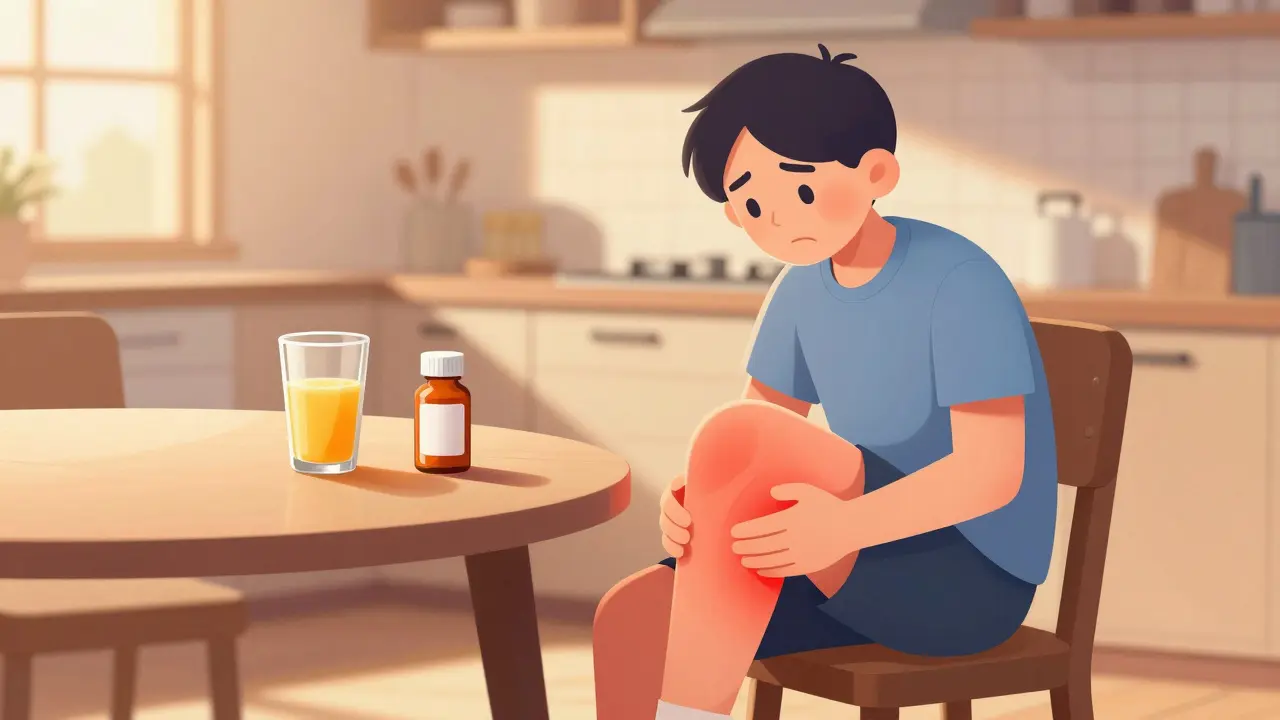
What actually happens when too much medication circulates? The most common symptom involves muscles.
Approximately 5% to 10% of people affected by this interaction report noticeable muscle pain or weakness. Your legs might feel unusually heavy. You experience unusual soreness after light exercise. These warning signs deserve immediate attention because they signal growing drug concentration.
Rhabdomyolysis represents the extreme end of complications. Here muscle tissue breaks down rapidly, releasing myoglobin proteins into your bloodstream. These proteins travel to kidneys, potentially causing acute kidney failure.
Symptoms to watch for:
- Severe muscle pain beyond typical exercise soreness
- Dark tea-colored urine (myoglobinuria)
- Unexplained fatigue and weakness
- Fever in rare cases
- Pain radiating from back to shoulders
This complication affects fewer than one in 10,000 statin users annually overall, yet risk jumps significantly when combined with regular grapefruit consumption. A documented case involved a 40-year-old woman who developed rhabdomyolysis after drinking grapefruit juice daily for just ten days while taking simvastatin.
Other Citrus Fruits: Safe or Not?
You shouldn't assume all citrus fruits carry identical risks. This matters because many people substitute grapefruit with other options assuming equal danger.
Safe choices include:
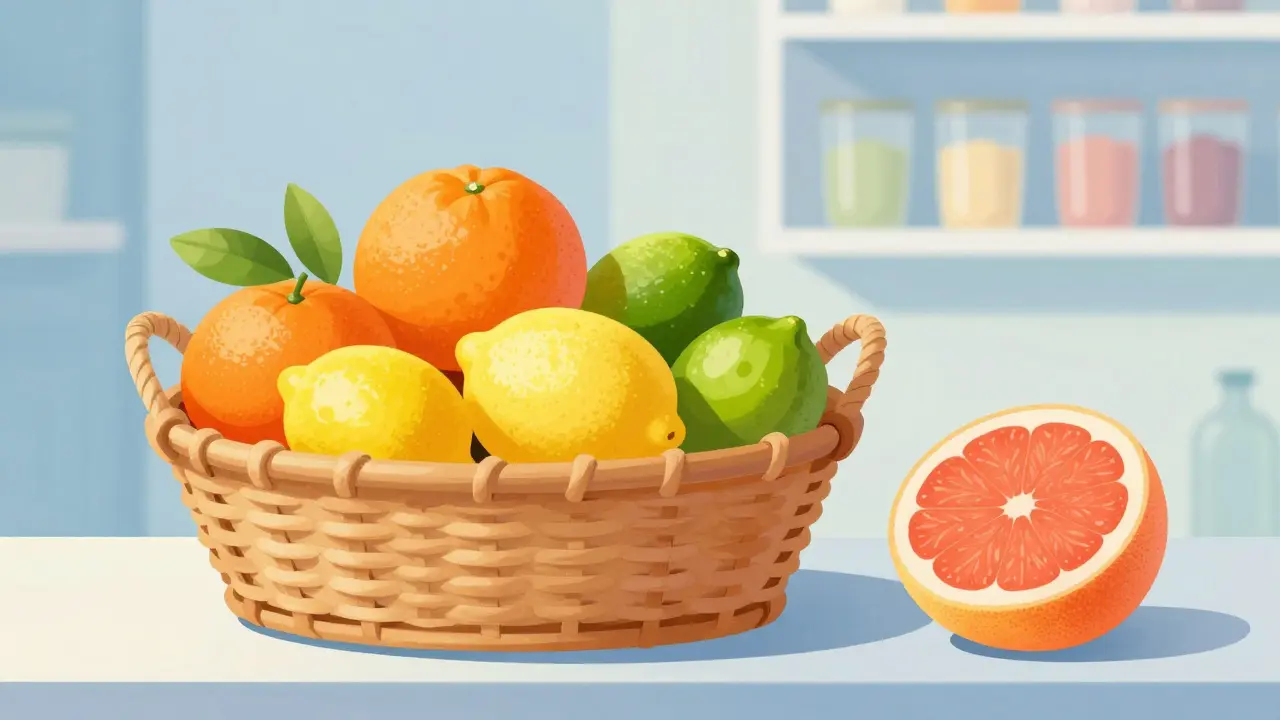
- Regular oranges (navel, Valencia)
- Lemons and limes
- Tangerines and mandarins
- Most clementine varieties
However, Seville oranges contain similar furanocoumarin levels and create comparable problems. Since commercial marmalade uses Seville oranges primarily, check ingredient lists carefully.
Pomelos present another hazard. Despite looking different from grapefruit, pomelos share the problematic chemistry. They interact similarly and deserve the same level of caution.
Can Timing Fix the Problem?
A common misconception suggests separating medication from grapefruit by several hours prevents interaction. Unfortunately, timing doesn't solve this issue.
The reason lies in enzyme recovery rates. Since furanocoumarins irreversibly damage CYP3A4, simply waiting six hours won't help. New enzyme production requires approximately three days for complete restoration. Even occasional weekend consumption maintains partially suppressed activity through the entire week.
Consider your medication schedule. Many people take statins in the evening. Drinking morning grapefruit juice still suppresses the afternoon enzyme pool. There's no reliable separation window that guarantees safety.
What Should You Actually Do?
If you currently take simvastatin, lovastatin, or atorvastatin while regularly enjoying grapefruit, don't panic-but do take action.
First, never stop your medication abruptly. Stopping statins independently increases heart attack and stroke risk substantially. Instead, schedule a doctor visit within the next week. Bring your complete medication list including supplements and herbal products.
Discuss switching to pravastatin or rosuvastatin. Both offer excellent cholesterol control without grapefruit sensitivity. The transition typically happens smoothly under medical supervision.
Your pharmacist plays an important role too. Studies show pharmacist-led interventions reduced inappropriate grapefruit-statin combinations by 78% among Medicare beneficiaries. Ask your pharmacy team to review all your medications periodically.
Can I ever eat grapefruit again if I switch statins?
Yes, switching to low-risk statins like pravastatin or rosuvastatin means you can return to normal citrus consumption. Once your new medication stabilizes (typically 4-6 weeks), grapefruit becomes safe again. Verify this change with your healthcare provider first.
How quickly does the enzyme recover after stopping grapefruit?
Complete CYP3A4 enzyme recovery requires approximately 72 hours after your last grapefruit exposure. However, intermittent consumption throughout the week prevents full recovery, creating ongoing risk even with gaps between servings.
Are there other foods that interact with statins similarly?
Beyond grapefruit, pomelo and Seville oranges (marmalade) pose similar risks. Some research suggests star fruit may affect certain medications, though evidence remains limited. Always discuss any unusual dietary patterns with your prescribing doctor.
Why doesn't my doctor mention this during prescription?
Unfortunately, research shows only 42% of primary care physicians routinely screen for grapefruit consumption habits. Healthcare systems increasingly recognize this gap. Don't hesitate to ask specifically: "Do I need to avoid grapefruit with my cholesterol medication?"
What if I've already been consuming grapefruit regularly?
If you've been combining high-risk statins with regular grapefruit, contact your doctor promptly. Request blood tests to check for elevated creatine kinase levels indicating muscle stress. Your physician may adjust dosage or switch medications based on results.
about author

Will Baker
It is truly fascinating how we used to think apples were fine until now apparently everything is poison unless you check three different enzyme pathways.
People are just going to stop drinking their morning juice because a paper said so while ignoring the coffee that does more damage overall.
I guess next week broccoli will be banned due to thyroid interference.
We spend too much time worrying about what we eat instead of actually living our lives properly.
Dee McDonald
Just stop drinking grapefruit juice if you take simvastatin and call it a day.
Hudson Nascimento Santos
You raise an interesting point about modern fear culture surrounding basic nutrition items.
The concept of natural versus synthetic creates a false dichotomy in medical science discussions today.
We must consider that our ancestors did not live to eighty due to lack of cholesterol management technology.
Medicine saves lives but brings its own set of complex interactions with biological systems.
Furanocoumarins are indeed potent molecules that inhibit metabolic processes significantly.
This inhibition mechanism is permanent for several days following consumption of the fruit.
Science dictates caution rather than panic but we often swing to extremes without reason.
Understanding the half-life of enzymes matters more than general anxiety about diet choices.
If the pathway is blocked completely then toxicity becomes a genuine threat to muscle tissue integrity.
Rhabdomyolysis is a severe condition that requires hospital intervention typically.
Patients should not ignore warnings simply because they sound inconvenient or overly cautious.
However fear mongering helps nobody manage their actual health risks effectively either.
Balance is the key ingredient in both pharmacology and dietary habits daily.
We should respect data without letting it ruin our enjoyment of harmless fruits entirely.
True wisdom lies in knowing when to follow guidelines and when to question necessity.
Vicki Marinker
Such aggressive advice lacks nuance regarding individual metabolic variances found across populations.
One size rarely fits all when discussing pharmacokinetics in clinical settings.
Precise language matters when advising patients who might otherwise panic unnecessarily.
I prefer detailed evidence over blunt commands that disregard context completely.
HARSH GUSANI
Our doctors know best here in USA 🇺🇸 Do not listen to random internet posts 😡 Take your pills and stay healthy 🏥
sophia alex
Sweetie please try reading the actual study before you start shouting flags :(
Your ignorance is actually quite alarming for someone claiming expertise :)
Hope Azzaratta-Rubyhawk
We can overcome this challenge by switching medications to rosuvastatin under guidance.
Healthcare providers are fully equipped to handle these transitions smoothly for everyone involved.
Do not hesitate to book an appointment immediately to ensure safety protocols are followed correctly.
Actionable steps yield better outcomes than passive worry about dietary restrictions daily.
Mark Zhang
That is exactly right and taking that initiative shows real dedication to well-being.
Switching stats is usually pretty simple once you find the right specialist.
I had a friend switch from zocor to crestor without any hiccups at all.
Communication with the physician is the most important tool available right now.
Keep pushing forward and look out for warning signs if anything feels off physically.
Your heart health matters way more than a glass of juice occasionally anyway.
Stay strong and keep up the good research habits for yourself.