What are REMS Programs? A Guide to FDA Risk Evaluation and Mitigation Strategies
Imagine a medication so powerful it can save a life or cure a debilitating disease, but so dangerous that a single mistake in how it's used could be fatal. For most drugs, the FDA just requires a warning label. But for a small group of high-risk medications, a label isn't enough. This is where REMS Programs is a formal safety program established by the U.S. Food and Drug Administration (FDA) to manage medications with significant safety risks that require safeguards beyond standard labeling.
You might wonder why some drugs are harder to get than others. If you've ever had to register for a specific program just to get a prescription, or if your doctor had to take a special certification course, you've encountered a REMS. It's not about bureaucracy for the sake of it; it's about ensuring that the benefit of a life-saving drug doesn't come at the cost of a preventable tragedy.
How REMS Actually Works
The FDA doesn't put every drug into a REMS. In fact, about 95% of approved medications are managed with routine adverse event reporting and standard labels. A REMS is triggered when the FDA decides that a drug's risks are too high to be managed by a simple piece of paper inside the box. This authority was formalized through the 2007 Food and Drug Administration Amendments Act (FDAAA), giving the agency the power to require these strategies during the initial approval or later, if new safety data pops up.
The goal isn't to remove all risk-that's impossible for many critical therapies-but to make those risks manageable. The FDA looks at several factors before mandating a program: how serious the side effects are, how many people will use the drug, and whether the condition being treated is life-threatening. For example, Isotretinoin (used for severe acne) has a REMS because it causes severe birth defects, making pregnancy prevention a non-negotiable part of the treatment process.
The Core Elements of Risk Mitigation
Not all REMS are the same. Some are "light," while others are incredibly restrictive. They generally fall into a few categories of intervention:
- Medication Guides: Paper handouts given to patients with every prescription, written in plain language to explain the most serious risks.
- Communication Plans: Targeted alerts sent to doctors and pharmacists to make sure they know about specific dangers.
- Elements to Assure Safe Use (ETASU): This is the most intensive level. ETASU are specific requirements that must be met for a drug to be dispensed. These can include prescriber certification, patient registries, or limited distribution.
To see this in action, look at Zyprexa Relprevv. Because it carries a risk of post-injection delirium sedation syndrome, it can't just be given at a local clinic. It must be administered in certified healthcare facilities that can watch the patient for at least three hours. While this happens in less than 1% of cases, the potential for a coma makes the restriction necessary.
| Feature | Standard Labeling | REMS Program |
|---|---|---|
| Scope | Most approved drugs (~95%) | High-risk medications (~5%) |
| Primary Goal | Inform the user of risks | Actively mitigate specific risks |
| Requirements | Insert package leaflet | Certifications, registries, specific sites |
| Responsibility | FDA monitoring | Drug sponsor (Pharma company) implements |
| Access | Standard prescription flow | Verification steps before dispensing |

The Real-World Struggle: Access vs. Safety
There is a constant tug-of-war between keeping patients safe and making sure they can actually get their medicine. On one hand, experts like Dr. Robert Temple from the FDA argue that REMS allow critical therapies to reach the market that would otherwise be deemed too dangerous for approval. On the other hand, these programs can create a "paperwork wall."
A study in JAMA Internal Medicine found that REMS can delay the first prescription by an average of 5.4 days. For someone with a rare, aggressive disease, a week's delay is a significant problem. Physicians often feel this burden too; a 2022 American Medical Association survey showed that 68% of doctors reported delays in starting REMS medications, and 42% believed those delays actually hurt their patients' health outcomes.
Pharmacists are in the thick of it. Managing a drug like Clozapine, which requires weekly blood monitoring for the first six months, adds hours of administrative work to a pharmacist's week. If the blood work isn't verified, the drug can't be dispensed. This creates a rigid system where any glitch in a web portal or a missed lab test stops treatment cold.
The Financial and Regulatory Side
Running these programs is expensive. The pharmaceutical industry spends roughly $1.2 billion annually on REMS. A simple medication guide program might cost $500,000, but a complex ETASU program with a full patient registry can exceed $15 million a year. Because the stakes are so high, the FDA doesn't play around with enforcement. In 2022, the agency issued 17 warning letters for non-compliance, including a $2.1 million settlement with a generic manufacturer who failed to properly implement a clozapine program.
The landscape is shifting toward specialty care. Currently, oncology drugs make up the largest share of REMS programs-about 37% of all active programs. As cancer treatments become more targeted and potent, the need for these safeguards grows. Industry projections suggest that by 2027, nearly half of all new oncology drugs will require some form of REMS.
Future Trends and Modernization
The FDA knows the current system can be clunky. To fix this, they've launched the REMS Integration Initiative. The goal is to move multiple different programs onto a single, standardized platform so doctors don't have to create ten different logins for ten different drugs. By late 2023, they had already standardized 22 of the 78 active programs.
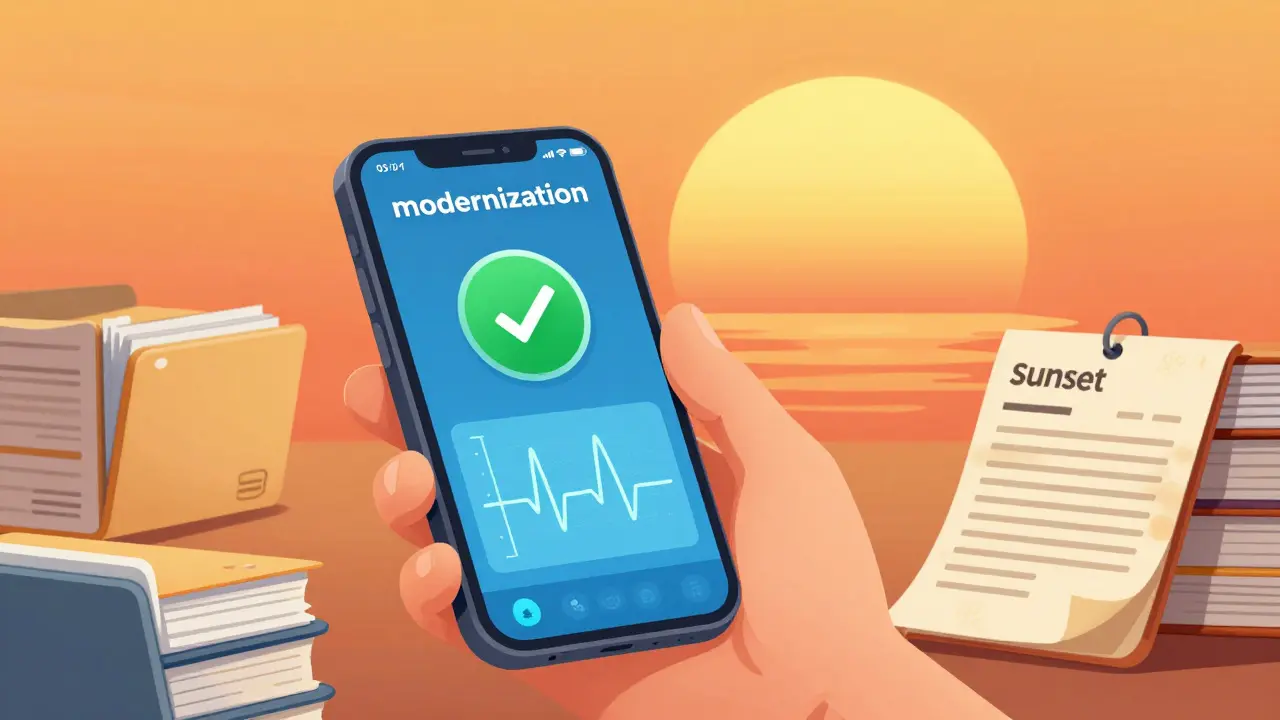
We are also seeing the first "sunsets." In August 2023, the FDA ended the REMS for thalidomide after 20 years. This happened because the medical community now understands the risks so well-and the alternative management strategies are so effective-that the formal REMS was no longer needed. Looking ahead, the 2024-2026 Strategic Plan involves moving toward digital health. Expect to see more smartphone apps for real-time monitoring of patients on high-risk anticoagulants, replacing some of the manual paperwork with digital data.
Does a REMS mean a drug is unsafe?
Not necessarily. It means the drug has a specific, serious risk that requires a plan to manage. Many of these drugs are life-saving; the REMS is simply the tool that makes using them safely possible. If the risks always outweighed the benefits, the FDA wouldn't approve the drug at all.
Who is responsible for managing a REMS program?
The "sponsor"-which is the pharmaceutical company that owns the drug-is responsible for developing and maintaining the program. However, the FDA oversees the program and can penalize companies that don't follow the rules.
Why do some medications require a registry like iPLEDGE?
Registries are used for drugs with catastrophic risks, such as severe birth defects. By requiring a registry, the FDA ensures that every patient, prescriber, and pharmacist is verified and that pregnancy tests are performed and documented before the drug is dispensed.
Can a REMS program be removed?
Yes. If the FDA determines that the risk mitigation strategies are no longer necessary-either because the risk is better understood or alternative methods are in place-they can "sunset" the program, as they did with thalidomide in 2023.
Do generic drugs also have REMS?
Yes. REMS apply to the molecule, not just the brand. If a generic version of a high-risk drug is released, it must adhere to the same safety protocols and mitigation strategies as the brand-name version.
about author