
Medication Safety in Emergencies: What to Keep in Your Go-Bag
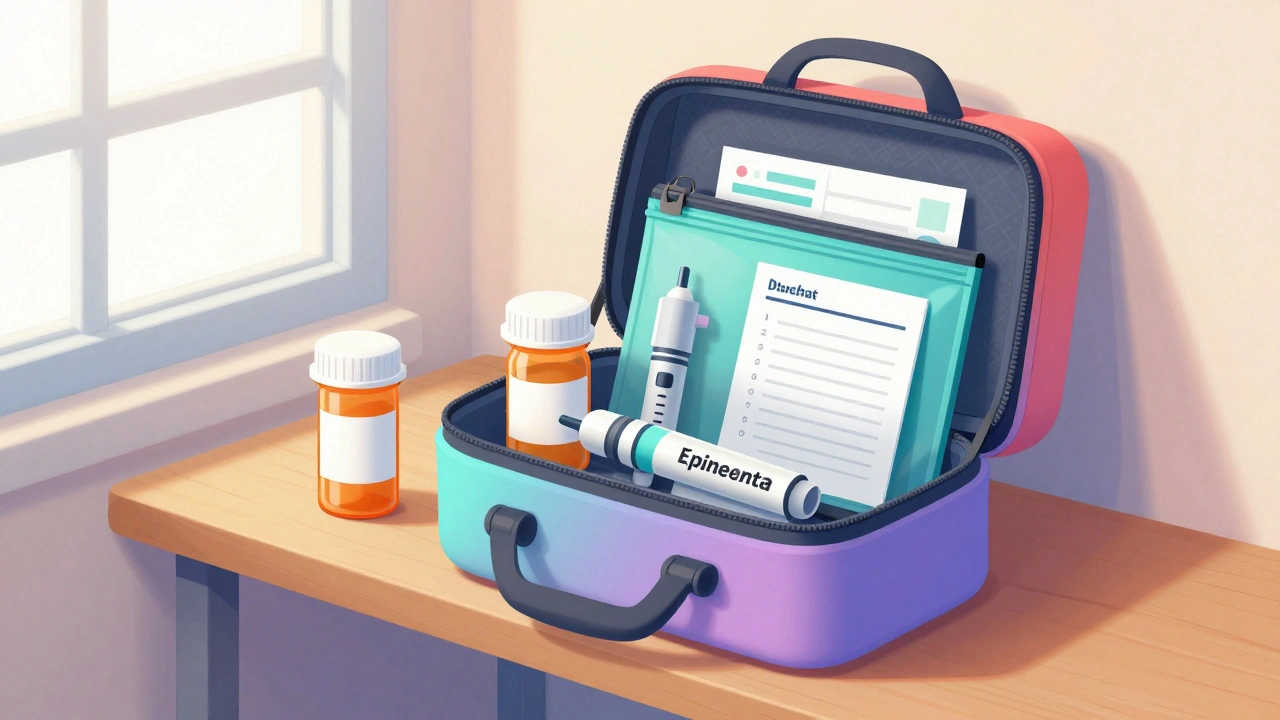
When a storm hits, a fire spreads, or an earthquake shakes your neighborhood, you won’t have time to search through drawers for your pills. Your heart medication, insulin, or asthma inhaler could be sitting in a flooded basement or lost in the chaos. That’s why a medication go-bag isn’t just a good idea-it’s a lifesaver. This isn’t about being overly cautious. It’s about making sure your body keeps functioning when everything else is falling apart.
Why Your Medications Can’t Wait
Most people think of emergency kits as water, flashlights, and canned food. But if you take daily meds, your body depends on them like a car depends on gas. Skip a day of blood pressure medicine? Your risk of stroke goes up. Miss insulin? Diabetic emergencies land people in the ER. The American College of Emergency Physicians found that 38% of disaster-related ER visits involve people who ran out of meds. Cardiovascular drugs alone made up 27% of those cases.
After Hurricane Ida, FEMA’s report showed 23% of evacuees didn’t have enough medication. And it wasn’t just the elderly. Younger people with asthma, diabetes, or mental health conditions were just as vulnerable. If your meds aren’t portable, they’re useless when you need them most.
What to Put in Your Go-Bag
You don’t need a fancy kit. A sturdy, water-resistant backpack or plastic bin with a tight lid works fine. Here’s what belongs inside:
- At least 14 days of all prescription medications - This isn’t optional. While FEMA suggests 7 days, places like Alert San Diego and the CDC recommend two weeks. Why? Disasters don’t follow schedules. Power outages, blocked roads, and closed pharmacies can stretch recovery for days or weeks. If you’re on insulin, thyroid meds, or heart drugs, don’t gamble with less.
- Over-the-counter essentials - Pain relievers (acetaminophen or ibuprofen), antihistamines, anti-diarrheal meds, and antacids. These aren’t luxuries. They prevent complications that could turn a minor issue into a medical crisis.
- Specialized items - If you use an inhaler, epinephrine auto-injector, glucose monitor, or nebulizer, pack extra batteries, test strips, and spare parts. One Redditor in California lost their insulin pump during a wildfire because they didn’t pack a backup.
- Medication list - Write down every drug you take: name, dose, frequency, and why you take it. Include allergies and side effects you’ve had. This isn’t just for you. Emergency workers need this info fast.
- Medical documents - Copies of your insurance card, doctor’s contact info, and advance directives (like a living will). Put these in a waterproof pouch. Paper can survive water better than a phone battery can.
- Emergency contacts - List at least two people who know your meds and medical history. Include their phone numbers and relationship to you.
Storage Matters More Than You Think
Storing meds in a hot garage or damp basement is a recipe for disaster. Heat, humidity, and light can destroy potency. Insulin, for example, degrades fast above 86°F. Epinephrine loses effectiveness if exposed to light or heat. The CDC says 62% of diabetics struggle to keep meds stable during power outages.
Here’s how to fix it:
- Keep your go-bag in a cool, dry place - like a high shelf in your bedroom closet. Out of reach of kids, but easy to grab.
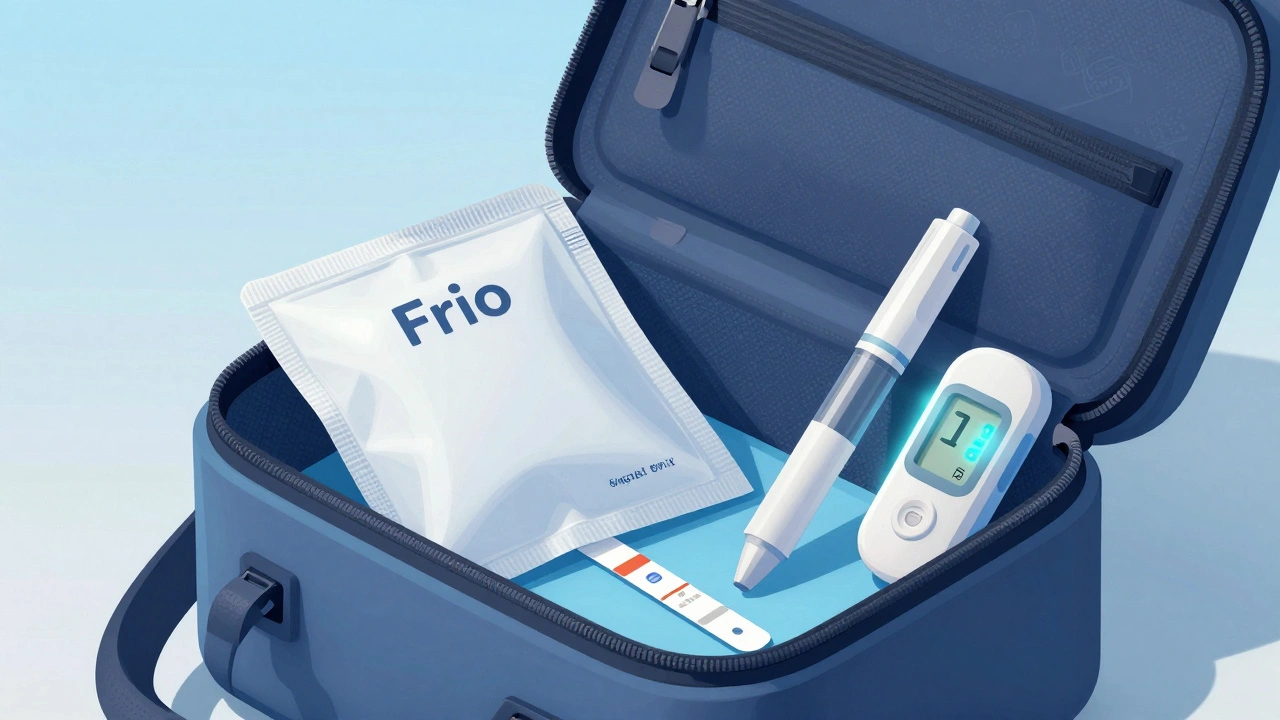
- Use a Frio Wallet or similar cooling pack for insulin or other temperature-sensitive drugs. Tested by Consumer Reports, these maintain safe temps for up to 48 hours without ice.
- Consider the MedAngel ONE device - a small sensor that connects to your phone and alerts you if your meds get too hot or cold. FDA-cleared in 2023, it’s becoming a must-have for people on biologics.
- Never store meds in the car. Temperatures inside a parked vehicle can hit 140°F in summer.
Don’t Forget the Paper Trail
Emergency responders don’t have time to guess. If you’re unconscious or disoriented, they need to know what you’re taking. A printed list is your best friend.
Make it simple:
- Name of drug
- Dose (e.g., 10 mg once daily)
- Reason (e.g., “for high blood pressure”)
- Prescribing doctor’s name and number
- Allergies (e.g., “allergic to penicillin - causes rash and swelling”)
Some people use a wallet-sized card. Others tape the list to the inside of the go-bag lid. One woman in Boston told the Red Cross her list saved her life during a flash flood - the paramedics spotted it and avoided giving her a drug that clashed with her blood thinner.
How to Keep It Fresh
Expired meds aren’t just useless - they can be dangerous. Epinephrine auto-injectors lose potency fast after their expiration date. Antibiotics might not work. Painkillers can become toxic.
Set a reminder: check your go-bag every six months. Do this on the same day you refill your prescriptions. That way, you’re always replacing old meds with new ones.
Here’s a smart trick: Ask your pharmacist for 60- or 90-day supplies instead of 30-day refills. Most insurance plans allow this for maintenance meds. It means you’re always ahead - not scrambling when disaster strikes.
Also, keep original bottles with labels intact. Pharmacists can verify doses faster if the label is there. Don’t dump pills into random containers unless you’re using a labeled pill organizer for daily use.
Who Needs This Most - And Who’s Missing It
The CDC says 89% of Americans over 65 take at least one prescription. That group is most at risk. But younger people aren’t safe either. One in five adults under 35 has a chronic condition like asthma, diabetes, or depression that requires daily meds.
Here’s the gap: Only 22% of U.S. households have a go-bag with enough meds. That’s up from 15% in 2018, but it’s still far too low. People over 65 are more likely to have one (34%), while only 18% of those under 35 do.
Why? Many think, “I’ll grab my meds if I have to leave.” But when the power’s out, the roads are blocked, and your phone is dead, you won’t remember what you need. You’ll just panic.
What to Do If You Can’t Get Enough
If your insurance won’t let you refill early, talk to your pharmacist. In 42 states, pharmacists can give you an emergency 7-day supply of most meds without a new prescription - if it’s during a declared disaster. But they can’t help if you haven’t asked them before.
Some pharmacies now offer digital medication lists you can print. Ask if yours does. The American Medical Association says 37% of providers now offer this - up from 12% in 2019.
And if you’re on a biologic - like insulin pens, rheumatoid arthritis drugs, or multiple sclerosis treatments - talk to your doctor now. These need refrigeration. Ask if there’s a stable alternative or if you can get a backup cooler.
Start Now. Don’t Wait.
You don’t need to buy a fancy kit. Start with what you have. Take out your meds. Write down the list. Pack a week’s supply. Do it today. Then, every six months, refresh it.
This isn’t about fear. It’s about control. When chaos comes, you won’t be helpless. You’ll have your meds, your list, your plan. And that’s more than most people have.
Can I just keep my meds in my car for emergencies?
No. Temperatures inside a parked car can exceed 140°F in summer, which ruins most medications. Insulin, epinephrine, and heart drugs can lose effectiveness or become unsafe. Always store your go-bag indoors, in a cool, dry place like a closet or drawer.
What if I forget to refill my meds before a storm?
If a disaster is forecasted, call your pharmacy immediately. In 42 states, pharmacists can legally give you a 7-day emergency supply without a new prescription - even if you haven’t reached your refill date. But this only works if you’ve already established a relationship with your pharmacist. Don’t wait until the last minute.
Do I need to pack all my meds, even the ones I only take once a week?
Yes. If you take it regularly - even weekly - it’s part of your treatment plan. Skipping it could cause a relapse. For example, someone on monthly injectable migraine meds might think it’s not urgent. But if they miss a dose during a disaster, the pain could become unmanageable, leading to ER visits or hospitalization.
How do I keep insulin cool without ice?
Use a Frio Wallet or similar cooling pack. These use evaporative cooling and need no ice or electricity. They’ve been tested to keep insulin below 86°F for up to 48 hours. You can also ask your doctor about stable insulin formulations that don’t require refrigeration after opening.
Should I include my pill organizer in the go-bag?
Only if it’s filled with current meds. Otherwise, stick to original bottles with labels. Pill organizers are great for daily use, but they don’t show dosage or prescribing info. Emergency workers need to know exactly what you’re taking - not just that you took a white pill today.
about author

May .
Just packed mine yesterday. Took 10 minutes. Life changed.
Sara Larson
This is so important!! 🙌 I just helped my mom build hers last weekend-she’s 72 and on 7 meds. We added a Frio Wallet and a printed list taped to the inside. She cried because she finally felt safe. You’re not being dramatic-you’re being smart. 💪❤️
Tom Costello
As someone who’s lived through three hurricanes and a wildfire evacuation, I can say this: the difference between survival and chaos is having your meds labeled, dated, and in a waterproof bag. I lost my insulin pump during Katrina because I threw it in a trash bag. Don’t be me. Use a proper container. And yes-even the weekly meds. I missed my monthly antidepressant once during a flood. Didn’t realize how bad it’d get until I couldn’t get out of bed for 48 hours. This isn’t paranoia. It’s preparation.
Siddharth Notani
Excellent guide. In India, monsoon-related disruptions often cut off pharmacy access for weeks. We recommend storing medications in vacuum-sealed bags with silica gel packets to combat humidity. Also, keep a digital copy on a secure cloud service-encrypted, with emergency contact details. Many hospitals now accept QR codes linking to medical profiles. Ask your doctor to generate one.
Cristy Magdalena
Wow. Just… wow. I’m sitting here with my 14-day stash in front of me, and I’m crying because I realized I’ve been this close to dying for years and didn’t even know it. I take lithium, metformin, and a beta-blocker. I thought I was ‘fine’ because I refill on time. But what if the power goes out? What if the pharmacy burns down? What if I’m unconscious and they give me something that kills me? I just printed my list. I bought a Frio Wallet. I’m putting my insulin in the closet. Thank you. I don’t even know you, but I owe you my life.
Josh Bilskemper
Most of this is common sense. The CDC stats are cherry-picked. Did you account for people who don’t take meds daily? Or those who use telehealth? Also, why assume everyone has access to a Frio Wallet or MedAngel? That’s luxury prep, not emergency prep. Real people use Ziplocs and hope. And your ‘14-day’ rule? Arbitrary. FEMA says 7. Stick to the official guidelines.
Stacy Natanielle
While the intent is commendable, the framing is alarmist. The 38% ER statistic is misleading-it conflates medication non-adherence with disaster-related incidents. Also, storing meds in a bedroom closet? In a seismic zone, that’s a hazard. Should be anchored. And the Frio Wallet? It’s not FDA-cleared for emergency use-it’s just a cooling pouch. Misleading marketing. Also, why recommend 90-day refills? That increases risk of expiration waste. Stick to 30-day cycles with pharmacy coordination. This post reads like a pharmaceutical ad.
kelly mckeown
i just read this and i’m so glad i didn’t wait… i’ve been on antidepressants for 8 years and never thought about how i’d get them if the power went out. i’m scared all the time but this made me feel… less alone? i made a list and put it in a ziplock with my inhaler. i’m gonna ask my pharmacist next week if they can print a card. thank you for writing this. i needed it.
dylan dowsett
Wait-so you’re telling people to pack ALL their meds? Even the ones they haven’t taken in 6 months? That’s dangerous. What if someone’s on a discontinued drug? Or if they’re misdiagnosed? And why are you encouraging people to store meds in their homes? That’s a liability. What if a kid finds them? What if a fire starts? You’re not helping-you’re enabling reckless behavior. This isn’t safety. It’s negligence dressed up as preparedness.
Chad Kennedy
Bro. I’m 28. I have asthma. I’ve had two ER visits because I didn’t have my inhaler. I just threw my spare in a bag. No Frio. No MedAngel. Just a plastic container with my inhaler and 2 puffs left. I’m not gonna spend $80 on a sensor. I’m gonna grab it and run. This post is overkill. Real people don’t have time for this. Just keep your shit in your car. It’s fine.
Cyndy Gregoria
You got this! 💪 I’m a nurse and I’ve seen too many people panic because they didn’t have their meds. Just start small-today. Take 5 minutes. Write down one drug. Put it in your bag. Tomorrow, add another. You don’t need to be perfect. You just need to start. You’re not weak for needing this-you’re strong for planning it. I’m proud of you for even reading this. Keep going. You’ve got this. 🌟
Justin Hampton
Everyone’s acting like this is groundbreaking. I’ve been doing this since 2012. You’re late to the party. Also, the part about ‘emergency 7-day supply’? That’s only in 42 states. What about the other 8? You’re ignoring rural America. And why no mention of VA benefits for vets? Or Medicaid waivers? This feels like a coastal elite guide. Real people live in places where pharmacies are 50 miles away and the power grid is a joke.
Erik van Hees
Let’s be real: if you’re on insulin and your go-bag gets flooded, you’re dead anyway. No amount of Frio Wallets or labeled lists will save you if you’re stranded without power, water, or a functioning hospital. This is performative preparedness. You’re not saving lives-you’re giving people false security. The real solution? Universal healthcare with automatic refill systems and mobile clinics. Not a backpack. This is band-aid thinking.
Susan Haboustak
Let me guess-you’re the type who also keeps a handwritten will in your sock drawer and a fire extinguisher in the kitchen. This is performative control. You think writing down your meds makes you safe? You’re not in control. You’re delusional. Disaster doesn’t care about your list. It doesn’t care about your labels. It doesn’t care that you have a Frio Wallet. You’re just distracting yourself from the fact that you’re powerless. And now you’ve made everyone else feel guilty for not doing the same. That’s not helpful. That’s toxic.