
EHR Integration: How Pharmacy-Provider Communication Improves Prescription Safety and Efficiency
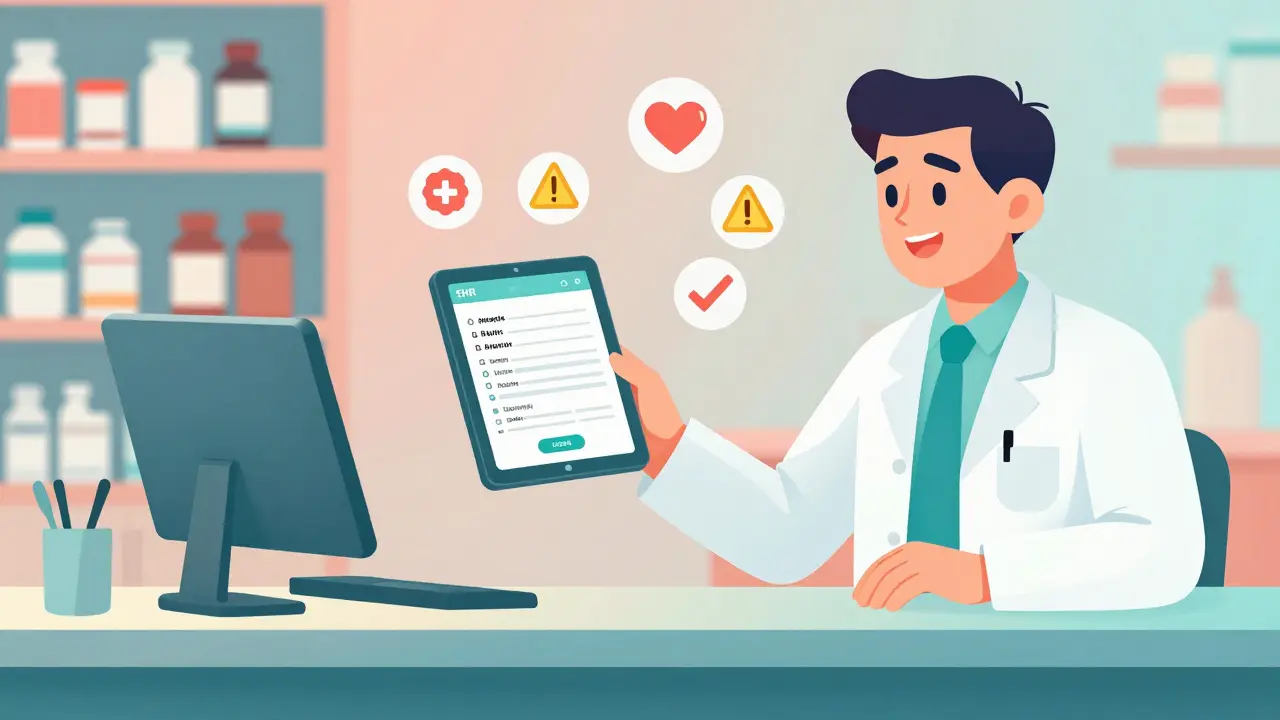
Imagine this: Your doctor prescribes a new medication, but your pharmacist doesn’t know you’re also taking blood thinners from another clinic. Or worse - they don’t know you had a bad reaction to this drug last year. That’s not rare. It’s the norm in most community pharmacies today. But what if your pharmacist could see your full medical history - lab results, allergies, other prescriptions - the moment they open your file? That’s not science fiction. It’s what EHR integration makes possible.
What EHR Integration Actually Does for Pharmacies and Providers
EHR integration connects your doctor’s electronic health record system directly to your pharmacy’s software. It’s not just about sending a digital prescription. It’s about two-way communication. When your provider updates your medication list, your pharmacist sees it. When your pharmacist spots a dangerous interaction, they can alert your doctor - instantly.This isn’t optional anymore. In the U.S., over 76% of pharmacies use electronic prescribing, but only 15-20% have true bidirectional EHR integration. That means most pharmacies still operate in the dark. They see the prescription, but not the full picture: your kidney function, your recent hospital discharge notes, your mental health meds, or that you’re allergic to sulfa drugs listed in your primary care chart.
With integration, pharmacists become active care team members. They don’t just count pills. They review your entire medication regimen. One study found pharmacists with EHR access identify 4.2 medication problems per patient visit - nearly triple the 1.7 they catch without it. That’s not a small improvement. That’s life-saving.
The Real-World Impact: Fewer Errors, Fewer Hospital Trips
The numbers don’t lie. When pharmacies and providers talk to each other through integrated systems:- Medication errors drop by 48%
- Hospital readmissions due to drug problems fall by 31%
- Patients stick to their meds 23% more often
- Each patient saves an average of $1,250 a year on avoidable health costs
In Australia, the My Health Record system cut preventable hospitalizations by 27%. In East Tennessee, a pilot program connecting 12 independent pharmacies with Epic EHR systems led to 1,847 care interventions - and 92% of doctors accepted the pharmacist’s recommendations. That’s not theory. That’s happening right now.
One pharmacist in Ohio told me her team caught a dangerous combo - a patient on three blood pressure drugs and a new NSAID. Without EHR access, they’d have dispensed the script. With it, they called the doctor. The patient avoided kidney failure.
How It Works: Standards, APIs, and Security
This isn’t magic. It’s built on strict technical rules. Two standards do most of the heavy lifting:- NCPDP SCRIPT 2017071 - This is how prescriptions get sent from doctor to pharmacy. It’s been around for years, but it’s one-way.
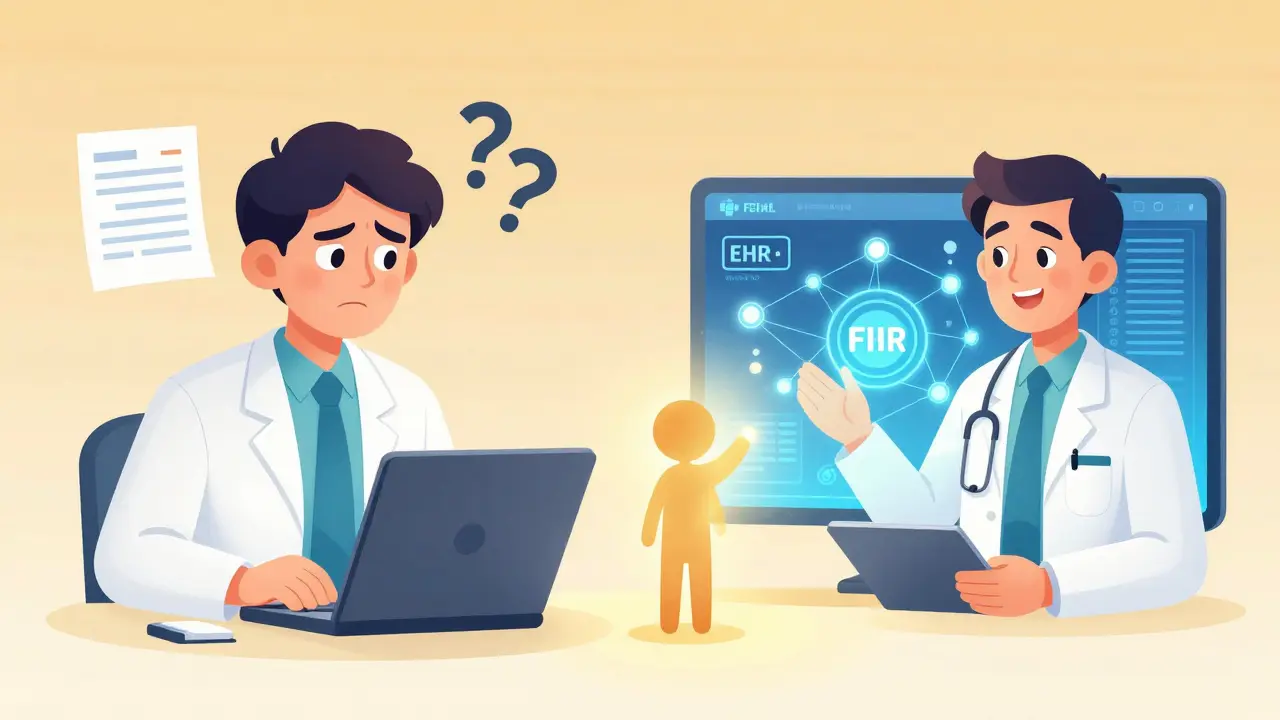
- HL7 FHIR Release 4 - This is the new game-changer. It lets systems share lab results, allergies, care plans, and more in real time. The Pharmacist eCare Plan (PeCP) uses FHIR to structure pharmacist notes so doctors can read them easily.
Behind the scenes, systems connect using secure APIs. They use OAuth 2.0 to log in, TLS 1.2+ to send data, and AES-256 encryption to protect it. All of this follows HIPAA and the 21st Century Cures Act - which bans "information blocking" (when systems refuse to share data).
Companies like Surescripts handle over 22 billion transactions a year. They’re the highway. But you still need the right vehicles. Not every pharmacy software talks to every EHR. That’s the biggest hurdle.
The Big Problems: Cost, Time, and Broken Systems
Here’s the ugly truth: Most community pharmacies can’t afford this.- Initial setup costs $15,000 to $50,000
- Annual maintenance: $5,000 to $15,000
- Implementation takes 3-6 months
Independent pharmacies are squeezed. Health systems? They’ve got the budget. 89% of hospital-affiliated pharmacies have integration. Only 12% of independent ones do.
Even if you pay, it’s not easy. There are over 120 EHR systems and 50 pharmacy platforms in the U.S. They don’t speak the same language. One pharmacy owner in Wisconsin spent seven months and $18,500 just to connect to Epic. The vendor promised "plug-and-play." It wasn’t.
And then there’s time. Pharmacists spend an average of 2.1 minutes per patient. They’re not sitting at a computer reviewing EHRs between fills. A 2021 survey found 68% of pharmacists say they don’t have time to use EHR data - even when it’s available.
Who’s Getting It Right - And Who’s Falling Behind
The leaders aren’t the big chains. They’re the ones building partnerships:- Surescripts - Processes 97% of U.S. e-prescriptions. Their Medication History tool pulls data from 3.5 billion transactions a year. It’s the backbone.
- SmartClinix - A pharmacy-specific EMR that integrates with Epic and Cerner. Users give it 4.6/5 stars, but complain about the learning curve.
- DocStation - Focuses on billing and provider networks. Great for clinics that run their own pharmacies.
- UpToDate - Not a pharmacy system, but it plugs into 40+ EHRs to give doctors real-time drug info. Pharmacists use it too.
On the flip side, 73% of health information exchanges say they struggle to map pharmacy data into medical EHRs. That’s because pharmacy data - like dosing instructions, refill history, or adherence notes - isn’t designed to fit into a doctor’s template.
And reimbursement? It’s a mess. Only 19 states pay pharmacists for EHR-based care coordination. Forty-eight states let pharmacists prescribe - but if they can’t get paid for using the data, why bother?
What’s Changing in 2025 and Beyond
The tide is turning - slowly.- CMS now requires Medicare Part D plans to integrate medication therapy management by 2025.
- California’s SB 1115 mandates EHR integration for MTM services by 2026.
- The ONC’s 2024 roadmap sets a goal: 50% of community pharmacies with bidirectional EHR access by 2027.
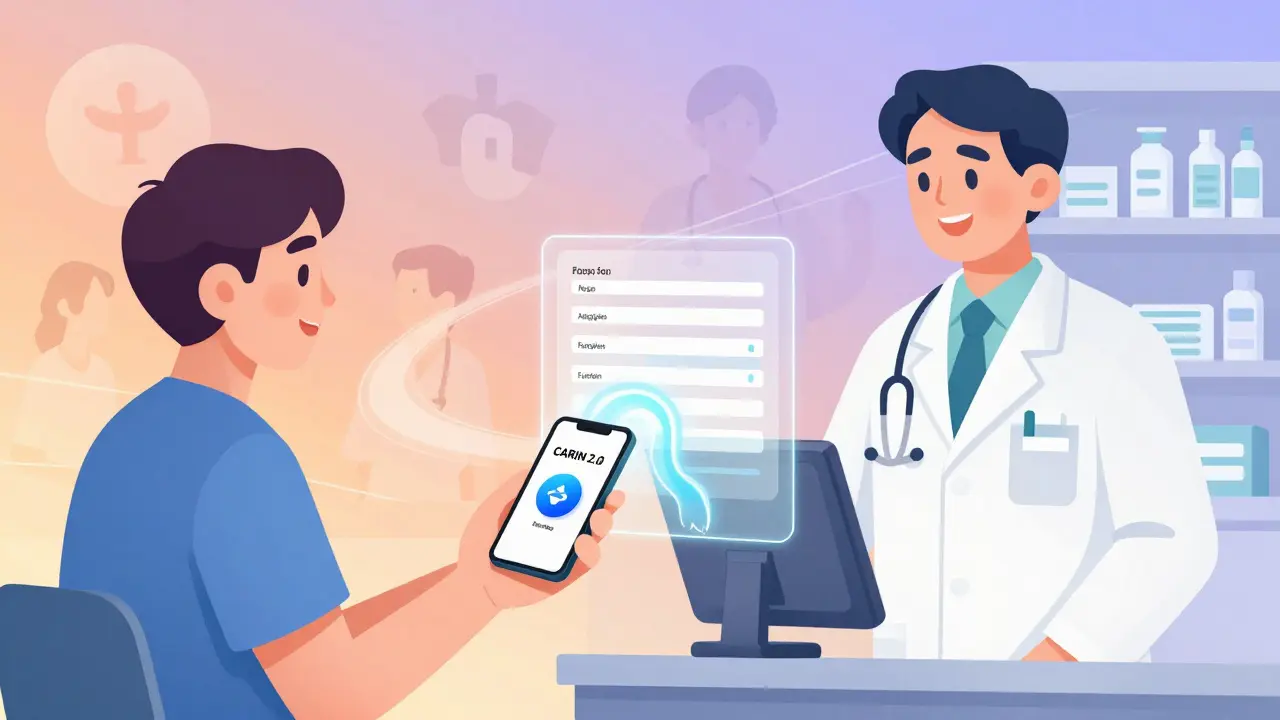
- New tools like CARIN Blue Button 2.0 let patients share their own data from payers to pharmacies - bypassing provider delays.
AI is coming fast. CVS and Walgreens are testing machine learning models that scan integrated EHR-pharmacy data to flag high-risk patients. Early results show a 37% boost in identifying medication problems before they happen.
But without payment reform, this stays a luxury. As Dr. Lucinda Maine of the American Association of Colleges of Pharmacy put it: "Without sustainable payment models, EHR integration will remain a luxury rather than a standard of care."
What You Can Do - Whether You’re a Pharmacist, Provider, or Patient
If you’re a pharmacist: Ask your software vendor about FHIR and PeCP compatibility. Don’t settle for SCRIPT-only. Push for two-way access.If you’re a doctor: Ask your EHR vendor if they connect to community pharmacies. If not, demand it. Your patients deserve full visibility.
If you’re a patient: Ask your pharmacist if they can see your full record. If they say no, ask why. Push for access. You have the right to your data under the 21st Century Cures Act.
This isn’t about technology. It’s about trust. When your doctor and pharmacist are on the same page, you’re not just safer. You’re better cared for. And that’s the whole point.
What is EHR integration in pharmacy practice?
EHR integration in pharmacy practice means connecting a pharmacy’s management system directly to a patient’s electronic health record used by doctors and hospitals. This allows pharmacists to see a patient’s full medical history - including allergies, lab results, other prescriptions, and care plans - and share their own clinical notes back with providers. It turns the pharmacy from a transactional dispenser into an active part of the care team.
Why don’t all pharmacies have EHR integration?
The biggest barriers are cost and complexity. Independent pharmacies face $15,000-$50,000 in upfront costs and $5,000-$15,000 yearly to maintain integration. There are over 120 different EHR systems and 50 pharmacy platforms, and they often don’t communicate well. Many pharmacists also say they don’t have enough time during patient visits to use the data, even when it’s available.
What standards do pharmacies use for EHR integration?
Pharmacies primarily use two standards: NCPDP SCRIPT 2017071 for sending prescriptions, and HL7 FHIR Release 4 for sharing clinical data like allergies, lab results, and care plans. The Pharmacist eCare Plan (PeCP) is a FHIR-based format that lets pharmacists structure their notes so doctors can easily read them. Secure APIs with OAuth 2.0 and TLS 1.2+ encryption ensure the data is protected and compliant with HIPAA.
Can patients access their own EHR data through pharmacies?
Yes, through tools like CARIN Blue Button 2.0, launched in January 2024. Patients can now download their medication history and lab results from their health plan and share them directly with their pharmacy - even if the pharmacy isn’t integrated with their doctor’s EHR. This gives patients control and helps fill gaps when provider-pharmacy systems aren’t connected.
How does EHR integration reduce medication errors?
Integrated systems flag dangerous drug interactions, duplicate therapies, and allergies in real time. Pharmacists can see if a patient is already taking a similar medication or if a new prescription conflicts with a lab result - like elevated creatinine indicating kidney risk. One study showed a 48% drop in medication errors when pharmacists had full EHR access. Automated alerts reduce human oversight gaps, especially during busy hours.
Is EHR integration required by law?
Not directly for pharmacies, but federal rules are pushing it. The 21st Century Cures Act bans information blocking - meaning providers and vendors can’t legally refuse to share data. Medicare Part D plans must now integrate medication therapy management by 2025. California requires EHR integration for MTM by 2026. These policies are creating pressure for pharmacies to adopt integration to remain eligible for reimbursement and participation in care networks.
about author

Faisal Mohamed
Bro, EHR integration is basically the healthcare equivalent of giving your brain a neural lace 🤖💊. We're talking real-time, bidirectional data flow - FHIR, PeCP, OAuth 2.0 - it’s not just tech, it’s a paradigm shift. Pharmacists aren’t just pill counters anymore; they’re clinical decision nodes in a living, breathing health network. The fact that we still treat this like a luxury? That’s not inefficiency - that’s systemic negligence. We’re literally gambling with lives because of legacy systems and vendor lock-in. Time to upgrade the OS of healthcare.
eric fert
Let me break this down for you all, because I’ve seen this movie before - and it always ends with a PowerPoint slide and a $20K invoice nobody asked for. Yes, integration sounds great on paper. But let’s be real: 89% of hospital pharmacies have it? Cool. But 12% of independents? That’s not a gap - that’s a chasm. And don’t get me started on the ‘2.1 minutes per patient’ myth. You think a pharmacist is gonna scroll through 17 tabs of FHIR data while a guy with a 30-pill bottle is yelling at them to hurry up? Nah. This isn’t about tech. It’s about pretending that busy people with zero time and zero support are gonna magically become data scientists. The real problem? Nobody’s paying them to do it. And until reimbursement models change, this is just performative healthcare.
Aishah Bango
It’s not just about cost or tech - it’s about ethics. If we allow pharmacists to remain blind to a patient’s full history, we’re complicit in preventable harm. That Ohio pharmacist who stopped the kidney failure? She didn’t do it because she had extra time. She did it because she had access. And yet, 48 states don’t reimburse pharmacists for using that access. That’s not just broken - it’s immoral. Patients deserve to be seen in full. Not just their Rx. Not just their labs. Their whole story. And if we’re not fighting for that, we’re not healthcare professionals - we’re clerks with stethoscopes.
SWAPNIL SIDAM
From India, I see this and I feel it. In our small towns, pharmacists know every patient by name. They remember if you’re diabetic, if you hate pills, if you skip doses because of cost. But they don’t have computers. They have notebooks. And that’s beautiful. But also dangerous. Maybe we don’t need fancy FHIR. Maybe we need simple, human, low-cost bridges. Like a shared WhatsApp group between doctors and local pharmacists. Tech should serve people - not replace them. Let’s not forget the human touch while chasing digital glory.
Sally Dalton
OMG YES. I’ve had my pharmacist call my doctor about a med interaction before and I cried. Like, actually cried. It felt so good to be seen. I have lupus and take 12 meds and sometimes I mix them up. But my pharmacist? She knows. She remembers. And now she can see my rheumatologist’s notes too? That’s next-level care. I wish everyone could have this. I’m telling all my friends to ask their pharmacists if they have EHR access. If they say no, tell them to push harder. We’re not just patients - we’re partners. And we deserve to be heard. 💕🫶
Mohammed Rizvi
So let me get this straight - we’ve got AI models scanning EHR-pharmacy data to predict bad outcomes, but pharmacists still can’t get paid for using the data? And we wonder why people burn out? This is like giving a chef a Michelin-star kitchen but only letting them use a spatula. The tech is here. The data is here. The will? Nah. It’s all about who gets the money. And right now, the money’s still stuck in the 1990s. Meanwhile, pharmacists are out here playing detective with sticky notes. Respect. But seriously - fix the payment model. Or shut up about innovation.
Curtis Younker
Guys. This is the future. And it’s not coming - it’s already here. Look at CVS and Walgreens rolling out AI that spots risky med combos before they happen. That’s not sci-fi - that’s Tuesday. We’re talking about saving lives, cutting hospital visits, and saving families thousands a year. This isn’t optional. It’s essential. And if your pharmacy doesn’t have it yet? Ask them why. Demand it. Share this post. Tag your reps. This is the kind of change that doesn’t need a revolution - just a lot of people saying, ‘I deserve better.’ And you do. You really do. Let’s make this standard. Not a bonus. Not a perk. A right.
Napoleon Huere
What’s fascinating here isn’t the tech - it’s the epistemology. We’ve moved from a model where knowledge is siloed - doctor knows one thing, pharmacist another - to a distributed cognition model. The pharmacy is no longer a terminal. It’s a node in a living neural network of care. And that changes the ontology of the patient. No longer a passive recipient of scripts, but a central node whose data flows, is interpreted, and is acted upon across multiple agents. This isn’t just efficiency. It’s a redefinition of care as a collaborative, emergent phenomenon. The real question: Are we ready to relinquish the myth of the solitary expert? Or will we keep clinging to the illusion of control?
Robin Van Emous
This is huge. I’ve seen both sides. My mom’s pharmacy couldn’t see her heart meds. She ended up in the ER. Now, her new pharmacy has FHIR. No more guesswork. No more scary phone calls. Simple. Safe. Good. We need this everywhere. No excuses.