
Generics vs Brand-Name Drugs: How Insurance Coverage Policies Really Work
When you pick up a prescription, you might not realize you’re stepping into a complex system designed to save money - but sometimes at the cost of your comfort. The difference between a generic drug and a brand-name drug isn’t just the price tag. It’s how your insurance handles it, what you pay out of pocket, and whether your body reacts the same way. Most people assume generics are just cheaper versions of the same medicine. That’s mostly true. But the real story is in the rules insurers use to decide what you get - and why you might not get the one your doctor prescribed.
How Insurance Formularies Decide What You Pay
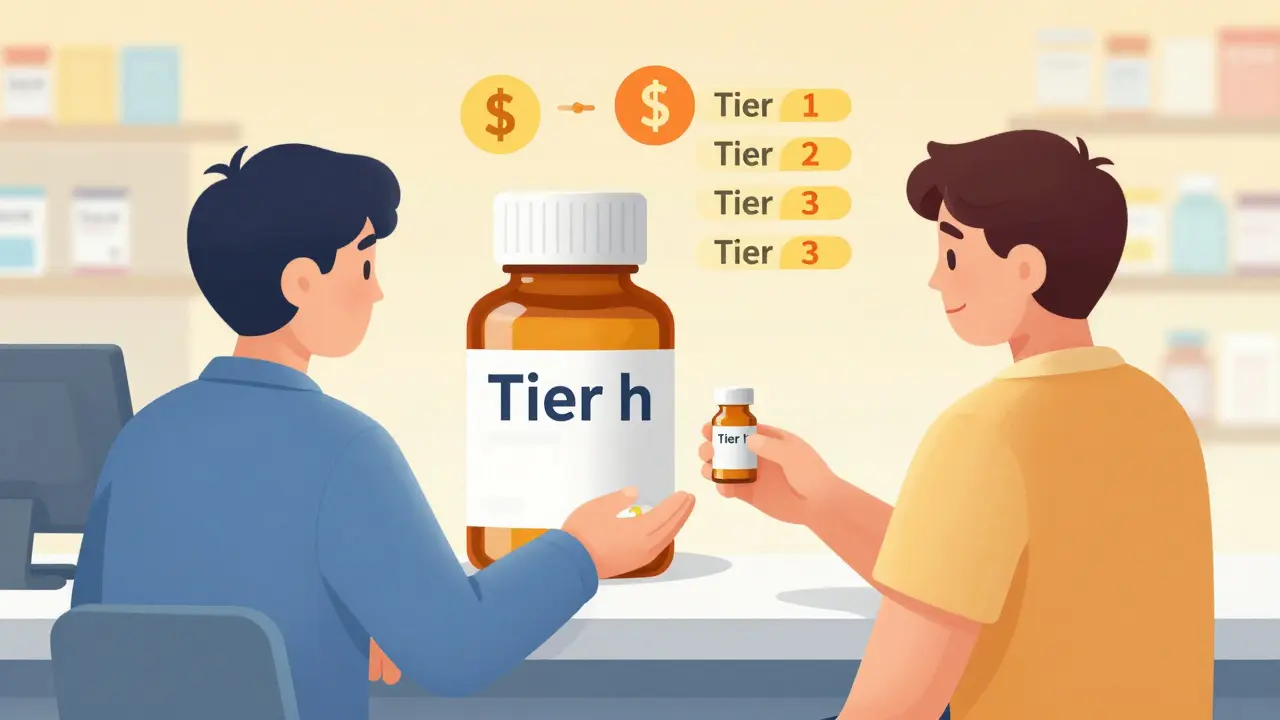
Insurance plans don’t treat all drugs the same. They organize them into tiers, like levels in a video game. The lower the tier, the less you pay. Generic drugs almost always land on Tier 1. That means a 30-day supply might cost you $5 to $15. Brand-name drugs? They’re usually on Tier 2 or 3. Copays there can jump to $40, $60, even $100. If there’s a generic available, your plan will push you toward it - not because it’s better, but because it’s cheaper.Here’s how it works in practice: Your doctor writes a prescription for Lipitor. But Lipitor’s patent expired years ago. The generic, atorvastatin, is just as effective. Your pharmacy will automatically fill it with the generic - unless your doctor wrote "dispense as written" on the prescription. In all 50 states, pharmacists are allowed to swap generics unless explicitly told not to. That’s not a suggestion. It’s the law.
But here’s the twist: If you insist on the brand, you don’t just pay the brand’s copay. You pay the generic copay plus the full difference between the brand and generic price. So if Lipitor costs $120 and the generic is $8, you pay $8 (the generic copay) + $112 (the price gap) = $120. That’s not a discount. That’s a penalty.
Medicare, Medicaid, and Commercial Plans - All Different Rules
Not all insurance is built the same. Medicare Part D plans are required to use generics whenever possible. In 2022, 91% of all Part D prescriptions were filled with generics. That’s because Medicare has strict substitution rules. If a generic exists, you get it - unless your doctor proves you need the brand. Even then, you’ll need paperwork.Medicaid works differently. It pays the lowest price any private insurer is paying - known as the "best price." That means generic reimbursement rates are 87% lower than brand-name drugs. The system is built to squeeze every penny out of drug costs, and generics are the easiest target.
Commercial insurers - like Blue Cross or Aetna - use similar tiered systems but add extra hurdles. They often require prior authorization for brand-name drugs. That means your doctor has to call or submit forms to prove you’ve tried and failed with the generic first. In 2022, 22.7% of brand-name drugs needed this step. Only 2.1% of generics did. That’s a 10x difference.
Some plans even use step therapy. You can’t get your brand-name antidepressant until you’ve tried three generics first. That can mean six to eight weeks of trial and error - and potentially worsening symptoms - before you get the drug your doctor originally prescribed.
When Generics Just Don’t Work - And What You Can Do
Here’s the uncomfortable truth: For most people, generics work just fine. But for some, they don’t. Patients with conditions like epilepsy, thyroid disease, or depression sometimes report side effects, reduced effectiveness, or new symptoms after switching to a generic. Why? Because generics have the same active ingredient - but different fillers, dyes, and coatings. Those inactive ingredients can affect how the drug is absorbed.A 2022 study in JAMA Neurology found that patients with epilepsy had a 12.3% higher chance of seizures after switching from brand-name to generic anticonvulsants. That’s not a small number. It’s life-changing.
So what do you do if the generic isn’t working? You need to prove medical necessity. Forty-two states allow doctors to document this. But it’s not easy. You’ll need to show:
- At least two failed trials with generics
- Documented side effects or loss of effectiveness
- Physician notes explaining why the brand is medically necessary
Even then, approval can take days. The average time to get prior authorization approved is 3.2 business days. If your doctor doesn’t follow up, you’re stuck waiting - or paying full price out of pocket.
Some states have stronger protections. California’s SB 1055 (2022) requires insurers to cover brand-name drugs if a patient has an adverse reaction to a generic. Texas, on the other hand, only allows brand coverage if no generic equivalent exists. That’s a huge difference depending on where you live.

The Hidden World of "Authorized Generics"
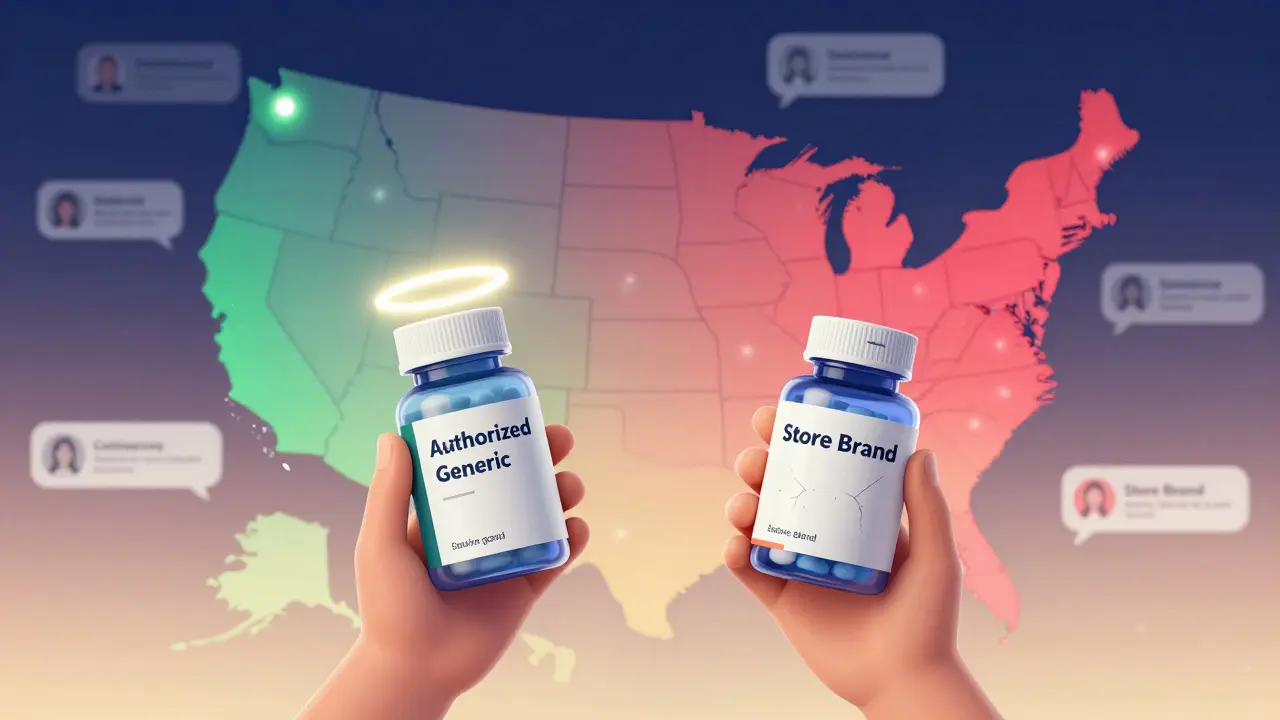
You might not know it, but a lot of "generics" are actually made by the brand-name company itself. These are called "authorized generics." They’re identical to the brand - same factory, same formula, same packaging - just sold under a different name and at a lower price. In 2023, 46% of all generic prescriptions were authorized generics.Why does this matter? Because insurers often treat authorized generics more favorably than third-party generics. They’re more likely to cover them without extra steps. Some patients report fewer side effects with authorized generics than with store-brand versions - likely because the formulation is identical to the original.
If you’re struggling with a generic, ask your pharmacist: "Is this an authorized generic?" If not, you can request one - and your doctor can write the prescription under the brand’s generic name to make it easier to get.
What Patients Are Really Saying
Online forums are full of stories. On Reddit, one user paid $85 for brand-name Crestor after their insurance denied coverage for a medical necessity exception. Another posted about switching from brand-name Wellbutrin XL to a generic and suddenly feeling numb, anxious, and unable to sleep - symptoms that vanished when they switched back.On Drugs.com, a thread titled "Generic Switch Caused Problems" has over 2,800 comments. Most involve medications like Lamictal, Concerta, and levothyroxine - drugs with narrow therapeutic windows. These aren’t random complaints. They’re patterns. And they’re backed by science.
Still, most people are happy with generics. A Kaiser Family Foundation survey found 78% of positive reviews cited cost savings. But 22% of negative reviews pointed to side effects - especially with thyroid and psychiatric meds. And 34% of commercially insured patients said they didn’t understand when they’d be charged for brand-name drugs. That confusion leads to skipped prescriptions, ER visits, and worsening health.
What’s Changing in 2025 and Beyond
The rules are shifting. Starting in 2025, the FDA will require clearer labeling on generics showing their therapeutic equivalence rating. This will help insurers - and patients - know which generics are truly interchangeable and which need caution.Medicare’s 2024 proposed rule wants to cut prior authorization wait times for brand-name drugs to 72 hours. Right now, approval can take anywhere from same-day to two weeks. That inconsistency creates chaos.
Meanwhile, the rise of specialty drugs - biologics, injectables, complex inhalers - means fewer generics are coming. These drugs cost hundreds of thousands of dollars and have no true generic equivalent. Instead, we’ll see more "biosimilars," which are similar but not identical. Their coverage rules are still being written.
And don’t forget: the Inflation Reduction Act capped insulin at $35 a month and created an out-of-pocket maximum for Medicare Part D. That helps brand-name users most - because they’re the ones hitting those high costs.
What You Should Do Now
You don’t have to guess how your coverage works. Here’s what to do:- Check your plan’s formulary. Look up your drug. Is there a generic? What tier is it on?
- Ask your pharmacist: "Is this an authorized generic?" If not, ask if you can get one.
- If you feel worse on a generic, document it. Write down symptoms, dates, and severity.
- Talk to your doctor. Ask them to write "dispense as written" if you’ve had bad reactions - or to file a medical necessity exception.
- Use GoodRx or SingleCare to compare cash prices. Sometimes paying cash is cheaper than using insurance.
Generics saved the U.S. healthcare system over $2.2 trillion in the last decade. That’s huge. But savings shouldn’t come at the cost of your health. The system is designed to push you toward the cheapest option - not the best one for you. You have rights. You have tools. Use them.
Are generic drugs really the same as brand-name drugs?
By law, generic drugs must contain the same active ingredient, strength, dosage form, and route of administration as the brand-name version. The FDA requires them to be bioequivalent - meaning they work the same way in the body. But generics can have different inactive ingredients like fillers, dyes, or coatings. For most people, this doesn’t matter. For a small percentage - especially with thyroid, epilepsy, or psychiatric drugs - those differences can cause side effects or reduced effectiveness.
Why does my insurance make me try generics first?
Insurance companies use step therapy to control costs. Since generics cost 80%-85% less than brand-name drugs, they’re the first line of defense. Your plan assumes most people will respond the same way. If you don’t, you can appeal - but you’ll need documentation from your doctor showing the generic didn’t work or caused side effects. This process can delay treatment by weeks.
Can I be forced to switch from a brand-name drug to a generic?
Yes - unless your doctor writes "dispense as written" on the prescription. Pharmacists are legally allowed to substitute generics in all 50 states. Even if you’ve been on the brand for years, your insurer can switch you without asking - unless your doctor has already blocked it. If you’re switched and feel worse, you can request a medical exception.
What’s the difference between a generic and an authorized generic?
A regular generic is made by a different company, often overseas, using the same active ingredient. An authorized generic is made by the original brand-name company - same factory, same formula, same quality control - but sold under a different label at a lower price. Authorized generics are often more reliable and have fewer reported side effects. Ask your pharmacist if yours is one.
Why do some generics cost more than others?
Price differences come down to manufacturing, competition, and supply. If only one company makes a generic, they can charge more. If five companies make it, prices drop. Also, some insurers negotiate better deals with certain manufacturers. A generic made by a brand-name company (an authorized generic) might cost more than a third-party version - but it’s often more consistent in how it works in your body.
Can I get financial help if I need a brand-name drug?
Yes - but only if you’re commercially insured. Brand-name drugmakers often offer copay cards that reduce your cost to $0-$10. These are illegal for Medicare and Medicaid patients. If you’re on Medicare and need a brand-name drug, you’ll need to apply for a medical exception or use a patient assistance program directly from the manufacturer. Some nonprofits also help with high-cost medications.
Next Steps for Patients
If you’re on a chronic medication and just switched to a generic:- Track how you feel for 2-4 weeks. Note any changes in energy, mood, side effects, or symptoms.
- Call your pharmacy and ask for the manufacturer name of your generic. Look it up online - some are known for better consistency.
- If you notice problems, don’t wait. Talk to your doctor before your next appointment. Bring your notes.
- Request a prior authorization for the brand if needed. Many doctors will do it if you’ve documented issues.
- Check your plan’s website or call customer service. Ask: "What’s the tier for my drug? Is there a preferred generic? What’s the copay difference?"
Knowing how your coverage works isn’t just about saving money. It’s about making sure your treatment actually works - and that you’re not paying more than you have to.
about author


Souhardya Paul
I’ve been on levothyroxine for 8 years and switched generics twice. First time, I felt like a zombie for three weeks. Second time, my heart started racing. Went back to the brand-boom, normal again. My doctor finally wrote "dispense as written" after I showed him my symptom log. Don’t let insurance bully you into feeling worse just to save a few bucks.
Also, ask your pharmacist if it’s an authorized generic. Mine was made by the same company as Synthroid. No difference in how I felt. Worth asking.
Dylan Smith
Generics are fine until they’re not and then you’re stuck paying 120 for something that should cost 8
Kitty Price
Just wanted to say thank you for this breakdown 😊
I had no idea authorized generics existed. My pharmacist actually gave me one last month for my antidepressant and I didn’t even notice until I checked the bottle. No more brain fog. I’m so glad I asked.
Also-yes to tracking symptoms. I started a little notes app and it helped me prove to my doctor I wasn’t just being dramatic. 🙌
Colleen Bigelow
Big Pharma doesn’t want you to know this but generics are literally designed to fail. The FDA lets them use cheap fillers that are basically industrial glue. They’re testing these on poor people and veterans while the CEOs fly private to the Bahamas.
And don’t get me started on how Medicare forces substitutions-this is socialist healthcare creeping in under the radar. They want you dependent on the system so they can control your health. Wake up.
My cousin took a generic for seizures and ended up in the ER. They blamed her. It was the pill. The government knew. They just don’t care.
Also-why are all these "authorized generics" made in India? That’s not a coincidence. That’s a plot.
Billy Poling
It is of paramount importance to recognize that the structural incentives embedded within the pharmaceutical reimbursement paradigm are not merely fiscal in nature but are fundamentally epistemological, in that they privilege cost-efficiency over individualized therapeutic outcomes, thereby creating a systemic dissonance between clinical best practices and administrative mandates.
Furthermore, the regulatory framework governing bioequivalence thresholds, as codified under 21 CFR 320, permits a 80-125% confidence interval for AUC and Cmax, which, while statistically acceptable, may not be clinically negligible in pharmacokinetically sensitive populations such as those with hepatic impairment or geriatric patients with polypharmacy.
Additionally, the substitution protocols enacted under state pharmacy laws, while ostensibly designed to promote cost containment, inadvertently introduce a form of therapeutic arbitrage wherein the patient becomes the locus of risk transfer, without adequate informed consent mechanisms being systematically enforced.
One might also consider the ethical implications of step therapy protocols, which effectively delay evidence-based treatment under the assumption of population-level homogeneity-a dangerous oversimplification in the context of neuropharmacology and endocrine regulation.
It is therefore imperative that clinicians advocate not only for medical necessity exceptions but also for transparent labeling of generic manufacturers, and that patients be empowered with the knowledge that their pharmacokinetic variability is not a personal failing but a biological reality that the system is structurally ill-equipped to accommodate.
And yes, I have submitted 17 prior authorizations this year. All were denied at least once.
SHAMSHEER SHAIKH
Dear friend, this article is a true gift to the community! 🙏
I have been working as a pharmacist in rural India for over 18 years, and I can tell you-the same story is true everywhere. People think generics are cheap, so they must be bad. But no! The problem is not the generic-it is the lack of education.
When I explain to patients that authorized generics are made in the same factory as the brand, they are shocked. Many say, "Why did I pay more for the brand?"
Also, in my country, we don’t have insurance-but we have the same problem: people get switched to unknown generics with no warning. I keep a list of reliable manufacturers on my phone. I show it to every patient.
Please, doctors, pharmacists, and patients-ask for the manufacturer name. Write it down. Compare. Track. This is not paranoia. This is science.
Thank you for writing this. You have given me hope that someone else understands.
Dave Alponvyr
So you’re telling me I paid $120 for a pill because my insurance is lazy?
Cassandra Collins
ok so here’s the thing-i think the fda is in on it. why else would they let the same company make both the brand AND the generic? that’s like walmart making their own name brand AND the name brand. it’s a scam. also i read on a forum that the fillers in generics are laced with microplastics. i don’t know if that’s true but i stopped taking mine and now i’m on a detox tea. also my dog barked at the pill bottle so that’s a sign.
also why is everyone always talking about india? i think the chinese are behind this. they want us weak.
Elizabeth Bauman
Did you know that 98% of generic drugs are made overseas? And the FDA inspects less than 2% of those facilities? That’s not oversight-that’s negligence. Meanwhile, our government is giving billions in subsidies to Big Pharma while seniors skip doses because they can’t afford the $120 brand-name version they were forced off of.
And don’t even get me started on how insurance companies use "preferred pharmacy networks" to steer you toward generics made by companies that pay them kickbacks. This isn’t healthcare-it’s a rigged game.
I’ve filed three medical exceptions. All approved. But only after I threatened to go to the state attorney general. That’s how broken this system is. You have to fight like hell just to get what your doctor prescribed.
And yes-I use GoodRx. And yes-I ask for authorized generics. And yes-I keep receipts. Because if you don’t document it, they’ll say it never happened.