
Uremic Symptoms Explained: Nausea, Itch, and Dialysis Timing
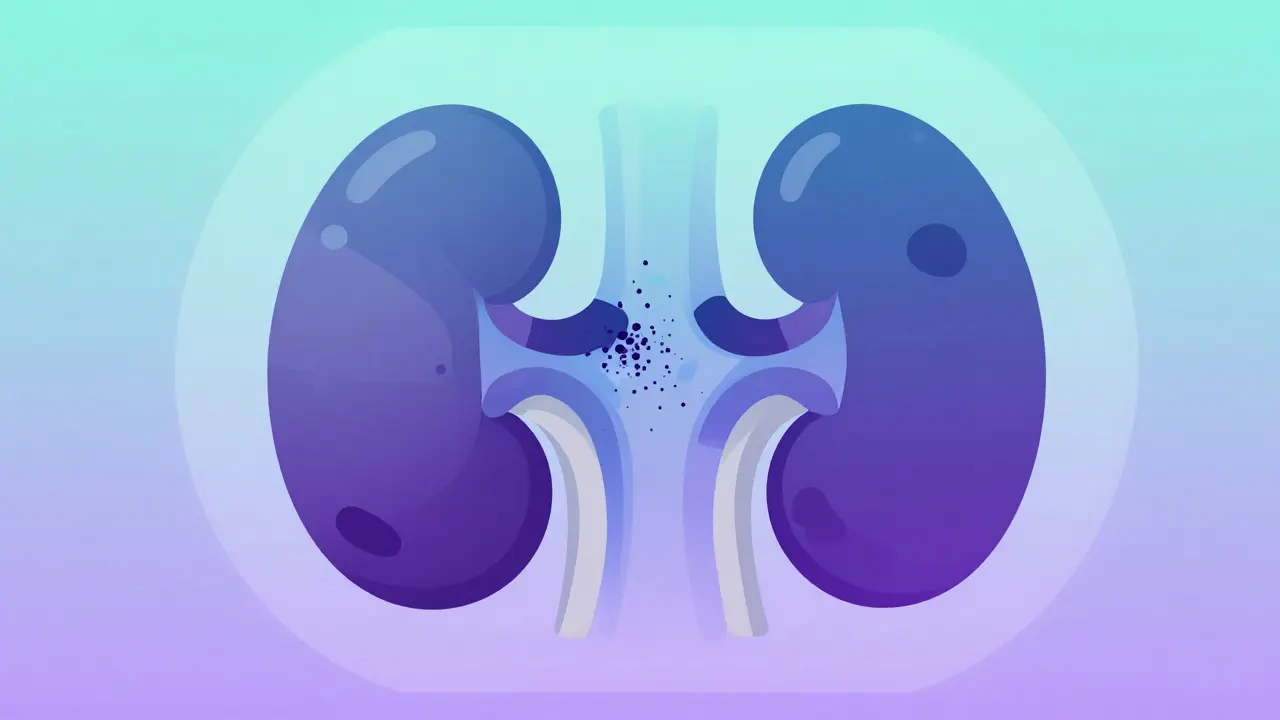
You know that feeling when your skin crawls and nothing you put on it helps? Or when the smell of food makes you gag, even if you're starving? For people with advanced kidney issues, these aren't just random annoyances. They are warning signs. Uremic symptoms are the body's distress signal when waste builds up because the kidneys can't filter it out anymore. Ignoring them can lead to serious complications, but understanding them gives you power over your treatment plan. We need to talk about what these signs mean, why they happen, and exactly when the medical team recommends starting dialysis.
What Actually Is Uremia?
Many people hear the word uremia is a clinical syndrome caused by the accumulation of nitrogenous waste products in the bloodstream due to kidney failure. It sounds technical, but the concept is straightforward. Your kidneys act like a water treatment plant. When they stop working, toxins stay in your blood instead of leaving through urine. Historically, this was a terminal condition until hemodialysis was developed in 1943. Today, it is a manageable syndrome, but it requires attention.
The condition affects multiple systems in your body. We aren't just talking about your bladder here. The buildup of substances like urea and creatinine impacts your brain, your skin, your stomach, and even your heart. Current data shows that approximately 786,000 Americans are living with end-stage kidney disease. The symptoms don't appear out of nowhere; they follow a pathophysiological mechanism where the kidneys fail to excrete metabolic waste. When serum urea nitrogen levels get high, usually above 60 mg/dL, you start to feel the effects.
The Nausea Connection: More Than Just Stomach Flu
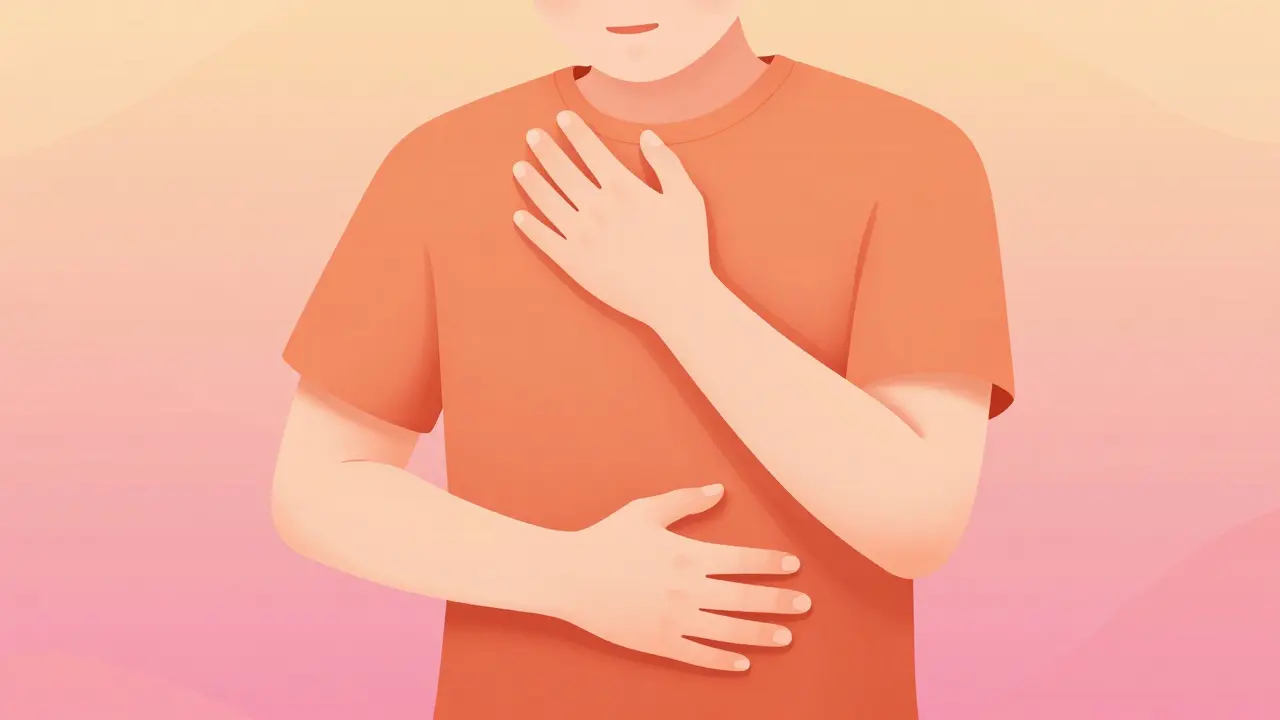
Nausea is one of the most common complaints, affecting about 68% of patients in stage 5 chronic kidney disease. It isn't usually food poisoning. It is chemical. When toxins like p-cresyl sulfate and indoxyl sulfate build up, they stimulate the chemoreceptor trigger zone in your brain. Think of this area as your body's alarm system for poison. It gets confused by the uremic toxins and tells your stomach to reject food.
This feeling often starts when Blood Urea Nitrogen (BUN) levels exceed 80 mg/dL. Research from the Chronic Renal Insufficiency Cohort study found that 92% of patients experienced this symptom between 6 to 12 weeks before they started dialysis. Imagine losing your appetite for months. It leads to weight loss and malnutrition. One patient described it as eating feeling like swallowing sand. This isn't just discomfort; it is a metabolic crisis. If you are losing more than 5% of your body weight over three months due to nausea, that is a specific trigger for doctors to consider immediate intervention.
Uremic Pruritus: The Itch That Won't Quit
If nausea is the internal alarm, itching is the external one. Uremic pruritus, also known as CKD-associated pruritus, affects between 20% and 70% of hemodialysis patients. It is distinct from dry skin or allergies. It is deep, often described as a crawling sensation under the skin. A 2022 meta-analysis in the Clinical Journal of the American Society of Nephrology highlighted how distressing this is. Patients report scratching until they bleed, especially at night.
The itching usually covers large, discontinuous areas on both sides of the body. It is not localized to one spot like a bug bite. Studies show that 76% of affected patients report the itching gets worse at night, destroying sleep quality. This isn't just about comfort; it is about inflammation. Patients with this severe itching often have higher levels of C-reactive protein in their blood, averaging 12.7 mg/L compared to 4.2 mg/L in those without itching. This supports the idea that the itch is a sign of systemic inflammation. To diagnose it properly, doctors use the 5-D Itch Scale, looking at duration, degree, direction, disability, and distribution. A score above 12 means you need medication, not just lotion.
When to Start Dialysis: The Timing Debate
The biggest question patients face is when to begin dialysis. Should you wait until you feel terrible, or start early to prevent complications? The IDEAL trial, published in the New England Journal of Medicine, changed how we think about this. The study compared early initiation versus late initiation. Surprisingly, there was no mortality benefit for starting early (when eGFR is 10-14 mL/min) compared to late (when eGFR is 5-7 mL/min).
However, quality of life was better in the late group if symptoms were managed well. Current expert consensus from the 2023 KDOQI Controversies Conference suggests dialysis should start when symptoms become refractory to conservative management. This typically happens when eGFR falls below 10.5 mL/min/1.73m². But numbers alone don't tell the whole story. Dr. Adeera Levin emphasizes that the decision must be individualized based on symptom burden. Specific triggers include persistent nausea affecting nutrition, uremic pericarditis detected by echocardiography, or refractory itching.
There is still debate. Some experts argue for early initiation at eGFR 12-15 mL/min to prevent severe complications. A 2020 Japanese registry study showed 22% lower hospitalization rates with earlier initiation. The 2024 KDIGO Controversies Conference is addressing this, suggesting patient-reported outcome measures should be primary triggers. Essentially, if your symptom scores are high enough, you start treatment regardless of the eGFR number.
| Strategy | Typical eGFR Threshold | Mortality Benefit | Quality of Life |
|---|---|---|---|
| Early Initiation | 10-14 mL/min | No significant difference | Variable |
| Late Initiation | 5-7 mL/min | No significant difference | 32% better symptom control if managed |
Managing Symptoms Before Dialysis
You don't have to suffer in silence while waiting for dialysis. There are specific protocols to manage these symptoms. For itching, the 2023 KDOQI guidelines recommend a tiered approach. Step one is optimizing dialysis adequacy if you are already on it, targeting a Kt/V of at least 1.4. Step two involves adding medication like gabapentin. Doctors usually start at 100mg nightly and titrate up to 300mg three times daily. Step three utilizes newer drugs like nalfurafine or difelikefalin.
Difelikefalin is a newer option approved by the FDA in 2021 specifically for this condition. A 2022 meta-analysis showed it reduced itch scores by 32.7% compared to placebo, with effects starting within 48 hours. For nausea, ondansetron is often the first line, taken orally three times daily. If that doesn't work, domperidone might be used, though doctors watch for heart risks like QTc prolongation. These treatments require careful monitoring because your kidneys aren't clearing the drugs efficiently either.

Real Patient Experiences and Economic Impact
Statistics tell one story, but patient experiences tell another. On support forums, users describe sleep scores dropping from 85 to 42 on fitness trackers due to constant scratching. One patient lost 18 pounds in two months because the metallic taste in their mouth made food repulsive. The economic burden is also real. Patients with severe uremic pruritus incur $8,432 higher annual healthcare costs than those without it. This is mostly due to increased hospitalizations, averaging 2.3 admissions per year versus 1.1.
Delays in diagnosis make this worse. A 2022 National Poll on Kidney Health found that 41% of patients with uremic symptoms visited at least three physicians before getting the correct diagnosis. The average delay was 8.7 months from symptom onset. This highlights the need for better recognition of these specific symptoms by general practitioners. If you have chronic kidney disease and start itching or feeling nauseous constantly, tell your nephrologist immediately. It might be time to adjust your care plan.
Looking Ahead: Future Treatments
Research is moving fast to find better solutions. The 2023 FDA approval of nemifitide, a selective kappa-opioid receptor agonist, showed 45% greater itch reduction than placebo in phase 3 trials. The National Institutes of Health HEAL Initiative allocated $47 million specifically for uremic symptom research in 2023. They are focusing on non-opioid alternatives to address the finding that nearly 40% of gabapentin prescriptions exceed safe renal dosing thresholds. Future guidelines will likely require symptom scores on scales like PROMIS-Itch for dialysis consideration, putting patient experience at the center of the decision.
What are the first signs of uremia?
The first signs often include persistent nausea, loss of appetite, and severe itching (uremic pruritus). You might also experience fatigue, confusion, or a metallic taste in your mouth. These symptoms typically occur when waste products like urea build up in the blood.
When should I start dialysis based on symptoms?
Dialysis should start when symptoms become refractory to conservative management. Key triggers include persistent nausea causing weight loss, uremic pericarditis, or severe itching that doesn't respond to medication. Generally, this happens when eGFR falls below 10.5 mL/min/1.73m².
Can uremic itching be cured without dialysis?
It can be managed but not always cured without addressing the kidney function. Medications like gabapentin or difelikefalin can reduce symptoms significantly. However, if the kidney failure is end-stage, dialysis or transplant is usually required to resolve the root cause.
Does early dialysis improve survival rates?
According to the IDEAL trial, there is no significant mortality benefit for starting dialysis early (eGFR 10-14) versus late (eGFR 5-7). The decision should focus on quality of life and symptom control rather than just survival statistics.
What medications help with uremic nausea?
Ondansetron is commonly recommended as a first-line treatment. For more resistant cases, doctors might prescribe domperidone, though they monitor heart health closely. Dietary changes and managing fluid intake also play a crucial role.
Understanding your body's signals is the first step toward better management. Whether you are dealing with the itch or the nausea, know that there are protocols and treatments available. Don't wait until you are in crisis to talk to your doctor. Early communication can lead to better symptom control and a smoother transition into dialysis if that becomes necessary.
about author

Aaron Sims
They want you to wait until you are dying.. It is all about the money.. The insurance companies love the suffering.. They say wait for the eGFR to drop.. Because the machines are expensive.. It is a calculated risk.. They know the toxins kill you slowly.. But they get paid for the slow death.. The numbers are fake.. The trials are rigged.. They do not care about your quality of life.. They care about the quarterly report.. This is a trap.. Wake up people..!!
Pat Fur
There is truth in what you say but fear clouds judgment. We must look at the science. The body knows when it is done. Listen to your skin. Listen to your stomach. It is a conversation. Medicine is a tool not a master. Peace is found in acceptance.
Anil Arekar
It is indeed a complex matter regarding the physiological thresholds. One must respect the medical consensus while acknowledging individual variance. The data suggests a careful balance is required. We should not dismiss the clinical evidence entirely. However, patient autonomy remains paramount. Let us support one another through this difficult journey. Knowledge is the best defense against uncertainty. I hope this information aids your understanding.
Elaine Parra
This is why America is falling apart. People wait too long. They are too weak to act. We need to force early treatment. The system is designed to fail you. It is a disgrace. Look at the stats. They are ignoring the suffering. We need to take control. Stop listening to the weak doctors. Stand up for yourself.
Amber Gray
u r so right bout the weakness!! 💯🔥
Danielle Arnold
Another article telling us to wait and suffer. Typical.
rebecca klady
I get that feeling but the doctors say patience is key. Just trying to stay calm about it all. Hope everyone finds what works.
Namrata Goyal
Only the elite understand the true cost of this neglect. The common folks are being fed lies. It is pathetic how easily they are manupulated. You need to be smarter than this. Real health is not about numbers. It is about will. Most people just give up.
winnipeg whitegloves
Your perspective is a vibrant tapestry of skepticism. I appreciate the colorful way you see the world. It adds a unique texture to the discussion. We all need a bit of that spark. Keep shining your light on these dark corners.
Rachele Tycksen
I read this whole thing and it makes me sad. My mom had this stuf too. She always said her skin felt like bugs. It was really bad for her sleep. The doctors kept saying wait a bit more. She lost so much weight before they started. I wish they knew sooner. The nausea is the worst part. You cant eat anything at all. It feels like poison in your blood. The itching makes you crazy at nite. You just want to scratch it off. They say medicine helps sometimes. But nothing fixes the root cause. Dialysis is a big deal for anyone. You have to go three times a week. It changes your whole life schedule. I hope new drugs come out soon. Maybe something better than pills. We need more reseach money. Please take care of your kidneys. Love to everyone dealing with this.