
Insurance Prior Authorization for Generic Alternatives: How Pharmacists Navigate Coverage Policies
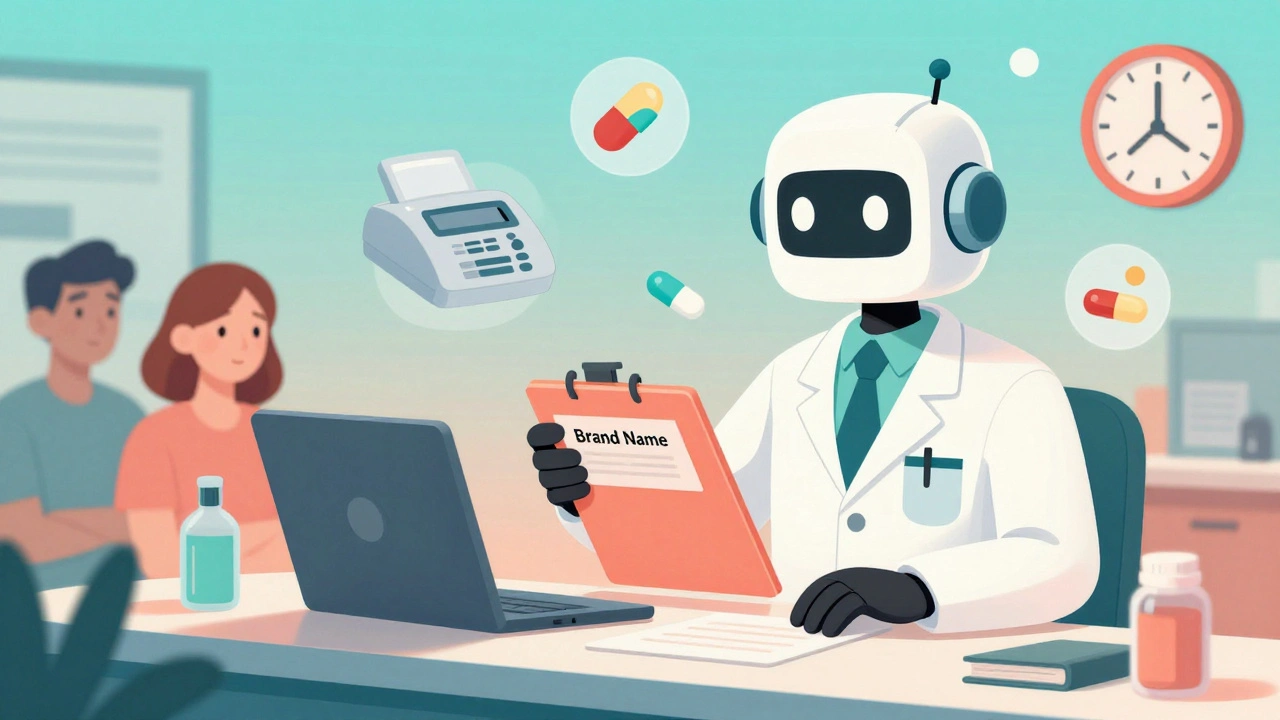
When a pharmacist fills a prescription for a brand-name drug, they often hit a wall: the insurance won’t cover it unless the patient first tried and failed a cheaper generic. This isn’t a glitch-it’s standard policy. Insurance prior authorization for generic alternatives is now a routine, and often frustrating, part of everyday pharmacy work. It’s not about denying care. It’s about cost control. But in practice, it slows down treatment, confuses patients, and burns out pharmacy teams.
Why Do Insurers Require Generic Trials First?
Health plans don’t just randomly block brand-name drugs. They follow step therapy protocols-rules that require patients to try lower-cost generics before moving up. The idea sounds simple: if a $5 generic works just as well as a $300 brand, why pay more? The Centers for Medicare & Medicaid Services (CMS) formalized this in 2010, and today, 97% of commercial insurers and all Medicaid managed care plans use some version of it. The goal isn’t to punish patients. It’s to reduce spending. In 2023, brand-name prescriptions with available generics made up 22% of all prescriptions where cost-saving options existed. Prior authorization on those prescriptions saved insurers billions. But savings don’t always translate to better care.The Seven-Step Process Pharmacists Actually Deal With
Here’s what happens behind the scenes when a patient needs a brand drug:- The pharmacist sees the prescription and checks the payer’s formulary. If the brand isn’t covered without prior auth, they flag it.
- The pharmacy team pulls the patient’s history: Did they try the generic? How long? What were the results?
- They prepare clinical documentation-ICD-10 codes, lab results, notes on side effects or ineffectiveness.
- The request is submitted electronically, by fax, or over the phone. Electronic submission (ePA) is faster, but not all practices use it.
- The insurer’s clinical pharmacist reviews it. They check if the documentation meets their criteria.
- Within days (or weeks), the pharmacy gets a response: approved, denied, or need more info.
- If denied, the team files an appeal, often with new data or a letter from the prescriber.
What Documentation Actually Works?
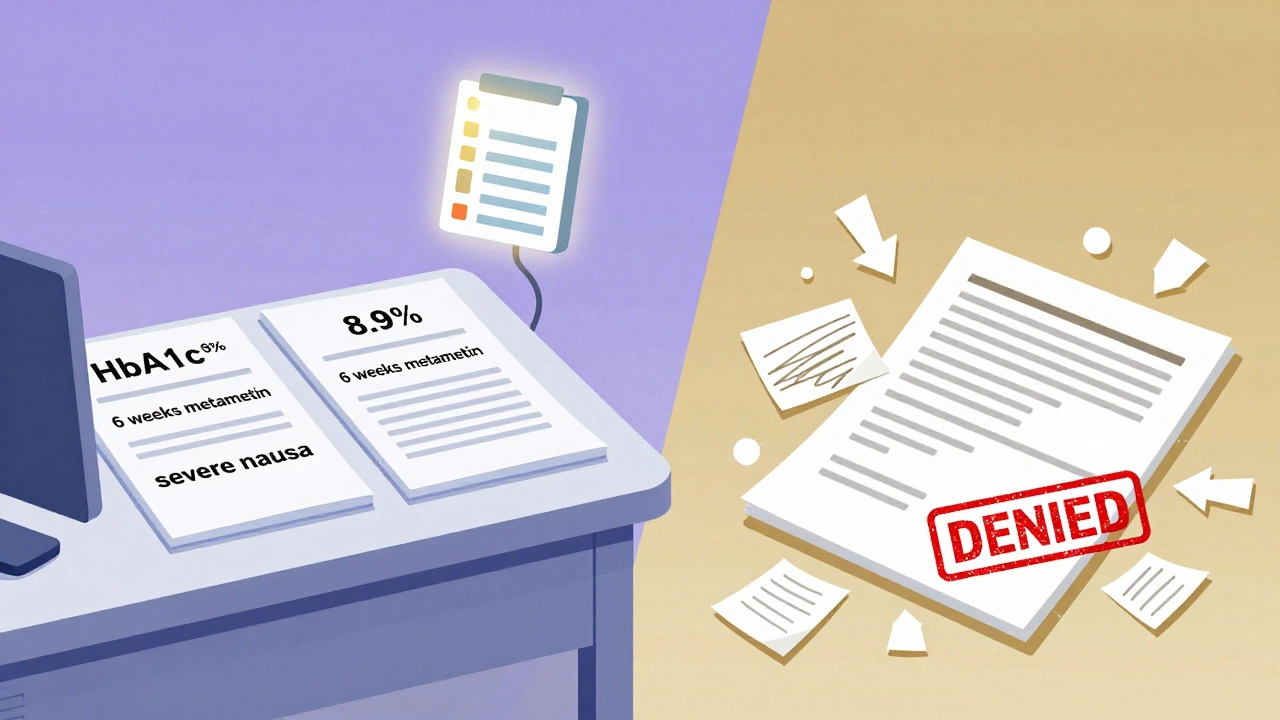
Most denials happen because the paperwork is vague. Saying “patient failed generic” isn’t enough. Insurers want specifics. Successful claims include:- Exact duration of generic use (e.g., “6 weeks of metformin 500mg twice daily”)
- Measurable outcomes (e.g., “HbA1c remained at 8.9% despite adherence”)
- Documented side effects (e.g., “severe nausea after 3 days on levothyroxine”)
- Provider notes confirming therapeutic failure, not just patient complaint
How Insurers Differ-And Why It Matters
Not all insurers play by the same rules. Here’s how major players compare:| Payer | Generic Trial Duration | Number of Generics Required | Electronic Prior Auth Adoption |
|---|---|---|---|
| UnitedHealthcare | 30 days | 2 different generics | 91% |
| Aetna | 14 days | 1 generic | 88% |
| Cigna | 14-28 days | 1-2 generics | 90% |
| Medicare Part D | Varies by plan | 1 generic (often) | 75% |
| Medicaid (2026 rule) | Not specified | Varies | 100% (required) |
The Hidden Costs: Time, Stress, and Abandoned Treatments
The biggest problem isn’t the policy. It’s the burden. A 2024 JAMA study found providers waste $13.4 billion a year on prior authorization paperwork. Sixty-three percent of that time is spent on generic alternative requests. That’s 43 prior authorizations per physician per week-most of them for drugs that should be automatic. Pharmacists aren’t immune. One pharmacist on Sermo reported spending 14.6 hours a week just on prior auth. That’s almost two full workdays. And patients suffer too. A Patients Rising survey found 67% of people abandon their prescriptions because of delays. For mental health meds, diabetes drugs, or GLP-1 agonists like Wegovy, that delay can mean worsening symptoms, hospital visits, or even death.What Actually Works? Proven Strategies for Pharmacists
You can’t change the system. But you can work smarter within it.- Submit early. Don’t wait until the patient’s prescription runs out. Start the process 14 days before refill date.
- Use ePA. Electronic submissions get approved 78% of the time within a week. Fax? Only 34%.
- Know your payer templates. Each insurer has a preferred form. Using it cuts denials by 37%.
- Designate a prior auth lead. Pharmacies with a dedicated staff member reduce processing time by 52%.
- Track everything. Use a simple spreadsheet or software to log submissions, dates, and outcomes. Lost requests drop by 89%.
The Future: Automation, AI, and Real-Time Decisions
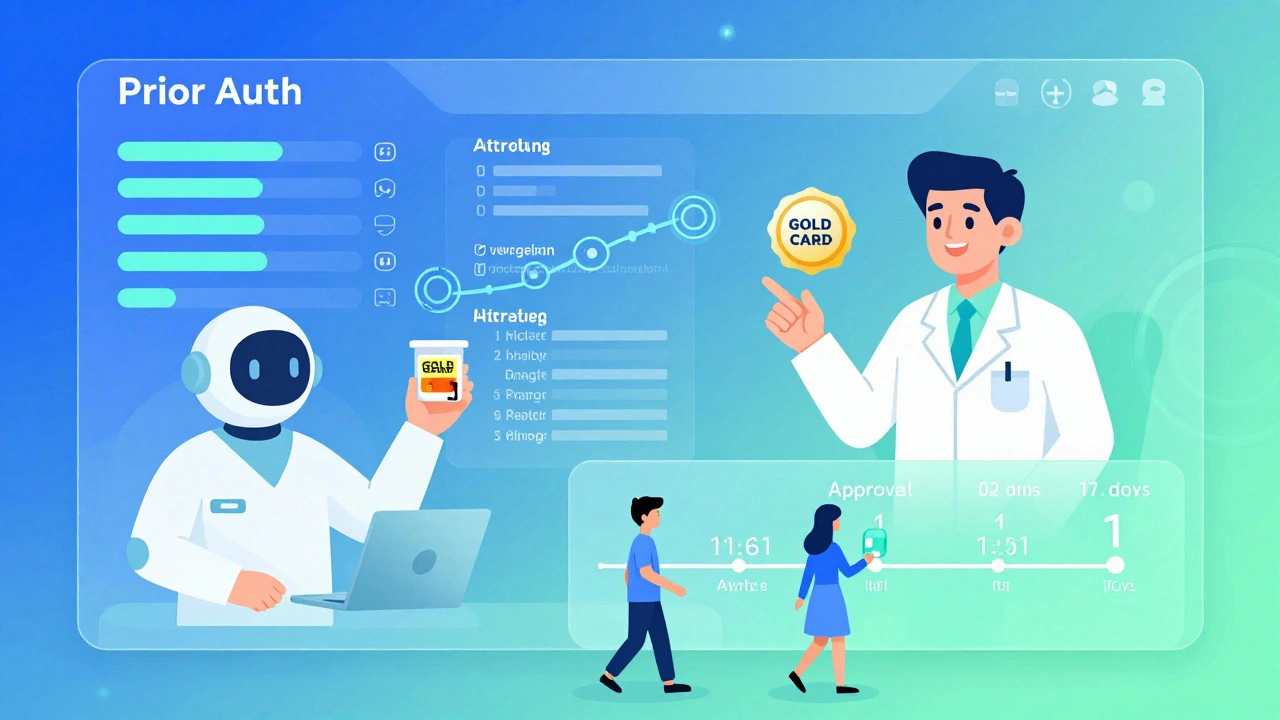
Change is coming. By 2026, CMS will require real-time benefit tools to show prior auth requirements at the moment a doctor prescribes. That means pharmacists will know upfront whether a drug needs approval-no more surprises at the counter. AI tools are already helping. Sixty-one percent of large health systems are testing natural language processing to auto-fill prior auth forms. Early results show a 44% drop in submission time. And blockchain pilots? Yes, really. Mayo Clinic’s system uses a distributed ledger to verify patient history instantly. Approval rates for exceptions jumped to 92%. The HL7 Da Vinci Project is building a universal API for prior auth. By 2027, most big insurers will use it. That could cut processing time to under 24 hours for routine cases.What’s Not Working-and Why
Critics say step therapy for generics often hurts more than it helps. Dr. Patrice Harris, former AMA president, called it “an unnecessary barrier to care.” A 2023 CMS OIG report found 17.3% of denials for brand-name drugs were medically inappropriate-meaning patients waited too long for effective treatment. Patients with multiple sclerosis, epilepsy, or depression often need brand drugs because generics trigger side effects or don’t control symptoms. But insurers don’t always recognize that. The American College of Physicians says: if a generic has an FDA AB rating (meaning it’s bioequivalent), it should be automatically approved. No paperwork needed. Right now, that’s not the rule. It’s the exception.What Pharmacists Can Do Today
You’re on the front lines. You see the delays. You hear the frustration. Here’s your action list:- Document every generic trial with measurable outcomes-no vague notes.
- Always submit electronically. Never fax if you can avoid it.
- Keep a list of payer-specific requirements in your pharmacy’s reference folder.
- Train your staff on gold carding eligibility. Ask insurers directly.
- Advocate for patients. If a denial seems wrong, appeal. And document why.
- Push for automation. If your pharmacy uses software, make sure it’s connected to ePA networks.
Why do insurers make patients try generics before brand-name drugs?
Insurers require patients to try generics first because they’re significantly cheaper and often just as effective. This practice, called step therapy, helps reduce overall drug spending. For example, a $5 generic for high blood pressure works the same as a $300 brand-name version for most patients. Insurers use prior authorization to ensure brand drugs are only used when truly necessary-not just because of preference or habit.
How long does prior authorization for a generic alternative typically take?
Processing times vary by insurer. Cigna takes 5-10 business days. UnitedHealthcare allows 7-14 calendar days. Starting January 1, 2026, Medicaid plans must respond within 7 calendar days for standard requests and 72 hours for urgent ones. Electronic submissions (ePA) usually get decisions in 1-3 days, while fax requests can take over a week.
What’s the most common reason for a prior authorization denial?
The #1 reason is inadequate documentation of generic failure. Saying “the patient didn’t respond” isn’t enough. Insurers need specifics: how long the generic was tried, what symptoms persisted, lab results, side effects, and proof of adherence. Requests with clear, measurable failure criteria have an 87% approval rate. Vague ones? Only 42%.
Can pharmacists help patients avoid prior authorization delays?
Yes. Pharmacists can start the process early-ideally 14 days before the prescription runs out. They can use electronic prior auth systems instead of faxing. They can ensure documentation includes exact dates, dosages, and outcomes. They can also check if the prescriber qualifies for “gold carding,” which gives automatic approvals. These steps cut approval times by up to 70%.
Are there any new laws changing how prior authorization works?
Yes. As of 2024, 27 states have passed laws targeting prior authorization for generic alternatives. Texas, for example, requires decisions within 72 hours for urgent cases. Starting January 1, 2026, Medicaid plans nationwide must respond within 7 days for standard requests and 72 hours for urgent ones. Also, by 2026, insurers must show prior auth requirements in real time at the point of prescribing-so doctors know upfront if a drug needs approval.
What’s the difference between a generic and a biosimilar?
Generics are exact chemical copies of small-molecule drugs (like metformin or lisinopril). Biosimilars are highly similar-but not identical-copies of complex biologic drugs (like Humira or Enbrel). Biosimilars require more testing and are often subject to stricter prior authorization rules. Even when a biosimilar exists, insurers may still require prior auth for the brand-name biologic, especially in oncology or autoimmune conditions.
Is there a way to get around prior authorization entirely?
Only in rare cases. If a patient has a documented medical necessity-like an allergic reaction to the generic, or proven ineffectiveness-the prescriber can submit an exception request. Some insurers offer “gold carding” for providers with high approval rates, which bypasses the process. But for most patients, prior authorization is unavoidable. The goal isn’t to avoid it-it’s to navigate it efficiently.
about author


Saurabh Tiwari
bro this is wild 🤯 i work in a pharmacy in mumbai and we dont even have this mess. if the doc writes it, we give it. no forms, no faxing, no waiting. insurance here is mostly out of pocket anyway. but still, 14 hours a week on paperwork? that's a full day. how are yall even breathing?
Kristen Yates
I’ve seen this play out with my mom’s diabetes meds. They made her try three generics before approving the one that actually kept her HbA1c under control. By then, she’d been hospitalized twice. The system isn’t broken-it’s designed to make people suffer before they get help.
Michael Campbell
big pharma and big insurance are in bed together. they want you dependent on expensive drugs. generics are cheaper but they’re not the same. they cut corners. you think this is about savings? it’s about control.
Anthony Breakspear
listen, if you're a pharmacist and you're spending half your week on prior auth, you're doing it wrong. get the ePA system dialed in, assign one person to own it, and keep a cheat sheet of each insurer’s weird requirements. i’ve seen teams cut approval time in half with zero new hires. it’s not magic-it’s systems.
Fern Marder
you know what’s funny? the same people who scream about 'personal responsibility' are the ones who built a system where you need a PHD just to get your insulin. 🤡
Carolyn Woodard
The structural inefficiencies inherent in step therapy protocols represent a misalignment between cost-containment objectives and clinical efficacy paradigms. The administrative burden disproportionately impacts outpatient pharmacy workflows, particularly in resource-constrained settings where personnel are already overextended. The absence of interoperable electronic prior authorization infrastructure exacerbates delays and increases the probability of therapeutic discontinuation.
Allan maniero
I’ve worked in UK community pharmacies for 22 years. We don’t have prior auth for generics here-NHS just pays for what’s prescribed unless there’s a clear clinical reason not to. It’s not perfect, but it’s human. I can’t imagine spending 14 hours a week arguing with an algorithm about whether metformin worked for someone. The Americans really do love a bureaucracy.
Zoe Bray
The implementation of real-time benefit tools, as mandated by CMS under the 21st Century Cures Act, represents a significant advancement in clinical workflow optimization. However, without standardized API protocols across all payers, interoperability remains fragmented. The HL7 Da Vinci Project is a necessary step, but adoption velocity is contingent upon payer incentives and regulatory enforcement.
Victoria Graci
It’s like the system was designed by someone who believes suffering is a character-building exercise. We treat diabetes like it’s a moral failure. If your body doesn’t respond to the cheapest version, you’re just not trying hard enough. Meanwhile, people are dying because the formulary doesn’t match their biology. The real tragedy isn’t the paperwork-it’s that we’ve accepted this as normal.
Girish Padia
people in india dont even have insurance. so we dont have this crap. you americans think you need a 10 page form to get a pill? get a job that pays more. stop expecting the government to fix your bad choices.
Saket Modi
another day, another 12 forms. why do i even bother? i just tell patients to go to walmart and buy the brand over the counter. cheaper than waiting 2 weeks for a denial. 🤷♂️
william tao
The statistical outlier of 87% approval rate for documented failures is statistically insignificant when contextualized within the broader administrative entropy of the U.S. healthcare reimbursement ecosystem. The entire prior authorization paradigm is a performative compliance theater designed to shift liability from insurers to frontline clinicians.
Sandi Allen
I’ve seen it. I’ve seen the fax machines. I’ve seen the same form, sent three times, with the same info, each time rejected because the insurer changed their mind. It’s not a system-it’s a game. And they’re the ones who made the rules. And they always win.
John Webber
why do they even make us do this? i mean like, if the generic works why not just use it? but then why do they make us jump through hoops? its like they want us to hate our jobs. i just gave up. now i just write the script and tell the patient to call their doctor. they’re the ones who asked for it.
Elizabeth Farrell
I want to say thank you to every pharmacist who does this work. You’re the ones who catch the errors, who fight the denials, who stay late to get the meds to someone who can’t afford to wait. I know it feels thankless. But you’re not just filling prescriptions-you’re holding the system together with duct tape and hope. Keep going. Someone out here sees you.