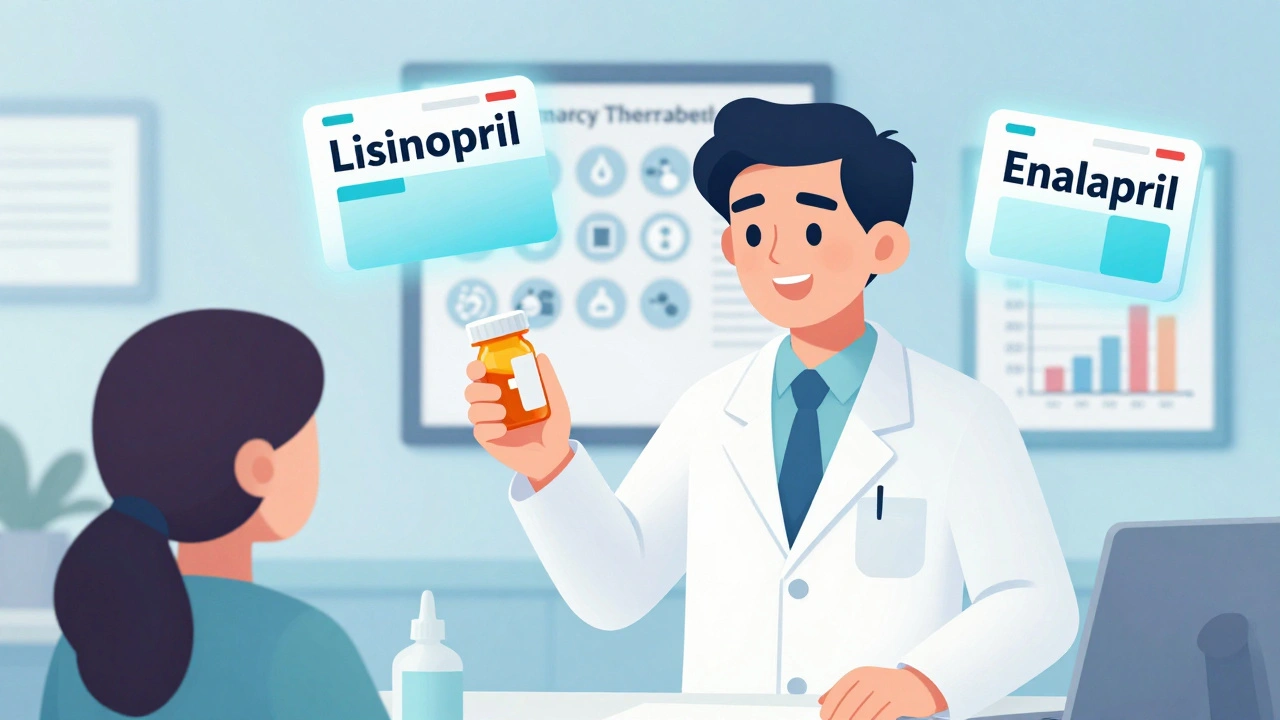
Therapeutic interchange means swapping medications within the same class to cut costs without losing effectiveness. It’s not a random change - it’s a structured, evidence-based practice used mostly in hospitals and nursing homes.

When your pharmacist hands you a different pill than what your doctor wrote on the script, it’s often because of therapeutic interchange, the practice of replacing one medication with another that has the same medical effect, even if it’s a different brand or chemical form. Also known as drug substitution, it’s not a mistake—it’s a standard part of how pharmacies manage costs and supply. This isn’t about generics vs. brand names alone. It’s about finding an equally effective option that fits your insurance, your budget, or what’s actually in stock.
Therapeutic interchange relies on generic drugs, medications approved by the FDA to work just like their brand-name counterparts in strength, dosage, and safety. Also known as bioequivalent drugs, they’re the backbone of most interchange programs. But it’s not just about price. Sometimes, a drug runs out, or your insurance won’t cover the original. That’s when your pharmacist checks if another drug in the same class—like switching from one NSAID to another, or one antidepressant to a similar one—can do the job without risking your health. It’s common, legal, and often smart. But it only works if done right. That’s why pharmacists follow strict guidelines: matching active ingredients, checking for allergies, avoiding dangerous interactions, and making sure the switch won’t trigger withdrawal or side effects.
Not all drugs can be swapped. Some, like insulin or thyroid meds, need exact dosing. Others, like seizure drugs, have tiny windows of effectiveness. That’s why pharmacy practice, the professional standards and protocols pharmacists follow when managing drug substitutions matters so much. A good pharmacist won’t just swap pills—they’ll review your full history, talk to your doctor if needed, and explain why the change is safe. And if you’re unsure? Ask. You have the right to know what’s being changed and why.
What you’ll find in these posts isn’t theory—it’s real-world examples. From how insurance forces medication switch, the process of changing from one drug to another due to coverage rules or availability to how patients handle unexpected changes in pill color or shape, these stories show what therapeutic interchange really looks like on the ground. You’ll see how people deal with prior authorizations, what happens when a drug shortage hits, and how to tell if a substitution is right for you.
Therapeutic interchange means swapping medications within the same class to cut costs without losing effectiveness. It’s not a random change - it’s a structured, evidence-based practice used mostly in hospitals and nursing homes.