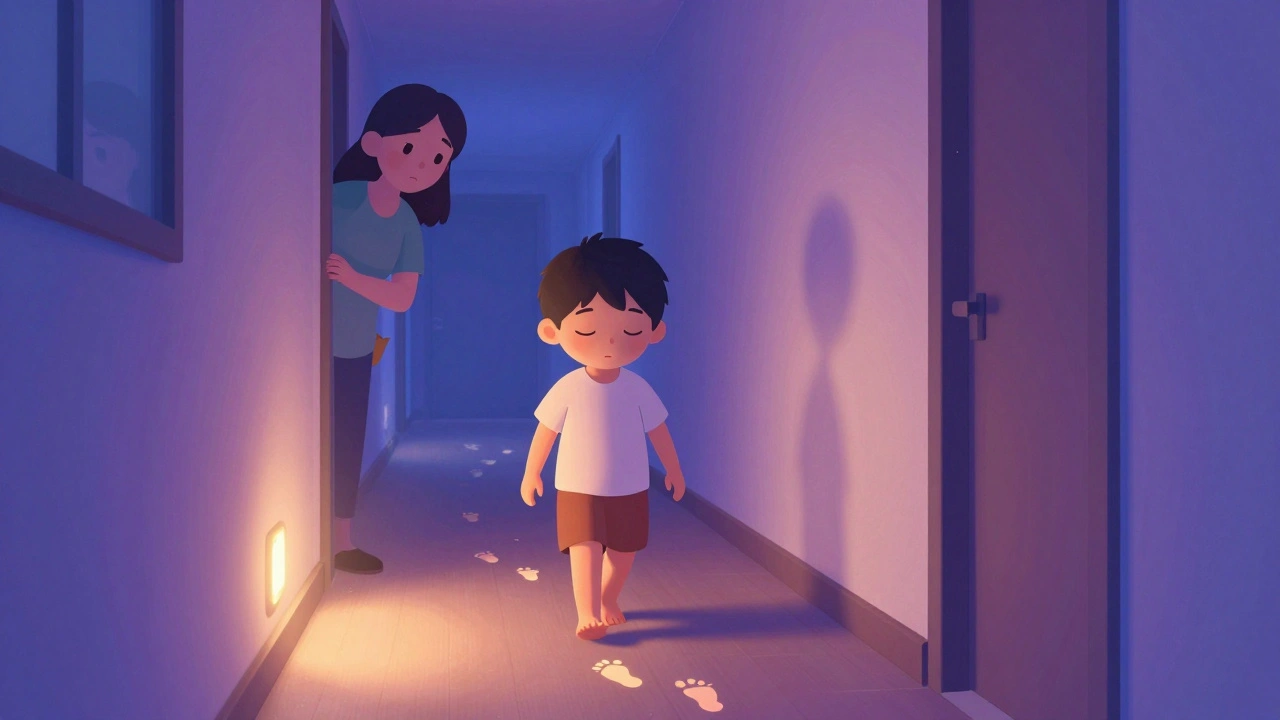
Learn practical, science-backed ways to manage sleepwalking and night terrors-without medication. Discover safety tips, behavioral strategies, and when to seek help for these common sleep disorders.

When someone sleepwalking, a type of parasomnia where a person performs complex behaviors while still asleep. Also known as noctambulism, it’s not just wandering around—it’s the brain partially awake while the body moves, often with no memory afterward. This isn’t a phase kids outgrow overnight, and it’s not just odd behavior. It’s a neurological event that affects 1 in 5 children and up to 4% of adults, often tied to stress, sleep deprivation, or underlying medical issues.
Parasomnia, a category of sleep disorders involving abnormal movements, behaviors, emotions, or perceptions during sleep includes more than just sleepwalking. It also covers night terrors, intense episodes of fear, screaming, and flailing during deep sleep, often mistaken for nightmares. These aren’t dreams—you’re not conscious of them. And unlike nightmares, you usually don’t remember them. Both can be triggered by the same things: irregular sleep schedules, fever, certain medications, or sleep apnea. If someone in your home sleepwalks regularly, it’s not just strange—it’s a safety issue. People have fallen down stairs, walked outside in freezing weather, or even driven while asleep. That’s why knowing how to prevent accidents matters more than trying to wake them.
Most sleepwalkers don’t need drugs. The best fix is often simple: fix the sleep environment. Lock windows, remove clutter, install alarms on doors, and keep keys out of reach. Avoid alcohol and heavy meals before bed. Stick to a bedtime routine—even on weekends. If it’s happening often, especially in adults, it could point to something deeper like PTSD, epilepsy, or a reaction to antidepressants or sleep aids. Some medications, like certain antihistamines or sedatives, can make it worse. If you’ve noticed a change in sleep behavior after starting a new drug, talk to your doctor. You might need a sleep study to rule out other conditions.
There’s no magic cure, but understanding sleepwalking helps you take control. It’s not something to laugh off. It’s not just "they’re just sleepwalking." It’s a signal your body is out of balance. And if you’re living with someone who does it, your actions can prevent real harm. Below, you’ll find real cases, practical safety tips, and insights from people who’ve dealt with this firsthand—no fluff, just what works.
Learn practical, science-backed ways to manage sleepwalking and night terrors-without medication. Discover safety tips, behavioral strategies, and when to seek help for these common sleep disorders.