
Sleepwalking and Night Terrors: Practical Management Strategies for Families and Adults
What Are Sleepwalking and Night Terrors?
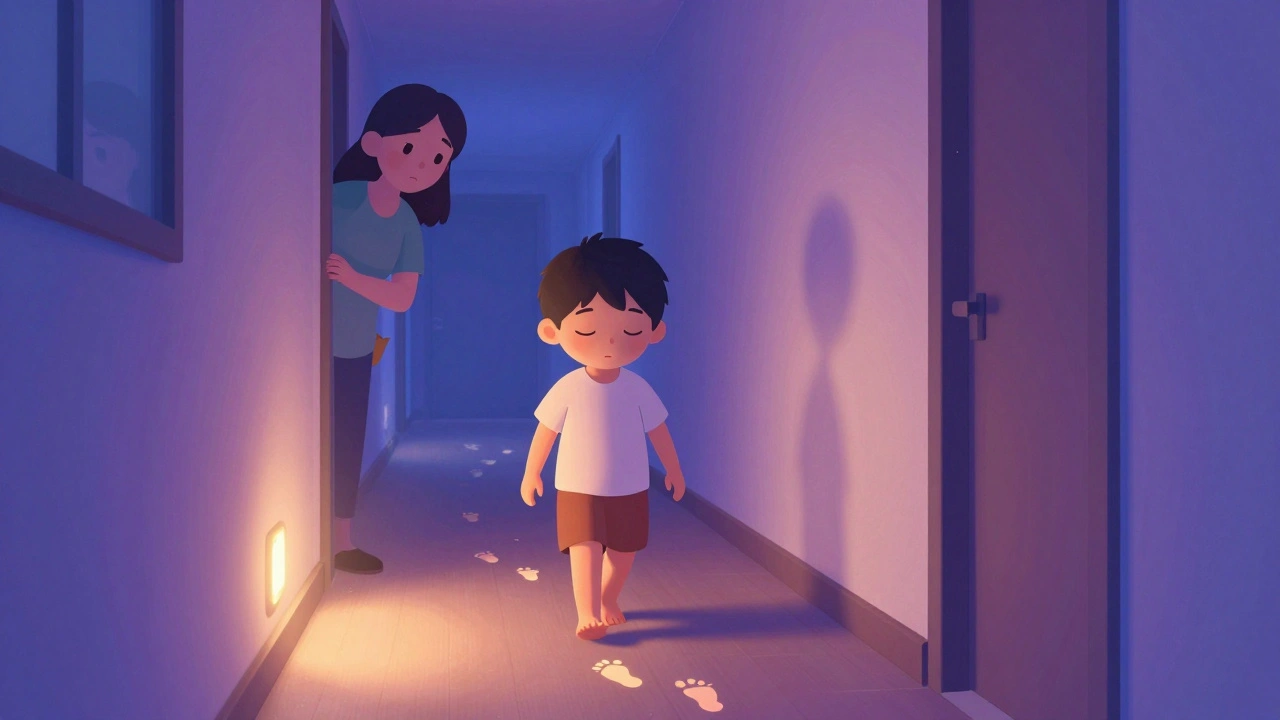
Sleepwalking and night terrors are types of parasomnias-disorders that cause unusual behaviors during sleep. Unlike nightmares, which happen during REM sleep and leave you remembering vivid dreams, these events occur during deep non-REM sleep, usually within the first few hours after falling asleep. People don’t remember them. They might sit up, shout, run around, or even leave the house-completely unaware. Afterward, they wake up confused or not at all.
These episodes are most common in children, especially between ages 3 and 8. About 1 in 5 kids will sleepwalk at least once, and 1 in 20 will have night terrors. But they don’t disappear with childhood. Around 1 in 25 adults still experience them, often triggered by stress, sleep deprivation, or underlying conditions like sleep apnea.
Why Do They Happen?
The brain doesn’t transition smoothly between sleep stages during these events. Deep sleep (slow-wave sleep) is when the body repairs itself, but the brain isn’t fully offline. In sleepwalking, motor areas activate while consciousness stays shut down. In night terrors, the emotional centers fire off-heart races, sweat pours, screams erupt-all without any dream content.
Genetics play a big role. If one parent sleepwalked, their child has a 45% chance of doing the same. If both parents did, the risk jumps to 60%. Researchers have found specific gene variants linked to these behaviors, especially in families with multiple affected members.
Other triggers include:
- Missing sleep or irregular sleep schedules
- Fever or illness
- Stress or anxiety
- Alcohol or certain medications
- Obstructive sleep apnea
- Restless legs syndrome
Adult-onset cases are especially concerning. If someone starts sleepwalking or having night terrors after age 18, it could signal a neurological issue-like epilepsy, Parkinson’s, or a brain injury. That’s why doctors recommend a sleep study if it begins in adulthood.
Differentiating Night Terrors from Nightmares
People often mix up night terrors and nightmares. Here’s how to tell them apart:
| Feature | Night Terrors | Nightmares |
|---|---|---|
| Sleep Stage | Deep NREM (first third of night) | REM (second half of night) |
| Duration | 30 seconds to 5 minutes | Several minutes |
| Physical Signs | Heart rate spikes to 120-140 bpm, sweating, rapid breathing | Mild increase in heart rate, no sweating |
| Memory After | No recall-complete amnesia | Vivid dream memory |
| Response to Awakening | Hard to wake; confused if awakened | Easily woken; aware and calm |
| Typical Age | Children 3-7 years | All ages, especially teens and adults |
Understanding this difference matters. Trying to wake someone during a night terror often makes it worse. With nightmares, a gentle touch and reassurance helps. With night terrors, safety comes first.
Safety First: Protecting Against Injury
The biggest danger isn’t the episode itself-it’s what happens during it. People have broken arms falling down stairs, walked into glass doors, or even driven cars while asleep. One parent in Cardiff told me their child climbed out a second-story window during a sleepwalking episode. No one was hurt, but the fear never left.
Here’s what actually works to prevent harm:
- Lock all windows and exterior doors. Use alarms that beep when opened-these cost under £30 and are easy to install.
- Remove sharp objects, glass tables, or clutter from near the bed.
- Place a mattress on the floor if the person sleeps on an upper bunk or high bed.
- Install motion-sensor lights in hallways and bathrooms so they don’t trip in the dark.
- Keep keys, phones, and shoes out of reach.
- Use baby gates at the top of stairs if needed.
Studies show these simple steps reduce injury risk by up to 75%. Most families don’t realize how much they can do without medication or doctor visits.
Behavioral Strategies That Work
Medication isn’t the first answer. In fact, 90% of pediatric cases resolve on their own by age 12. For adults, behavior changes often do the trick.
Scheduled Awakenings
This is the most effective non-drug treatment for sleepwalking. It works by interrupting the deep sleep cycle before the episode starts.
Here’s how:
- Track when episodes happen for two weeks. Do they always occur at 1:15 a.m.?
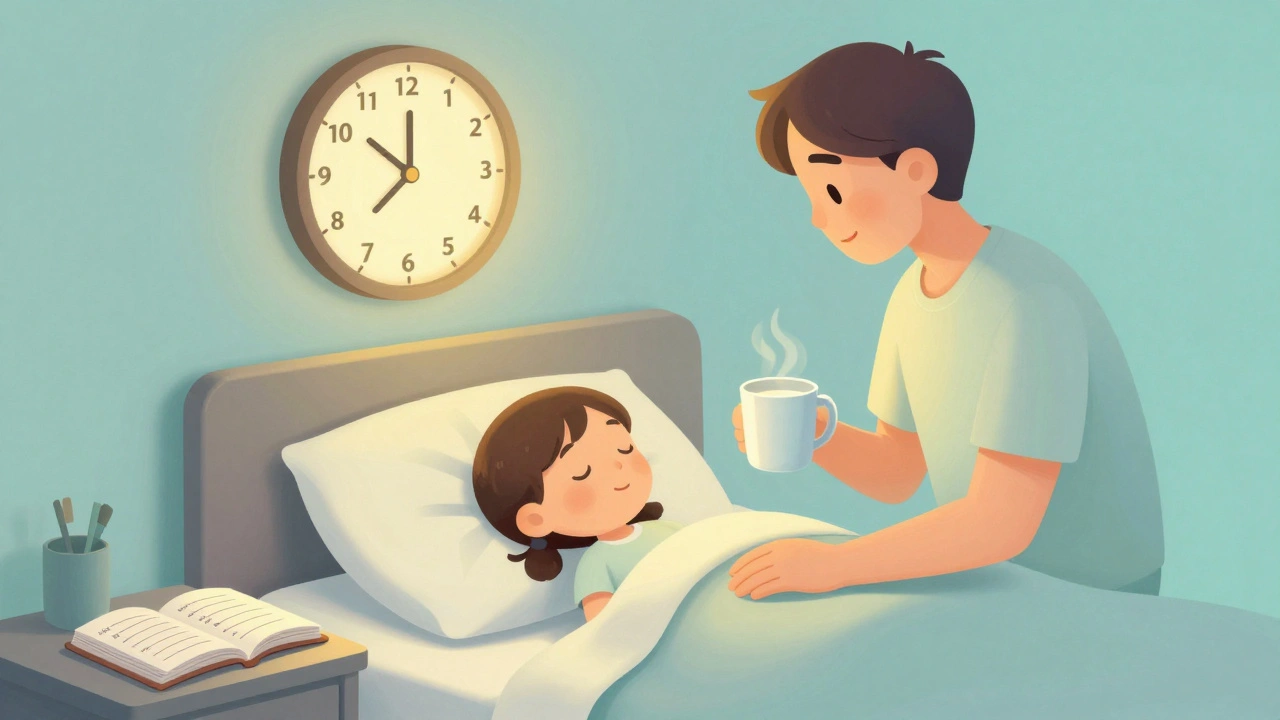
- Set an alarm to wake the person 15-30 minutes before that time.
- Keep them fully awake for 5-10 minutes-sit them up, talk to them, let them use the bathroom.
- Let them go back to sleep.
- Repeat for 7-14 nights in a row.
Studies show this stops episodes in 70-80% of cases. It’s tedious, but it’s free and has no side effects.
Sleep Extension
Most people don’t get enough deep sleep because they’re not sleeping long enough. Adding just 30 minutes of sleep per night can reduce slow-wave sleep pressure-the root cause of these episodes.
Try going to bed 30 minutes earlier for two weeks. No screens. No caffeine. Just rest. One adult patient in Swansea reduced weekly sleepwalking from five times to once after doing this. No pills. Just more sleep.
Consistent Routine
Irregular sleep schedules throw off brain rhythms. Going to bed and waking up within 30 minutes of the same time every day-even on weekends-cuts episode frequency by nearly half, according to Johns Hopkins data.
When to See a Doctor
You don’t need to rush to a clinic for every episode. But these signs mean it’s time:
- Episodes happen more than twice a week
- There’s violence-hitting, kicking, or yelling aggressively
- The person gets confused for more than 15 minutes after waking
- They start sleepwalking as an adult (after age 18)
- They eat or drink during episodes (sleep-related eating disorder)
- They hurt themselves or others
Doctors may recommend a sleep study (polysomnography) with video monitoring. It’s the only way to confirm the diagnosis and rule out seizures or other conditions.
Medications: Only When Necessary
Most people don’t need drugs. But for severe cases, two options are commonly used:
- Clonazepam (0.25-0.5 mg at bedtime): Works in 60-70% of cases. But it can cause drowsiness, dependence, and memory issues. Not for long-term use.
- Melatonin (3-10 mg at bedtime): Safer option. Helps regulate sleep cycles. Works in 40-50% of cases. Better for children and older adults.
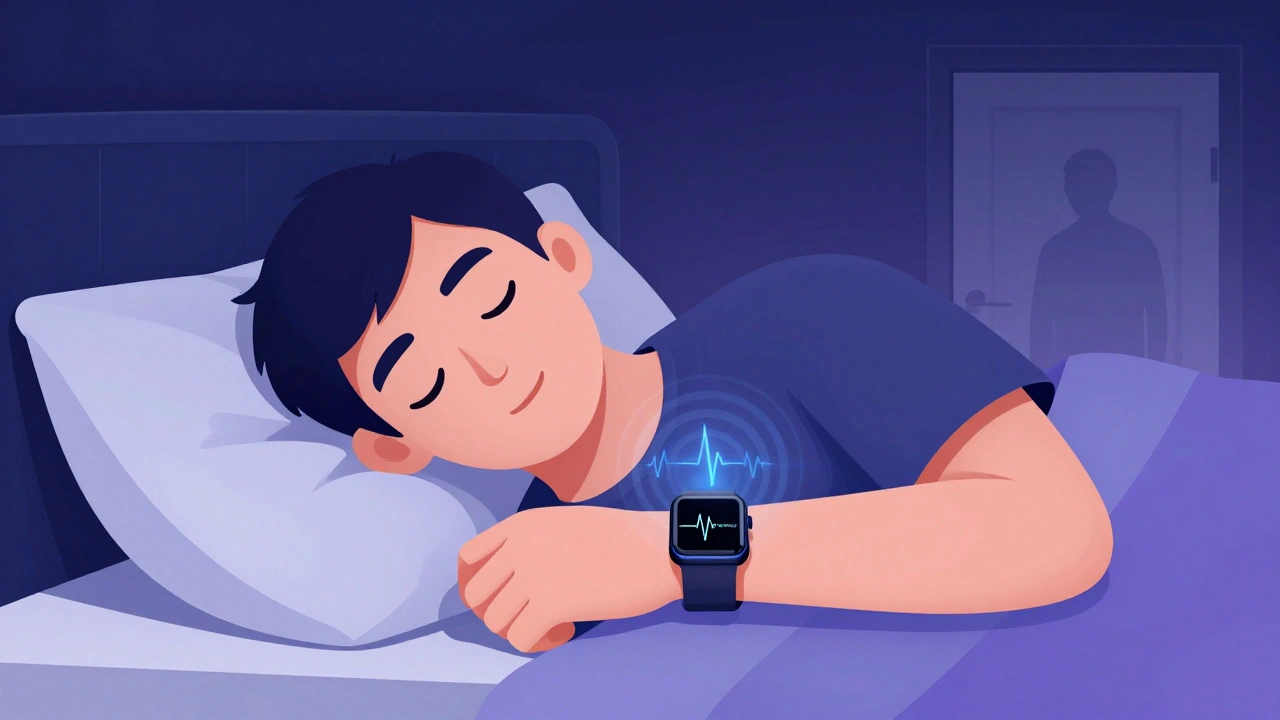
There’s also a new FDA-approved device called Nightware-a smartwatch app that detects rising heart rate before a night terror starts and gently vibrates to interrupt it. Early trials show a 35% drop in episodes after six months. It’s expensive (£200+), but covered by some private insurers.
What Doesn’t Work
Many myths persist:
- Waking someone during an episode-This often makes them more agitated and disoriented. Better to guide them gently back to bed.
- Scaring them-Yelling or spraying water doesn’t help. It just creates trauma.
- Just waiting it out-For adults or dangerous cases, this is risky. Safety comes first.
- Ignoring sleep apnea-If you snore loudly, gasp at night, or feel tired during the day, get tested. Treating sleep apnea often stops parasomnias entirely.
Long-Term Outlook
Most children outgrow sleepwalking and night terrors. By age 15, only 4% still experience them. For adults, outcomes depend on triggers. If stress or poor sleep is the cause, fixing those usually fixes the problem. If there’s an underlying condition like sleep apnea, treating that brings relief.
Long-term studies show that 60-70% of adults who follow behavioral strategies see major improvement. Only 5-10% need medication long-term.
The key is not to panic. These episodes are scary to witness-but rarely dangerous if managed well. With simple safety steps, consistent sleep, and patience, most families regain peace of mind.
Can children outgrow sleepwalking and night terrors?
Yes, most do. Around 80% of children who sleepwalk stop by age 12, and 90% of those with night terrors outgrow them by age 13. These are developmental phases, not lifelong conditions. The brain matures and transitions more smoothly between sleep stages over time.
Should I wake someone during a night terror?
No. Trying to wake someone during a night terror often makes them more confused, agitated, or even violent. Instead, stay calm, speak softly, and gently guide them back to bed. Most episodes end on their own within 5 minutes. Safety is more important than trying to interrupt the episode.
Is sleepwalking dangerous?
It can be. While most episodes are harmless-like sitting up or walking to the kitchen-some people have walked out of homes, driven cars, or fallen down stairs. Injuries like cuts, bruises, or fractures are not rare. That’s why safety measures like locking doors, removing hazards, and using alarms are essential.
Can stress cause night terrors in adults?
Absolutely. Stress, anxiety, and emotional trauma are major triggers for adult-onset night terrors. Many people report their first episode after a job loss, divorce, or illness. Managing stress through routine, therapy, or sleep extension often reduces or eliminates episodes.
Do I need a sleep study for parasomnia?
Not always. For children with typical episodes and no injury risk, a sleep study isn’t needed. But if episodes start in adulthood, happen frequently, involve violence, or don’t improve with behavior changes, a sleep study with video monitoring is the best way to confirm the diagnosis and rule out seizures, sleep apnea, or other neurological issues.
Are there new treatments for sleepwalking?
Yes. The FDA-approved Nightware system, which uses a smartwatch to detect early signs of arousal and gently vibrate to prevent full episodes, has shown promising results in clinical trials. Digital CBT apps like Sleepio also help reduce episodes by improving sleep hygiene and reducing anxiety. Genetic research is also identifying risk markers, which could lead to personalized prevention in the future.
about author

Kidar Saleh
I’ve seen this in my cousin’s kid-3 a.m., screaming like the house is on fire, eyes wide open but totally blind to everything. We just sat there like zombies until it passed. No waking. No yelling. Just waiting for the storm to blow over. Scary as hell, but the article’s right: safety first. We put a gate on the stairs and locked the windows. No more near-death experiences.
Gavin Boyne
So let me get this straight-you’re telling me the same brain that lets me forget where I put my keys at 8 a.m. is also the one that sends me to the fridge at 2 a.m. in full zombie mode? And we’re supposed to just… let it happen? I sleepwalked from 6 to 14. Once I woke up holding a spatula in the bathtub. My mom said I was ‘making pancakes for the moon.’ I didn’t even know I had a spatula. The real horror? I still do it sometimes. Stress? Yeah. Sleep? Never enough. I’m trying the 30-minute extension thing. Wish me luck-or at least send a therapist.
Rashi Taliyan
My daughter had night terrors every Thursday night-like clockwork. We tried everything: lavender, white noise, chamomile tea, even chanting mantras. Nothing worked. Then we started waking her at 1:10 a.m. every day. No drama. No panic. Just a quiet cup of warm milk and a hug. By week three, it stopped. Not because we fixed her brain-but because we outsmarted the cycle. I cried when she slept through the night for the first time in years. This isn’t magic. It’s love with a timer.
Chloe Madison
I’m a nurse. I’ve seen adults sleepwalk into traffic. I’ve seen people try to ‘fight’ the ghost they think is in the room. One man punched his wife because he thought she was an intruder. This isn’t ‘quirky bedtime behavior.’ It’s a neurological glitch with real-world consequences. The article nails it: lock the doors, remove the glass, install motion lights. No one should have to live in fear of their own sleep. And yes-sleep apnea? 80% of the time, it’s the hidden trigger. Get tested. Your family deserves better than a midnight horror movie.
Vincent Soldja
I don't care about your sleep study or your watch. Just put them in a padded room and lock the door. Problem solved.
Francine Phillips
My dad started sleepwalking after his heart attack. No one told us it could be linked to sleep apnea. We thought it was stress. Turns out his CPAP machine fixed it. I didn’t even know he had apnea until the sleep study. Now he sleeps like a baby. I wish we’d known sooner. Just… get tested if it’s new. Seriously.
Kara Bysterbusch
I am writing this from a place of profound gratitude and clinical awe. The structural clarity of this exposition-its synthesis of neurophysiology, behavioral psychology, and pragmatic safety engineering-is nothing short of masterful. The distinction between REM and NREM parasomnias is articulated with such precision that even a layperson may comprehend the underlying pathophysiology. Moreover, the emphasis on non-pharmacological intervention, particularly scheduled awakenings, represents a paradigm shift away from the over-medicalization of developmental sleep phenomena. I shall disseminate this document to my colleagues in pediatric neurology, sleep medicine, and family counseling. Thank you for this luminous contribution to the field.