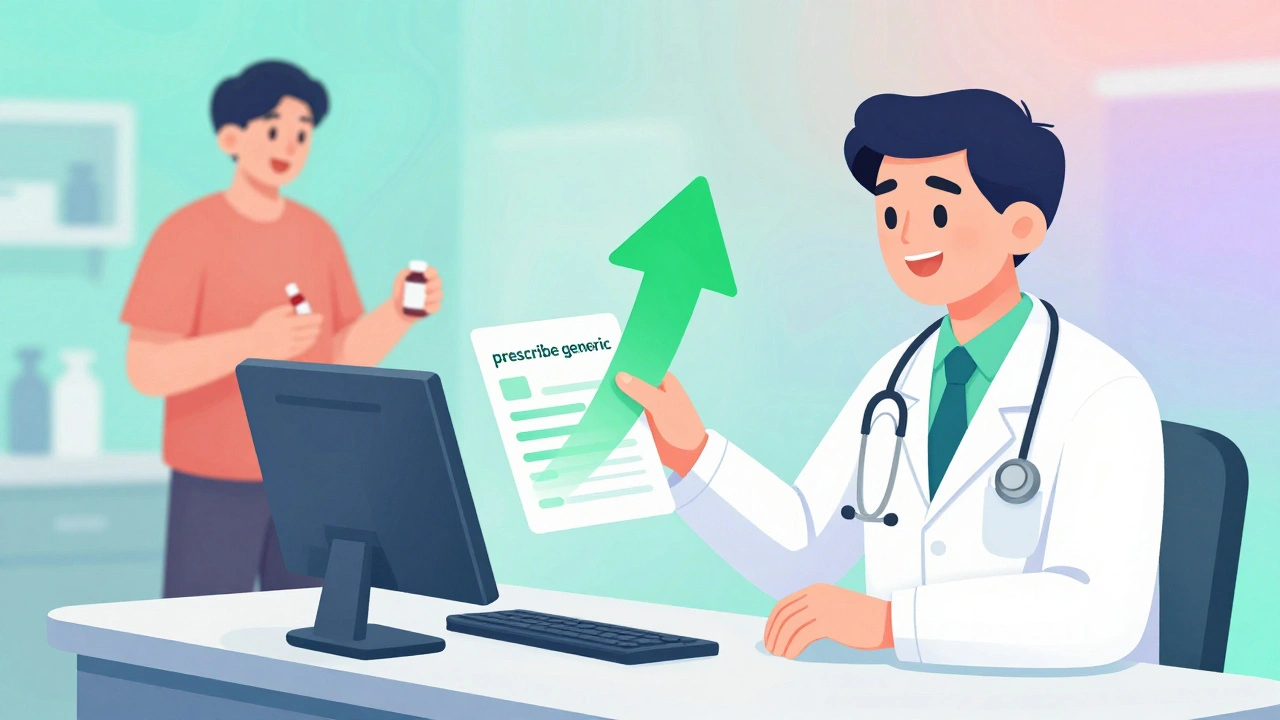
Generic prescribing incentives reward doctors for choosing lower-cost generic drugs, saving billions in healthcare spending. But how do these programs really work-and when do they risk compromising care?

When you get a prescription, it’s not just about what’s best for your condition—it’s shaped by prescribing behavior, the pattern of decisions doctors make when choosing drugs, influenced by guidelines, cost, experience, and system pressures. Also known as drug selection patterns, it’s the hidden engine behind every pill you take. This isn’t random. It’s a mix of science, policy, and real-world constraints. A doctor might pick a cheaper generic because insurance requires it. Or switch you to a similar drug because the original is on shortage. These aren’t mistakes—they’re part of how the system tries to balance safety, cost, and access.
One big piece of this is therapeutic interchange, a structured swap of one drug for another in the same class, done to cut costs without sacrificing results. Also known as formulary substitution, it’s common in hospitals and clinics, not just pharmacies. For example, swapping one NSAID for another like aceclofenac instead of diclofenac because it’s gentler on the stomach. This isn’t cutting corners—it’s using evidence to make smarter choices. But it only works when patients are informed. If you notice your pill looks different or you’re suddenly on a new name, ask why. You’re not being replaced—you’re being optimized.
Then there’s the role of generic drugs, medications that are chemically identical to brand names but cost far less, thanks to strict FDA bioequivalence rules. Also known as off-patent drugs, they make up over 90% of prescriptions in the U.S. But their appearance changes because of trademark laws, which is why your blue pill might suddenly be white. That doesn’t mean it’s weaker. It just means the law requires visual distinction. And when a drug is in short supply, prescribing behavior shifts again—doctors turn to alternatives, sometimes even before patients know there’s a problem. That’s why checking the FDA drug shortage database matters.
Prescribing behavior also responds to safety alerts. If a new side effect shows up—like dysosmia from antibiotics or urinary urgency from antidepressants—doctors adjust. They don’t just follow the textbook. They watch what’s happening in real patients. That’s why reports of counterfeit pills or adverse reactions matter. When you report a fake drug to the FDA, you’re not just protecting yourself—you’re helping shape how future prescriptions are made.
And it’s not just about the drug. It’s about who’s writing the script. A primary care doctor might prefer a pill that’s easy to take and has few interactions. A specialist might go for something more targeted. Insurance rules add another layer—prior authorization for generics, step therapy, formulary tiers. These aren’t just bureaucracy. They’re filters that determine what reaches your hands. The system isn’t perfect, but understanding how it works gives you power. You can ask: Is this the most cost-effective option? Is there a safer alternative? Why am I switching?
Below, you’ll find real stories from patients and providers about how these decisions play out. From how pharmacists fight insurance denials to why a doctor might choose a GLP-1 agent over a traditional diabetes drug, these posts show the human side of prescribing behavior. You’ll learn when changes are routine—and when they’re a red flag. You’ll see how medication safety, therapeutic interchange, and generic drug standards aren’t just terms in a manual—they’re part of your daily health journey.
Generic prescribing incentives reward doctors for choosing lower-cost generic drugs, saving billions in healthcare spending. But how do these programs really work-and when do they risk compromising care?