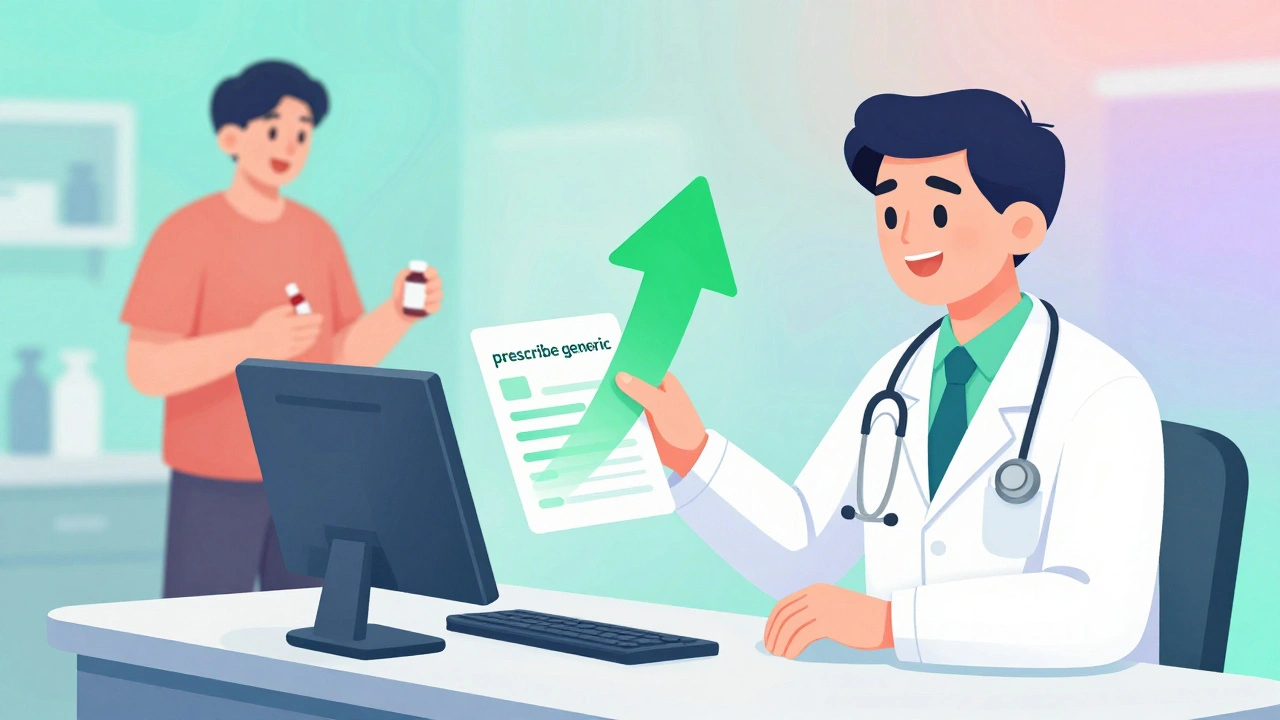
Generic prescribing incentives reward doctors for choosing lower-cost generic drugs, saving billions in healthcare spending. But how do these programs really work-and when do they risk compromising care?

When it comes to healthcare cost savings, the practice of reducing spending on medical care while maintaining quality outcomes. Also known as medical expense reduction, it’s not about skipping care—it’s about choosing smarter, evidence-based ways to pay less for the same results. Millions of people overpay for prescriptions, endure long delays for approvals, or stick with expensive brand-name drugs simply because they don’t know their options. The truth? You don’t need to sacrifice effectiveness to save money.
One of the biggest levers for healthcare cost savings, the practice of reducing spending on medical care while maintaining quality outcomes. Also known as medical expense reduction, it’s not about skipping care—it’s about choosing smarter, evidence-based ways to pay less for the same results. is generic drugs, medications that contain the same active ingredients as brand-name drugs but cost up to 85% less. Also known as off-patent drugs, they’re required by the FDA to match brand-name drugs in strength, safety, and how they work in the body. You might notice your pill looks different or has a new name, but that’s just trademark law—not a change in quality. In fact, most hospitals and nursing homes use therapeutic interchange, the planned substitution of one drug for another in the same class based on clinical equivalence and cost. Also known as formulary switching, it’s a standard practice backed by pharmacy committees to keep treatment effective while cutting waste. This isn’t random—it’s a calculated move to save money without risking patient outcomes. And when insurance companies require prior authorization, a process where insurers approve certain medications before covering them, often requiring patients to try cheaper options first. Also known as step therapy, it’s a common barrier—but one pharmacists are trained to navigate. Knowing how to push back, provide documentation, or ask for exceptions can get you the drug you need faster and cheaper.
These aren’t theoretical ideas. They’re daily realities in pharmacies, clinics, and homes across the country. People save hundreds—or even thousands—each year by switching from brand-name Viagra to generic sildenafil, by getting tested for false penicillin allergies to avoid pricier alternatives, or by using app-based services that deliver low-cost generics straight to their door. The system isn’t perfect, but you don’t have to be powerless in it. Below, you’ll find real guides on how generic drugs meet FDA standards, how therapeutic interchange works behind the scenes, how prior authorization gets approved (or denied), and how to spot counterfeit pills that could cost you more than just money. These aren’t theory pieces—they’re practical tools to help you take control of your spending without compromising your health.
Generic prescribing incentives reward doctors for choosing lower-cost generic drugs, saving billions in healthcare spending. But how do these programs really work-and when do they risk compromising care?