
Eye Allergies: Itching, Redness, and the Best Antihistamine Drops for Relief

Itchy, red, watery eyes that won’t quit? You’re not alone. Around 40% of people in the U.S. deal with eye allergies every year, and the numbers are climbing. With pollen counts rising due to climate change, more people than ever are waking up to swollen eyelids and eyes that feel like they’re on fire. The good news? You don’t have to suffer through it. There are effective, science-backed ways to find relief - especially when you know which eye drops actually work.
What Causes Eye Allergies?
Eye allergies, or allergic conjunctivitis, aren’t caused by germs. They’re your body’s overreaction to things in the air: pollen from trees and grass, mold spores, dust mites, pet dander. When these allergens land on the thin membrane covering your eyeball (the conjunctiva), your immune system goes into overdrive. Mast cells in your eyes release histamine - the same chemical that gives you a runny nose during allergy season. That histamine triggers itching, redness, swelling, and tears. It’s not contagious, unlike pink eye from a virus or bacteria. No one else will catch it from you.How to Tell It’s Allergy, Not Infection
It’s easy to confuse eye allergies with an infection. But there’s a clear difference. Allergic conjunctivitis gives you clear, watery discharge and intense itching - the kind that makes you want to rub your eyes until they burn. Bacterial pink eye? Thick yellow or green gunk. Viral? More discharge than itching, often with a sore throat or cold symptoms. If your eyes are itchy, red, and watery - especially when you’re outside or around pets - it’s likely allergies. A 2023 study found 92% of people with eye allergies report severe itching. Only 30% of those with viral conjunctivitis do.The Best Eye Drops: Antihistamines and More
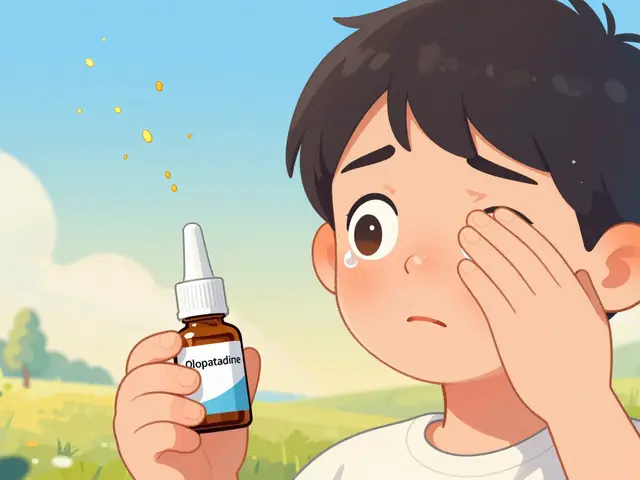
Not all eye drops are created equal. Some just mask the redness. Others tackle the root cause. The most effective options are antihistamine/mast cell stabilizer combos. These do two things: block histamine (so itching stops fast) and prevent mast cells from releasing more histamine in the first place. That’s why they last longer and work better than plain antihistamines.- Olopatadine (Pataday, Pataday Once Daily Relief): This is the gold standard. One drop in the morning gives you 16 hours of relief. In clinical trials, itching dropped from a 2.8 to a 0.7 on a 4-point scale within 3 minutes. It’s prescription or OTC depending on strength.
- Ketotifen (Zaditor, Alaway): Works fast - often within 3 minutes - and costs less. But you usually need to use it twice a day. Good for mild to moderate cases.
- Epinastine (Elestat): Another dual-action option. Less common, but effective if others don’t work.
Generic versions of ketotifen cost around $13 for a 2.5mL bottle. Brand-name Pataday runs $43. Many insurance plans cover the prescription version for $15-$40. If you’re paying full price, generics are a smart pick.
What About Decongestants Like Visine-A?
They make redness disappear fast. But here’s the catch: they don’t touch the itching. And if you use them for more than 3 days, your eyes rebound - meaning they get even redder than before. A 2023 study found 65% of people who used decongestant drops daily for a week ended up with worse redness. That’s not relief. That’s a trap. Skip them unless you’re using them once, for a special event.
Oral Antihistamines: Do They Help?
Pills like Zyrtec or Claritin can ease nasal symptoms, but they’re not great for eyes. In fact, 40% of people who take them say their eyes feel drier and more irritated. That’s because these drugs reduce tear production. If you’re already dealing with dry eyes - common in allergy sufferers - oral meds can make things worse. Stick to eye drops for targeted relief.When You Need More Than Drops
If your eyes still burn and itch after 2 weeks of using the right drops, see an eye doctor. About 20% of people who think they have allergies actually have dry eye disease, blepharitis, or another condition that looks similar. For severe cases, doctors may prescribe short-term steroid eye drops like loteprednol. These work fast - but only for a few weeks. Long-term use can raise eye pressure or cause cataracts. Not worth the risk unless you’ve tried everything else.For long-term relief, consider immunotherapy - allergy shots or under-the-tongue tablets. It takes 6-12 months to start working, and you’ll need 3-5 years to see full results. But 60-80% of people report major improvement. It’s not a quick fix, but it’s the only treatment that changes how your body reacts to allergens long-term.
How to Use Eye Drops Right
Even the best drops won’t help if you’re not using them correctly. Most people mess it up. Here’s how to do it right:- Wash your hands.
- Tilt your head back and look up.
- Pull your lower eyelid down gently to make a small pocket.
- Hold the bottle above your eye - don’t touch your eye or eyelid.
- Squeeze one drop into the pocket.
- Closed your eye for 30 seconds. Press gently on the inner corner near your nose to keep the drop from draining into your throat.
This technique prevents contamination and keeps the medicine where it belongs. Studies show people who use this method are 75% more likely to get full benefit.

Stop the Allergens Before They Start
Medicine helps - but avoiding triggers helps even more. Try these simple steps:- Wash your face and hands after being outside - especially during high pollen days.
- Use preservative-free artificial tears 4-6 times a day to rinse allergens off your eyes.
- Wear wraparound sunglasses outdoors. They cut pollen exposure by half.
- Keep windows closed during peak pollen season (usually March-October in the U.S.).
- Use a HEPA filter in your bedroom.
- Wash bedding weekly in hot water to kill dust mites.
A 2022 study found people who washed their face after coming inside reduced eye allergy symptoms by 30%. That’s like getting free relief.
What’s New in Eye Allergy Treatment?
The field is evolving. In 2023, the FDA approved bepotastine besilate 1.5% (Bepreve), a once-daily drop that works as well as Pataday. Companies are testing sustained-release inserts that deliver medicine for up to 3 months. Biologics targeting specific allergy pathways (like IL-4 and IL-13) are in early trials. And telehealth visits for allergies are up 140% since 2022 - making it easier to get advice without leaving home.But for now, the best option remains the same: antihistamine/mast cell stabilizer drops. Pataday and Zaditor are still the top choices. One gives you all-day relief. The other gives you fast, affordable relief. Pick based on your symptoms and budget.
Final Thoughts
Eye allergies are annoying, but they’re manageable. You don’t need to live with itchy, red eyes every spring. Start with the right drops - avoid decongestants, skip oral meds if your eyes feel dry, and pair treatment with simple environmental changes. If nothing’s working after two weeks, see a professional. And remember: you’re not just treating symptoms. You’re protecting your vision.Can eye allergies cause permanent damage?
No, eye allergies themselves don’t cause permanent damage. But if you rub your eyes constantly, you can scratch the cornea or worsen conditions like keratoconus. Also, long-term use of steroid eye drops without supervision can lead to glaucoma or cataracts. The key is proper treatment and avoiding eye rubbing.
Is Pataday better than Zaditor?
It depends on your needs. Pataday (olopatadine 0.2%) lasts up to 16 hours and only needs one drop a day. Zaditor (ketotifen) works faster - within 3 minutes - but usually needs two doses daily. Pataday is more expensive, but if you’re tired of reapplying, it’s worth it. Zaditor is a great budget option for mild symptoms.
Can I use antihistamine eye drops every day?
Yes. Second-generation antihistamine/mast cell stabilizer drops like olopatadine and ketotifen are safe for daily, long-term use. They don’t cause rebound redness or tolerance like decongestants. Many people use them all allergy season - and even year-round if they have perennial allergies.
Why do my eyes still feel dry even after using allergy drops?
Allergy drops reduce itching and redness, but they don’t add moisture. If your eyes feel dry, use preservative-free artificial tears separately - ideally 3-4 times a day. Dryness can be a side effect of oral antihistamines or the allergy itself. Combining drops with tears often gives the best relief.
When should I see a doctor for eye allergies?
See an eye doctor if your symptoms last more than 2 weeks despite using the right drops, if your vision blurs, if you feel pain, or if you notice light sensitivity. About 20% of people who think they have allergies actually have dry eye, infection, or another condition that needs different treatment.
about author

Amit Jain
Been using Zaditor for years and it’s a lifesaver. Cheap, works fast, and I don’t have to remember to reapply like with some other stuff. Just one drop in the morning and I’m good till bedtime. No more rubbing my eyes raw during pollen season.
Keith Harris
Oh please. You’re all drinking the Big Pharma Kool-Aid. These ‘antihistamine drops’ are just fancy placebos wrapped in clinical jargon. The real fix? Stop eating processed food, get off the grid, and let your immune system actually WORK instead of chemically suppressing it. I haven’t used eye drops in 8 years. My eyes haven’t blinked since 1997. Just kidding… but also not.
Mandy Vodak-Marotta
Okay but can we talk about how weird it is that we all just accept that our eyes are basically allergic to nature now? Like, I used to think ‘allergies’ were just sneezing and runny noses, but now my eyeballs are staging a protest every April? And the fact that you can buy medicine for your eyeballs like it’s a grocery item? I just bought a $43 bottle of Pataday like it was a bag of chips. I’m not mad, I’m just… confused. Also, I started wearing sunglasses indoors during allergy season and my cat now thinks I’m a vampire. Worth it.
Alec Stewart Stewart
Hey everyone, just wanted to say - if you’re struggling with this, you’re not alone. I used to rub my eyes till they bled. Then I tried the preservative-free tears + Zaditor combo and my life changed. Also, washing your face after coming inside? Total game-changer. I do it every single time now, even if I just walked to the mailbox. Small habits = big relief. 💙
Geri Rogers
Pataday is the GOAT. Period. End of story. I don’t care what you heard on TikTok - if you’re using anything else, you’re just wasting money and time. And yes, you CAN use it every day. No rebound. No drama. Just smooth, itch-free eyes. Also, stop using Visine. It’s not helping. It’s hurting. I’ve seen it. I’ve lived it. I’m your eye allergy auntie now. 🙋♀️
Samuel Bradway
My mom swears by the cold spoon trick. Put a spoon in the fridge for 10 minutes, then hold it over your eyes. Feels amazing. Doesn’t fix the allergy, but it cools the burn. Also, I use the drops wrong 90% of the time - I just squirt them in and blink. Maybe I’m lucky? Or maybe my eyes are just tired of fighting.
Caleb Sutton
They’re lying. The pollen isn’t natural. It’s engineered. The FDA approved these drops so you’d keep buying them. They don’t want you to heal. They want you dependent. The HEPA filter? It’s a distraction. Look up ‘Project SkyClear’ on the dark web. Your eyes are a biometric sensor. They’re watching you.
pradnya paramita
From a clinical immunology perspective, the dual-action pharmacodynamics of olopatadine and ketotifen are particularly efficacious due to their concurrent H1-receptor antagonism and mast cell membrane stabilization, thereby inhibiting both the early-phase and late-phase inflammatory cascades. The bioavailability of topical formulations exceeds systemic antihistamines by 300% in conjunctival tissue penetration, making them the gold-standard first-line intervention for allergic conjunctivitis.
Jamillah Rodriguez
I tried everything. Drops. Tears. Sunglasses. Face washing. Nothing worked. Then I moved to Alaska. No pollen. No problems. Just cold. And bears. But my eyes? Perfect. So yeah. Solution: leave Earth. 🌍❌