
Combining Multiple Sedating Medications: Risks and Warning Signs
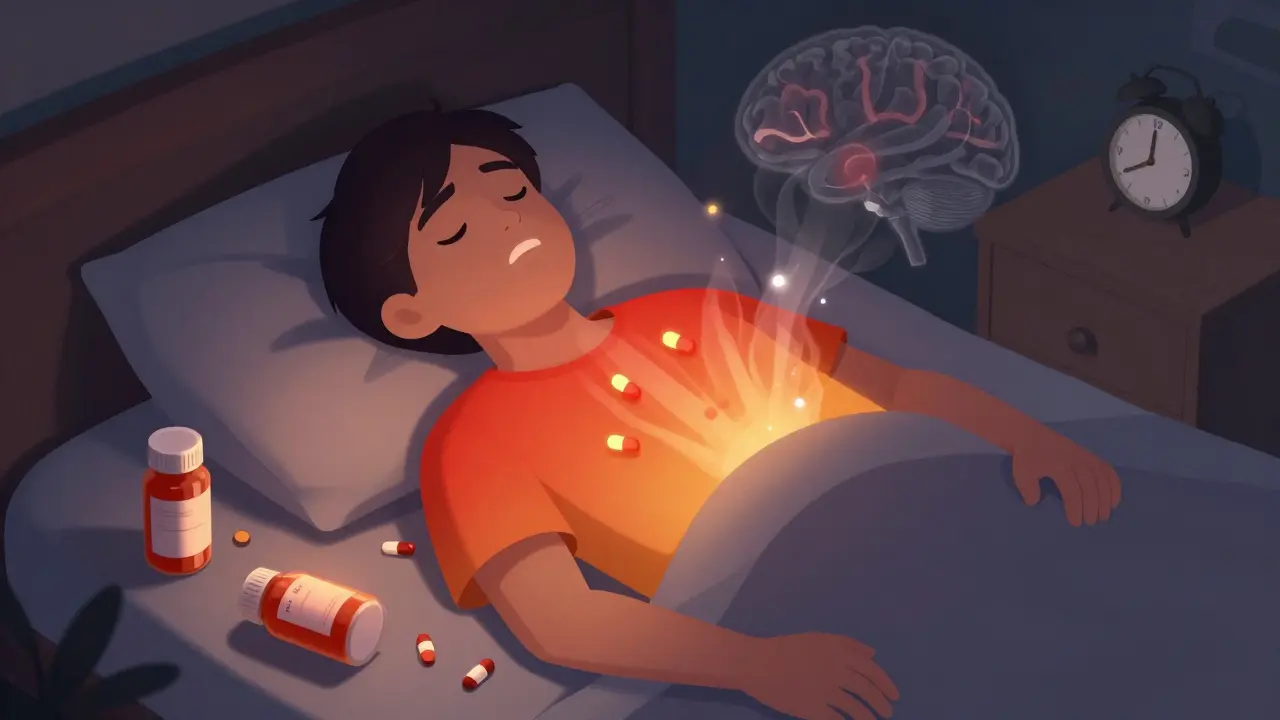
When you take more than one sedating medication at the same time, the effects don’t just add up-they multiply. This isn’t theoretical. It’s happening in homes, clinics, and emergency rooms across the country. People think mixing a sleep pill with a painkiller or a glass of wine with their anxiety medication is harmless. But the truth is far more dangerous. In 2020, nearly one in six opioid overdose deaths in the U.S. also involved a benzodiazepine. That’s not coincidence. That’s chemistry.
How Sedating Medications Work Together
Sedating medications-like opioids, benzodiazepines, sleep aids, and even some antidepressants-work by slowing down your brain’s activity. They boost a natural chemical called GABA, which tells your nervous system to relax. That’s why they help with anxiety, insomnia, or pain. But when you take two or more of these together, they don’t just work side by side. They team up. The result? A much stronger, unpredictable, and often deadly effect.
Take opioids and benzodiazepines. Opioids calm pain signals and slow breathing. Benzodiazepines calm nerves and muscles. Together, they can shut down your breathing entirely. A 2017 study in JAMA Internal Medicine found that people taking both had more than double the risk of overdose compared to those taking opioids alone. The risk isn’t just higher-it’s exponentially higher. Some studies show the chance of fatal overdose jumps by nearly four times when these two are combined.
Alcohol makes it worse. Even one drink can turn a safe dose of a sleep aid like Ambien into a dangerous one. Research from American Addiction Centers shows that combining alcohol with zolpidem cuts reaction time by 70%, compared to 40% with either alone. That’s why so many falls, car crashes, and unexplained injuries happen after people take their meds and have a drink.
The Most Dangerous Combinations
Not all drug mixes are equally risky. Some are deadly. Others are just risky. Here are the combinations that need the most attention:
- Opioids + Benzodiazepines: This is the deadliest combo. It’s responsible for about 30% of all prescription drug-related deaths. The FDA issued a formal warning in 2016. Since then, prescribing has dropped-but it’s still happening. In 2019, over 9 million Americans got both at the same time.
- Alcohol + Sedatives: Whether it’s Ambien, Xanax, or a muscle relaxer, mixing with alcohol is a gamble with your life. The body can’t process both at once. The result? Deep sedation, loss of consciousness, and stopped breathing.
- SSRIs + MAOIs: These are antidepressants. When combined, they can trigger serotonin syndrome-a rare but life-threatening surge in brain chemicals that causes high fever, seizures, and muscle rigidity. About 14-16% of cases lead to hospitalization.
- Older adults + three or more sedatives: The Beers Criteria, used by doctors to guide safe prescribing, says anyone over 65 taking three or more CNS depressants should be reviewed within 30 days. Why? Because aging slows how the body breaks down these drugs. A dose that was safe at 50 can be lethal at 75.
Warning Signs You Can’t Ignore
Most people don’t realize they’re in danger until it’s too late. But there are clear signs that your body is shutting down. If you or someone you know shows any of these, call 999 immediately:
- Slowed or shallow breathing-fewer than 12 breaths per minute
- Unresponsiveness-can’t wake up with loud shaking or shouting
- Blue lips or fingertips-sign of not enough oxygen
- Gurgling or snoring sounds while sleeping-this isn’t normal snoring, it’s air struggling to pass
- Extreme confusion or dizziness that doesn’t go away
These aren’t side effects. They’re red flags. And they often happen silently. Someone might seem fine one minute, then slip into unconsciousness the next. That’s why it’s so dangerous to assume “I’ve taken this before, it’s fine.” Your tolerance changes. Your body changes. Your meds change.
Why Doctors Miss These Risks
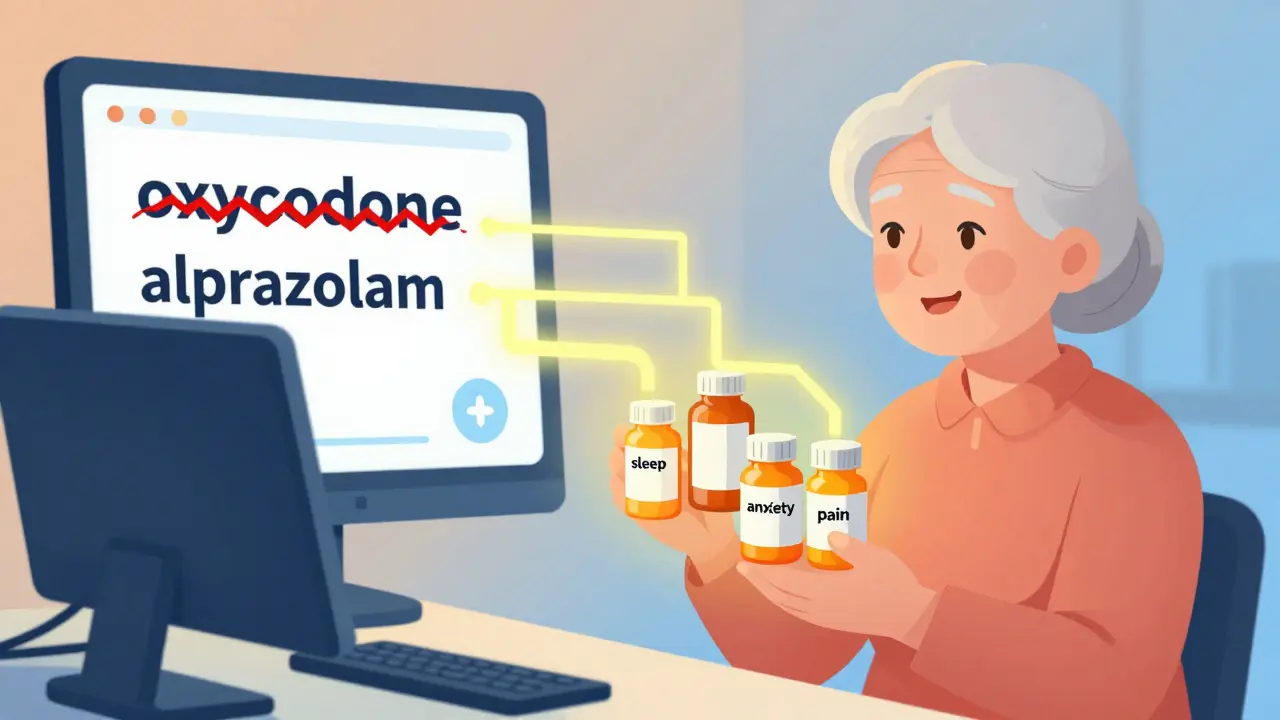
It’s not just patients who don’t know. Many doctors don’t either. A 2020 study in JAMA Network Open found that only 17.3% of electronic health record systems even flagged dangerous combinations. That means if you’re taking Ambien and oxycodone, your doctor’s computer might not say a word.
Part of the problem is fragmentation. You see one doctor for pain, another for anxiety, and a third for sleep. Each prescribes what they think is safe. None of them talk to each other. Recovery Village data shows 42% of people who overdosed on combined sedatives had gotten prescriptions from three or more doctors in just six months. That’s not luck. That’s a system failure.
Even the Beers Criteria-used in the U.S. and adopted in parts of the UK-lists 19 sedating combinations that older adults should avoid. Yet 35% of seniors still take at least one of them. Women are even more likely to be affected, with 41% taking inappropriate sedatives compared to 27% of men.
What You Can Do to Stay Safe
You don’t have to live in fear. But you do need to be informed. Here’s how to protect yourself:
- Keep a full list of everything you take-prescription, over-the-counter, supplements, even herbal teas. Include doses and why you take them. Bring this to every appointment.
- Ask your doctor: “Could any of these meds make each other more dangerous?” Don’t assume they know. Say it outright.
- Avoid alcohol entirely if you’re on any sedating drug. There’s no safe amount.
- Never take someone else’s meds-even if they have the same condition.
- Get a medication review every three months if you’re over 65 or taking more than three sedating drugs.
- Know your opioid dose in morphine milligram equivalents (MME). If you’re on more than 50 MME per day, your risk of overdose rises sharply-especially with other sedatives.
Some people think stopping their meds is the answer. But quitting cold turkey can be deadly. Benzodiazepines and opioids both cause withdrawal seizures if stopped suddenly. Always taper under medical supervision. A safe reduction is usually 10-25% every one to two weeks.
The Bigger Picture
This isn’t just about one person mixing pills. It’s about a healthcare system that still prescribes dangerous combos because it’s easier than finding alternatives. A painkiller costs $15 a month. A non-sedating nerve medication can cost $500. For people on tight budgets, the choice isn’t always about safety-it’s about affordability.
New tools are emerging. In 2022, the FDA required boxed warnings on all opioid and benzodiazepine packaging. In 2023, all U.S. states mandated electronic prescribing systems to cross-check dangerous combinations. And the DETERMINE platform, an AI tool launched in 2022, predicts individual overdose risk with 87.4% accuracy. But these are just tools. They don’t replace conversation.
The real solution is awareness. If you’re on one sedating drug, assume adding another could be deadly. If you’re caring for an older relative, check their meds. If you’ve ever felt “too sleepy” after taking your pills, don’t brush it off. That’s your body warning you.
When to Seek Help
If you’re worried about your current meds, don’t wait. Talk to your GP or pharmacist. If you’ve noticed warning signs in yourself or someone else, act fast. Emergency rooms are trained for this. They see it every day.
And if you’re afraid to speak up-because you think you’ll be judged, or your prescriptions will be taken away-know this: your life matters more than the pill. There are safer ways to manage pain, anxiety, and sleep. But they require honest talk. And they require you to be the one to start it.
Can I mix my sleep medication with a glass of wine at night?
No. Even one drink can double the sedative effect of sleep aids like Ambien, zolpidem, or zaleplon. This combination slows your breathing and increases the risk of unconsciousness, falls, and overdose. There is no safe amount of alcohol when taking sedating medications.
Are over-the-counter sleep aids safe to combine with prescription meds?
Not usually. Many OTC sleep aids contain diphenhydramine or doxylamine-both are sedating antihistamines. When mixed with benzodiazepines, opioids, or antidepressants, they add to the overall CNS depression. This can lead to extreme drowsiness, confusion, and respiratory issues. Always check with a pharmacist before combining any OTC product with a prescription.
Why do some people seem fine taking multiple sedatives?
Some people appear fine because their bodies have built up tolerance, or they’re taking low doses. But tolerance doesn’t mean safety. It means your body is under constant stress. The risk of sudden respiratory failure doesn’t disappear-it just becomes harder to predict. Even those who seem fine are at higher risk of accidents, falls, and long-term brain changes.
Can my doctor just switch me to a non-sedating alternative?
Yes, in many cases. For anxiety, options like SSRIs or buspirone are less sedating than benzodiazepines. For chronic pain, non-opioid treatments like physical therapy, SNRIs, or nerve blocks may help. For insomnia, CBT-I (cognitive behavioral therapy for insomnia) is more effective long-term than sleep pills. But switching requires careful planning-never stop sedatives suddenly. Always work with your doctor on a gradual plan.
What should I do if I suspect someone has overdosed on sedating drugs?
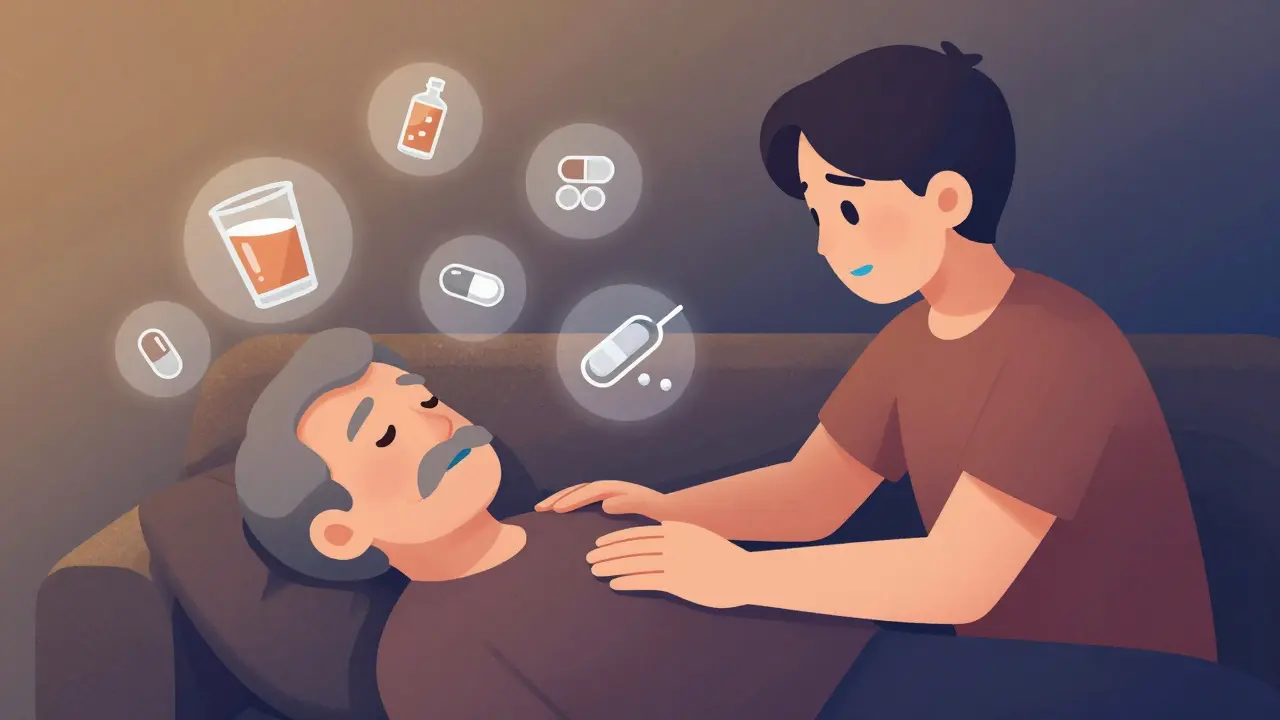
Call emergency services immediately (999 in the UK). Do not try to wake them with shaking or cold water. If they’re not breathing, start CPR if you’re trained. If naloxone is available (for opioid overdose), administer it. But remember-naloxone doesn’t reverse benzodiazepine effects. Even if they wake up after naloxone, they still need medical care. Sedative overdoses can recur hours later.
about author

Paul Ratliff
yep. been there. took xanax with oxycodone for a 'bad back' and woke up on the floor. no idea how i got there. doc said 'it happens' like it was normal. it's not.
now i just take tylenol and pray.
Nicole Blain
i literally just told my mom this yesterday 😅 she’s on ambien + klonopin + wine 'to help her sleep'... i sent her this article. hope she listens. 🙏
Kathy Underhill
the real tragedy is not the overdose but the quiet decline. people don't die from mixing meds so much as they fade out. slower. quieter. less present.
the body adapts until it stops fighting. that's when you lose them.
Srividhya Srinivasan
THIS IS A BIG PHARMA SCHEME!! THEY WANT YOU SEDATED SO YOU DON'T ASK QUESTIONS!! THEY MAKE THE DRUGS TO BE DEPENDENT AND THEN CHARGE YOU A FORTUNE FOR THE 'RECOVERY' PROGRAMS!!
EVERY DOCTOR IS IN ON IT!! THEY'RE PAID BY THE COMPANIES!! I SAW A VIDEO ON TIKTOK WHERE A DOCTOR SAID 'WE NEED MORE SEDATED PEOPLE'!!
Prathamesh Ghodke
honestly? i get why people do it. chronic pain + anxiety + insomnia = hell.
but yeah, you're right. the combo is a ticking bomb. i switched to CBD and therapy. took 3 months. worth it.
you don't need to be numb to be okay.
Stephen Habegger
good post. really good.
if you're reading this and you're scared-talk to someone. your pharmacist. your sister. your dog. just say it out loud.
you're not alone. and you're not weak for needing help.
Shameer Ahammad
I HAVE READ THIS ENTIRE ARTICLE TWICE. AND I MUST SAY: THE DATA IS NOT MERELY CONCERNING-IT IS ALARMING. THE FACT THAT 35% OF SENIORS ARE STILL TAKING CONTRAINDICATED COMBINATIONS IS A NATIONAL DISGRACE.
WE NEED A NATIONAL REGISTER. WE NEED A MEDICATION AUDIT. WE NEED TO HOLD DOCTORS ACCOUNTABLE. THIS IS NOT A 'PERSONAL CHOICE'-IT IS A PUBLIC HEALTH CRISIS.
Suchi G.
i used to take 3 different sedatives every night. i thought i was just tired.
then i stopped remembering my daughter's birthday. then i forgot my own phone number. then i fell asleep driving.
my husband found me slumped over the steering wheel. i didn't even wake up.
they said i was lucky. i don't feel lucky.
i feel like i lost 5 years of my life to pills.
now i'm in therapy. and i cry every time i see a prescription bottle.
if you're reading this and you're still doing this... please. stop. before you forget who you are.
SNEHA GUPTA
the real issue is not the combination. it's the assumption that biology is linear.
your body doesn't add. it multiplies.
and yet we treat it like a calculator.
medicine is still stuck in the 19th century. we need systems thinking. not prescriptions.
Gaurav Kumar
in india we don't have this problem. everyone here takes medicine like candy. but at least we don't mix it with alcohol.
you americans are just too soft.
you think a glass of wine is harmless?
in my village, grandpa took 7 pills and drank whiskey every night. he lived to 98.
your system is broken. not your meds.