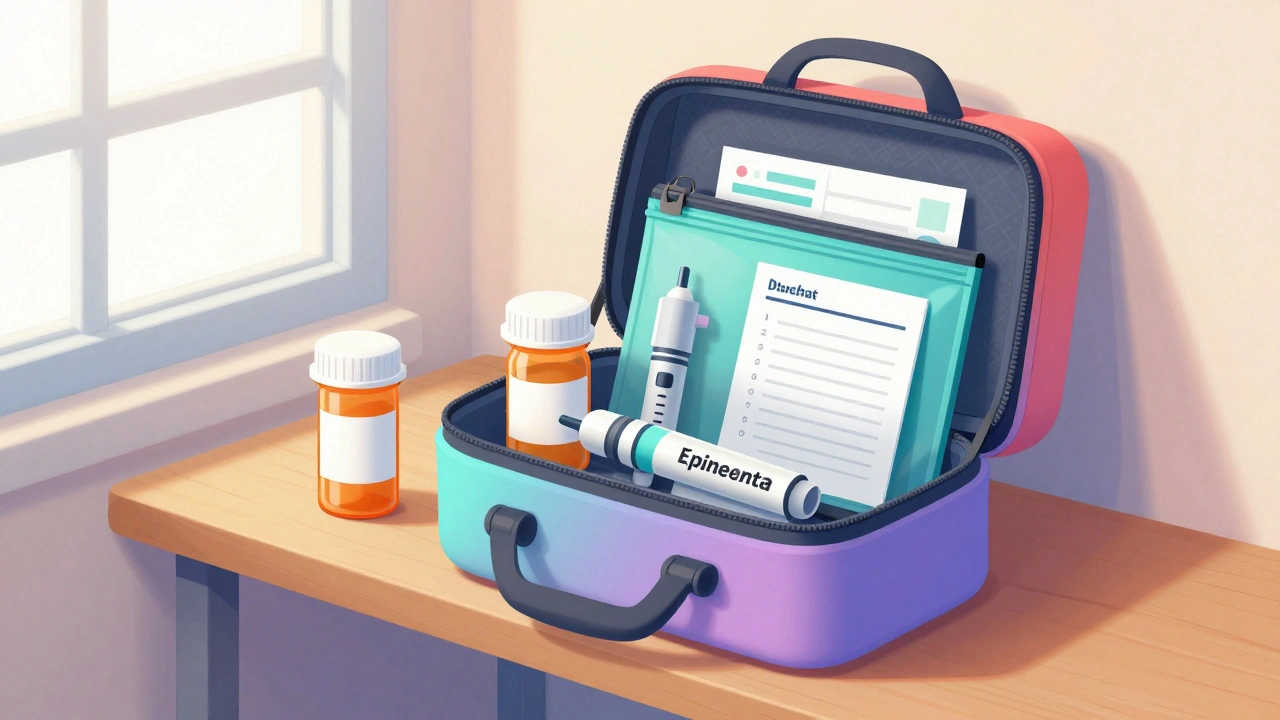
A medication go-bag ensures you have access to critical prescriptions during disasters. Learn what to pack, how to store it safely, and why 14 days of meds is the new standard for emergency preparedness.

When a medication reaction turns dangerous, minutes matter. An emergency medication kit, a pre-packed collection of essential drugs and tools for sudden health crises isn’t just a good idea—it’s a necessity for households with chronic conditions, allergies, or elderly members. It’s not about stocking up on every pill you’ve ever taken. It’s about having the right tools ready when your body reacts badly to something you didn’t see coming.
What goes into this kit? First, your prescribed rescue meds—like epinephrine for severe allergies, nitroglycerin for chest pain, or fast-acting asthma inhalers. Then, basics: antihistamines for swelling, activated charcoal for accidental poisonings (only if advised by poison control), and a digital thermometer. Don’t forget a printed list of all your medications, dosages, and your doctor’s contact info. This isn’t just for you—it’s for paramedics or family members who might not know your history. An medication emergency, a sudden, life-threatening reaction to a drug or interaction doesn’t wait for a convenient time. And drug side effects, unexpected and potentially harmful responses to medications can escalate fast. Skin peeling, trouble breathing, confusion, or a sudden drop in blood pressure? Those aren’t "just side effects." They’re when to go to ER, critical warning signs that demand immediate medical attention.
People think they’ll know what to do in a crisis. But stress clouds judgment. That’s why your kit needs to be simple, labeled clearly, and stored where everyone can find it—never locked away unless it’s childproofed. Keep it in the kitchen or bathroom, not the back of a closet. Check expiration dates every six months. Replace used items immediately. And if you’re unsure whether something belongs in the kit, talk to your pharmacist. They see what works and what doesn’t every day.
Below, you’ll find real-world guides on handling bad reactions, spotting the signs you can’t ignore, and keeping your meds safe from kids, counterfeits, and confusion. No fluff. Just what you need to act fast, stay calm, and protect yourself and your family when seconds count.
A medication go-bag ensures you have access to critical prescriptions during disasters. Learn what to pack, how to store it safely, and why 14 days of meds is the new standard for emergency preparedness.