
Pharmacy Labels and Warning Stickers: How to Read Medication Safety Info
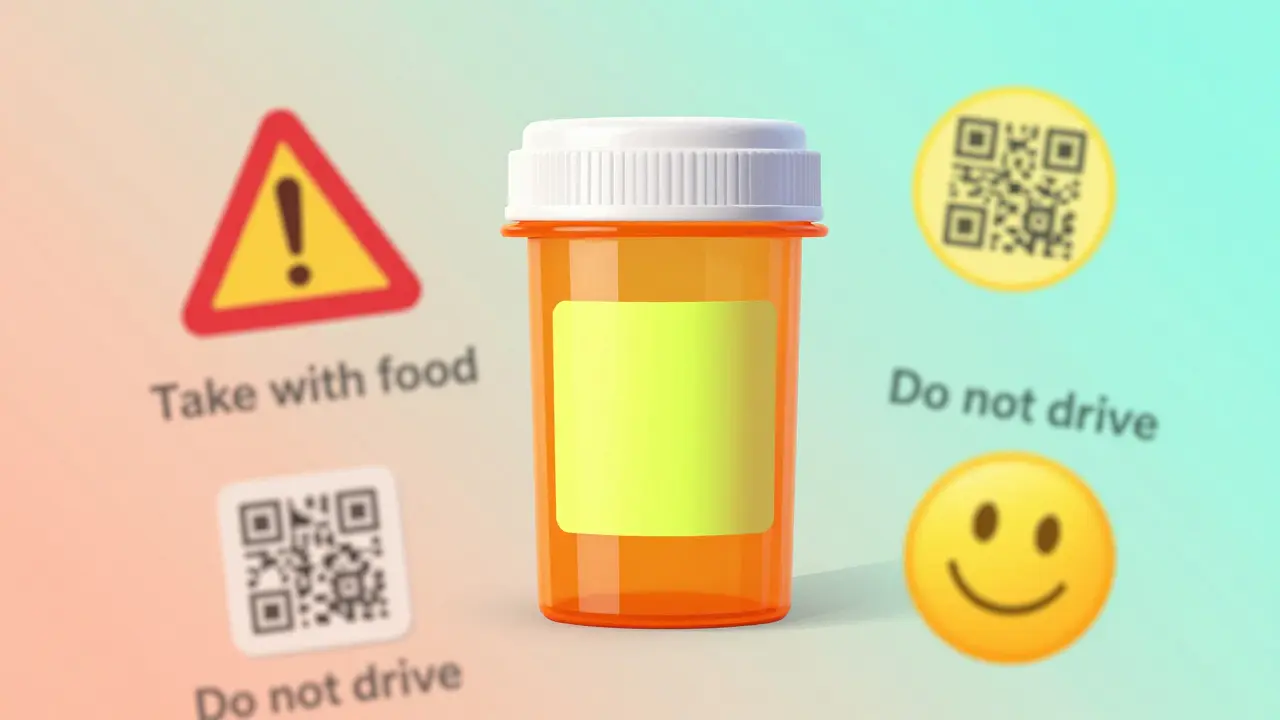
Medication Warning Decoder
Warning stickers on prescription bottles use color codes to indicate risk levels. Select the color you see on your medication label to understand what it means and how to act.
Note: Colors may vary by state and pharmacy, but most follow this standard system.
Examples: "May cause life-threatening reaction," "Do not stop suddenly," "Risk of overdose"
Examples: "May cause drowsiness," "Do not drink alcohol," "Avoid sunlight"
Examples: "Opioid - Risk of addiction," "Take only as prescribed," "Do not share with others"
What This Warning Means
Select a warning color to see its meaning.
When you see this warning, please take these steps:
- Read the label carefully
- Ask your pharmacist about specific risks
- Follow all instructions exactly
- Keep track of any side effects
Ever opened a prescription bottle and stared at the label like it’s written in code? You’re not alone. Millions of people struggle to understand what those tiny print warnings, symbols, and instructions really mean. And it’s not just about reading small text - it’s about knowing what each warning sticker is trying to tell you before you take that pill. The truth is, pharmacy labels aren’t just paperwork. They’re your first line of defense against dangerous mistakes.
What’s Actually on Your Prescription Label?
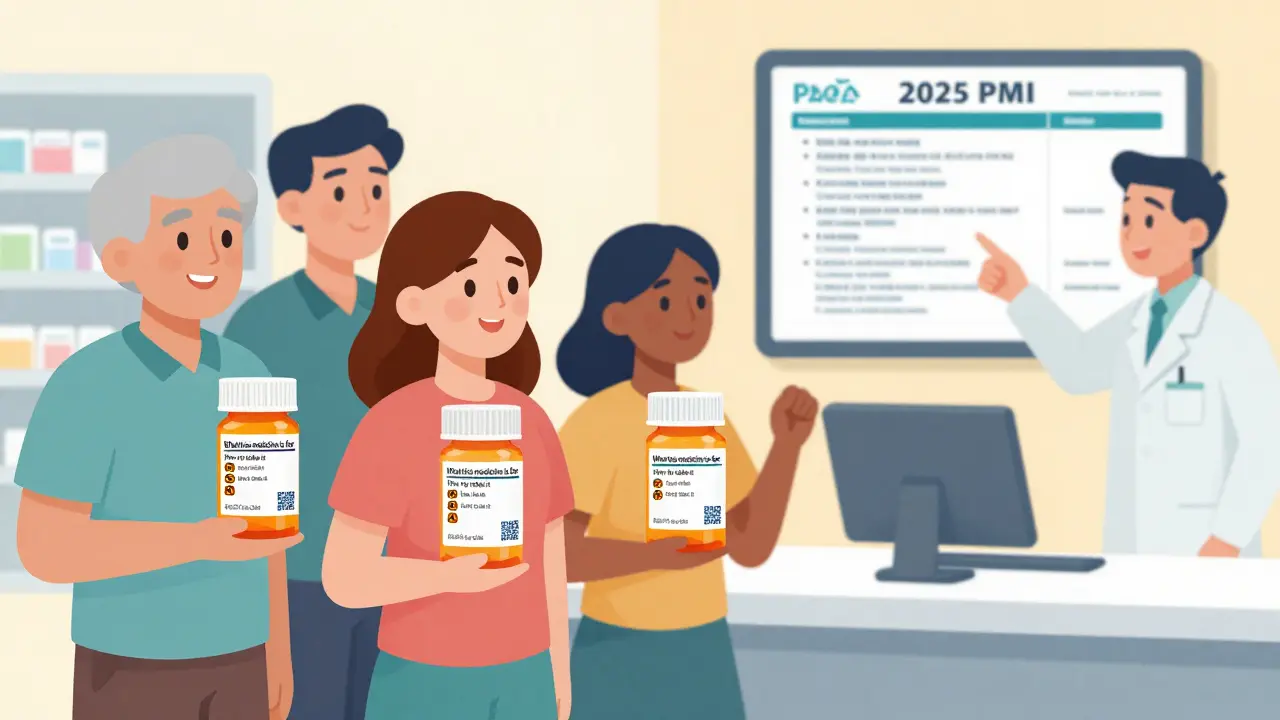
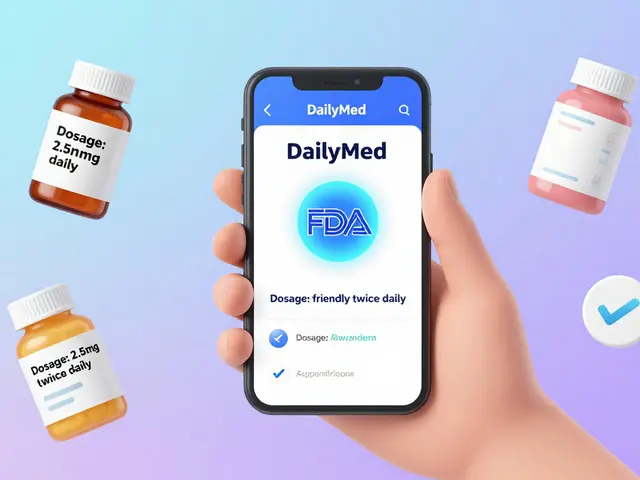
Your prescription label isn’t random. Federal law requires it to include your name, the drug name, dosage, how often to take it, and the prescriber’s name. But that’s just the start. The real safety info comes in the fine print - and it’s changing fast.Since 2012, the United States Pharmacopeia (USP) has pushed for clearer, more consistent labeling. Their guidelines say: use sans-serif fonts, make sure warning text is at least 8-point, and keep contrast high so it’s readable for older eyes. Many pharmacies still don’t follow these rules. But by January 2025, that’s about to change. The FDA’s new Patient Medication Information (PMI) rule will require every pharmacy in the U.S. to use a single, standardized format. No more guessing which pharmacy uses which layout.
That means your label will have clear sections: What this medicine is for, How to take it, What to watch out for, and When to call your doctor. No more buried warnings under a pile of legal jargon.
Why Warning Stickers Matter More Than You Think
Those bright orange, red, or yellow stickers on your bottle? They’re not decoration. They’re emergency alerts.Connecticut started a bold experiment in 2024: all opioid prescriptions must now have a fluorescent orange, 1.25-inch diameter warning sticker. It’s not optional. It’s the law. The goal? Make it impossible to miss the risk of overdose and addiction. Other states are following. As of 2023, 27 states now require some kind of opioid warning label.
But it’s not just opioids. Warning stickers can also say things like:
- “CAUTION: May cause drowsiness - do not drive”
- “Do not drink alcohol while taking this”
- “Risk of serious skin reaction”
- “Take with food”
These aren’t suggestions. They’re life-or-death instructions. A 2022 report from the Institute for Safe Medication Practices found that 12% of medication errors in pharmacies came from misreading similar-looking labels or missing critical warnings. One pharmacist on Reddit said he had three patients in a single week mix up their blood pressure and diabetes pills - because the labels looked too similar.
Font Size, Color, and Contrast: The Hidden Rules
You might think it’s just about printing clearly. But there are actual federal standards for how labels are designed.Essential info - like your name and dosage - must be printed in a sans-serif font, at least 6-point. Warning text? Minimum 8-point. Background and text must have a contrast ratio that’s readable even for people with low vision. That’s not a suggestion. That’s required under FDA guidelines.
Why does this matter? A 2023 AARP survey found that 68% of adults over 65 had trouble reading their prescription labels. Many didn’t realize their pills were supposed to be taken twice a day - because the “2x daily” was printed in 5-point font next to a light gray background.
Barcode technology is now mandatory too. Every label must have a GS1 DataMatrix or Code 128 barcode that holds your drug’s National Drug Code (NDC), lot number, and expiration date. Pharmacies scan these before giving you the bottle. If the barcode doesn’t match the prescription, the system flags it. That’s how errors get caught before they reach you.
State Laws vs. Federal Rules: It’s a Patchwork
Here’s the messy part: there’s no single national standard - yet. The FDA only requires the basics. Everything else? That’s up to each state.California requires multilingual labels for patients with limited English skills. Their 2021 survey showed 47% of non-English speakers struggled to understand standard labels. Now, pharmacies there must offer translations for common instructions like “take once daily” or “avoid sunlight.”
Connecticut’s orange sticker law is stricter than federal rules. Some states require bilingual labels. Others mandate specific wording for controlled substances. This creates confusion. A patient who moves from New York to Texas might get the same drug with completely different labeling. That’s why the FDA’s 2025 PMI rule is such a big deal - it’s finally bringing uniformity.
What’s Coming in 2025 and Beyond
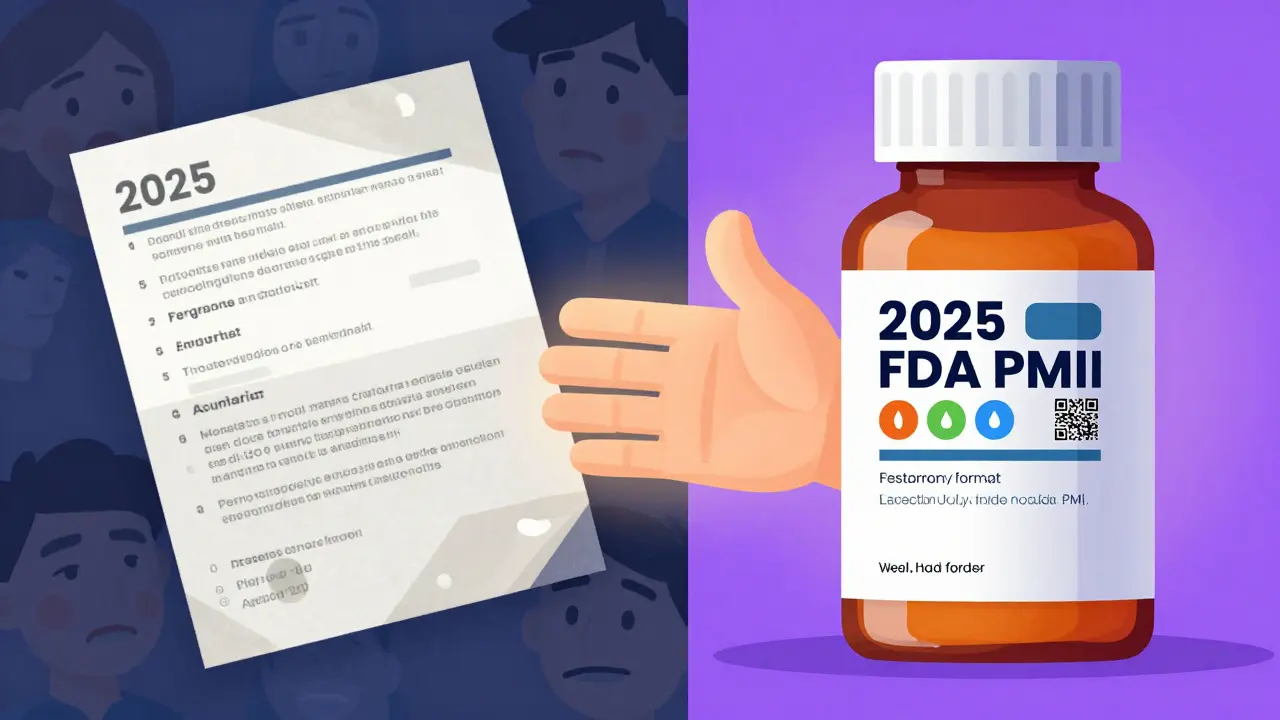
By January 1, 2025, every prescription in the U.S. will follow the same PMI format. That means:- One consistent layout - no more guessing where to find your dose
- Plain language - no medical jargon like “prn” or “q.d.”
- Standardized warning icons - a red triangle for serious risks, a yellow circle for moderate ones
- QR codes linking to video instructions - already on 18% of labels in 2024
Some pharmacies are already testing augmented reality labels. Point your phone at the bottle, and a 3D animation shows you how to swallow the pill correctly, or what side effects to watch for. By 2027, industry analysts predict 75% of labels will have this feature.
The goal? Reduce medication errors. Dr. Lucinda Maine of the American Association of Colleges of Pharmacy says pilot studies show standardized labels could cut errors by up to 30%. That’s tens of thousands of preventable hospital visits every year.
What You Can Do Right Now
You don’t have to wait for 2025 to protect yourself.- Read every sticker - even if it’s small. If you don’t understand it, ask.
- Take a photo of your label when you get a new prescription. Compare it next time you refill.
- Use a pill organizer with labels you write yourself - in big, clear letters.
- Ask for a printed guide - many pharmacies now offer simple one-page summaries.
- Check the barcode - if the pharmacist doesn’t scan it, ask why.
If you’re helping an older relative, sit with them when they get a new prescription. Read the label out loud. Ask: “What’s this medicine for?” “What happens if you miss a dose?” “What’s the worst thing this could do?”
Why This Isn’t Just About Paper - It’s About Survival
Medication errors kill over 250,000 Americans every year. That’s more than car accidents. And a huge chunk of those errors come from misreading labels.The old system was designed for pharmacists, not patients. It assumed you had a college degree and perfect vision. It didn’t account for memory problems, language barriers, or multiple medications. The new system is being built for real people - the 65-year-old with five prescriptions, the non-English speaker, the person with diabetes who’s tired of guessing what their pills do.
These labels aren’t just rules on paper. They’re the last checkpoint before a mistake happens. And now, thanks to federal pressure, state laws, and new technology, they’re finally getting better.
What should I do if I can’t read my prescription label?
Ask your pharmacist for a larger print copy or a printed summary in plain language. Most pharmacies can print a simplified version. You can also request a multilingual version if English isn’t your first language. If the label is too small or hard to read, ask them to replace it - you have the right to understand your medication.
Are warning stickers mandatory on all prescriptions?
No - not yet. Federal law doesn’t require warning stickers on all drugs. But for controlled substances like opioids, 27 states now require them. Connecticut, for example, mandates a bright orange sticker on all opioid prescriptions. The FDA’s new PMI rule, effective in 2025, will standardize warning symbols across all prescriptions, making them mandatory nationwide.
What do the colors on warning stickers mean?
There’s no universal color code yet, but most pharmacies follow a simple system: red means serious risk (like overdose or life-threatening reaction), yellow means moderate risk (like drowsiness or interaction with alcohol), and orange is often used for controlled substances like opioids. The FDA’s 2025 rule will standardize these colors and symbols so they mean the same thing everywhere.
Can I get my prescription label in another language?
Yes - but it depends on your state and pharmacy. California, New York, and several other states require pharmacies to offer translated labels for common instructions. Even if your state doesn’t require it, most large pharmacies will provide translations upon request. Ask for a “patient-friendly” or “multilingual” version when picking up your prescription.
Why does my pharmacy scan a barcode when I pick up my medicine?
That barcode contains your drug’s National Drug Code (NDC), lot number, and expiration date. The scanner checks that the right drug, dose, and quantity are being given to the right person. If there’s a mismatch - say, you’re supposed to get 5mg but the bottle says 10mg - the system will alert the pharmacist before you leave. It’s a safety net built into every prescription.
Next Steps: What to Watch For
By mid-2025, you’ll start seeing the new FDA labels everywhere. Look for:- Consistent section headings
- Icons next to warnings
- QR codes that link to video instructions
- Plain language - no Latin abbreviations
If you see an old-style label after January 2025, ask your pharmacy if they’re compliant. Most will be - but not all. And if you’re on multiple medications, start using a pill tracker app or printed chart. The new labels help, but your own vigilance still matters most.
about author

Paul Mason
Man, I used to think my grandma was just being paranoid when she held up her pill bottles to the light like they were ancient scrolls. Turns out she was onto something. That orange sticker on her oxycodone? It’s not decoration - it’s a damn alarm bell. And now they’re finally making labels you don’t need a magnifying glass to read? Long overdue.
My cousin mixed up her blood pressure and diabetes meds last year because the fonts looked identical. She ended up in the ER. That’s not a glitch - that’s a system failure. Glad they’re fixing it.
Andrew N
Let’s be real - this is just federal overreach dressed up as ‘patient safety.’ The real problem isn’t font size, it’s people not reading the damn label. I’ve seen folks take two doses because they thought ‘q.d.’ meant ‘every day’ instead of ‘once daily.’ No amount of standardized text will fix dumb.
Also, QR codes? Really? My 78-year-old mom can’t open a PDF on her phone. Now we’re gonna make her scan a barcode to watch a video on how to swallow a pill? This is tech theater, not healthcare.
LALITA KUDIYA
So happy to see this change coming 🙏 I live in India and my mom gets her meds from the US - sometimes the labels are impossible to read. Even the pharmacy staff don’t know what some abbreviations mean. This is a win for everyone who just wants to stay healthy without guessing.
Love the QR codes idea too - maybe one day they’ll have voice instructions in Hindi too 😊
Poppy Newman
Okay but have you seen the new labels in some CVS stores? The icons are actually kind of cute? Like a little red triangle with a skull in it for ‘danger’? I took a pic and sent it to my aunt who’s on 7 meds - she laughed and said, ‘Finally, something I can understand without a PhD.’
Also the QR code led to a 30-second video of a woman saying, ‘Take this with food, not on an empty stomach.’ So simple. So effective. 🫶
Anthony Capunong
Why are we letting other countries dictate how we do medicine? California’s multilingual labels? That’s just inviting chaos. English is the language of science. If you can’t read it, maybe you shouldn’t be taking pills. This whole ‘patient-friendly’ nonsense is just coddling people who won’t take responsibility.
And QR codes? What’s next - a TikTok tutorial for aspirin?
Aparna karwande
Do you people even realize how much damage this laziness causes? My cousin died because she didn’t know her blood thinner was interacting with her herbal tea. The label was printed in 5-point font on a beige background. That’s not negligence - that’s a crime. And now we’re talking about QR codes like they’re a luxury? No. This is survival. This is justice. This is what happens when you stop treating patients like children and start treating them like human beings who deserve to live.
And yes - I cried reading this. Because my sister’s life was stolen by a tiny, unreadable label.
Vince Nairn
Oh wow. A federal mandate to make labels readable. Who saw that coming? 😏
Meanwhile, my pharmacy still prints ‘Take 1 tablet by mouth daily’ in Comic Sans. But hey - at least now they’ll have a red triangle. That’s progress, I guess. Next up: mandatory emojis for ‘don’t drink alcohol’ - 🍷🚫
Still, I’ll take a standardized label over a 10-page legal disclaimer any day. Even if it’s just a little less confusing.
Ayodeji Williams
Bro this is wild. I got my meds from a pharmacy in Lagos and the label was handwritten in pencil. No barcode. No warning sticker. Just ‘take 1’ and a smiley face.
Now you’re telling me the US is finally getting its act together? I’m proud 😭 But also… why did it take this long? My cousin died from a mix-up like this. This isn’t innovation - it’s basic human decency.
Kamlesh Chauhan
QR codes? Seriously? Who’s gonna scan that? My grandma can’t even turn on the TV without calling me. And now we’re gonna make her point her phone at a pill bottle to watch a video? This is dumb. Just print it bigger. That’s it. No tech. No apps. No nonsense.
Also why are we spending millions on this when we could just pay pharmacists more to talk to patients? 🤷♂️
Alex Danner
Let me tell you something that no one’s talking about: the barcode system is the real MVP here. I work in a hospital pharmacy. We had a case last month where a patient was supposed to get metformin 500mg - the system flagged a 1000mg bottle because the barcode was slightly off. The pharmacist caught it before the patient even left the counter.
That’s not magic. That’s engineering. And it’s saving lives every single day. The font size and stickers? Nice. But the barcode? That’s the firewall.
Also - if you’re on five or more meds, get a pill organizer with your own labels. No app, no scanner, no QR code - just pen and paper. It’s dumb, but it works.
Elen Pihlap
I don’t care how big the font is - if I can’t remember what the pill is for, it doesn’t matter. I’m 72 and I take 12 pills a day. I don’t read labels. I just trust the pharmacy. But now I’m scared. What if they give me the wrong one? What if the sticker says ‘do not drive’ but I’m already driving? I feel like I’m playing Russian roulette every morning.
Can someone just come to my house and do it for me?
Sai Ganesh
In India, we’ve been using color-coded pill boxes for decades. Red for heart, green for diabetes, yellow for pain. Simple. No tech. No jargon. My mother taught me this when I was 12. It’s not about fancy fonts - it’s about systems that work for real people, not engineers.
The US is finally catching up. Good. But don’t forget: the best label is the one you understand without reading it.
Katrina Morris
OMG I just got my new label and it actually says ‘Take with food’ instead of ‘Take q.d.’ I cried. Not joking. I’ve been taking my blood pressure pill on an empty stomach for 3 years because I thought ‘q.d.’ meant ‘quietly’ 😭
Also the QR code played a video of a woman saying ‘Swallow with water’ and I felt seen. Like… someone finally designed this for me.
steve rumsford
So they’re finally making labels you can read without a magnifying glass? Took long enough. My grandma used to call me every time she got a new script just to ask what the heck the little red dot meant. Now she can just point her phone at it and hear a voice say ‘This can cause dizziness.’
Still think they should add a ‘don’t take with grapefruit’ emoji. 🍇🚫