
Complete Guide to Over-the-Counter Medications for Safe Self-Care
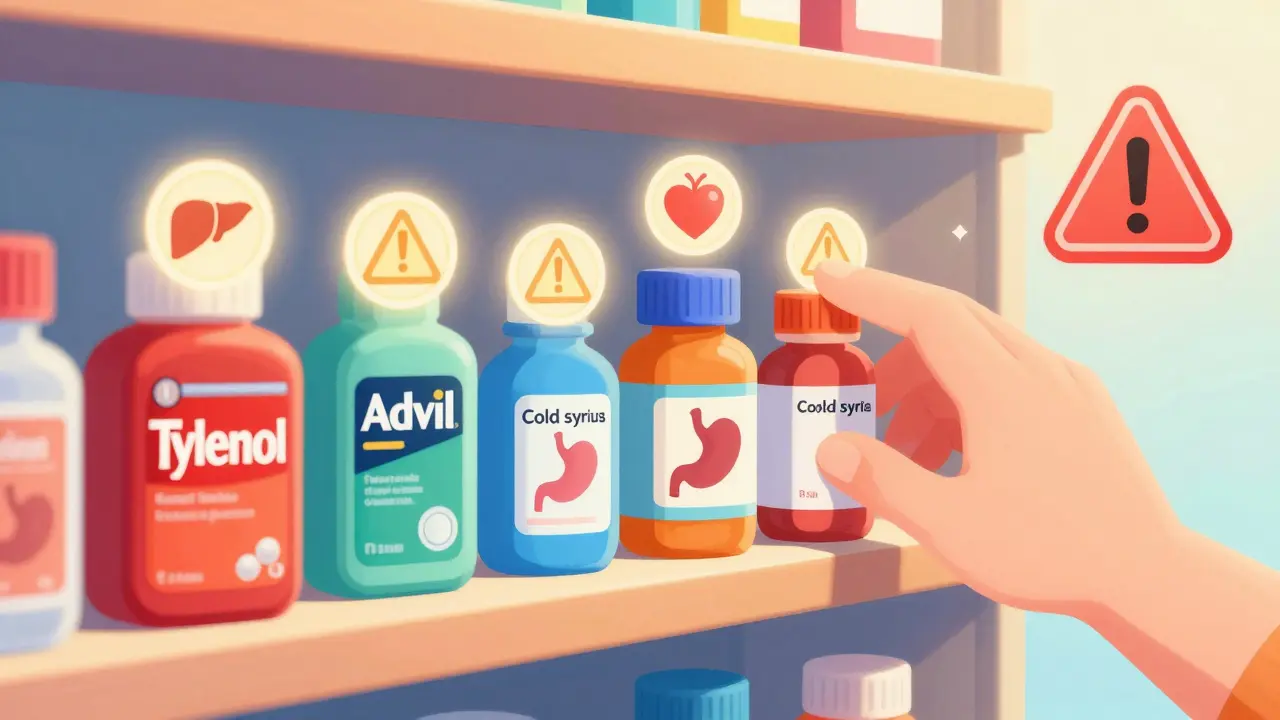
Every year, millions of people reach for an OTC medication without thinking twice. A headache. A stuffy nose. Heartburn after dinner. It’s quick, it’s easy, and it’s right there on the shelf. But just because you don’t need a prescription doesn’t mean these drugs are harmless. In fact, OTC medications are responsible for over 68,000 emergency room visits each year in the U.S. alone - and most of those cases are preventable.
The truth is, OTC drugs are powerful. They’re not candy. They’re not harmless supplements. They’re medicine. And like any medicine, they can hurt you if you use them wrong. This guide cuts through the noise and gives you the real, practical facts you need to use OTC medications safely - no fluff, no marketing hype, just what works and what doesn’t.
What Exactly Counts as an OTC Medication?
Most people think of OTC meds as painkillers or cold pills. But the list is way bigger. The FDA classifies dozens of everyday products as OTC medications, including:
- Fluoride toothpaste (yes, it’s a drug because it prevents cavities)
- Antibiotic ointments like Neosporin
- Dandruff shampoos with selenium sulfide or zinc pyrithione
- Lubricating eye drops for dry eyes
- Wart removers with salicylic acid
- Antacid tablets and liquid
These aren’t just cosmetics or hygiene products. They’re regulated as drugs because they change how your body works. And that means they come with risks - even if they’re sold next to toothpaste.
The Big Four: Pain Relievers You Need to Know
If you take one OTC drug regularly, it’s probably one of these: acetaminophen or an NSAID. But they work very differently - and mixing them up can be dangerous.
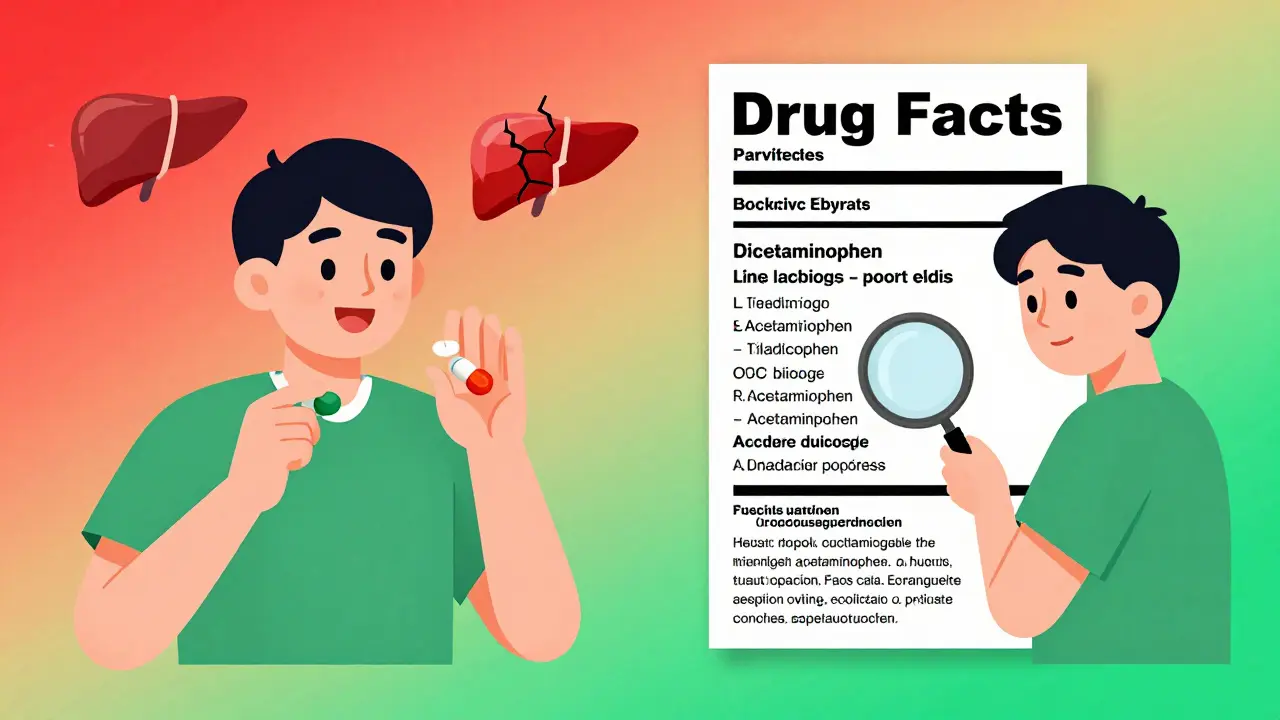
Acetaminophen (Tylenol) is the go-to for headaches, fever, and mild aches. It’s gentler on the stomach than NSAIDs. But here’s the catch: your liver can’t handle more than 3,000 mg in a day. That’s just six extra-strength tablets. Many people don’t realize that acetaminophen is in over 600 combination products - cold medicines, sleep aids, even some prescription painkillers. Taking two products at once? You could easily hit the limit without knowing it. The American Liver Foundation says acetaminophen overdose causes nearly 500 deaths a year in the U.S. - and most of those are accidental.
NSAIDs - like ibuprofen (Advil, Motrin) and naproxen (Aleve) - are better for swelling, joint pain, or muscle strains. But they’re harsher on your gut and heart. The FDA now requires all NSAID labels to warn about increased risk of heart attack or stroke, even at OTC doses. If you’re over 60, have high blood pressure, or take blood thinners, you should talk to a pharmacist before using these. And if you have a history of stomach ulcers? Skip them entirely. NSAIDs cause about 16,500 deaths a year from internal bleeding - more than all prescription painkiller overdoses combined.
Here’s the simple rule: Use acetaminophen for general pain or fever. Use ibuprofen or naproxen only if you have swelling or inflammation. And never take both together.
The Drug Facts Label: Your Secret Weapon
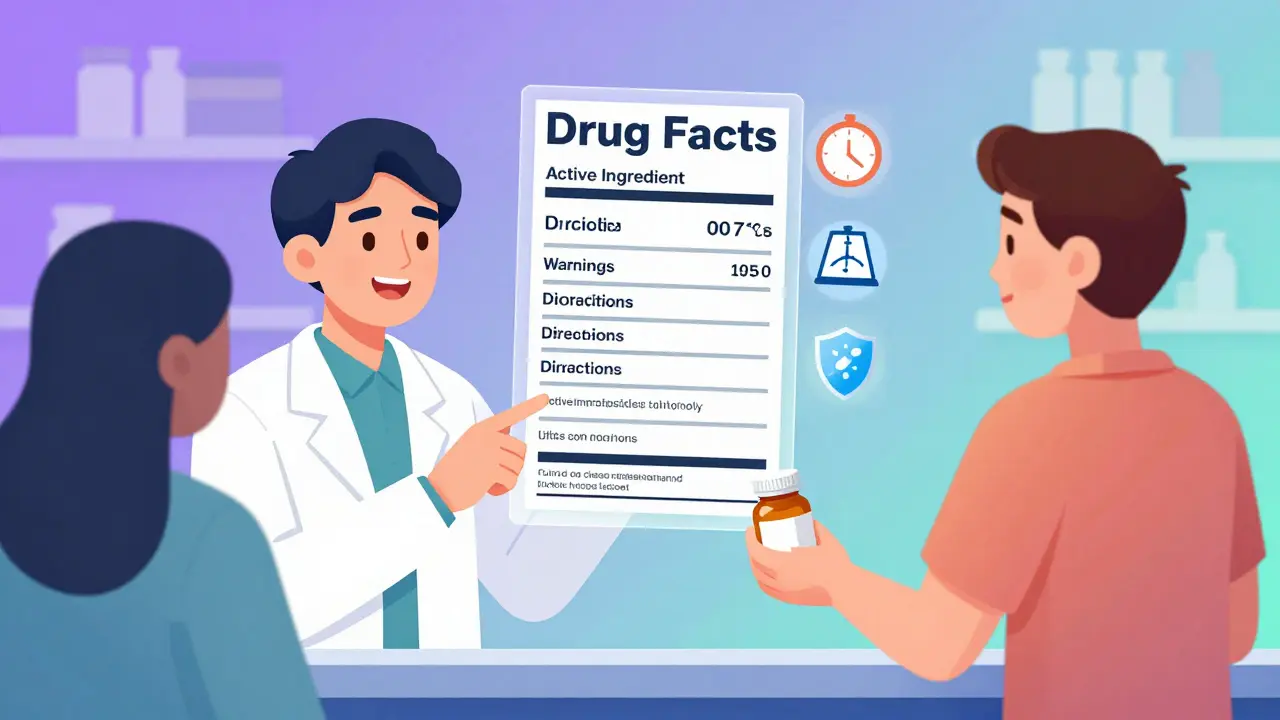
Every OTC medicine sold in the U.S. must follow the same label format, introduced by the FDA in 1999. It’s called the Drug Facts label. And if you learn how to read it, you’ll avoid 90% of mistakes.
Here’s what to look for - in order:
- Active ingredients - This is the drug itself. Always check this before buying. If you’ve taken it before, you’ll know what it does.
- Purpose - What is this medicine for? Cough? Allergies? Heartburn?
- Uses - Specific symptoms it treats. If your symptom isn’t listed, don’t take it.
- Warnings - Who shouldn’t take it? What conditions make it dangerous? This section is critical.
- Directions - How much? How often? For how long? Never exceed this.
- Inactive ingredients - These are fillers, dyes, or flavorings. If you’re allergic to anything here - like gluten, dye, or lactose - skip it.
Most people skip straight to the dosage. That’s the mistake. You need to check the active ingredient first. A product labeled "Daytime Cold & Flu" might have acetaminophen, dextromethorphan, and pseudoephedrine. If you already took Tylenol, you’re doubling up on acetaminophen. That’s how people end up in the ER.
Common Mistakes (And How to Avoid Them)
Here are the top five errors people make - and how to fix them:
- Mixing products - 45% of people accidentally take two OTC meds with the same active ingredient. Solution: Always check the active ingredient list. If it’s the same, don’t combine.
- Ignoring expiration dates - Expired meds don’t just lose strength. Some can become toxic. Store them in a cool, dry place - not the bathroom. Heat and moisture break them down.
- Using kids’ dosing for adults - Children’s liquid acetaminophen is 160 mg per 5 mL. Adult liquid is 320 mg per 5 mL. Using the wrong one can lead to under- or overdose.
- Assuming "natural" means safe - Herbal supplements like echinacea or ginger root aren’t regulated like OTC drugs. They can interact with prescriptions or cause liver damage. Don’t assume "natural" = harmless.
- Storing meds in the wrong place - Heat, humidity, and light ruin medicine. Don’t keep them in the medicine cabinet above the sink. A bedroom drawer or kitchen cabinet away from the stove is better.
When Should You NOT Use OTC Medications?
OTC meds are for short-term, mild symptoms. If you’re still not feeling better after 7 days - or if your symptoms get worse - it’s time to see a doctor. Here’s when to stop self-treating:
- Pain that lasts more than 10 days
- Fever over 102°F (39°C) that doesn’t break
- Difficulty breathing or chest pain
- Severe vomiting or diarrhea
- Swelling, rash, or hives after taking the medication
- Confusion, dizziness, or fainting
Also, if you’re taking three or more prescription drugs - especially for high blood pressure, diabetes, or depression - talk to a pharmacist before taking anything new. Drug interactions are the #1 cause of hospitalizations from OTC meds in people over 65.
What’s Changing in 2026?
The FDA is tightening rules fast. Since the CARES Act passed in 2020, the agency has been updating the OTC monograph system - the rulebook for what can be sold without a prescription. By 2026, they’ll have reviewed 250 pending products. That means:
- Some popular OTC drugs may disappear if they can’t prove safety
- New labels will be clearer - especially for NSAIDs and sleep aids
- Combination products (like cold meds with 4 ingredients) will face more scrutiny
Also, more states are letting pharmacists prescribe certain OTC products - like emergency contraception or nicotine patches - without a doctor’s note. In 27 states, you can walk in and get it right away.
How to Use OTC Meds Like a Pro
Here’s a simple 3-step system you can use every time:
- Match the symptom - Is your problem listed in the "Uses" section? If not, don’t take it.
- Check the active ingredient - Are you already taking this drug in another form? If yes, skip it.
- Verify the dose - Are you taking the right amount for your age and weight? Don’t guess. Read the label.
And always talk to a pharmacist. They’re trained for this. In fact, 89% of pharmacists now offer free OTC reviews - no appointment needed. Ask them: "Is this safe with my other meds?" or "Is there a simpler option?"
Remember: OTC doesn’t mean "no risk." It means "no doctor needed - but you still need to be smart."
Can I take OTC painkillers every day?
No. Daily use of OTC painkillers increases your risk of serious side effects. Acetaminophen over 3,000 mg per day can cause liver failure. NSAIDs like ibuprofen can lead to stomach bleeding or kidney damage with long-term use. If you need pain relief every day, see a doctor. You may have an underlying condition that needs treatment.
Is it safe to give OTC meds to children?
Only if you use the correct product and dose. Never give adult medicine to a child. Always check the label for age and weight-based dosing. Liquid forms are easier to measure accurately. If you’re unsure, ask a pharmacist. Children’s acetaminophen and ibuprofen come in specific concentrations - using the wrong one can cause overdose.
Why do some OTC meds require ID to buy?
Products containing pseudoephedrine (like Sudafed) are kept behind the counter because they can be used to make illegal methamphetamine. The Combat Methamphetamine Epidemic Act of 2005 requires photo ID and limits how much you can buy per day. You’ll also find these products in a locked cabinet - ask the pharmacist for help.
Are store-brand OTC meds as good as name brands?
Yes. Store brands contain the same active ingredients, strength, and dosage as name brands - often for half the price. The only difference is the inactive ingredients (like dyes or fillers), which rarely affect how the drug works. Always check the Drug Facts label to confirm the active ingredient matches.
What should I do if I think I’ve taken too much?
Call Poison Control immediately at 1-800-222-1222. Don’t wait for symptoms. Even if you feel fine, overdose can damage your liver or kidneys hours later. Have the medication bottle ready - the pharmacist or poison control team will need the active ingredient and amount taken. If you’re in the UK, call NHS 111.
Final Thoughts
OTC medications are a powerful tool - but they’re not a free pass. They work because they change how your body functions. That means they can also hurt you if you’re careless. The key isn’t to avoid them - it’s to use them with awareness. Know the active ingredient. Check the label. Don’t mix. Don’t ignore warning signs. And when in doubt, ask a pharmacist. They’re not just there to ring you up - they’re trained to keep you safe.
about author

Michaela Jorstad
Finally, someone laid this out without the fluff! I used to mix Tylenol and cold meds all the time-didn’t realize I was flirting with liver failure. Now? I keep a little notebook next to my medicine cabinet. Active ingredient? Check. Dose? Check. Already took it? Nope. Game-changer.
Chris Beeley
Let me tell you, the FDA’s Drug Facts label is a masterpiece of bureaucratic obfuscation disguised as transparency. I’ve read the labels of over 300 OTC products across six countries, and let me say this: the American system is laughably inadequate. In Germany, they use a color-coded risk matrix. In Japan, the packaging includes a QR code linking to peer-reviewed studies. Here? We get a wall of tiny text designed to make you feel guilty for not reading it-while simultaneously making it unreadable. This isn’t safety-it’s performance art for corporate liability.
Arshdeep Singh
lol u think acetaminophen is dangerous? bro have u ever tried ayurvedic turmeric paste for joint pain? 10x safer than your chemical cocktails. also NSAIDs? pfft. my grandpa took aspirin daily for 50 years and still rode his bike to the temple. modern medicine is just fear marketing wrapped in a label. u scared of your own body? that’s the real problem.
Danielle Gerrish
OMG I JUST REALIZED I’VE BEEN USING CHILDREN’S IBUPROFEN FOR MY MIGRAINES BECAUSE IT’S EASIER TO POUR AND I THOUGHT IT WAS JUST ‘MILD’-I’M SO STUPID. I’VE BEEN DOING THIS FOR TWO YEARS. MY KID’S MEDICINE IS 100MG PER 5ML AND I’VE BEEN DOING 15ML. THAT’S 3000MG. THAT’S A FULL DOSE OF ADULT ACETAMINOPHEN. I’M GOING TO THE ER TOMORROW. I’M SO SCARED. WHY DID NO ONE TELL ME THIS? I FEEL SO STUPID.
Maddi Barnes
Okay but can we talk about how ridiculous it is that we treat OTC meds like they’re free candy? 🤦♀️ I mean, we wouldn’t just chug a bottle of insulin because we felt ‘off’… but we’ll take 4 Advil because our head hurts? We live in a society that worships convenience and ignores consequences. Also-yes, store brands are just as good. I buy generic ibuprofen from Aldi and it’s literally identical. Save your cash. And yes, I’m using emojis because I’m tired of being lectured about ‘professionalism’.
Benjamin Fox
THIS IS WHY AMERICA IS GREAT WE DONT NEED A DOCTOR TO TELL US WHAT TO TAKE IF YOU CANT READ A LABEL THEN YOU DONT DESERVE TO BE HEALTHY
Jonathan Rutter
You think this is bad? Wait till you hear about what’s in the ‘natural’ pain patches. I found out my neighbor was using one that had lidocaine AND capsaicin AND menthol-three different active ingredients. She thought it was ‘just herbs.’ She ended up with second-degree burns and a trip to the ER. And guess what? The label didn’t even mention the capsaicin in the ‘uses’ section. It was buried under ‘inactive ingredients’ as ‘plant extract.’ That’s not transparency. That’s a trap. And don’t even get me started on how pharmacies profit from this. They want you confused. Confused people buy more.
Jana Eiffel
It is both fascinating and disconcerting to observe the sociocultural trajectory of pharmaceutical self-regulation in liberal democracies. The normalization of pharmacological autonomy-wherein individuals are expected to self-diagnose and self-administer potent biochemical agents without professional oversight-reflects a broader epistemological shift toward technocratic individualism. The Drug Facts label, while ostensibly empowering, functions as a performative artifact of institutional abdication. One must question: Is this autonomy, or merely the commodification of risk? The answer, I suspect, lies not in the label, but in the absence of a collective moral framework surrounding bodily integrity.
aine power
Acetaminophen = liver. NSAIDs = stomach. Simple.
Irish Council
Did you know the FDA has been pressured by Big Pharma to delay reclassifying certain OTC drugs? The 2026 timeline? A distraction. The real reason some meds are disappearing isn’t safety-it’s patent expiration. Companies don’t want you buying generics. They want you buying their new $40 ‘advanced formula’ that’s 98% the same as the $3 version. I’ve seen the internal memos. This isn’t about health. It’s about market control. And the ‘pharmacist review’? A marketing tactic. Most pharmacists are paid per sale. Ask them if they get a bonus for pushing the pricier brand. I dare you.
Laura B
I love how this guide doesn’t just scare people-it actually gives tools. I teach first-year nursing students, and I use this exact 3-step system. Match symptom → check active ingredient → verify dose. It’s so simple, but so few people do it. I wish this was taught in high school health class. Also-yes, ask the pharmacist. They’re the unsung heroes of public health. My local one remembered my meds and warned me about a combo I didn’t even know was risky. That’s service.
Robin bremer
bro i took 3 tylenol and 2 advil for my back and felt fine so i did it again next day and now i got a stomach ache lmao guess i aint got no sense 😅
Amrit N
Man this post saved me. I was about to give my 8-year-old a regular Advil because I thought the kids’ one was too weak. Thank god I read this. Now I keep two separate bottles labeled ‘KID’ and ‘ADULT’ with sticky notes. Also-store brands? I switched to Walmart’s and saved $15/month. My wife thinks I’m cheap. I think I’m smart. 🙌