
Managing Chronic Pain: Practical Strategies for Lifelong Relief
Living with persistent pain is an exhausting experience that stretches far beyond a simple physical sensation. When pain lasts longer than three months-the typical time the body needs to heal-it becomes what clinicians call Chronic Non-Cancer Pain is persistent pain that lasts beyond the normal tissue healing time and significantly impacts physical function and emotional well-being . It isn't just about a "hurting" body part; it's a complex cycle that affects your sleep, your mood, and your ability to enjoy the small things in life. The goal here isn't necessarily to make the pain vanish completely-which is often unrealistic-but to reclaim your quality of life and get you moving again.
The Shift Toward a Biopsychosocial Approach
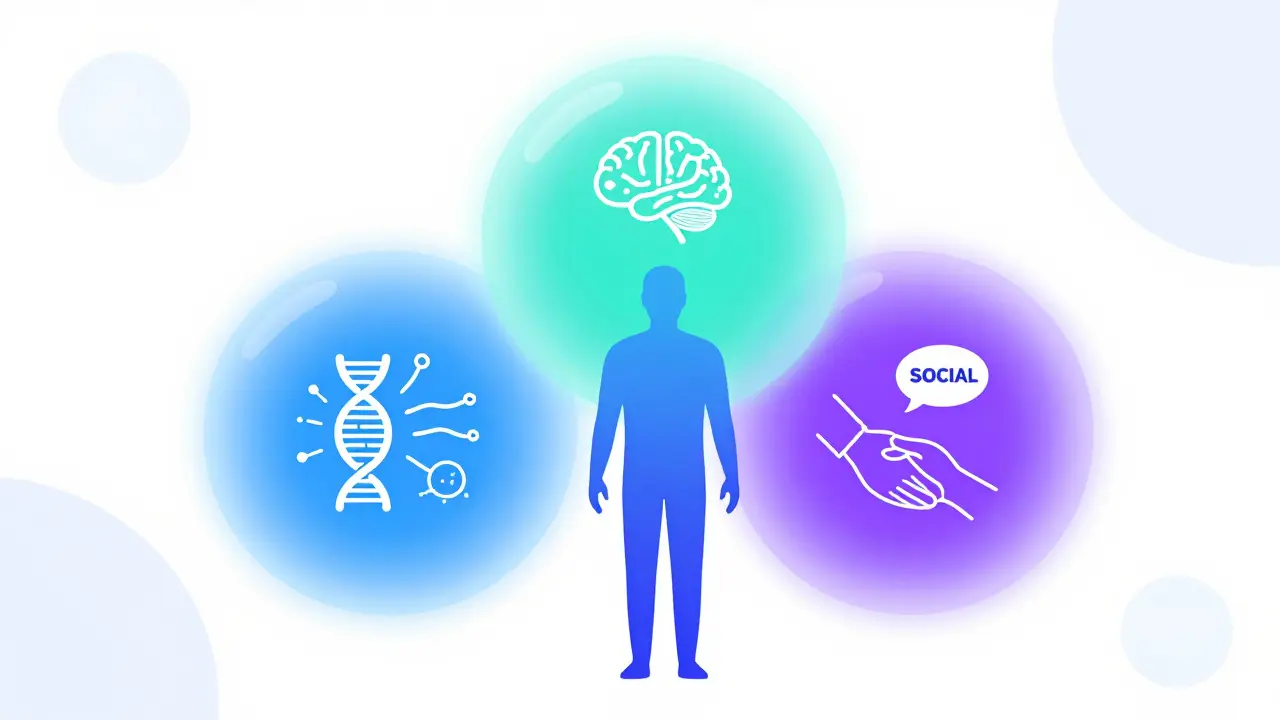
For decades, the medical world treated pain like a broken machine: find the part that hurts and fix it with a pill. We now know it doesn't work that way. Modern care uses the Biopsychosocial Model a holistic framework that addresses the biological, psychological, and social dimensions of pain simultaneously to improve patient outcomes . This means acknowledging that your stress levels, your social support, and your brain's chemistry all play a role in how you feel the pain.
If you only treat the biology (the inflammation or nerve damage) but ignore the psychology (the fear of moving) and the social side (isolation), you're only fighting a third of the battle. This shift is why experts now place drug-free approaches "front and center." By addressing the mind and body together, people often see a much bigger jump in their ability to function than they do with medication alone.
Movement as Medicine: Structured Exercise
It sounds counterintuitive to move when you're in pain, but inactivity actually makes chronic pain worse by stiffening joints and weakening muscles. The key is chronic pain management through tailored, structured exercise. You can't just go for a random walk; you need a plan. Effective programs typically run for 6 to 12 weeks, with sessions 2 to 3 times a week.
Depending on your condition, a mix of these modalities usually works best:
- Aerobic and Resistance Training: To keep the heart healthy and muscles strong.
- Aquatic Therapy: Using water to reduce the load on joints, which is a lifesaver for those with severe arthritis.
- Yoga and Tai Chi: These combine physical movement with mindfulness, helping to calm the nervous system.
- Motor Control Exercises: Specific movements designed to stabilize the core and improve posture.
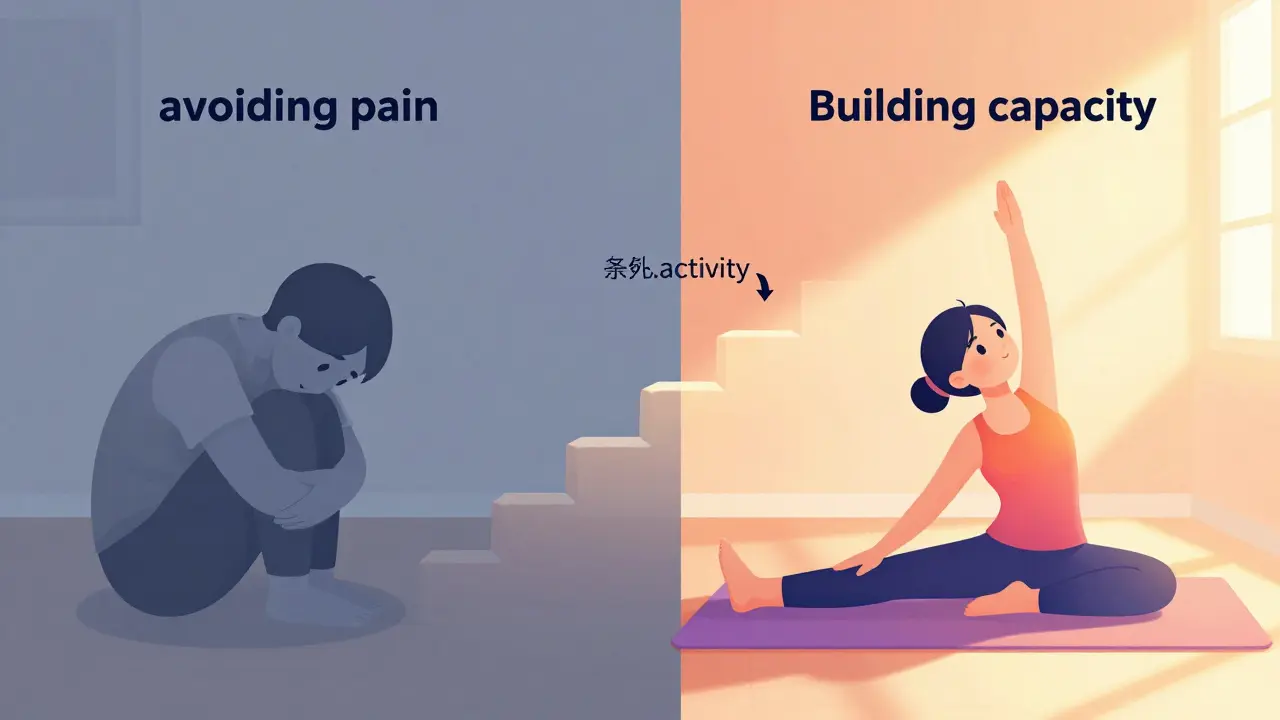
When done correctly, these programs can lead to a 15-30% reduction in pain and a 20-40% improvement in how well you can perform daily tasks. The magic happens when you move from "avoiding pain" to "building capacity."
Rewiring the Brain with CBT
Pain isn't just in the tissues; it's processed in the brain. Over time, the brain can become "hypersensitive," amplifying pain signals even after an injury has healed. This is where Cognitive Behavioral Therapy a psychological treatment that helps patients identify and change negative thought patterns to reduce pain catastrophizing and improve coping (CBT) comes in. CBT doesn't tell you the pain is "in your head"; it teaches you how to manage the brain's response to it.
A typical CBT protocol involves 8 to 12 weekly sessions. The focus is on reducing "catastrophizing"-that voice in your head saying, "This will never get better," or "My back is going to snap." By changing these thought patterns, patients have seen pain intensity drop by 25-40% and disability decrease by 30%. It's essentially a way of retraining your nervous system to stop treating every sensation as a crisis.
Navigating Medications and the Opioid Dilemma
Medication is a tool, but it should be a supporting tool, not the entire strategy. The CDC Clinical Practice Guideline for Prescribing Opioids a set of medical standards emphasizing non-pharmacological and non-opioid therapies as first-line treatments for chronic pain has fundamentally changed how prescriptions are handled. The priority is now on non-opioid options first.
| Drug Class | Common Examples | Typical Use Case | Key Consideration |
|---|---|---|---|
| Non-Opioid Analgesics | Acetaminophen | Mild to moderate pain | Max 3,000-4,000 mg/day to avoid liver damage |
| NSAIDs | Ibuprofen, Naproxen | Inflammatory pain/arthritis | Can cause gastrointestinal issues |
| Coanalgesics | Duloxetine, Pregabalin | Neuropathic (nerve) pain | Often used for fibromyalgia or diabetic neuropathy |
| Opioids | Morphine, Oxycodone | Severe pain when others fail | High risk of dependence; diminishing returns after 6 months |
The danger with opioids is that while they provide a quick fix (often 30-50% reduction in the first few months), the benefit drops off significantly after half a year. Meanwhile, the risk of overdose and dependence continues to climb. This is why doctors now push for the lowest effective dose and frequent risk-benefit reviews.
The Gold Standard: Multidisciplinary Rehabilitation
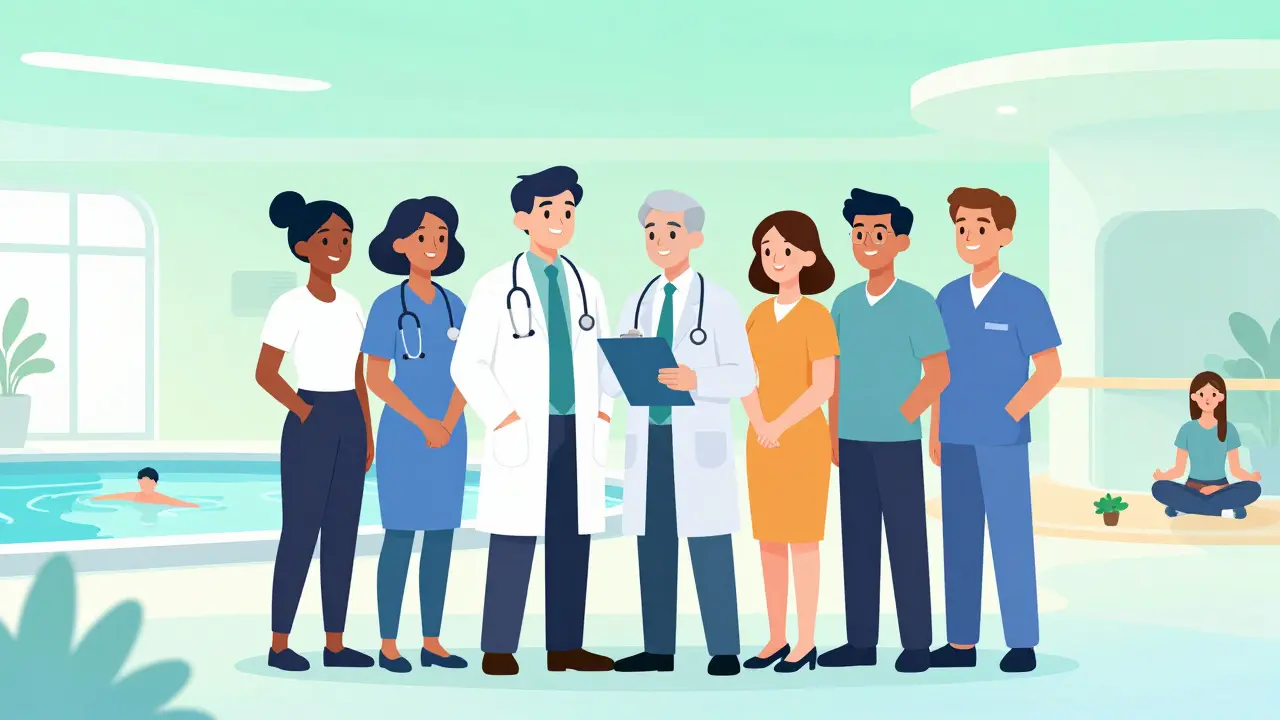
If you have complex, widespread pain, the most effective path is a multidisciplinary program. Think of this as a "boot camp" for pain management. Instead of seeing four different doctors in four different offices, you have a team-physicians, psychologists, physical therapists, and nutritionists-all working together under one roof.
Programs like those at the Mayo Clinic Pain Rehabilitation Center a specialized facility providing intensive, integrated pain management through physical reconditioning and cognitive restructuring focus on an intensive few weeks of training. They use biofeedback, stress management, and activity moderation to help you find the "sweet spot" of activity-where you move enough to improve but not so much that you trigger a massive flare-up. Data shows that 60-75% of participants in these programs achieve significant functional improvement, far outpacing those who only use one type of treatment.
Overcoming Barriers to Care
Knowing the best treatment is one thing; actually getting it is another. Many people find that their primary care provider might only offer a prescription pad, with little knowledge of non-opioid alternatives. Furthermore, insurance companies sometimes deny coverage for CBT or specialized physical therapy, viewing them as "optional" rather than essential.
To advocate for yourself, start by asking for specific tools. Instead of just saying "I'm in pain," ask about a referral for a functional capacity evaluation or a CBT therapist specializing in chronic pain. Look for providers who mention the biopsychosocial model. If you're in a rural area where specialists are rare, explore FDA-cleared digital therapeutics or wearable neuromodulation devices, which are becoming more accessible for home use.
When is pain officially considered "chronic"?
Pain is generally classified as chronic when it persists beyond the normal tissue healing time, which is typically around 3 months. At this point, the pain is often no longer just a symptom of an injury but may become a condition in its own right.
Can exercise really help if it hurts to move?
Yes, but the key is "graded activity." You don't start with a full workout; you start with movements that are just below your pain threshold and slowly increase them. This prevents the "boom-bust" cycle where you overdo it on a good day and then can't move for a week.
Is CBT only for people with depression?
Not at all. While CBT is used for depression, in chronic pain it is used to manage the *response* to pain. It helps you stop the cycle of pain leading to fear, which leads to inactivity, which leads to more pain.
Are opioids ever the right choice?
According to the CDC, opioids should be reserved for cases where the benefits clearly outweigh the risks and non-opioid therapies have failed. They are generally used for short-term relief rather than long-term management due to the high risk of tolerance and dependence.
What is a multidisciplinary program?
It is an integrated approach where a team of different specialists (like a doctor, a psychologist, and a physical therapist) works together to treat you. This is considered the gold standard for complex chronic pain because it treats the biological, psychological, and social aspects of pain all at once.
Next Steps for Different Scenarios
If you are just starting your journey: Focus on a comprehensive assessment. Use tools like the Brief Pain Inventory (BPI) to track not just the intensity of your pain, but how it interferes with your life. This gives your doctor concrete data to work with.
If you've tried meds and they aren't working: Look into a CBT provider or a specialized physical therapist. Ask your insurance about "interdisciplinary pain rehabilitation" coverage. Even if a full residential program is too expensive, you can often find outpatient versions that offer similar team-based care.
If you are managing a flare-up: Remember the "pacing" principle. Instead of pushing through the pain, use gentle movements (like aquatic therapy or light stretching) and focus on breathing techniques to lower your nervous system's arousal level.
about author

dwight koyner
The emphasis on the biopsychosocial model is absolutely critical. In my professional experience, patients who integrate psychological support with physical rehabilitation consistently achieve superior long-term outcomes compared to those pursuing a purely pharmacological route.
jack hunter
this whole apropach is just a way to tell people their pain is imagineed so they stop asking for meds. its a litte bit too convenient for the pharma companys to launder their image by pretending to care about the "psychological" side while we all suffer in silence
Stephen Luce
I really feel for anyone going through this. It's such a lonely place to be when people around you don't get that you're not just "sore" but actually exhausted. I found that pacing really helped me stop the cycle of crashing after a good day.
Jitesh Mohun
stop overcomplicating things just move your body and stop whining about the brain chemistry part if you want results you gotta put in the work no matter what the cbt therapist says
Jay Vernon
Water therapy is the best! 🌊 It feels so good to move without the heavy weight on my knees. Keep fighting everyone! 💪✨
Brady Davis
Oh sure, because telling someone who can't walk to "just do some yoga" is definitely the peak of medical innovation. I'm sure a few stretches will magically erase years of nerve damage. Truly revolutionary stuff here.
Grace Lottering
The CDC guidelines are just a cover for big pharma to push more expensive non-opioid drugs. Follow the money.
Srikanth Makineni
cbt is overrated but pacing works
GOPESH KUMAR
One must realize that pain is merely a perception created by the consciousness. While the biological data is interesting, the real struggle is the ego's attachment to the idea of a "healthy" body. Most of these clinical strategies are just band-aids on the existential wound of human fragility. If you truly understood the nature of suffering, you'd see that a 30% reduction in pain is irrelevant if the mind remains enslaved to the fear of that pain returning. We are treating the symptom of existence, not the disease of the soul. The medical industrial complex wants you to believe in "functional improvement" because it's a metric they can sell, but true relief comes from the total surrender of the desire for comfort. All these protocols are just another form of control over the inevitable decay of the biological vessel.
Timothy Burroughs
This is why American medicine is failing compared to how we should be doing things if we actually had some pride in our standards again stop letting these weak ideas take over and just get the job done
shelley wales
I just want to remind everyone that it's okay to start small. Even a two-minute stretch is a victory. You're all so strong for dealing with this every day and there is always hope for a better tomorrow.
Alexander Idle
Look at this fancy list of medications. Absolutely thrilling. I'm practically swooning over the table formatting. Truly the pinnacle of entertainment for a Tuesday afternoon.
Nathan Kreider
I tried the water exercises and it really helped me feel a bit more like myself. It's hard at first, but you can do it!