
Weekend Weight Gain: How to Stop Calorie Creep and Prevent Regain
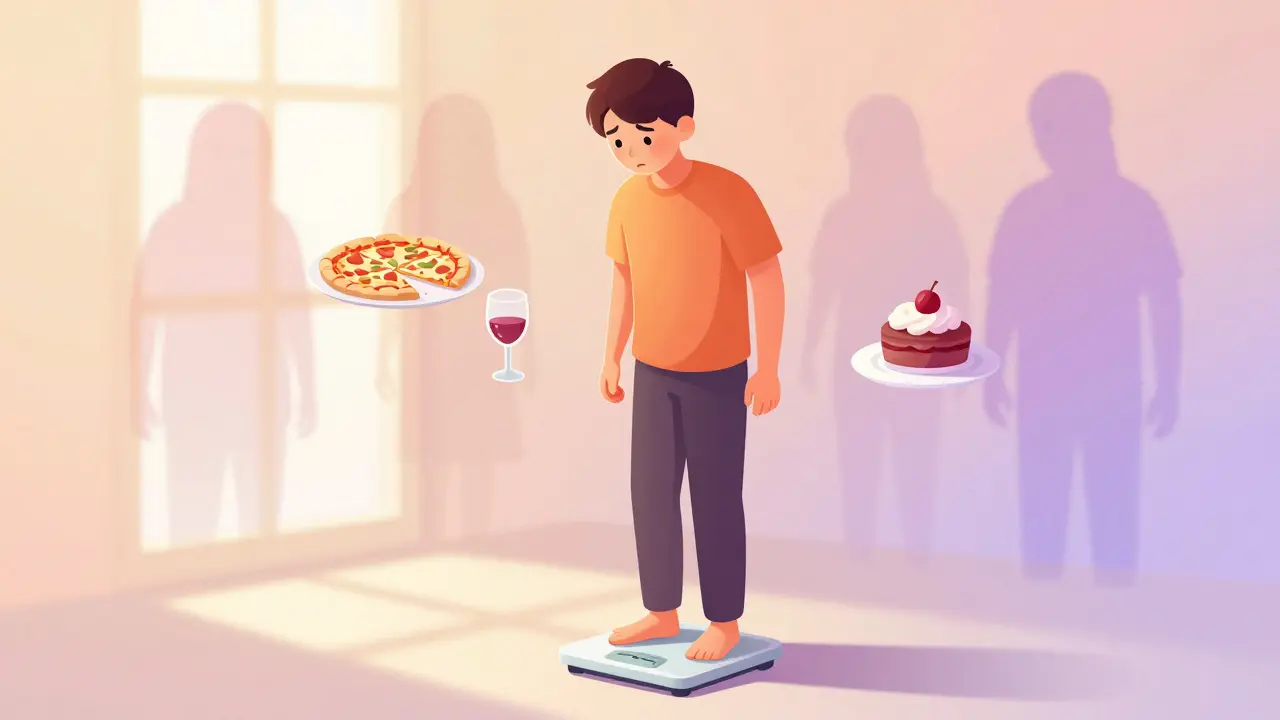
Most people think weight gain happens slowly over months. But if you’re struggling to lose weight-or even keeping it off-you might be losing ground every weekend.
It’s not a myth. It’s science. From Friday night to Sunday night, people consistently eat more, move less, and gain weight. Then, Monday rolls around, they go back to their routine, lose a bit, and think they’re back on track. But here’s the catch: that weekend gain never fully disappears. Over time, it adds up. Studies show the average adult gains about 0.26% of their body weight every year just from weekend eating patterns. That’s roughly 1-2 pounds a year-easily 10 pounds over five years-without ever breaking a single diet rule during the week.
Why Weekends Are the Silent Weight Gain Killer
Saturday isn’t just a day off. It’s a calorie magnet. Research from Washington University found people consume 36% of their daily calories from fat on Saturdays-more than any other day. That’s not because they’re bingeing. It’s because of small, repeated choices: an extra glass of wine with dinner, a slice of pizza with friends, dessert after lunch, a late-night snack because "it’s the weekend."
These aren’t big splurges. They’re tiny. But they add up. One extra 200-calorie snack per day over two days is 400 calories. Do that every weekend, and you’re consuming over 20,000 extra calories a year. That’s nearly six pounds of fat.
And it’s not just food. People move less. A 2023 study tracking 368 Australians found weight was lowest on Friday mornings and highest on Sunday nights. People didn’t stop exercising-they just didn’t move as much. Walking the dog, taking the stairs, going for a post-dinner stroll-those things vanish. And without them, the extra calories stick.
The Exercise Trap: Why Working Out Doesn’t Fix It
Many people think, "I’ll work out extra on Saturday to burn off the weekend treats." But here’s the problem: your body fights back.
A 2008 study split people into three groups: one cut calories, one increased exercise, and one did nothing. The exercise group worked out more than the others-but they still gained weight on weekends. Why? Because they ate more. They told themselves, "I burned 500 calories at the gym, so I deserve that burger." That’s called compensation. Your brain doesn’t calculate calories like a spreadsheet. It calculates reward.
David S. Ludwig from Harvard put it plainly: 150 minutes of exercise a week-the government’s official recommendation-isn’t enough to stop weight gain if you’re eating more. You need both. Move more, yes. But also eat less.
What Actually Works: 5 Proven Strategies
You don’t need to be perfect. You don’t need to give up weekends. You just need to be smarter.
- Self-weigh on Monday mornings-not Friday. A study of six interventions found people who weighed themselves every Monday maintained their weight. Those who didn’t gained. Why? Awareness. Seeing the number on the scale tells you if your weekend habits are slipping. It’s not about obsession. It’s about feedback.
- Plan your weekend meals-even if it’s just one meal. Write down what you’ll eat on Saturday lunch and Sunday dinner. It doesn’t have to be fancy. Just write: "Grilled chicken, salad, apple." That simple act reduces calorie intake by an average of 15%. Planning makes you less likely to grab the first thing you see.
- Swap one high-calorie drink for water. One glass of wine (120 calories), one beer (150), one latte with cream (200)-add them up, and you’ve consumed 500 calories before dinner. Replace one with sparkling water. That’s 2,000 fewer calories a month.
- Add 2,000 steps on weekends. That’s about 20 minutes of walking after dinner. It doesn’t have to be a workout. Just walk. Walk with your partner. Walk while you talk on the phone. Walk after breakfast. That small habit burns around 100 calories a day-enough to cancel out a slice of cake.
- Focus on protein and fiber at every meal. A study showed people who ate more fruits, vegetables, and lean protein gained less weight over time. Fiber fills you up. Protein keeps you full longer. Eat a boiled egg and an apple before going out. You’ll eat less later.
The Social Trap: Friends, Food, and Pressure
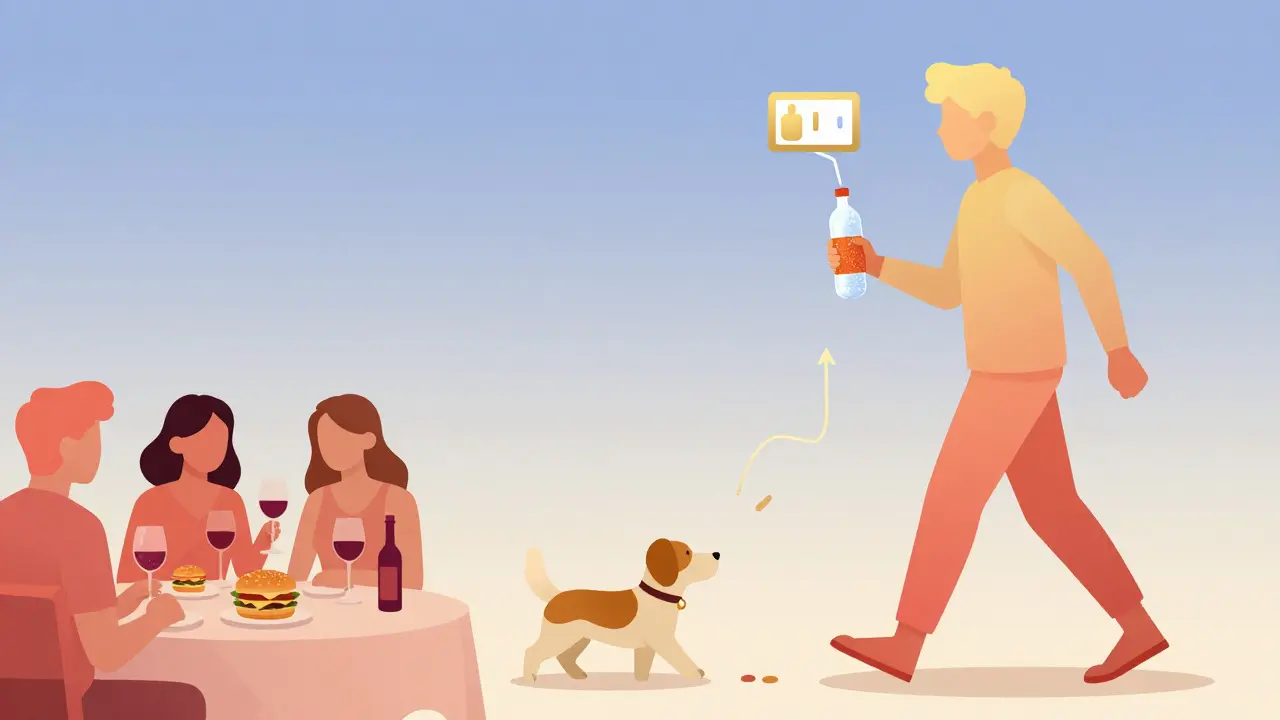
Weekends are social. You’re not eating alone. You’re eating with people who aren’t on a weight loss mission. That’s normal. But it’s also the biggest trigger for overeating.
Studies show social support helps-when it’s the right kind. People who had friends who ate healthy foods themselves ate more fruits and vegetables on weekends. Those with friends who ordered pizza and dessert? They did too.
You don’t have to say no. You can say, "I’ll have one glass, not two." Or, "I’ll take a small slice of cake, not the whole piece." Or, "Let’s go for a walk after dinner instead of coffee." It’s not about being the odd one out. It’s about choosing what matters to you.
Weekends Aren’t the Enemy-Mindset Is
Many people think: "I blew it on Saturday. I might as well keep going." That’s the all-or-nothing trap. One bad meal doesn’t ruin your progress. But believing it does? That does.
Research from the University of Vermont shows people who treat weekend weight gain as a normal part of the process-instead of a failure-lose more weight long-term. They don’t panic. They don’t punish themselves. They just adjust. Maybe Sunday night they skip dessert. Maybe Monday they add an extra 10-minute walk. Small. Consistent. Real.
That’s the difference between failing and succeeding. It’s not about being perfect on the weekend. It’s about being aware. And then making one better choice.

What About Holidays? Are They Worse?
Yes. Christmas and New Year’s are worse. People gain an average of 0.7 kg (1.5 pounds) during the holidays. But here’s the key difference: holidays are one-time events. Weekends are every week.
That’s why weekend habits matter more. You can plan for Christmas. You can’t plan for every Saturday night. So if you want to keep the weight off long-term, you need to fix the weekly pattern-not just the yearly one.
Final Thought: It’s Not About Restriction. It’s About Rhythm.
Weight management isn’t a battle you fight every day. It’s a rhythm you build. Weekdays: steady. Weekends: slightly looser-but not out of control.
You don’t need to give up pizza. You just need to know how much you’re eating. You don’t need to run a marathon on Sunday. You just need to walk. You don’t need to be perfect. You just need to be consistent.
That’s how people stay lean for life. Not by starving. Not by punishing themselves. But by noticing the little things-and choosing better, one weekend at a time.
about author


Janette Martens
i just ate a whole pizza on saturday and now i feel like a monster. why do we do this to ourselves??? i swear my pants are tighter already. #weekendfail
Marie-Pierre Gonzalez
Thank you for this thoughtful, science-backed perspective. I have been tracking my weekend intake for three months now, and the difference in my energy levels is profound. Planning meals-even just one-has been transformative. Small shifts, immense impact. 💪
Louis Paré
This is peak wellness cult content. You think people care about 0.26% body weight gain? Most of us are just trying to survive capitalism. You’re blaming the weekend for systemic issues like food deserts, wage stagnation, and the commodification of ‘health.’ Wake up.
Sydney Lee
I’m sorry-but if you’re gaining weight because of a slice of pizza on Saturday, you’re not ‘trying.’ You’re indulging in emotional avoidance under the guise of ‘self-care.’ Real discipline means never compromising, even when it’s ‘the weekend.’ You’re not a victim of calories-you’re a victim of weak will.
oluwarotimi w alaka
they don't want you to know this but the government and big pharma are pushing this weekend weight gain myth so you buy more diet pills and gym memberships. i lost 50lbs just by drinking sea salt water every morning. no one talks about this. #truth
Debra Cagwin
I love how practical this is. The 2,000-step tip? Game changer. I started doing it with my dog after dinner, and now we both look forward to it. It’s not about perfection-it’s about showing up. You’ve got this. ❤️
Hakim Bachiri
Okay, but let’s be real-nobody’s gonna plan meals on the weekend. That’s not living. That’s corporate wellness propaganda dressed up as ‘lifestyle advice.’ I eat what I want, when I want. If I gain weight? So what. Life’s too short to count calories like a robot. 🍕🍷
Celia McTighe
I used to hate weighing myself on Monday... until I started doing it with my sister. Now we text each other our numbers and celebrate small wins. It’s not about the number-it’s about connection. And yeah, sometimes we eat cake. But we also walk. And that’s enough. 🌞
Ryan Touhill
The notion that ‘one extra glass of wine’ causes weight gain is a reductive fallacy. It ignores circadian biology, insulin sensitivity, and the role of stress hormones. You’re reducing human behavior to a calorie math problem-when in reality, the root cause is often unresolved trauma or socioeconomic stress. Please consult a licensed psychologist before prescribing dietary fixes.
Teresa Marzo Lostalé
i used to think weekends were the enemy... then i realized i was just lonely. the food wasn't the problem. i was using it to fill a silence. now i cook with friends instead of eating alone. it's not about the calories. it's about the company. 🌙
ANA MARIE VALENZUELA
If you’re not tracking macros on weekends, you’re not serious. This post is just a sugar-coated excuse for laziness. You think walking 2,000 steps fixes 400 extra calories? That’s a 20% deficit. You’re delusional. Get real.