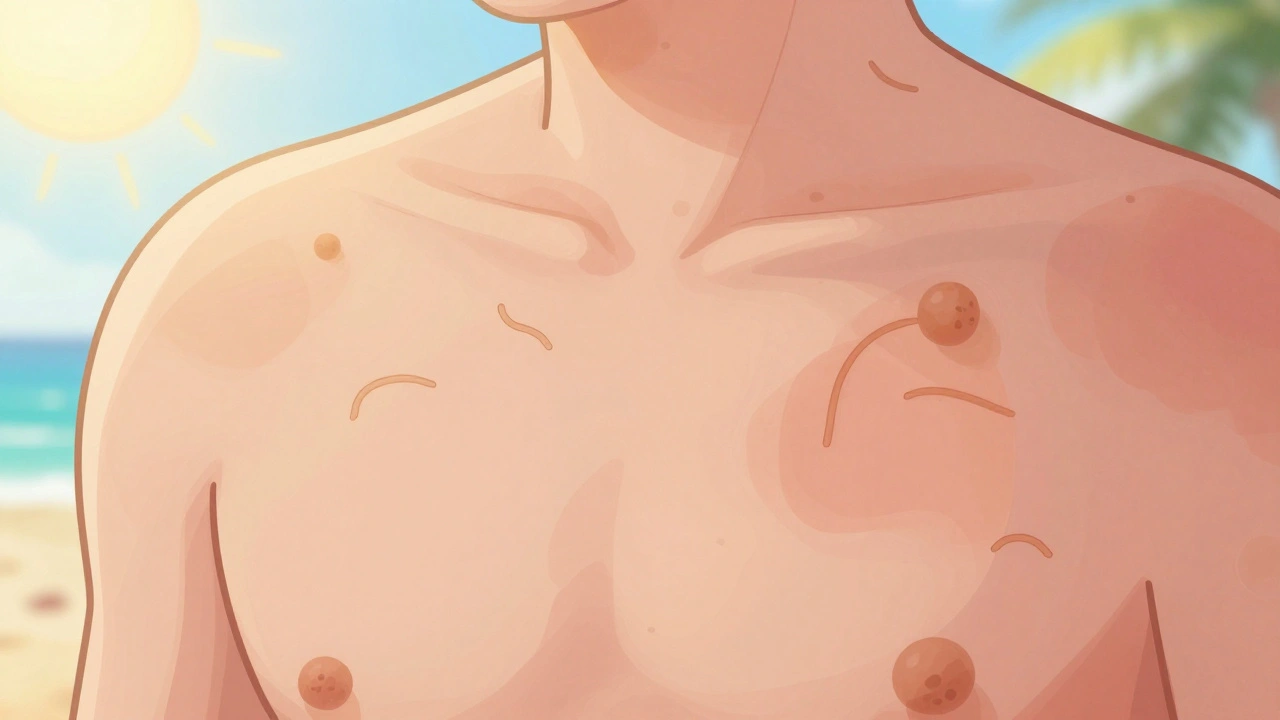
Tinea versicolor is a common yeast overgrowth that causes discolored skin patches. Learn how to treat it effectively and prevent it from coming back with simple, science-backed maintenance routines.

When your skin starts showing patches that are lighter or darker than the rest, it’s often not a rash or an allergy—it’s tinea versicolor, a harmless but noticeable fungal infection caused by an overgrowth of yeast naturally living on the skin. Also known as pityriasis versicolor, it’s not contagious, but it can stick around for months if not treated properly. This isn’t just a cosmetic issue. Many people feel self-conscious about the patches, especially in summer when the contrast becomes more obvious under tan skin.
The culprit is Malassezia yeast, a type of fungus that thrives in warm, oily, and humid environments. It’s found on everyone’s skin, but for some, it flips into overdrive—especially during hot weather, after sweating a lot, or if you’re on steroids or birth control. People with oily skin or a family history of tinea versicolor are more likely to get it. It doesn’t mean you’re unclean. It’s biology, not hygiene.
What makes tinea versicolor tricky is how it behaves. The patches don’t itch much, if at all, so people ignore them—until they spread. Then they turn white on tanned skin, or reddish-brown on darker skin, and suddenly you can’t wear tank tops or swimwear without feeling exposed. The yeast blocks melanin production, which is why the patches don’t tan. That’s why it’s most noticeable in summer, even though the infection started weeks earlier.
Thankfully, it’s treatable. Over-the-counter antifungal creams, shampoos, and sprays containing selenium sulfide, ketoconazole, or clotrimazole work for most cases. You don’t need a prescription unless it’s stubborn or widespread. But here’s the catch: even after the patches fade, the yeast can still be there. That’s why it comes back. Preventing recurrence means using antifungal shampoo once a week, especially before summer, and keeping skin dry after sweating. Washing clothes in hot water helps too—yeast lives in fabric.
There’s no magic fix. Some people clear it up in a week. Others deal with it for years. What works for one person might not work for another. That’s why you’ll find real-life stories in the posts below—people who tried everything from tea tree oil to prescription pills, and what finally worked for them. You’ll also see how doctors approach it differently in clinics versus at-home care, and why some treatments fail even when they seem perfect on paper.
This isn’t about quick fixes. It’s about understanding the pattern: heat + oil + yeast = recurrence. Once you know that, you can stop guessing and start managing it like a chronic condition—not a one-time problem. The posts here cover everything from daily routines that prevent flare-ups, to what to do when OTC products don’t work, to how to tell tinea versicolor apart from eczema, psoriasis, or vitiligo. No fluff. Just what actually helps.
Tinea versicolor is a common yeast overgrowth that causes discolored skin patches. Learn how to treat it effectively and prevent it from coming back with simple, science-backed maintenance routines.