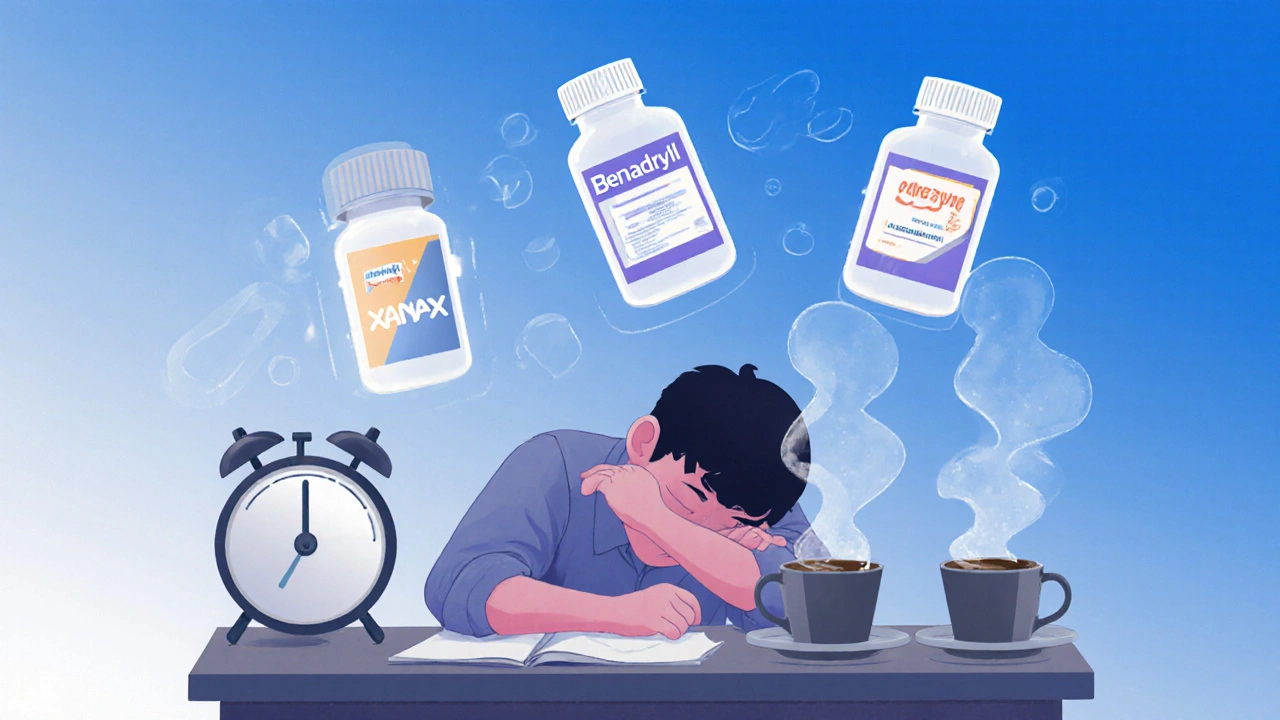
Medication-induced drowsiness affects 15-20% of adults and can impact safety, productivity, and quality of life. Learn the top causes, real-world fixes, and how to talk to your doctor without stopping your meds.

When you take a pill and suddenly feel like you’re dragging through molasses, you’re not imagining it. sleepiness side effects, a common reaction to many medications that slow down brain activity aren’t just annoying—they can be dangerous if you’re driving, operating machinery, or caring for others. This isn’t about being tired from a bad night. This is your body reacting to chemicals designed to affect your nervous system. And it’s happening more often than you think.
Some of the biggest culprits are antihistamines, drugs used for allergies that block histamine receptors and often cross into the brain. Cetirizine and diphenhydramine? They’re great for stopping sneezes—but they also knock you out. That’s why levocetirizine, the purified version of cetirizine, was developed: it works just as well with less drowsiness. Then there are antidepressants, especially older ones like amitriptyline or even newer ones that affect serotonin and norepinephrine. Even if you’re taking them for mood, your brain doesn’t know the difference—it just feels sleepy. And don’t forget opioids, painkillers that calm the central nervous system but also slow breathing and trigger deep fatigue. Up to 60% of people on long-term opioids report constant tiredness. It’s not weakness. It’s pharmacology.
Why does this happen? Because these drugs don’t pick and choose. They hit receptors everywhere—including the ones that keep you awake. Your brain’s alertness system gets dampened, like turning down the volume on a speaker. Some people notice it right away. Others build tolerance. But if you’re still feeling foggy after a week, it’s not normal. You might need a switch. Maybe a different antihistamine. Maybe a non-sedating antidepressant. Or maybe your dose is too high. The point isn’t to suffer through it. It’s to find a version of your treatment that lets you live, not just survive.
What you’ll find below isn’t a list of every drug that makes you sleepy. It’s a focused collection of real, practical guides—like how cetirizine compares to levocetirizine, why opioid-induced fatigue needs more than coffee, and how steroid side effects can mimic exhaustion. These aren’t theoretical. They’re written by people who’ve been there. Whether you’re managing allergies, chronic pain, or mental health, you don’t have to accept sleepiness as the price of relief. There are smarter ways. And they’re waiting for you in the posts ahead.
Medication-induced drowsiness affects 15-20% of adults and can impact safety, productivity, and quality of life. Learn the top causes, real-world fixes, and how to talk to your doctor without stopping your meds.