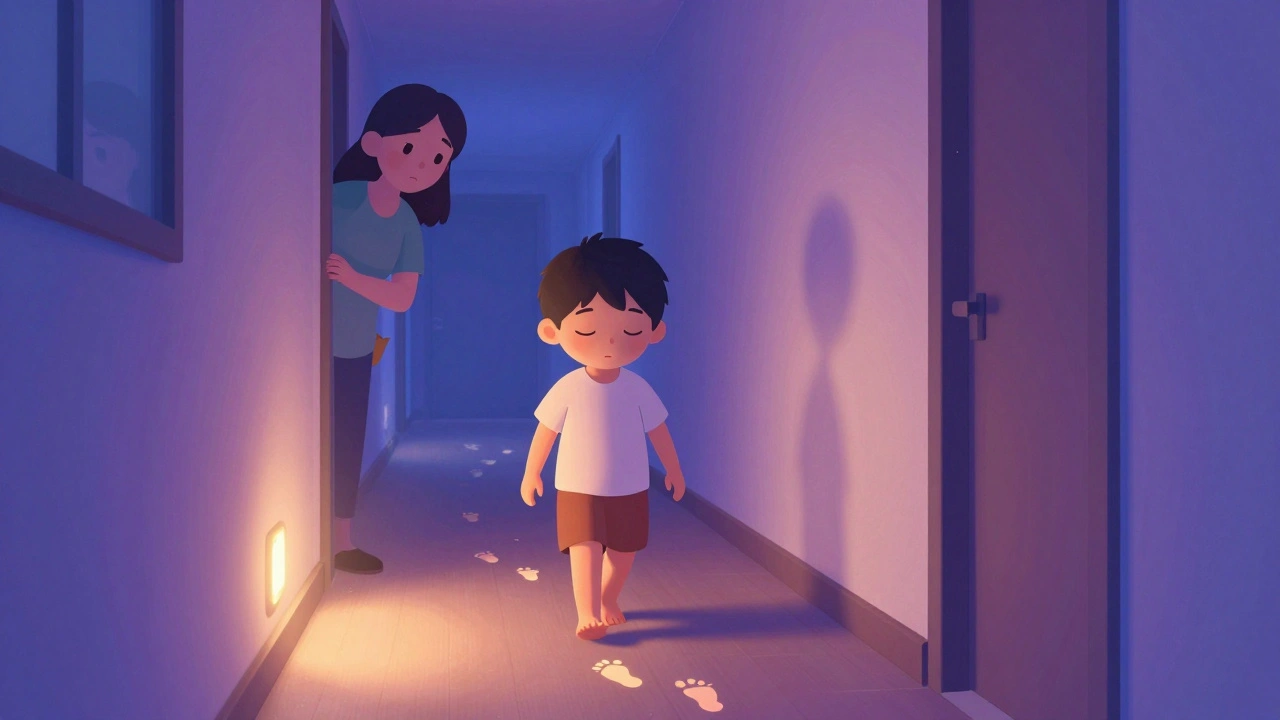
Learn practical, science-backed ways to manage sleepwalking and night terrors-without medication. Discover safety tips, behavioral strategies, and when to seek help for these common sleep disorders.

When you or someone you know acts out during sleep—walking, screaming, even hitting—the body isn’t resting. It’s caught in parasomnia, a category of sleep disorders where abnormal movements, behaviors, emotions, or perceptions occur during sleep. Also known as disorders of arousal, parasomnia isn’t just weird—it can be dangerous. Unlike normal dreaming, these episodes happen outside conscious control, often with no memory afterward.
Common types of parasomnia include sleepwalking, a condition where people get up and move around while still asleep, night terrors, intense fear episodes that scream or thrash but leave no recall, and REM sleep behavior disorder, where the brain fails to paralyze muscles during dreaming, leading to violent actions. These aren’t just sleep quirks—they’re linked to brain chemistry, stress, medications, and even neurological conditions like Parkinson’s. Some people develop them after head injuries or while taking antidepressants or sleep aids.
What makes parasomnia tricky is how often it’s dismissed as "just a phase" or blamed on stress. But repeated episodes can lead to injuries, relationship strain, or even legal trouble if someone acts aggressively while asleep. Children outgrow many forms, but adults with persistent symptoms need medical attention. Doctors often recommend sleep studies, lifestyle changes, or adjusting medications—especially if the person is on drugs that affect the central nervous system.
You’ll find real stories here about people who woke up with bruises, broke furniture, or nearly fell down stairs—all from something that happened while they were "asleep." We cover what triggers these episodes, which medications make them worse, how to make a bedroom safer, and when to see a specialist. No fluff. Just what works—and what doesn’t—based on real cases and medical evidence.
Learn practical, science-backed ways to manage sleepwalking and night terrors-without medication. Discover safety tips, behavioral strategies, and when to seek help for these common sleep disorders.