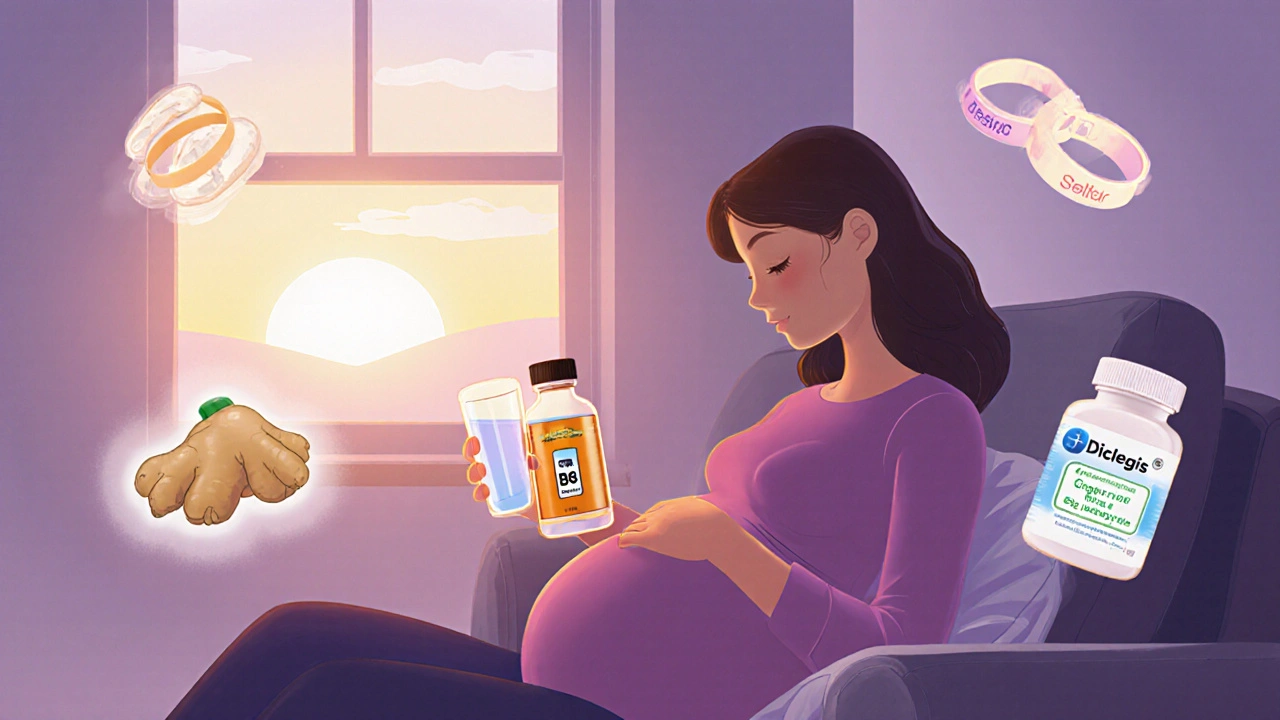
Safe and effective morning sickness remedies include vitamin B6, doxylamine, Diclegis, ginger, and acupressure. Learn what’s backed by science, what to avoid, and how to start treatment without risking your pregnancy.

When you’re pregnant and fighting constant nausea, finding a safe, effective solution isn’t just about comfort—it’s about keeping food down, staying hydrated, and not feeling like you’re stuck in a never-ending wave of sickness. OTC nausea pregnancy, over-the-counter medications and remedies used to treat nausea during pregnancy. Also known as morning sickness treatments, these options range from simple antihistamines to vitamin B6 combos, and they’re some of the most searched-for solutions for expectant mothers. Not all remedies are created equal, and what works for one person might do nothing—or even cause side effects—for another. The key is knowing which ones have real evidence behind them and which ones are just noise.
One of the most trusted Doxylamine, an antihistamine commonly combined with vitamin B6 for pregnancy nausea. Also known as Unisom SleepTabs, it’s the active ingredient in Diclegis, the only FDA-approved prescription drug for morning sickness—but it’s also available OTC in many countries when paired with pyridoxine. Studies show this combo reduces nausea in up to 70% of pregnant women with minimal risk. Another common choice is Vitamin B6, a water-soluble vitamin shown to reduce nausea intensity in early pregnancy. Also known as pyridoxine, it’s often taken alone at 10–25 mg three times daily and is considered one of the safest options. Ginger, whether in tea, capsules, or candies, is another well-documented remedy. A 2020 review of 12 trials found ginger as effective as vitamin B6 for reducing nausea without increasing miscarriage risk. These aren’t just anecdotes—they’re backed by clinical data.
But not all OTC options are safe. Pepto-Bismol, for example, contains bismuth subsalicylate, which is related to aspirin and should be avoided in pregnancy, especially in the third trimester. Similarly, strong anti-nausea drugs like promethazine or metoclopramide require a prescription and aren’t first-line choices unless other options fail. Even herbal teas can be risky if they contain unregulated ingredients like peppermint in high doses or licorice root, which may affect blood pressure. The line between helpful and harmful is thin, and it’s easy to accidentally pick something that sounds natural but isn’t pregnancy-safe.
What you’ll find in the posts below isn’t a list of random remedies. It’s a curated collection of real, practical guides on what works, what doesn’t, and why. You’ll see comparisons between common OTC options, insights on how they interact with your body during pregnancy, and tips on avoiding hidden risks. Whether you’re looking for the safest pill, the most effective ginger dose, or alternatives to medication altogether, these articles give you the facts without the fluff. No guesswork. No marketing hype. Just clear, direct advice from people who’ve studied this stuff—so you can feel confident choosing what’s right for you and your baby.
Safe and effective morning sickness remedies include vitamin B6, doxylamine, Diclegis, ginger, and acupressure. Learn what’s backed by science, what to avoid, and how to start treatment without risking your pregnancy.