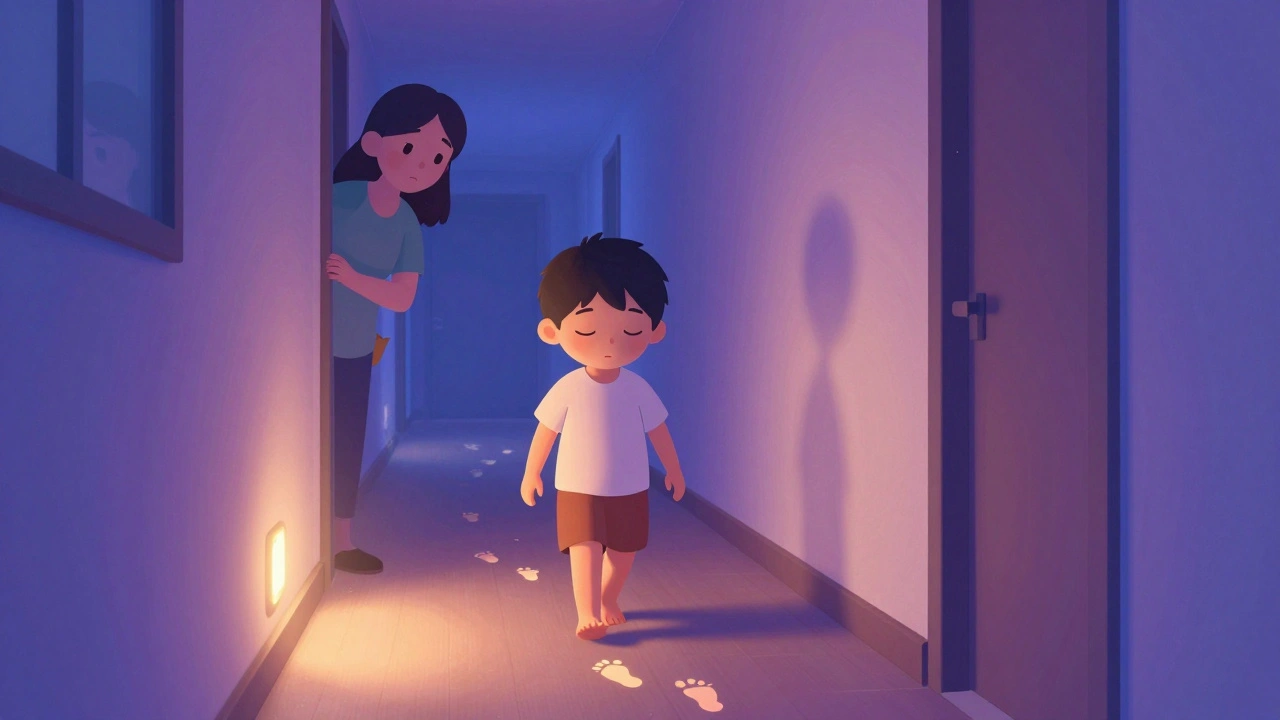
Learn practical, science-backed ways to manage sleepwalking and night terrors-without medication. Discover safety tips, behavioral strategies, and when to seek help for these common sleep disorders.

When someone experiences a night terror, a sudden, frightening episode during deep sleep that leaves the person confused, screaming, or even bolting upright, with no memory of it afterward. Also known as sleep terror, it’s not a nightmare—you’re not dreaming about monsters. You’re stuck in a state between sleep and wakefulness, and your body reacts like you’re in real danger. This isn’t rare. About 40% of kids go through it at least once, and while most outgrow it by adolescence, adults can get them too—especially under stress, sleep deprivation, or with certain medications.
What makes night terrors different from nightmares? Nightmares happen during REM sleep, you wake up fully, and you remember every scary detail. Night terrors happen in non-REM sleep, usually within the first few hours of bed. The person might sit up, shout, sweat, or even run around the room. They won’t respond to you. They won’t recognize you. And when they finally calm down, they’ll fall back asleep like nothing happened. They won’t remember it in the morning. That’s why parents often think their child had a bad dream—until they see the episode for themselves.
It’s not just kids. Adults with sleepwalking, a related parasomnia where the person performs complex actions while still asleep are more likely to have night terrors. So are people taking antidepressants, stimulants, or those with sleep apnea or fever. Trauma, anxiety, and irregular sleep schedules can trigger them. It’s not mental illness. It’s not bad parenting. It’s a neurological hiccup in the transition between sleep stages.
If your child has night terrors, don’t try to wake them. Don’t shake them. Just keep them safe. Turn off lights, remove sharp objects, and wait it out. Most episodes last less than 10 minutes. For adults, fixing sleep habits often helps—consistent bedtime, no caffeine after noon, avoiding alcohol. If they happen weekly or lead to injury, talk to a doctor. There are no magic pills, but behavioral strategies like scheduled awakenings (waking the person 15 minutes before the usual terror time) have worked in clinical studies.
What you’ll find below are real, practical guides from people who’ve lived through this. From how to track episodes to what meds might make them worse, from why your teenager suddenly started having them after starting a new pill to how to make the bedroom safer during an episode. No fluff. Just what works.
Learn practical, science-backed ways to manage sleepwalking and night terrors-without medication. Discover safety tips, behavioral strategies, and when to seek help for these common sleep disorders.