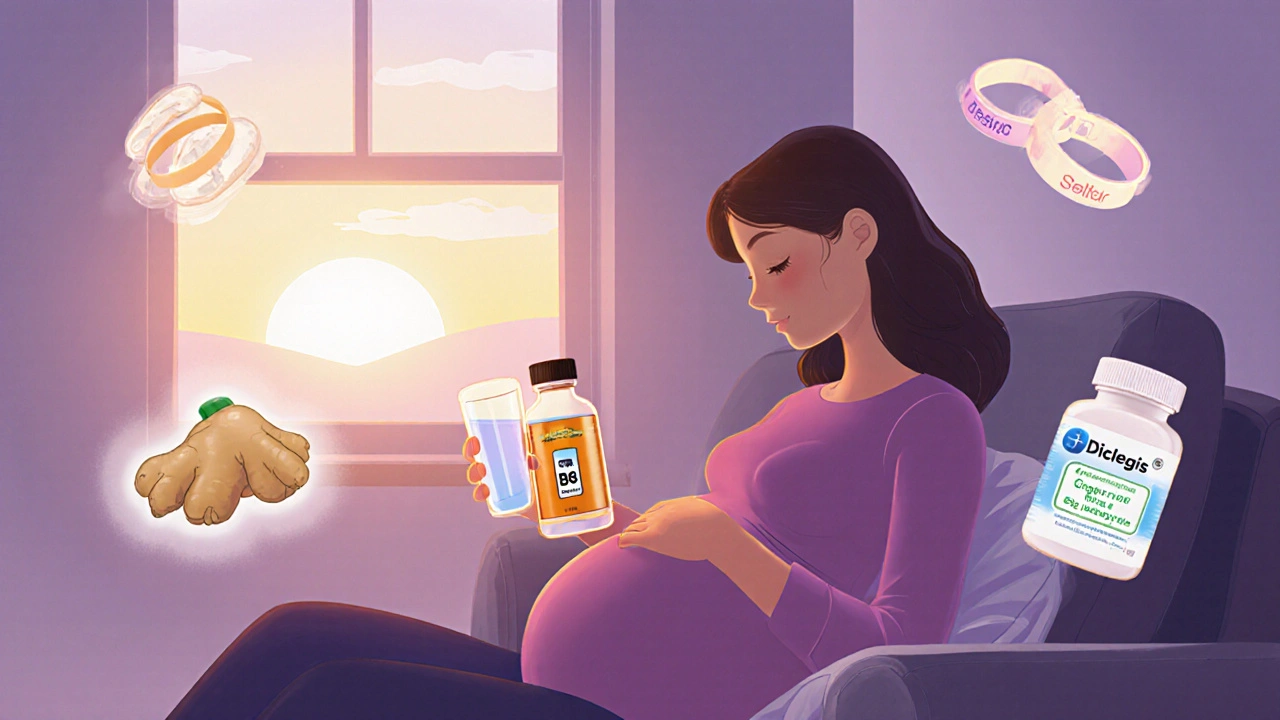
Safe and effective morning sickness remedies include vitamin B6, doxylamine, Diclegis, ginger, and acupressure. Learn what’s backed by science, what to avoid, and how to start treatment without risking your pregnancy.

When you’re pregnant and stuck with constant nausea, it’s not just "morning sickness"—it’s all-day, all-night, can’t-eat-anything, feel-like-you’re-going-to-pass-out sickness. This isn’t a myth or a phase you’ll power through. It’s a real, physical reaction to hormonal shifts, and morning sickness remedies, practical strategies to reduce nausea during early pregnancy. Also known as nausea of pregnancy, it affects up to 80% of expectant mothers and can be just as intense for some as it is mild for others. The good news? You don’t have to suffer through it alone. There are proven, safe ways to feel better—even if you’re not ready for pills yet.
One of the most trusted ginger for morning sickness, a natural remedy shown to reduce pregnancy-related nausea comes from roots, not labs. Studies show that 1 gram of ginger daily, whether as tea, capsules, or candied pieces, cuts nausea by nearly half for many women. No prescription needed. Then there’s vitamin B6 for pregnancy, a simple supplement proven to ease nausea without harming the baby. Doctors often recommend 10–25 mg three times a day, and it’s the first-line treatment in many countries. You can find it in most prenatal vitamins, but sometimes you need extra—talk to your provider. These aren’t magic tricks. They’re science-backed tools used in clinics and homes worldwide.
But what if ginger makes you gag and B6 doesn’t touch the nausea? That’s where other options come in. Some women find relief with acupressure wristbands, like Sea-Bands, which target the P6 point on the inner wrist. Others swear by small, frequent meals—crackers before getting out of bed, plain rice, dry toast. Avoiding strong smells, staying hydrated with cold water or electrolyte drinks, and even changing your prenatal vitamin brand (some iron-heavy ones make it worse) can make a huge difference. And yes, if nothing else works, there are FDA-approved medications like Diclegis (doxylamine and pyridoxine) that are safe and effective. No shame in needing them. Pregnancy is hard enough without pretending nausea is just "part of the journey."
Safe and effective morning sickness remedies include vitamin B6, doxylamine, Diclegis, ginger, and acupressure. Learn what’s backed by science, what to avoid, and how to start treatment without risking your pregnancy.