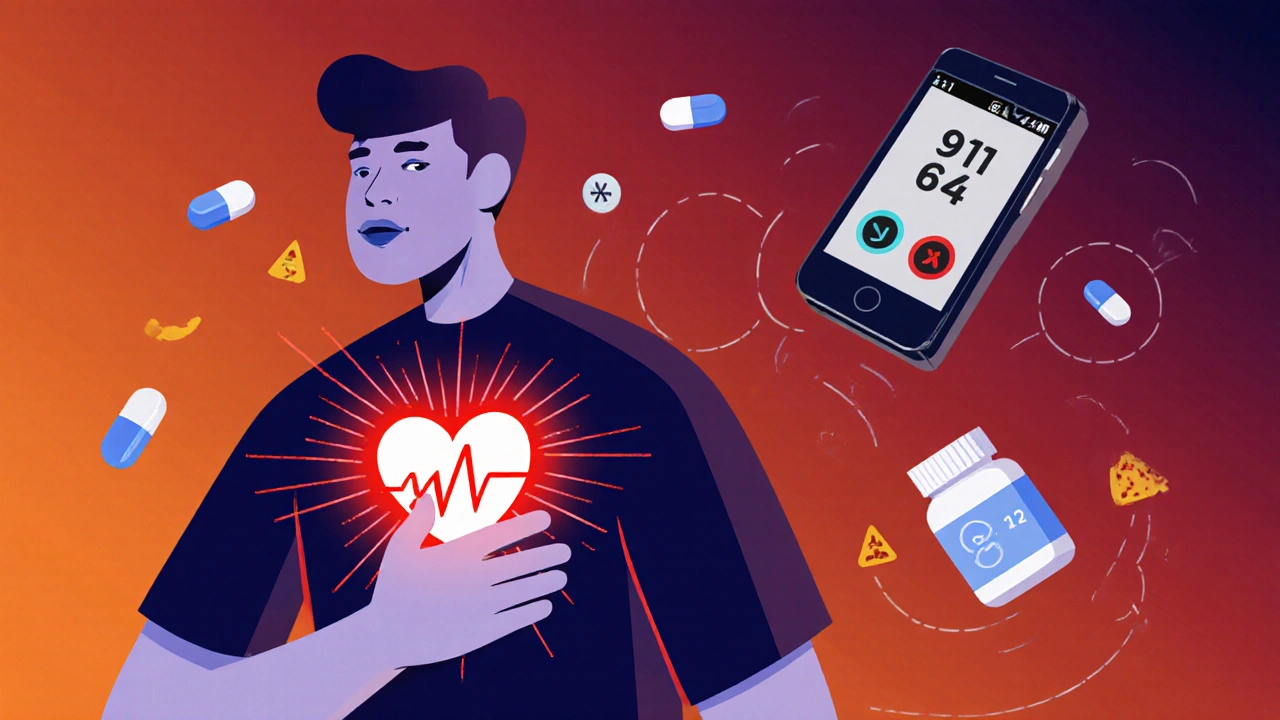
Learn the life-saving red flags that mean you need to go to the ER because of a medication reaction. From anaphylaxis to skin peeling and dangerous drug interactions, know when to act fast.

When something feels off with your medicine, it’s not just in your head. Medication red flags, warning signs that a drug may be harming you or isn’t what it claims to be. Also known as drug warning signs, these are the moments when you need to stop, check, and call your doctor—before it gets worse. It could be a new rash after starting a pill, sudden confusion from a common painkiller, or a pill that looks different than the last bottle. These aren’t just annoyances. They’re signals your body or the system is trying to tell you something’s wrong.
Many people don’t realize how often fake drugs, counterfeit pills that look real but contain dangerous or inactive ingredients. Also known as faked medications, they’re flooding the market. The FDA gets reports every week of pills sold online or in foreign pharmacies that contain rat poison, fentanyl, or nothing at all. Even if you bought from a trusted pharmacy, your pill could’ve been swapped. That’s why checking the appearance, color, and markings matters. If your generic pill suddenly looks different, it’s not a branding issue—it’s a medication red flag. And if you’ve got unexplained symptoms like strange tastes, smell loss, or sudden bladder changes, those aren’t normal. They’re documented side effects tied to real drugs, from antibiotics to antidepressants.
Some red flags are subtle. A sudden drop in energy after switching meds? Could be withdrawal. Confusion after starting a new steroid? That’s steroid-induced psychosis, and it’s treatable—if caught early. Frequent urination from an old medication? Maybe it’s not just aging—it’s a known bladder side effect. These aren’t random. They’re patterns. And the posts below cover exactly these cases: how to spot them, what to do next, and how to report dangerous drugs before someone else gets hurt. You’ll find real stories, step-by-step guides, and hard facts from patients and doctors who’ve been there. No fluff. Just what you need to protect yourself.
Learn the life-saving red flags that mean you need to go to the ER because of a medication reaction. From anaphylaxis to skin peeling and dangerous drug interactions, know when to act fast.