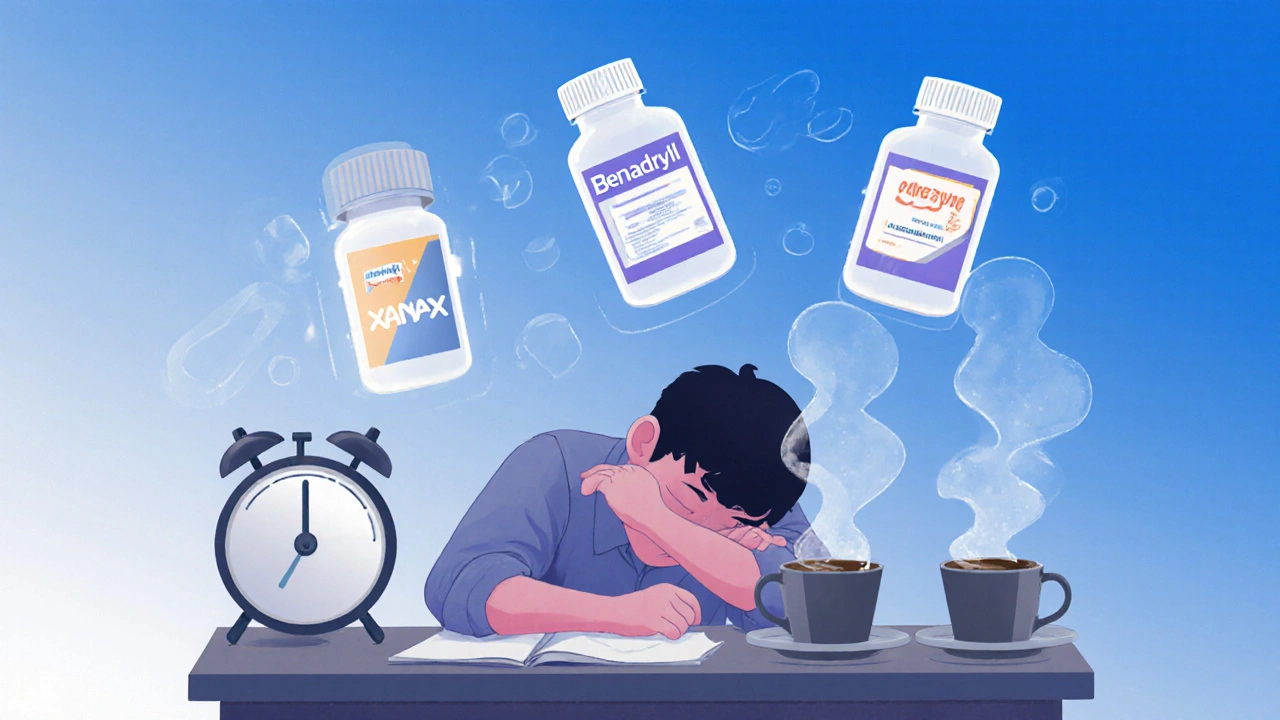
Medication-induced drowsiness affects 15-20% of adults and can impact safety, productivity, and quality of life. Learn the top causes, real-world fixes, and how to talk to your doctor without stopping your meds.

When you take a medication drowsiness, a side effect where drugs slow down brain activity, causing tiredness, reduced alertness, or difficulty staying awake. Also known as sedation, it’s one of the most reported issues with common prescriptions and over-the-counter pills. It’s not just about feeling sleepy—it can mess with your focus, slow your reactions, and even make driving or working dangerous.
Not all drowsiness is the same. Some drugs like antihistamines, medicines used for allergies that block histamine in the brain, often causing sedation are built to make you sleepy—like older versions of Benadryl. Others, like antidepressants, drugs used to treat depression and anxiety that affect serotonin and other brain chemicals, often leading to fatigue as a side effect, cause drowsiness as an unwanted side effect. Even some pain relievers, muscle relaxants, and blood pressure meds can pull you down. The key is knowing which ones are most likely to do it. For example, cetirizine (Zyrtec) causes more drowsiness than its cousin levocetirizine (Xyzal), even though they treat the same allergies. That difference matters if you’re working, studying, or driving.
Why does this happen? Most of these drugs interact with histamine, serotonin, or GABA receptors in your brain—chemicals that control wakefulness and alertness. Some people are more sensitive to this effect than others. Age, liver function, and other meds you’re taking can make drowsiness worse. You might think switching to a "non-drowsy" version will fix it, but even those can still cause fatigue in some people. The real solution isn’t always stopping the drug—it’s finding the right one for your body, adjusting the time you take it, or combining it with lifestyle tweaks like better sleep or avoiding alcohol.
Below, you’ll find real, practical guides on exactly which drugs cause drowsiness, how they compare, and what you can do about it. From antihistamines to antidepressants, you’ll see which ones are safest for daytime use, which ones have hidden sedative effects, and how to spot the difference between normal tiredness and something you should talk to your doctor about.
Medication-induced drowsiness affects 15-20% of adults and can impact safety, productivity, and quality of life. Learn the top causes, real-world fixes, and how to talk to your doctor without stopping your meds.