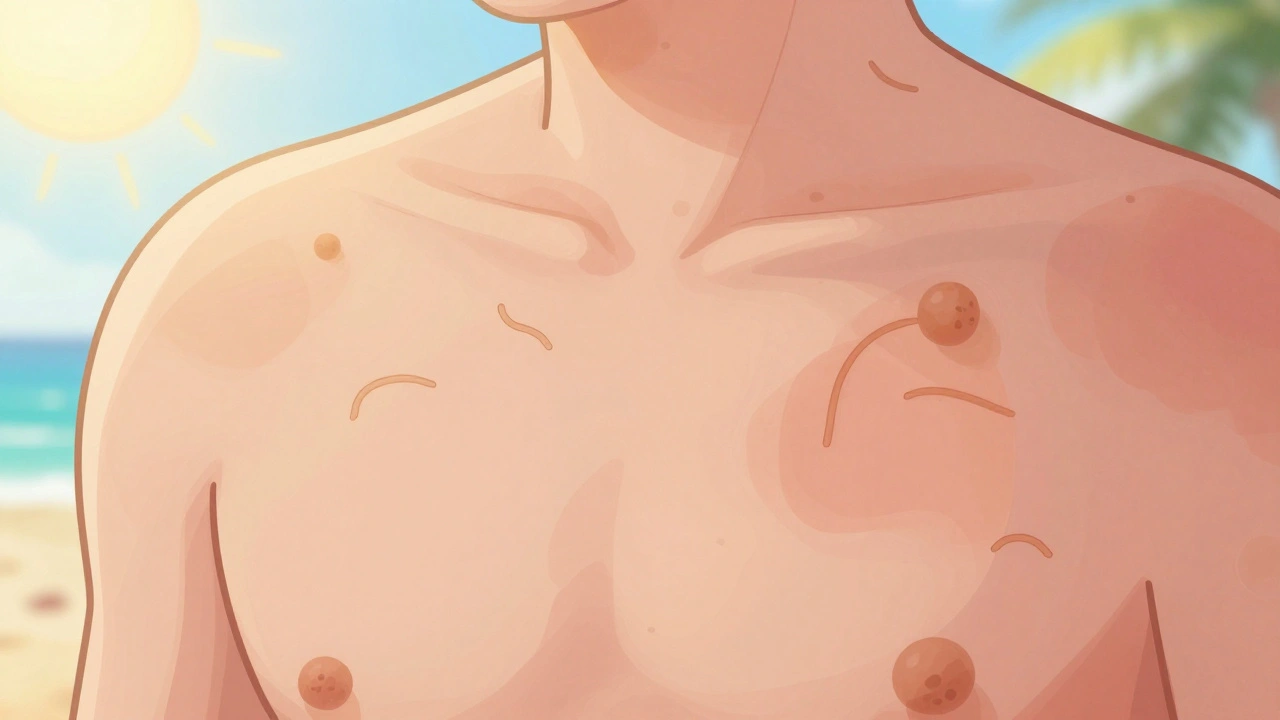
Tinea versicolor is a common yeast overgrowth that causes discolored skin patches. Learn how to treat it effectively and prevent it from coming back with simple, science-backed maintenance routines.

When your scalp flakes, your face itches, or your chest breaks out in red patches, the culprit might not be dry skin or allergies—it could be Malassezia fungus, a type of yeast that naturally lives on human skin but can overgrow and trigger inflammation. Also known as Pityrosporum orbiculare, this yeast thrives in oily areas like the scalp, face, and upper back, and it’s behind more than just dandruff. About 90% of adults carry it harmlessly, but when your skin’s oil balance shifts—thanks to stress, humidity, hormones, or even certain shampoos—it starts multiplying fast and causes trouble.
That’s why seborrheic dermatitis, a chronic skin condition marked by flaky, red, greasy patches is so common. It’s not an infection you catch—it’s your own yeast going rogue. Same goes for dandruff, the mild form of this overgrowth that affects nearly half of all adults at some point. It’s not dirt. It’s biology. And unlike bacterial acne, you can’t just scrub it away. You need to target the yeast itself. That’s where antifungal shampoos, creams, and sometimes oral meds come in. Ketoconazole, ciclopirox, and selenium sulfide aren’t just ingredients—they’re your first-line defense.
What’s interesting is how often this gets misdiagnosed. People think it’s eczema, psoriasis, or even an allergic reaction. But if your rash stays stubbornly in the hairline, eyebrows, or nose folds—and it flares up after sweating or during winter—it’s likely Malassezia. And while it doesn’t spread from person to person, it can hang around for years if you don’t manage the triggers. Stress, oily skin, and even some supplements like biotin can make it worse. The good news? You don’t need expensive treatments. Simple, proven antifungals work if you use them right.
Below, you’ll find real-world guides on how to spot Malassezia fungus early, what products actually kill it, how to prevent it from coming back, and when to see a doctor instead of reaching for another anti-dandruff shampoo. These aren’t theory pieces—they’re practical, tested strategies from people who’ve lived with it and found what works.
Tinea versicolor is a common yeast overgrowth that causes discolored skin patches. Learn how to treat it effectively and prevent it from coming back with simple, science-backed maintenance routines.