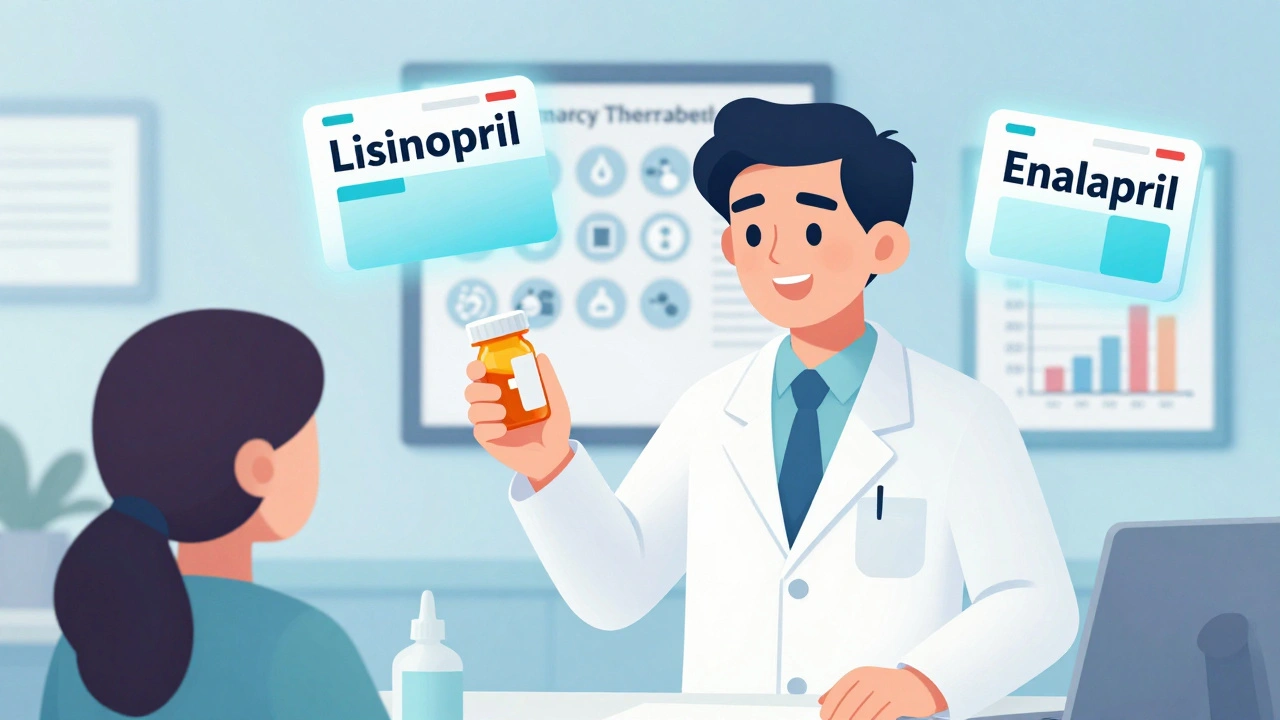
Therapeutic interchange means swapping medications within the same class to cut costs without losing effectiveness. It’s not a random change - it’s a structured, evidence-based practice used mostly in hospitals and nursing homes.

When you hear drug class, a category of medications that work in similar ways to treat similar conditions. Also known as medication class, it helps doctors pick the right treatment and lets you understand why your pill looks different from someone else’s—even if it does the same job. Think of it like sorting tools: a hammer and a nail gun are both for driving nails, but they work differently. Same with drugs. A NSAIDs, a drug class that reduces pain and inflammation by blocking certain enzymes includes ibuprofen, naproxen, and aceclofenac. They all ease arthritis or headaches, but one might be gentler on your stomach. That’s why your doctor might switch you from one NSAID to another—not because the first one failed, but because your body responds better to a different member of the same class.
Knowing your drug class, a category of medications that work in similar ways to treat similar conditions helps you spot patterns. If you had a bad reaction to one antibiotic, you might need to avoid others in the same class. Penicillin allergies aren’t just about penicillin—they often mean avoiding amoxicillin, ampicillin, and similar drugs. That’s why allergy testing matters. And if you’re on a GLP-1 agent, a drug class used for weight loss and type 2 diabetes that mimics a natural gut hormone like semaglutide, you’re not just taking a weight pill—you’re using a tool designed to slow digestion and reduce appetite. Newer versions like retatrutide are pushing boundaries, but they still belong to the same family. Even generic drugs fall into these groups. The FDA doesn’t care if the pill is blue or red, or if it’s made by Pfizer or a small lab in India. What matters is whether it’s the same drug class, a category of medications that work in similar ways to treat similar conditions and meets bioequivalence standards. That’s why your generic sildenafil looks nothing like Viagra but works just as well.
Some drug classes are built for emergencies. Steroid-induced psychosis, for example, isn’t a diagnosis on its own—it’s a side effect of a powerful corticosteroid, a drug class used to suppress inflammation and immune response. If you’re on high-dose prednisone and start hearing voices or feeling paranoid, it’s not anxiety—it’s a known reaction tied to the class. Same with drowsiness: antihistamines like cetirizine and levocetirizine are both in the same class, but one causes less sleepiness because of tiny chemical differences. That’s why knowing the class helps you ask smarter questions. Not all drugs in a class are equal. Some are faster, cheaper, or safer for your liver. Others cause weird side effects like losing your sense of smell or peeing all the time. And if you’re switching meds, you need to understand how to cross-taper between classes without triggering withdrawal.
Below, you’ll find real-world guides on how these classes affect your life—from how to spot fake generics to why your insurance fights over step therapy. Whether you’re managing diabetes, quitting smoking, or just trying to understand why your pill changed color, this collection gives you the facts without the fluff.
Therapeutic interchange means swapping medications within the same class to cut costs without losing effectiveness. It’s not a random change - it’s a structured, evidence-based practice used mostly in hospitals and nursing homes.