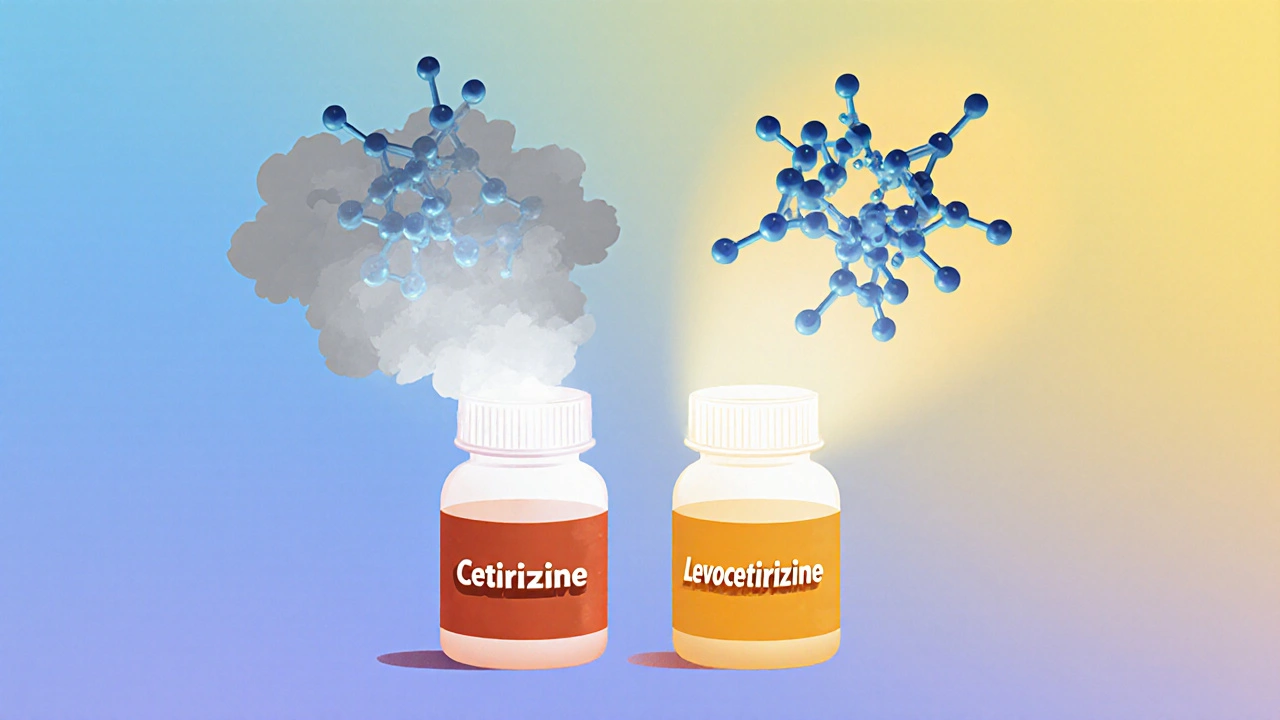
Cetirizine and levocetirizine both treat allergies, but levocetirizine causes less drowsiness. Learn why, how they compare in effectiveness, side effects, and cost-and which one is right for your daily life.

When you reach for an allergy medicine, a drug designed to block histamine and reduce symptoms like sneezing, runny nose, and itchy eyes. Also known as antihistamines, it's one of the most common over-the-counter treatments used worldwide. But if you’ve ever felt sluggish after taking one, you’re not alone. Many allergy medicine options—especially older ones—come with a side effect that no one talks about until it hits: drowsiness. It’s not a bug. It’s a feature. These drugs cross the blood-brain barrier and calm the nervous system, which helps with itching and sneezing… but also makes you want to nap. That’s why some people take them at night, and others avoid them completely.
Not all antihistamines are created equal. The first-generation types—like diphenhydramine (Benadryl) and chlorpheniramine—are the main culprits behind that heavy-headed feeling. They’re cheap, effective, and widely available. But they also bind to receptors in your brain that control wakefulness. That’s why your eyes feel heavy, your thoughts slow down, and driving feels risky. On the flip side, second-generation antihistamines like loratadine, a non-sedating antihistamine that blocks histamine without crossing into the brain in significant amounts, and cetirizine, a slightly more potent option that still causes drowsiness in about 10-15% of users, were developed to avoid this. They work just as well for allergy relief but leave you alert. If you’ve been told to avoid driving or operating machinery after taking your allergy pill, it’s probably the first-gen kind. Switching isn’t always easy, but it’s often worth it.
There’s more to this than just picking the right pill. Your body’s reaction depends on age, liver function, other meds you take, and even how much you’ve eaten. A 70-year-old on multiple prescriptions might feel drowsy from a low dose of cetirizine, while a healthy 25-year-old might not notice a thing. And if you’re using allergy meds for sleep—yes, some people do—that’s a red flag. Long-term reliance on sedating antihistamines for insomnia can mess with your natural sleep cycle and even raise dementia risk in older adults. The real goal? Get relief without the fog. That’s why so many of the articles in this collection focus on alternatives, safer options, and how to spot the hidden trade-offs in what seems like a simple over-the-counter fix.
Below, you’ll find real-world guides on how to buy generic Claritin safely, what to expect with cetirizine versus loratadine, how to avoid drowsiness without giving up relief, and even how some people use allergy meds differently than they’re meant to be used. There’s no fluff here—just what works, what doesn’t, and what you need to know before your next dose.
Cetirizine and levocetirizine both treat allergies, but levocetirizine causes less drowsiness. Learn why, how they compare in effectiveness, side effects, and cost-and which one is right for your daily life.