
Metabolic Rate: How Adaptive Thermogenesis Sabotages Weight Loss and How Reverse Dieting Can Help
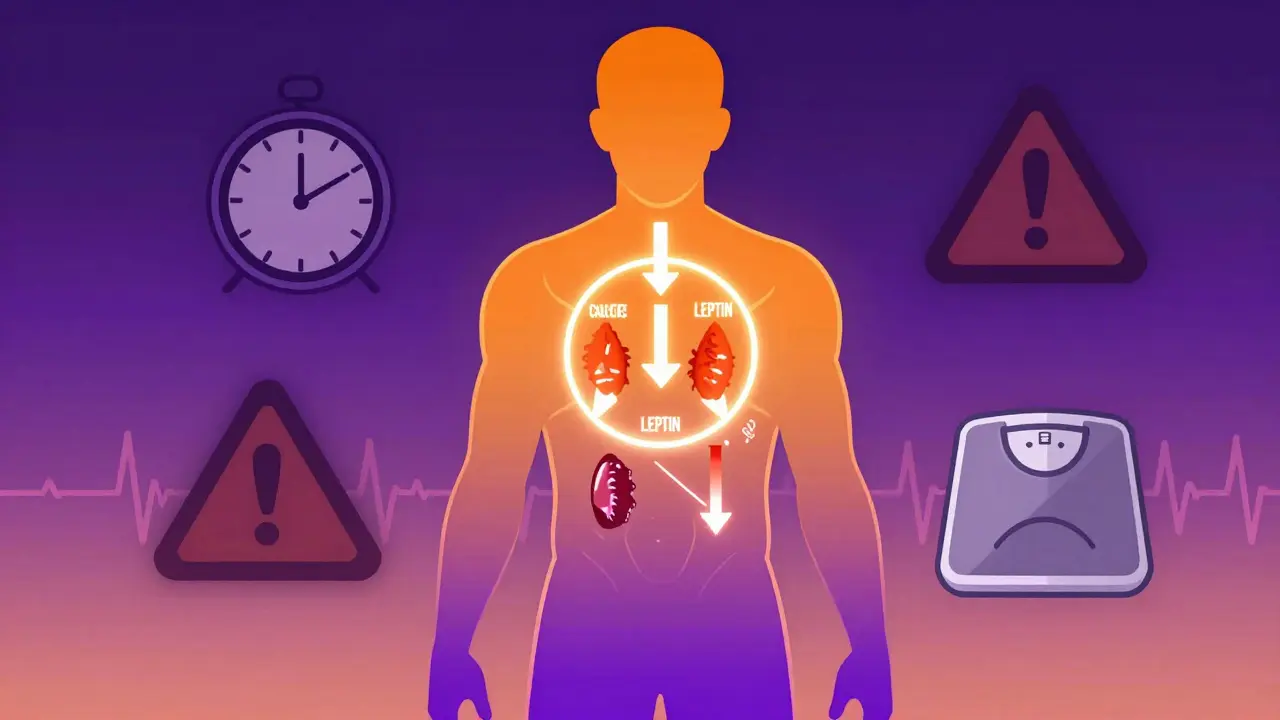
After losing weight, many people hit a wall. No matter how hard they try, the scale won’t budge. They eat less, work out more, and still gain back what they lost. It’s not laziness. It’s not lack of willpower. It’s adaptive thermogenesis-a biological survival mechanism that kicks in when your body senses you’re not eating enough.
What Is Adaptive Thermogenesis?
Adaptive thermogenesis is when your body slows down its energy use more than it should based on how much weight you’ve lost. If you drop 20 pounds, your metabolism should adjust to match your new, lighter frame. But it doesn’t stop there. Your body goes further. It burns 100, 150, even 200 fewer calories a day than science predicts. That’s not a glitch. It’s a defense system. This isn’t new. Scientists have known about it since the early 2000s. But it hit mainstream attention after the 2016 New York Times story on contestants from The Biggest Loser. Six years after the show, most had regained nearly all their weight-and their metabolisms were still running 500 calories slower than expected. Their bodies hadn’t forgotten the starvation phase. It’s not just for people who lose a lot of weight. Even modest losses trigger it. A 2020 study found that after just one week of cutting calories, people burned an average of 178 fewer calories per day-not because they lost muscle, but because their bodies actively reduced energy output. That’s like eating a small banana every day and not noticing. Over six weeks, that adds up to nearly 8,200 fewer calories burned. No wonder weight loss stalls.How Your Body Slows Down
Your metabolism isn’t just about how much you weigh. It’s a complex system of hormones, nerves, and cells working together to keep you alive. When you lose weight, your body sees it as a threat. It’s not trying to make you fat-it’s trying to keep you from starving. Leptin, the hormone that tells your brain you’re full, drops sharply after weight loss. That makes you hungrier. At the same time, your thyroid activity slows, your stress hormones rise, and your sympathetic nervous system quiets down. Brown fat-once thought to be a major player in burning calories-becomes less active. Even 25 grams of it going dormant can account for a big chunk of the calorie drop. The result? Your resting metabolic rate (RMR) falls. Your body moves less without you realizing it-fidgeting less, standing less, taking shorter steps. You’re not lazy. You’re biologically conserving energy. This isn’t temporary. Studies show it lasts at least 44 weeks after weight loss ends. And if you’ve dieted and regained weight before? That slowdown gets worse. Each cycle makes your metabolism more stubborn.Why Reverse Dieting Is the Only Real Solution
Most people try to fix a slow metabolism by eating less. That’s like trying to fix a broken car by turning the key harder. Reverse dieting is the opposite. It’s about slowly giving your body more fuel so it stops thinking it’s in crisis. The idea is simple: after a period of dieting, you gradually increase your daily calories-usually by 50 to 100 kcal per week. You don’t jump back to your old intake. You creep up. You watch your weight. If it stays stable, you keep going. If it climbs, you pause and hold for another week. This isn’t magic. It’s physiology. By slowly increasing calories, you signal to your body that food is available. Leptin levels rise. Thyroid activity improves. Your nervous system wakes up. Your metabolism starts to recover. A 2022 survey of 1,200 MyFitnessPal users found that 68% experienced metabolic adaptation after losing weight. Of those who tried reverse dieting, 73% reported better energy, 65% felt less hungry, and 31% successfully maintained their weight without regain. But it takes time. Most people need 3 to 6 months to fully reverse the slowdown. Rushing it-adding more than 150 kcal per week-often leads to regain. Patience isn’t optional. It’s the strategy.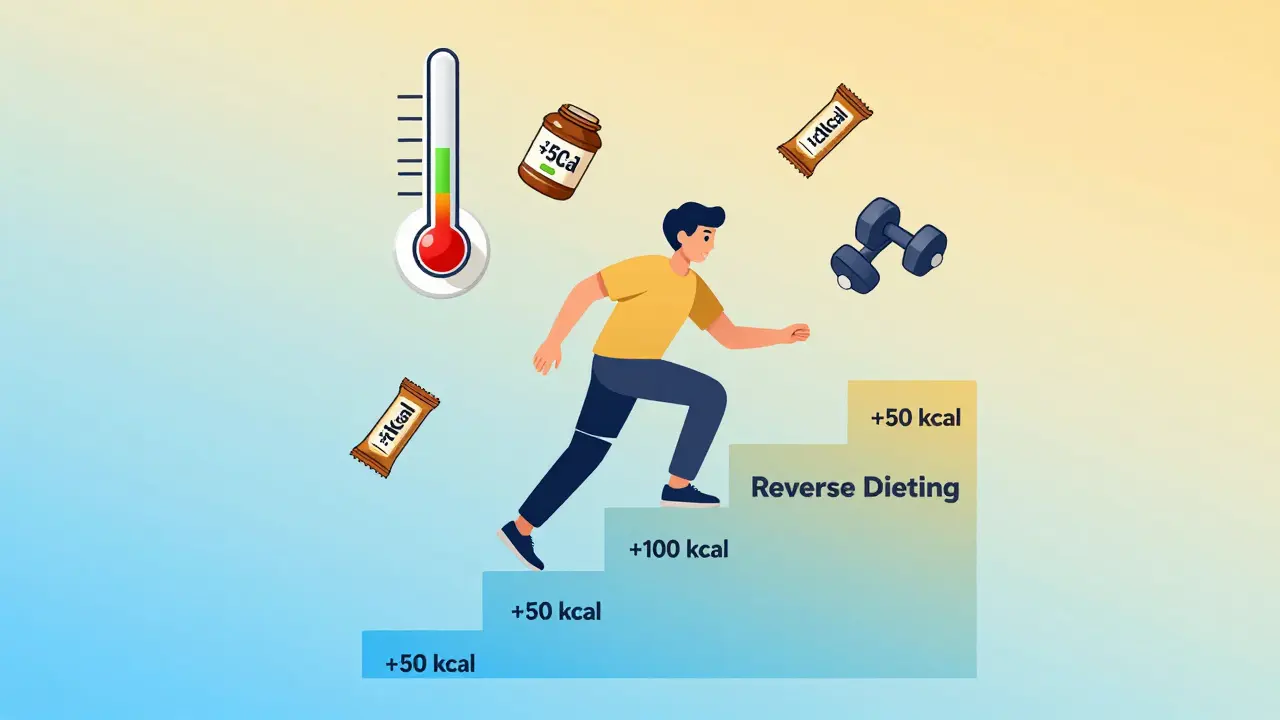
What Works Alongside Reverse Dieting
Reverse dieting alone isn’t enough. Your body needs more than just calories to reset. Two things make a huge difference: protein and resistance training. Eating 1.6 to 2.2 grams of protein per kilogram of body weight helps preserve muscle. Muscle burns more calories at rest than fat. The more muscle you keep, the less your metabolism drops. One study showed that preserving muscle during weight loss reduced adaptive thermogenesis by about 15%. Resistance training-lifting weights, doing bodyweight exercises, using resistance bands-does the same. It tells your body: “We need this tissue. Don’t waste energy shutting it down.” Two to three sessions a week are enough. You don’t need to be a bodybuilder. Just move heavy things regularly. Some experts also recommend tracking simple biomarkers. A drop in morning body temperature or resting heart rate by 5-10% can signal your metabolism is still suppressed. If your heart rate is lower than usual and you feel sluggish, it’s a sign you’re not done recovering.What Doesn’t Work
There’s a lot of noise out there. “Metabolic reset” supplements. “Thermogenic” fat burners. 7-day detoxes. None of these touch adaptive thermogenesis. Supplements don’t turn off your body’s survival mode. Neither do extreme fasting or “cleanses.” In fact, they make it worse. The more you restrict, the deeper your body digs in. Bariatric surgery-like gastric bypass-does blunt adaptive thermogenesis. But that’s because it changes gut hormones and digestion, not because it “fixes” metabolism. For most people, surgery isn’t an option. And even then, long-term success still depends on behavior. The truth? No pill, potion, or quick fix reverses metabolic adaptation. Only consistent, patient, calorie-based rebuilding does.Real Stories, Real Results
One Reddit user, u/HealthyHustle22, lost 100 pounds over 18 months. Afterward, his metabolism crashed. He was eating 1,800 calories a day and still gaining weight. He started reverse dieting: +75 kcal per week, high protein, three strength sessions weekly. After eight months, he was eating 2,600 calories without gaining an ounce. His energy returned. His hunger vanished. He didn’t just maintain-he felt better than he had in years. Another user, MetabolismMatters, tried reverse dieting for a year after losing 100 pounds. He followed every rule. But he regained 30 pounds. Why? He didn’t account for his changing body. As he gained weight, his calorie needs rose. He kept adding calories at the same rate, not adjusting for his new size. He learned too late: reverse dieting isn’t just about adding food. It’s about recalibrating your entire energy equation.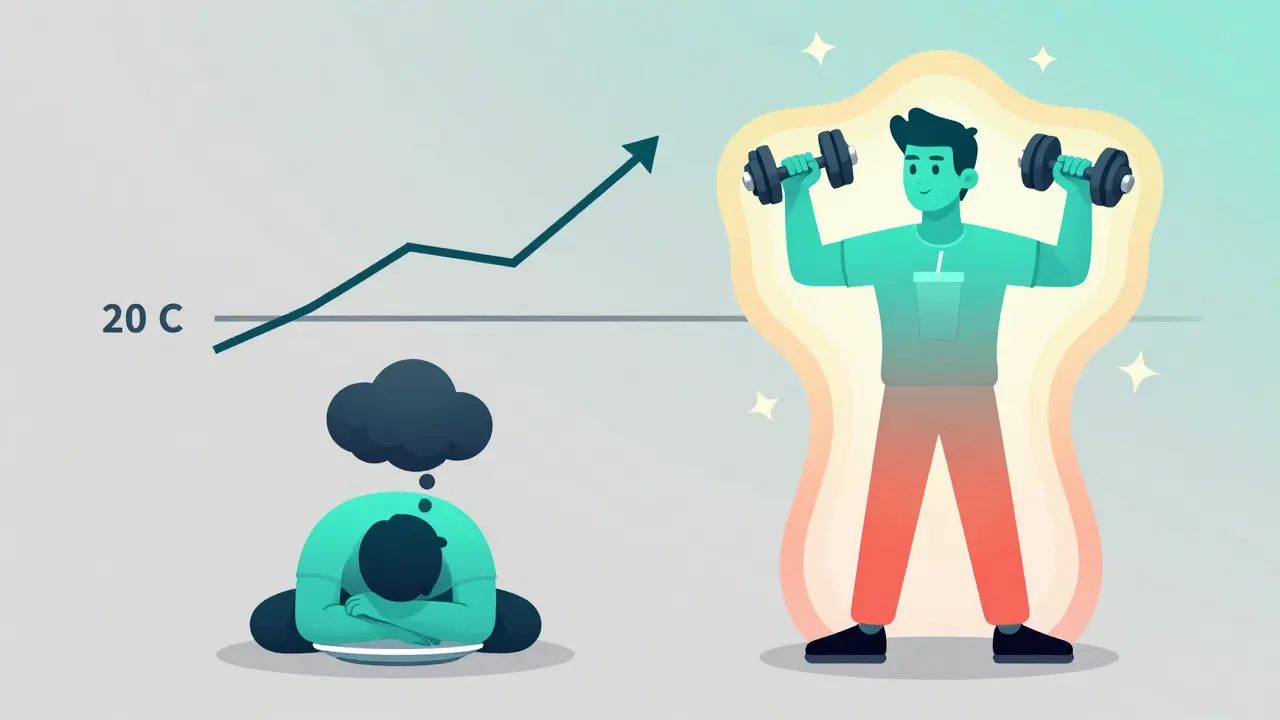
The Bigger Picture
The global weight loss market is worth over $269 billion. And yet, only 20% of people keep off 10% of their lost weight for a year. Why? Because most programs ignore biology. They treat weight loss like a math problem: calories in, calories out. But your body isn’t a calculator. It’s a living system built to survive. Adaptive thermogenesis isn’t a flaw. It’s a feature. Evolution didn’t design us to stay thin. It designed us to hold onto fat when times are hard. The problem isn’t your metabolism. It’s the myth that weight loss should be easy. New research is promising. Scientists are testing drugs that activate brown fat. Others are studying gut bacteria linked to metabolic slowdown. But these are years away from the public. For now, the only proven tool is reverse dieting-slow, steady, and science-backed.How to Start Reverse Dieting Today
1. Calculate your maintenance calories. Use an online calculator to estimate your current TDEE (Total Daily Energy Expenditure) based on your current weight, activity, and age. 2. Start 200-300 kcal below that. If you’ve been dieting, you’re probably eating less than this. Don’t jump to maintenance. Start from where you are. 3. Increase by 50-100 kcal per week. Add carbs or fats-whatever you prefer. Keep protein high (1.6-2.2g/kg). 4. Track your weight weekly. Weigh yourself at the same time, same day, same conditions. If your weight stays stable for two weeks, increase again. If it rises more than 0.5kg, pause for a week. 5. Do resistance training 2-3x per week. Focus on compound lifts: squats, deadlifts, push-ups, rows. 6. Be patient. This isn’t a 30-day challenge. It’s a 6-month reset. Your body took months to slow down. It’ll take months to come back.What to Expect
- Weeks 1-4: No change. Maybe a tiny gain. That’s normal. - Weeks 5-12: Energy improves. Hunger drops. Sleep gets better. - Months 3-6: Your metabolism starts to rise. You can eat more without gaining. Your body feels like it’s working again. - Month 6+: You’ve reached maintenance. You know your body’s new normal. You’re no longer fighting it. This isn’t about getting back to your old eating habits. It’s about building a new one-one your body won’t fight.Does reverse dieting work for everyone?
Most people see benefits-better energy, less hunger, improved mood. But metabolic recovery isn’t guaranteed. Genetics, past dieting history, and muscle loss all play a role. Some people recover fully. Others only partially. The goal isn’t to return to your pre-diet metabolism-it’s to find a sustainable, healthy maintenance level your body accepts.
Can you reverse diet without gaining weight?
Yes, if you go slowly. The key is increasing calories gradually-no more than 100 kcal per week-and watching your weight. A small gain (0.2-0.5kg) is normal and expected. If you gain more than that, pause for a week. Most people gain less than 1kg total during a full reverse diet. The weight gain is temporary. The metabolic recovery is permanent.
How long does adaptive thermogenesis last?
Research shows it lasts at least 44 weeks after weight loss ends-and possibly longer. Some studies suggest it may never fully return to pre-diet levels, especially after major weight loss or repeated dieting. But it doesn’t have to. Reverse dieting helps your body adapt to a new, higher energy balance. You don’t need to go back to your old metabolism-you need to build a new one that works for your current body.
Is reverse dieting just a way to eat more?
No. It’s a strategy to rebuild metabolic health after prolonged restriction. It’s not about indulging. It’s about restoring hormonal balance, improving energy levels, and preventing regain. Many people who reverse diet end up eating more than they did before their weight loss-but they’re also stronger, more energetic, and far less obsessed with food.
Should I do reverse dieting after every diet?
If you’ve been in a calorie deficit for more than 8-12 weeks, yes. Even a moderate cut for a few months can trigger adaptive thermogenesis. You don’t need to reverse diet after a 2-week diet. But if you lost weight over months, your body needs time to recalibrate. Think of it like a reset button for your metabolism.
about author


bhushan telavane
Been there done that. Lost 30 kilos, hit the wall hard. Thought I was lazy. Turns out my body was just being a stubborn Indian grandmother refusing to accept I’m not starving anymore. Reverse dieting felt like cheating at first but now I eat like a king and still lean. No magic, just biology.
Mahammad Muradov
Adaptive thermogenesis is real but most people don’t understand it. You can’t just ‘eat more’ and expect miracles. Your insulin sensitivity, gut microbiome, and cortisol levels matter too. Most Reddit advice is dangerously oversimplified. Science isn’t a TikTok trend.
Connie Zehner
OMG YES I’M SO GLAD YOU SAID THIS!!! I’ve been reverse dieting for 5 months and my energy is UNREAL!!! Like I can actually walk up stairs without wanting to cry 😭 I thought I was broken but my body just needed love not punishment 💖
holly Sinclair
It’s fascinating how evolution designed us to hoard fat as a survival mechanism, yet modern society pathologizes fatness as a moral failing. The body doesn’t distinguish between famine and a diet plan-it just responds to perceived scarcity. So when we punish ourselves with calories, we’re not fighting fat, we’re fighting our own biology. And biology always wins unless we work with it, not against it. Reverse dieting isn’t about food-it’s about trust. Trusting your body to heal when you stop trying to control it.
Monte Pareek
If you’re not doing resistance training while reverse dieting you’re doing it wrong. Protein and lifting aren’t optional add-ons-they’re the engine. I’ve coached 300+ people through this. The ones who skip weights? They plateau or bounce back. The ones who lift? They rebuild metabolism and feel like new people. Stop thinking calories are the only variable. Muscle is the multiplier. Do the work.
Tim Goodfellow
Reverse dieting is the quiet rebellion against diet culture. No detoxes. No shakes. No ‘miracle’ pills. Just you, your fork, and the patience of a monk. I went from eating 1200 kcal and crying over salad to eating 2800 and feeling like a goddamn titan. My joints stopped aching. My skin cleared. I stopped obsessing over food. It’s not about gaining weight-it’s about reclaiming your life.
Elaine Douglass
I just wanted to say thank you for writing this. I’ve been stuck for two years. I thought I was failing. Turns out my body was just trying to keep me alive. Started reverse dieting last week. Still scared. But for the first time in a long time… I feel hopeful.
Alex Curran
Been reverse dieting for 4 months. Gained 1.2kg total. But my resting heart rate went from 52 to 68. My morning temps up from 35.8 to 36.5. Energy through the roof. No more brain fog. The scale doesn’t lie but your body tells you more than the scale ever could. Trust the signs not the numbers
Allison Pannabekcer
What if you’ve been dieting for years and your body just… doesn’t bounce back? I’m 45, lost 50 lbs over 3 years, tried reverse dieting for 8 months, still can’t eat over 1800 without gaining. Is it hopeless? Or just slower? I’m not giving up but I need to know if I’m just deluding myself.
Sarah McQuillan
Actually in the US we’re overhyping this. In Europe they just eat normally and stay thin. It’s not biology-it’s culture. You don’t need to ‘reverse diet’ if you don’t obsess over calories. Maybe the problem isn’t your metabolism… it’s your relationship with food.
Aboobakar Muhammedali
Bro I lost 40 kilos in 14 months and then my body just shut down. I was eating 1500 and gaining. Felt like a ghost. Started reverse dieting like the post said. Added carbs. Lifted heavy. Waited. Took 6 months. Now I eat 2500. No weight gain. No cravings. Just… peace. I didn’t know my body could feel this good again
Alana Koerts
Studies show 73% felt better? That’s anecdotal self-reporting. No control group. No metabolic testing. This whole thing smells like wellness woo wrapped in science jargon. People feel better because they stop starving themselves. Not because some magical ‘metabolic reset’ happened. Stop selling snake oil as biology.
Gloria Parraz
I did this after my second pregnancy. My metabolism was wrecked. I was eating 1300 and gaining. Started reverse dieting with protein and squats. No supplements. No fasting. Just patience. 7 months later I’m eating 2200. I’m stronger than I was at 25. My daughter says I have ‘happy energy’ now. That’s worth more than any number on a scale.
Sahil jassy
Just started reverse dieting last week. Added 75 kcal. Ate a whole bowl of rice for dinner. Felt guilty. Then remembered-this isn’t cheating. This is healing. My body’s been holding its breath for years. Time to let it breathe. 🙏