
How to Interpret Risk vs. Benefit in FDA Safety Announcements
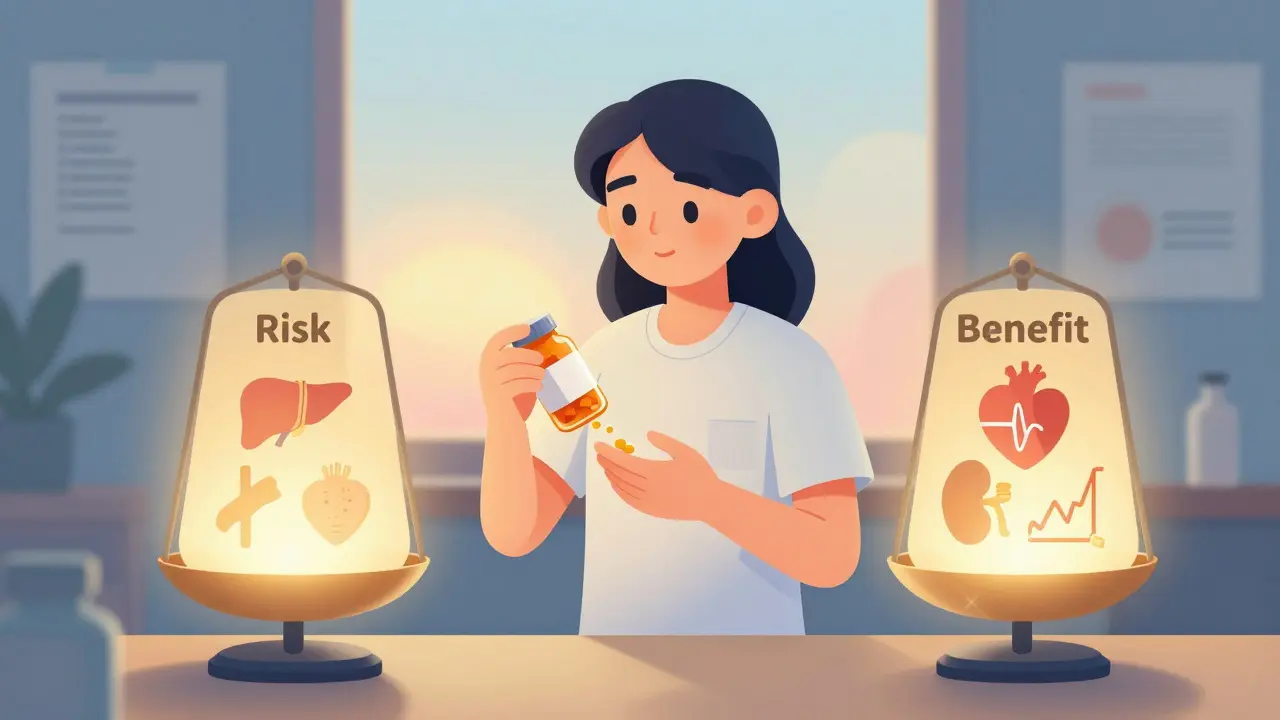
When you see an FDA safety alert about a medication you’re taking, it’s natural to panic. Did your doctor prescribe something dangerous? Should you stop right away? The truth is, most FDA safety announcements don’t mean you’re in immediate danger - but they do demand your attention. Understanding the difference between a risk and a benefit isn’t just for doctors or pharmacists. It’s a skill every patient needs to make smart, calm decisions about their health.
What the FDA Is Actually Saying
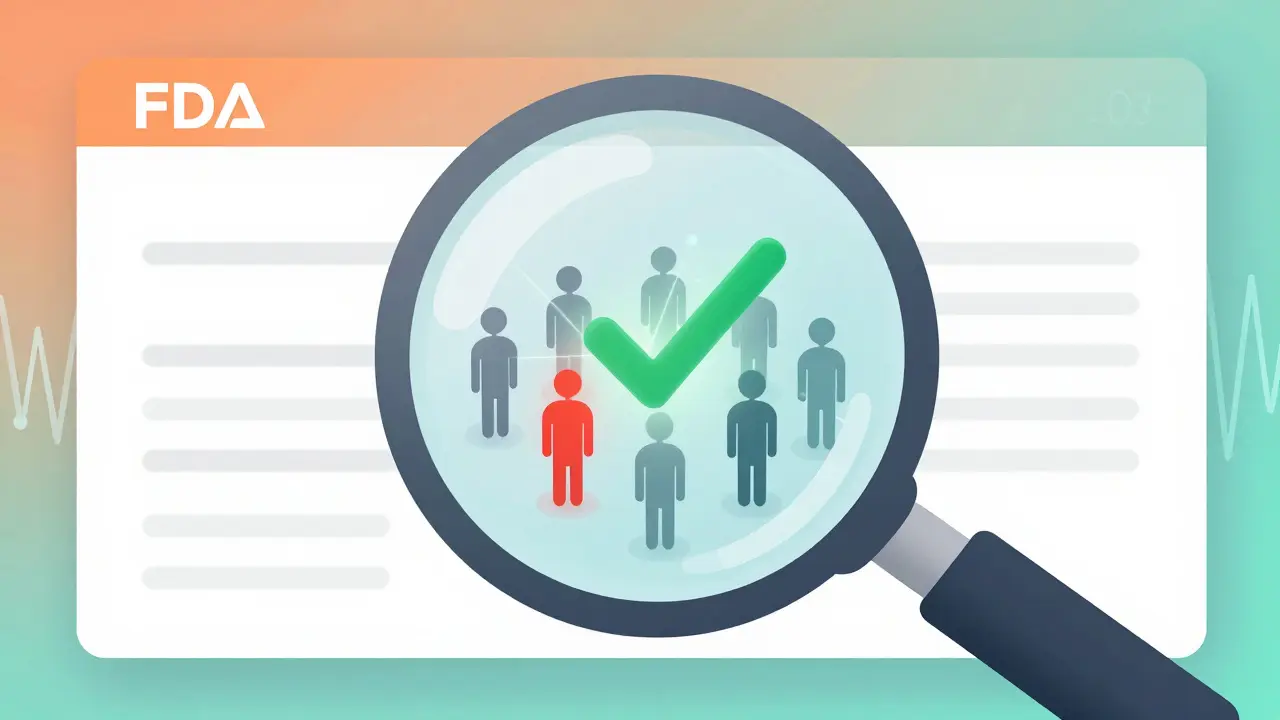
The FDA doesn’t issue safety alerts because a drug suddenly turned toxic. These announcements come from years of real-world use. Clinical trials involve thousands of people - but real life has millions. Someone with kidney disease, someone on five other medications, someone older than 70 - these patients weren’t always in the original studies. That’s where problems show up. When the FDA says there’s a “potential signal,” it means they’ve noticed something unusual in their data. Maybe 15 people taking Drug X developed a rare liver issue in the last six months. That’s not proof the drug caused it. It’s a red flag that says: “We need to look closer.” The FDA is very clear: a potential signal does NOT mean the drug causes the problem. It doesn’t mean you should stop taking it. It means they’re investigating. In fact, nearly half of all potential signals turn out to be unrelated to the drug after deeper review.Understanding the Difference Between Adverse Events and Adverse Reactions
Not every bad thing that happens after taking a pill is the pill’s fault. The FDA makes a critical distinction:- An adverse event is any negative medical occurrence after taking a drug - even if it’s unrelated. A patient takes a blood pressure pill and gets a headache two days later. That’s an adverse event.
- An adverse drug reaction is when there’s a reasonable chance the drug actually caused the problem. This requires evidence - timing, biological plausibility, and data from other patients.
How to Read an FDA Drug Safety Communication
Not all FDA alerts are the same. Here’s how to tell what kind you’re reading:- Potential signal: “We’ve seen a possible link between Drug A and X condition. More data needed.” This is the most common type. Do not stop your medication. Talk to your doctor.
- Confirmed risk: “Evidence shows Drug B increases the risk of Y condition by 3 times.” This is rare. It usually leads to a label change - like adding a warning about pregnancy or liver damage.
- Labeling update: The drug’s official prescribing information now includes new warnings. This means the FDA has reviewed enough data to be confident.
- REMS update: The drug now requires a special risk management plan - like mandatory blood tests or doctor training. This usually means the risk is real but manageable.
What Makes a Risk Worth Worrying About?
Not all risks are equal. A 1 in 10,000 chance of a rash is very different from a 1 in 1,000 chance of a heart attack. The FDA weighs three things:- How serious is the risk? Is it a minor side effect - like nausea - or something life-threatening, like internal bleeding?
- How common is it? A risk that affects 1 in 100,000 people is very different from one that affects 1 in 1,000.
- What’s the benefit? Is this drug curing a deadly cancer? Or is it treating mild acne?
Why Doctors Get Confused Too
Even experts struggle. A 2022 survey found that 68% of doctors felt FDA safety alerts lacked enough context. Many don’t say how big the risk actually is. They just say “increased risk.” One doctor on Reddit described how a vague alert about SSRIs in pregnancy caused 12 patients to call her in a week, terrified they’d harmed their babies. The alert didn’t say the risk went from 0.1% to 0.2% - it just said “possible association.” That’s not helpful. The best alerts give numbers. Like the one for a diabetes drug that said: “The risk of kidney injury is 1 in 500 for people over 75, compared to 1 in 2,000 for younger patients.” Now you can decide: Is that risk acceptable for me?What You Should Do When You See an Alert
Don’t panic. Don’t stop cold. Here’s your step-by-step:- Find the exact drug name. Is it the brand name or generic? Make sure you’re reading about the right one.
- Check the date. Is this new? Or did the FDA update a 2020 warning? Older alerts may have been resolved.
- Look for “potential signal” vs. “confirmed risk.” If it’s a signal, you’re safe to continue - for now.
- Find the numbers. Does the alert say how often the problem occurs? If not, search for the original FDA report - it often has more detail.
- Ask your doctor this question: “Compared to the benefit I’m getting, is this risk meaningful for me?”
The Bigger Picture: Why This System Exists
The FDA doesn’t monitor drugs to scare people. They do it because patients deserve to know what’s happening. Before 2007, safety signals were buried in internal reports. Now, the public can see them. That’s progress. The system isn’t perfect. Sometimes alerts cause unnecessary fear. Sometimes the data takes too long to confirm. But it’s the best we have. And it works. Since 2007, the FDA has made over 1,000 labeling changes based on real-world data - keeping drugs safer for everyone. The goal isn’t to eliminate all risk. It’s to make sure the benefits still outweigh the risks - especially as more people use the drug in real life. A drug that saves lives in a hospital might not be worth the risk for someone with a mild condition. That’s why context matters.What’s Changing in 2026
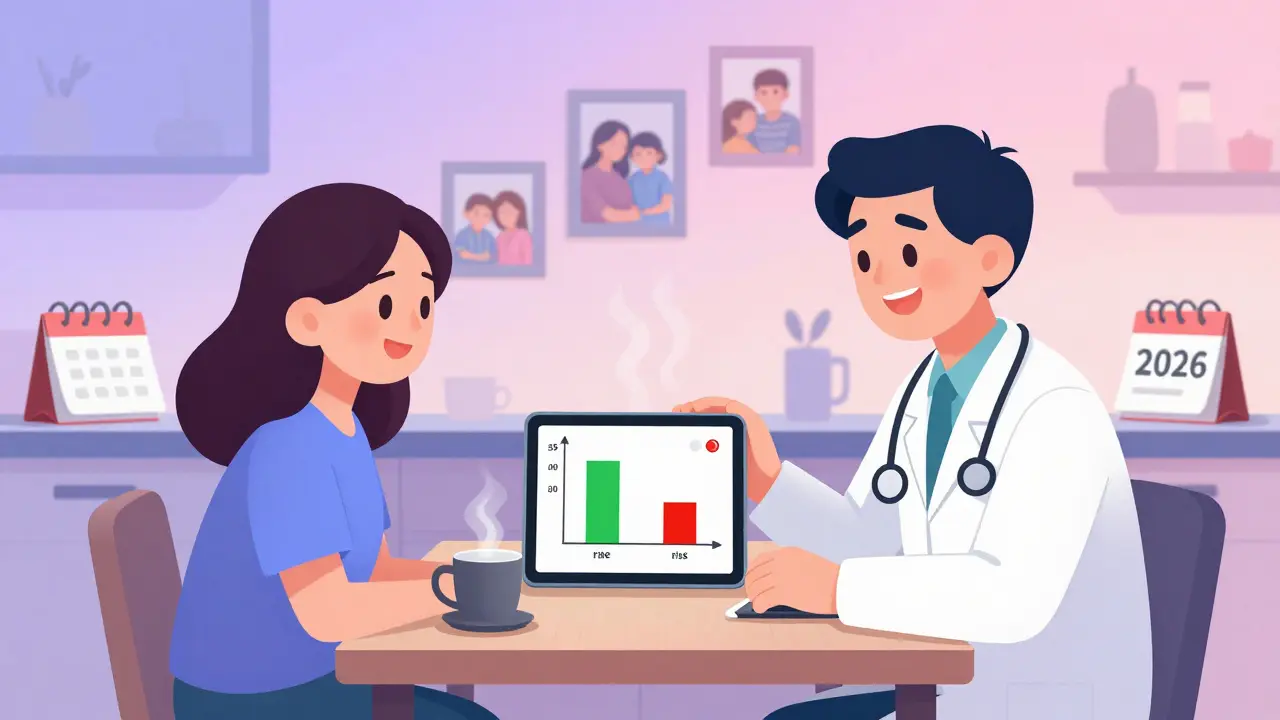
The FDA is finally fixing the biggest complaint: vague language. By late 2025, all new safety alerts will include standardized risk numbers. By 2026, they’ll launch a free online tool that shows you, visually, how a drug’s risks compare to its benefits - using your age, health conditions, and other medications. This is huge. Imagine typing in your details and seeing: “For a 68-year-old with diabetes and high blood pressure, Drug X reduces your chance of heart failure by 25%, and your risk of kidney injury increases by 0.3%.” That’s not fear. That’s clarity.Final Thought: Trust the Process, Not the Panic
Medications are powerful. They save lives. But they’re not harmless. The FDA’s job isn’t to tell you what to do - it’s to give you the facts so you and your doctor can decide together. The next time you see an alert, don’t react. Read. Ask. Compare. The goal isn’t to avoid all risk - it’s to live with the right amount of risk for your life.Should I stop taking my medication if I see an FDA safety alert?
No - not unless the alert specifically says so. Most FDA alerts are about potential signals, not confirmed dangers. Stopping a medication suddenly can be more dangerous than the risk being investigated. Always talk to your doctor before making any changes.
What’s the difference between a potential signal and a confirmed risk?
A potential signal means the FDA noticed a pattern in reports that might suggest a new risk - but it’s not proven. A confirmed risk means enough evidence exists to say the drug likely causes the problem. Confirmed risks lead to label changes or new warnings. Potential signals just mean the FDA is investigating further.
Why don’t FDA alerts always say how big the risk is?
Historically, many alerts lacked clear numbers, which caused confusion. But starting in 2025, the FDA is requiring all new communications to include quantitative risk estimates - like “1 in 1,000 patients” - so patients and doctors can better understand the actual likelihood.
Can I trust the FDA’s safety data?
Yes - but understand its limits. The FDA uses real-world data from over 25 million reports, making it the most comprehensive safety system in the world. However, not every report is accurate. Some are incomplete or unrelated. The FDA’s strength is spotting patterns across thousands of cases - not judging single reports.
How often does the FDA issue safety alerts?
The FDA issues about 40-50 Drug Safety Communications each year - roughly one every week or two. Most are updates to existing warnings, not new discoveries. Only about 1 in 5 result in major changes like new black box warnings or Risk Evaluation and Mitigation Strategies (REMS).
about author

Kimberly Reker
Just read this whole thing and honestly? I feel way less panicked now. I’ve been avoiding my blood pressure med because of some vague alert, but this breaks it down so clearly. Thanks for writing this - it’s like a calm voice in a room full of screaming headlines.
Sarah Blevins
The statistical literacy required to interpret FDA communications remains grossly underdeveloped in the general population. The absence of quantitative risk metrics in prior advisories constitutes a systemic communication failure, not merely an oversight.
Jason Xin
Yeah, I get why people freak out. I once Googled 'side effects of metformin' and ended up convinced I was going to turn into a lizard. Turns out, the 'lizard skin' thing was a typo in some blog. But seriously - this post nails it. The FDA isn't out to get you. They're just trying not to miss something important.
Carolyn Whitehead
Love this so much
So many people just panic and quit meds
But like... you gotta talk to your doc first
Also the part about Fournier's gangrene? I had no idea it was so rare
Just breathe and ask questions
Diksha Srivastava
This is exactly what we need more of in healthcare! People are scared because they don't understand. I shared this with my sister in Delhi - she's on a diabetes med and was ready to stop it. Now she's calm and scheduled a call with her doctor. Thank you!
Sidhanth SY
Honestly, I think the FDA does a better job than most people give them credit for. The system’s not perfect, but it’s lightyears ahead of what we had 20 years ago. If you’re reading this and still scared - go to their site. The real reports are way less scary than the headlines.
Adarsh Uttral
fr tho i read one of these alerts and thought i was gonna die
turned out it was just a 0.01% chance of getting a rash
my doctor laughed and said i was fine
so yeah dont panic
Blair Kelly
THIS IS WHY WE CAN’T HAVE NICE THINGS. The FDA is just playing mind games with us. First they say 'potential signal' - then they add a warning - then they say 'don’t stop' - then they update the label - then they say 'we were wrong.' It’s a circus. And now they’re gonna add ‘visual tools’? Like we need a TikTok filter to understand if our heart’s gonna explode?!
Katie and Nathan Milburn
It is of paramount importance to acknowledge the methodological rigor underpinning the FDA's pharmacovigilance framework. The aggregation and triangulation of disparate data sources - including spontaneous reporting systems, electronic health records, and post-marketing surveillance - constitute a robust evidentiary foundation upon which risk-benefit assessments are predicated.
Darren Gormley
😂😂😂 FDA says 'don't panic' but then they drop a bomb like 'possible link to spontaneous human combustion' 🤡
Also, why is 'Fournier's gangrene' the only thing people remember? Like... yeah, it's rare, but did you know 1 in 3 people who get it were also watching Netflix at 3am? Coincidence? I think not.
Mike Rose
why do we even have this system? just tell us if the pill is safe or not. why do we need 10 paragraphs and charts? i just want to know if i’m gonna die. that’s it.
Russ Kelemen
What this post really gets is that medicine isn’t about eliminating risk - it’s about choosing which risks you’re willing to carry. Every decision we make - driving to work, eating avocado toast, taking a pill - has trade-offs. The FDA doesn’t decide for you. They just hold up the mirror. The hard part? Looking in it. And then deciding what kind of life you want to live.
Yanaton Whittaker
AMERICA’S MEDICINES ARE BEING SABOTAGED BY FOREIGN LABS AND BUREAUCRATS WHO DON’T KNOW WHAT THEY’RE DOING. I’VE BEEN TAKING THIS DRUG FOR 12 YEARS AND I’M FINE. THE FDA IS JUST TRYING TO CONTROL US. TRUST YOURSELF, NOT THE SYSTEM. 🇺🇸💪
Kathleen Riley
The epistemological vulnerability inherent in pharmacovigilance data - particularly when derived from unstructured, non-randomized, and self-reported adverse event narratives - fundamentally undermines the ontological certainty required for clinical decision-making. One must therefore exercise extreme hermeneutic caution.
Beth Cooper
Okay but what if the FDA is hiding something? I read on a forum that they’re paid by Big Pharma to downplay side effects. And what about those 2000 people who died in 2019 that never made it into the reports? They just got labeled 'natural causes.' And why do all the alerts come out on Fridays? Coincidence? I think not. 🤔