Food Labels and Allergies: How to Spot Hidden Allergens and Stay Safe
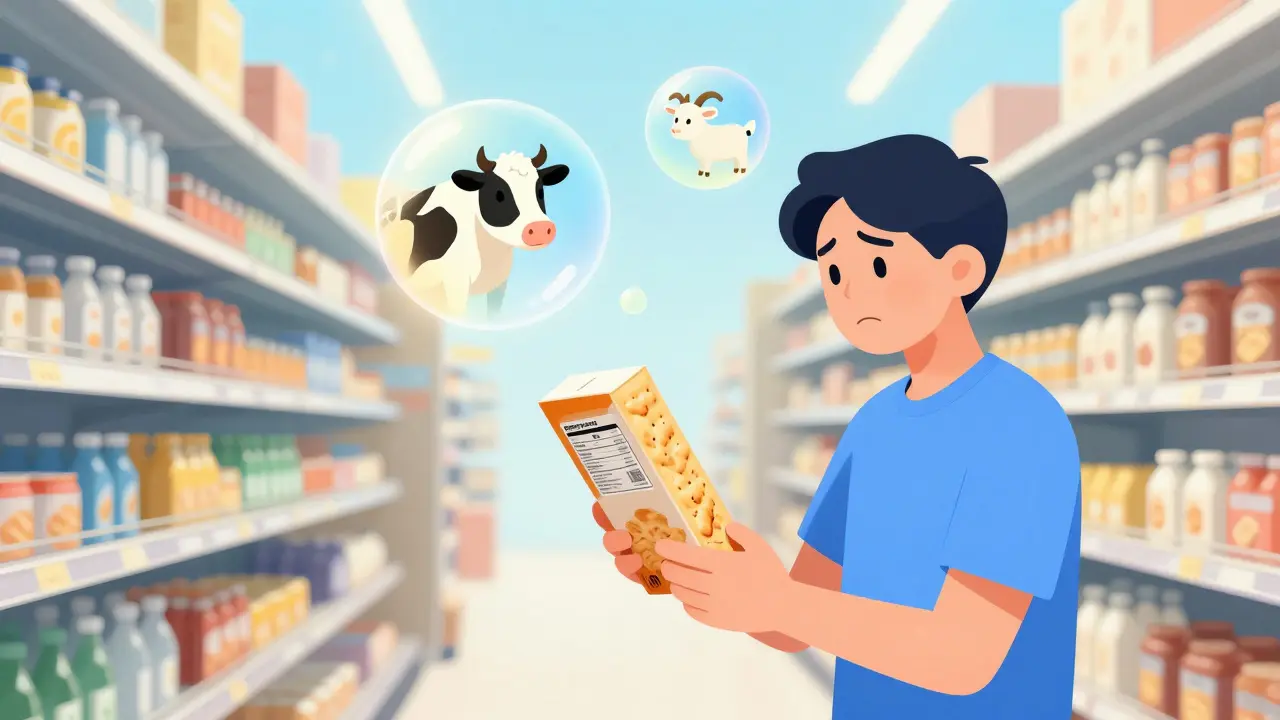
Imagine standing in a grocery aisle, staring at a box of crackers, and wondering if that vague word "milk" means cow's milk (which you can't have) or goat's milk (which you can). For millions of people, this isn't just a nuance-it's a dangerous gamble. In the US alone, about 32 million people live with food allergies, including over 5 million children. A single mistake in reading a label can lead to a trip to the ER.
The good news is that the rules are changing. The FDA is the U.S. Food and Drug Administration, the federal agency responsible for protecting public health by ensuring the safety and security of our nation's food supply. In January 2025, they released updated guidance to clear up the confusion surrounding food allergen labeling. This update aims to stop the guesswork by forcing manufacturers to be more specific about what's actually in your food.
The New Rules: Why "Milk" Isn't Just Milk Anymore
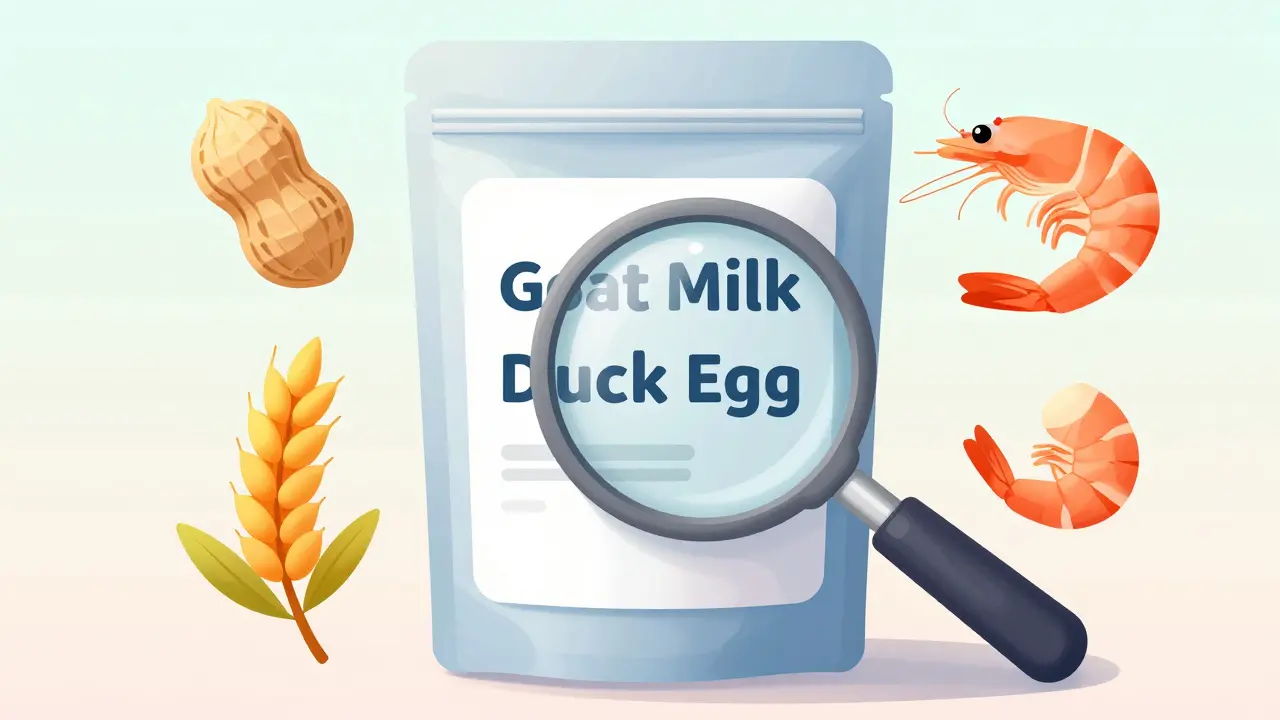
For years, a label saying "Contains Milk" was a blanket warning. But not everyone is allergic to every type of milk. The 2025 FDA guidance changes the game by requiring manufacturers to specify the animal source. Now, if a product uses goat milk, the label must say goat milk, not just "milk." This is a huge win for people who can tolerate goat or sheep milk but react violently to cow's milk.
The same logic applies to eggs. Instead of a generic "egg" warning, you'll start seeing specific sources like duck egg or quail egg. This specificity removes the need for parents and adults to spend hours emailing companies just to find out if a snack is safe for their child. It moves the power back to the consumer at the point of purchase.
Navigating the "Big Nine" Allergens
Currently, the FDA focuses on nine major food allergens. These are the most common triggers that require clear labeling under the FALCPA (Food Allergen Labeling and Consumer Protection Act). If you're shopping for safety, these are the key players to watch for:
- Milk: Now requires animal source specification.
- Eggs: Now requires animal source specification.
- Fish: Must be categorized by species, such as bony fish (trout), cartilaginous fish (shark), or jawless fish (lamprey eels).
- Crustacean Shellfish: Specifically crab, lobster, and shrimp.
- Tree Nuts: A broad category, but notably, coconut has been removed from the major allergen list.
- Peanuts: Always a high-priority trigger.
- Soybeans: Found in countless processed foods.
- Wheat: A primary gluten and protein trigger.
- Sesame: Added more recently via the FASTER Act.
| Allergen Group | Old Labeling Style | New 2025 Requirement | Impact on Safety |
|---|---|---|---|
| Milk/Eggs | Generic "Milk" or "Egg" | Specific source (e.g., "Goat Milk") | Prevents unnecessary avoidance |
| Fish | "Fish" | Species category (e.g., "Bony Fish") | Higher precision for specific allergies |
| Tree Nuts | Included Coconut | Coconut removed from major list | Less confusion for non-coconut allergic users |
| Shellfish | Broad Shellfish category | Crustaceans only | Mollusks (clams/oysters) now excluded |
The Danger of "Hidden" Allergens and Cross-Contact
Even when a label is clear, danger can lurk in the production process. This is known as cross-contact, which happens when an allergen is accidentally transferred into a food that isn't supposed to contain it. Think of a bakery that uses the same oven for peanut cookies and sugar cookies; a few stray crumbs can be enough to cause a reaction.
You've probably seen "advisory statements" like "May contain peanuts" or "Processed in a facility that also handles wheat." The FDA has clarified that these statements are voluntary, but they must be truthful. They aren't meant to be a guarantee of safety, but rather a warning about the risk of cross-contact.
A critical new rule addresses the contradiction between "free-from" claims and advisory warnings. In the past, a brand might label a product "Milk-Free" but then add "May contain milk" in small print. This is now prohibited. If a company claims a product is "milk-free," they cannot use a "may contain" statement for that same allergen. This removes a huge layer of confusion and holds manufacturers to a higher standard of purity.
The Mollusk Gap: A New Risk Area
While most of the 2025 updates improve safety, one change has sparked concern among health experts. The FDA has narrowed the shellfish classification to include only crustacean shellfish (shrimp, crab, lobster). This means mollusks-such as oysters, mussels, scallops, and clams-are no longer listed as major allergens requiring specific labeling.
For the roughly 1.5 million Americans with mollusk allergies, this is a significant risk. If you are allergic to clams but not shrimp, you can no longer rely on a "shellfish" warning to protect you. You'll need to dig deeper into the ingredient list or contact the manufacturer directly. This is a prime example of why you should never stop reading the full ingredient list, even if the "Contains" summary looks safe.

Practical Tips for Safer Shopping
Reading labels is a skill that takes practice. To stay safe, adopt a system that minimizes human error. First, always check the "Contains" statement, but don't stop there. The ingredient list is the gold standard. If a product lists "natural flavors," be cautious, as some flavorings can hide derivatives of milk or soy.
When in doubt, use a decision tree for your purchases:
- Check the "Contains" summary: If your allergen is listed, put it back.
- Scan the full ingredient list: Look for hidden names (e.g., "casein" for milk or "albumin" for egg).
- Evaluate the advisory statement: Does "May contain" align with your risk tolerance?
- Verify "Free-From" claims: Ensure there isn't a contradicting "May contain" warning.
- When unsure: Contact the manufacturer. While the new rules help, some smaller brands take longer to update their packaging.
Remember that these FDA guidelines apply to packaged foods, dietary supplements, and infant formula. However, they don't cover everything. Meat, poultry, and processed egg products are regulated by the USDA, meaning the labeling rules might differ slightly when you're buying fresh chicken or beef.
What is the difference between a food allergy and an intolerance?
A food allergy is an immune system response that can cause anaphylaxis-a life-threatening reaction. An intolerance, like lactose intolerance, involves the digestive system and causes discomfort (bloating, gas) but is generally not life-threatening. Labels focus on allergies because of the severe risks involved.
Is coconut still considered a tree nut for labeling?
Under the latest 2025 FDA guidance, coconut has been removed from the list of major food allergens. While it is botanically a fruit and previously grouped with tree nuts, it is no longer required to be labeled as a major allergen.
Can a product be labeled "Milk-Free" and "May contain milk" at the same time?
No. The 2025 updates explicitly prohibit this. A product cannot make a "free-from" claim for an allergen if it also carries a precautionary "may contain" statement for that same allergen. This prevents confusing and contradictory messaging.
What should I do if I find a label that contradicts the new rules?
If you see a label that is confusing or contradicts the new FDA standards, avoid the product and report it to the FDA. Because the guidance is non-binding for some manufacturers, transition periods can vary. Your safety is more important than the convenience of a specific brand.
Do these labeling rules apply to alcohol?
Alcoholic beverages are regulated by the TTB (Alcohol and Tobacco Tax and Trade Bureau), not the FDA. The TTB has its own rules that permit, but do not always require, the declaration of major food allergens. Always check the specific brand's documentation for alcoholic drinks.
Next Steps for Different Needs
For Parents of Children with Allergies: Focus on teaching your kids to recognize the "Contains" statement. Since the 2025 rules are being rolled out, encourage them to look for the specific animal source (like "cow's milk") to ensure they aren't missing out on safe alternatives like goat's milk.
For Those with Mollusk Allergies: Be extra vigilant. Since mollusks are no longer "major allergens," you cannot rely on a quick summary. You must read every single ingredient and be wary of "seafood" blends that may contain clams or mussels.
For Frequent Travelers: Remember that these specific animal-source rules are a US-led initiative. If you are traveling in the EU or other regions, labels may still be more generic (simply saying "milk" or "eggs"). Always carry an English-translated list of your allergens and a reliable translation app.
about author