
Acute Interstitial Nephritis from Medications: Signs, Causes, and What to Do
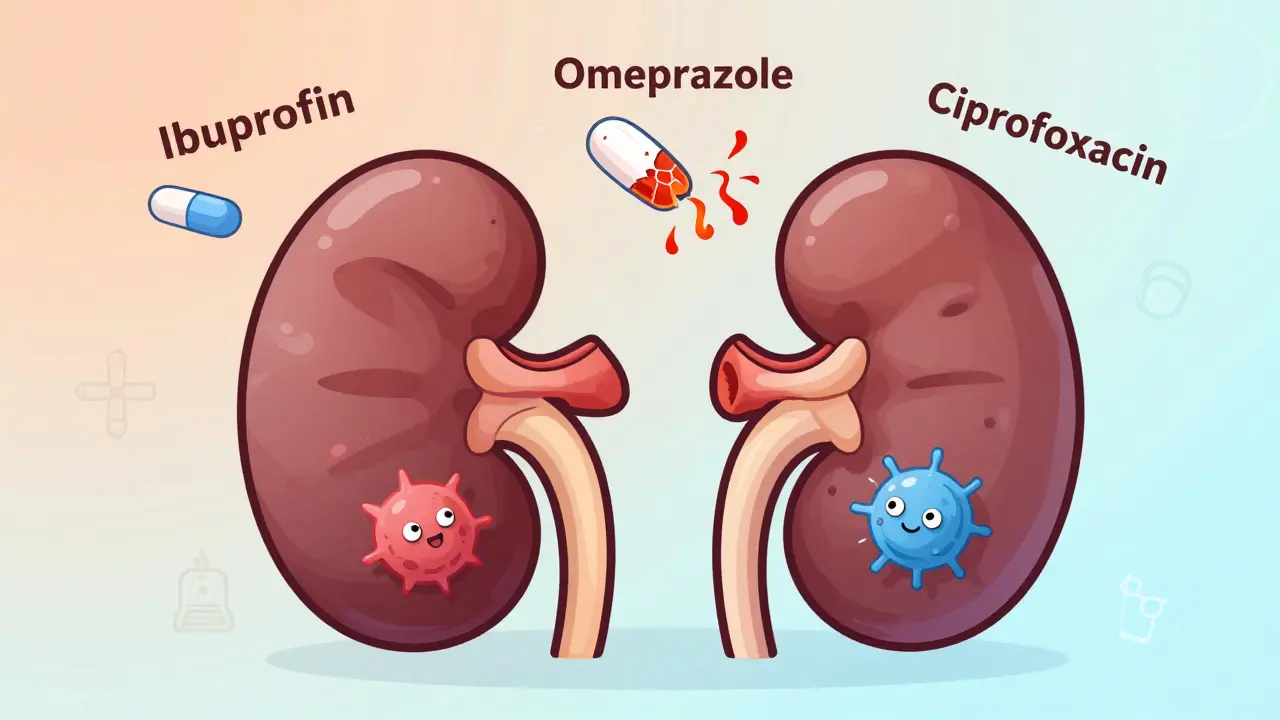
When your kidneys start acting up after you begin a new medication, it’s easy to blame dehydration, a urinary infection, or just aging. But what if it’s something more serious - and entirely preventable? Acute interstitial nephritis (AIN) is a hidden threat hiding in plain sight, triggered by common drugs like antibiotics, heartburn pills, and pain relievers. It doesn’t always come with obvious symptoms, but when it does, the signs are clear: your urine output drops, you develop a fever or rash, and your blood tests show your kidneys are struggling. Left unchecked, it can lead to permanent kidney damage - even if you never had kidney problems before.
What Exactly Is Acute Interstitial Nephritis?
Acute interstitial nephritis is inflammation in the spaces between the kidney’s tubules - the tiny structures that filter waste and balance fluids. This isn’t a disease you catch; it’s a reaction. Your immune system mistakes a drug for a threat and sends inflammatory cells to attack the kidney tissue. Think of it like an allergic reaction, but instead of a swollen throat or itchy skin, your kidneys are the target.
It’s not rare. In fact, drug-induced AIN is the leading cause of unexplained acute kidney injury in hospitals. Studies show it accounts for about 1 in 5 cases where doctors can’t figure out why someone’s kidney function suddenly dropped. And the number of cases has more than doubled since 2005 - mostly because more people are taking proton pump inhibitors (PPIs) like omeprazole and pantoprazole for heartburn. These drugs, once thought to be harmless, are now known to trigger AIN in up to 25% of all medication-related kidney inflammation cases.
Common Medications That Cause Kidney Inflammation
Over 250 medications have been linked to AIN. But only a handful are responsible for most cases:
- Antibiotics - Especially penicillin, ampicillin, methicillin, and fluoroquinolones like ciprofloxacin. These cause symptoms within 1 to 3 weeks of starting the drug. About 40% of all AIN cases come from antibiotics.
- Proton pump inhibitors (PPIs) - Omeprazole, esomeprazole, lansoprazole. These are the #1 offender today. Symptoms usually show up after 2 to 6 months of daily use - so people don’t connect the dots.
- NSAIDs - Ibuprofen, naproxen, diclofenac. Chronic use, even at over-the-counter doses, can trigger AIN, especially in older adults. These are unique because they can cause heavy protein loss in urine - sometimes over 3 grams per day.
- Immune checkpoint inhibitors - Used in cancer treatment (like pembrolizumab and nivolumab). These are newer but dangerous. They cause AIN in 5-10% of patients and often require long-term steroid treatment.
What’s scary is that many of these drugs are taken without a prescription. People pop ibuprofen daily for back pain. They take omeprazole for months because they “feel better.” They don’t realize their kidneys are quietly being damaged.
Signs You Might Have Drug-Induced Kidney Inflammation
There’s no single symptom that screams “AIN.” But here’s what to watch for:
- Less urine than usual - You’re going to the bathroom less, or your urine is darker. This happens in about half of cases.
- Fever and rash - The classic “hypersensitivity triad” (fever, rash, eosinophilia) sounds like a textbook clue. But here’s the catch: fewer than 10% of people with AIN show all three. You might only get a mild rash or a low-grade fever.
- Swelling in legs or ankles - Fluid builds up because your kidneys can’t remove it.
- Feeling tired or nauseous - These are vague, but if they show up with new kidney lab results, they’re red flags.
- Unexplained rise in creatinine - This is the most objective sign. If your blood test shows your creatinine jumped by 0.3 mg/dL in 48 hours - or 1.5 times your normal level - your kidneys are in trouble.
Many patients are misdiagnosed at first. One patient thought they had a UTI. Another was told they were “just dehydrated.” It took two weeks and a biopsy to find out it was AIN from omeprazole.
How Doctors Diagnose It
There’s no blood test that confirms AIN. Diagnosis is a puzzle:
- Urinalysis - This is step one. You’ll likely see sterile pyuria - white blood cells in the urine without bacteria. That rules out infection.
- Urine eosinophils - If your lab can test for them, finding eosinophils (a type of immune cell) in urine is a strong hint. They appear in 30-70% of AIN cases.
- Blood tests - Elevated creatinine, low estimated glomerular filtration rate (eGFR), and sometimes high eosinophils in the blood.
- Kidney biopsy - This is the gold standard. A tiny sample of kidney tissue shows immune cells swelling the spaces between tubules. Biopsy is needed when the diagnosis isn’t clear - especially if kidney function isn’t improving after stopping the drug.
Doctors now use newer tools too. A biomarker called NGAL (neutrophil gelatinase-associated lipocalin) can rise within hours of kidney injury. If it’s over 150 ng/mL, AIN becomes much more likely - even before creatinine climbs.
What Happens If You Don’t Act
Stopping the drug is the single most important step. But timing matters. If you wait more than 72 hours after symptoms start, your chance of full recovery drops.
Here’s what the data shows:
- With early treatment - stopping the drug within 3 days - 80-90% of patients recover most or all kidney function.
- If you wait longer, recovery drops to 60-70%.
- Without any intervention, 15-25% of people develop permanent kidney damage - some even needing dialysis.
Age plays a role too. People under 50 usually bounce back in 6-8 weeks. Those over 65 often take 3-4 months - and may never fully recover. One patient on a kidney forum wrote: “I stopped the omeprazole, but my kidneys only got to 75% of normal. I’m still on meds to protect them.”
Treatment: Is Steroid Therapy Necessary?
This is where things get messy.
Doctors agree: stop the drug. But should you add steroids?
Some say yes. The European Renal Association recommends steroids (like prednisone) if kidney function hasn’t improved after 7 days of stopping the drug. The dose is usually 0.5-1 mg per kg of body weight, tapered over 4-6 weeks.
Others say no. The American Society of Nephrology says steroids should only be used if creatinine is above 3.0 mg/dL - meaning severe damage. Why? Because there’s no solid proof from randomized trials that steroids help. One 2022 survey found that 30% of nephrologists never use them; 70% do - depending on their hospital and experience.
Real-world results vary. One patient took prednisone for 8 weeks after AIN from antibiotics and recovered to 95% kidney function. Another stopped the drug but didn’t take steroids - and still had 20% permanent loss. No one knows why some respond and others don’t.
Who’s at Highest Risk?
Not everyone gets AIN. But certain people are far more vulnerable:
- People over 65 - They make up 65% of cases, even though they’re only 16% of the population.
- Those on 5 or more medications - Polypharmacy increases risk by nearly 5 times.
- Women - They’re 1.8 times more likely than men to develop drug-induced AIN.
- People with chronic conditions - Diabetes, heart failure, or prior kidney disease make recovery harder.
And here’s the kicker: 40% of AIN cases involve over-the-counter drugs that patients never mention to their doctors. They don’t think ibuprofen or omeprazole counts as “medicine.” But it does.
What You Can Do Now
You don’t need to wait for symptoms. If you’re on any of these drugs long-term, take action:
- Review your meds - Make a list of everything you take, including supplements and OTC pills. Bring it to your doctor.
- Ask: “Could any of these hurt my kidneys?” - Especially if you’re over 60 or on multiple drugs.
- Get a basic kidney check - A simple blood test for creatinine and eGFR takes 5 minutes. Do it annually if you’re on PPIs or NSAIDs long-term.
- Don’t ignore new symptoms - Fever, rash, less urine, swelling? Call your doctor immediately. Don’t wait.
- Don’t quit meds cold turkey - Especially PPIs or blood pressure drugs. Talk to your doctor first. They can help you taper safely.
One nurse practitioner on Reddit shared: “I’ve seen five cases. Three had permanent damage. All were preventable.”
What’s Next for AIN?
Research is moving fast. Scientists are finding genetic markers - like HLA-DRB1*03:01 - that make some people more likely to develop AIN from PPIs. AI tools are being trained to predict risk by scanning your medical records for medication patterns and lab trends. And new clinical trials are testing targeted immune therapies that might replace steroids.
But for now, the best tool is still awareness. The FDA now requires warning labels on PPIs. The CDC predicts PPI use in older adults will rise to 45% by 2030. That means more AIN cases - unless people start asking the right questions.
Your kidneys don’t complain until it’s too late. But if you know the signs, act fast, and talk to your doctor - you can stop this before it stops you.
Can over-the-counter painkillers like ibuprofen cause kidney inflammation?
Yes. Chronic use of NSAIDs like ibuprofen, naproxen, or diclofenac - even at over-the-counter doses - can trigger acute interstitial nephritis, especially in people over 50 or those with other health conditions. It usually takes months of daily use, but once it starts, stopping the drug is critical. About 15-20% of all drug-induced AIN cases come from NSAIDs.
How long does it take for AIN to develop after starting a new drug?
It varies by drug. Antibiotics usually cause symptoms within 1-3 weeks. Proton pump inhibitors (like omeprazole) often take 2-6 months. NSAIDs may need 3-6 months of regular use. Immune checkpoint inhibitors can trigger AIN within weeks. The key is: if you started a new medication in the last 3 months and your kidney function dropped, AIN should be considered.
Is a kidney biopsy always needed to diagnose AIN?
No, but it’s the most reliable method. Doctors often start with urine tests and blood work. If your creatinine is rising, you have sterile pyuria or eosinophils in your urine, and you’re on a high-risk drug, AIN is likely. But if kidney function doesn’t improve after stopping the drug, a biopsy is recommended to confirm the diagnosis and rule out other causes.
Can AIN be reversed, or is kidney damage permanent?
In many cases, yes - if caught early. Stopping the offending drug within 72 hours gives you the best chance of full recovery. About 80-90% of people recover most or all kidney function if treated promptly. But if treatment is delayed, up to 25% develop permanent damage. Older adults and those with other health problems are more likely to have lasting effects.
Should I take steroids if I’m diagnosed with AIN?
It depends. Stopping the drug is the most important step. Steroids like prednisone may help if your kidney function doesn’t improve after a week, especially if your creatinine is high. But there’s no strong proof they work for everyone. Some doctors use them routinely; others only in severe cases. Talk to a nephrologist - they’ll consider your age, kidney function, and overall health before recommending steroids.
about author

ellen adamina
My grandma started taking omeprazole for heartburn and within 3 months her creatinine shot up. They thought it was dehydration until her urine showed eosinophils. She never even told her doctor she was taking it daily. Now she’s on a low dose and her kidneys are slowly coming back. Just something to watch for.
Sarah Mailloux
I’m a nurse and I’ve seen this too many times. People pop ibuprofen like candy and think it’s harmless. One guy took 800mg every day for 6 months for his back pain. No doctor ever asked. His kidneys are at 60% now. It’s not just old people - it’s anyone on long-term meds.
Jaspreet Kaur Chana
Man I feel you. In India, everyone thinks if it’s sold over the counter, it’s safe. My uncle took pantoprazole for a year because his stomach felt ‘off’ - never saw a doctor. When he got dizzy and stopped peeing much, they thought it was heatstroke. Turned out his kidneys were fried. We had to fly him to Delhi for a biopsy. Now he’s on dialysis three times a week. I tell everyone I know: if you’re on something daily for more than 3 months, get your creatinine checked. Five minutes, free at most clinics. Don’t wait till you’re gasping for breath.
Nicholas Urmaza
This article is long but correct. The real problem isn’t the drugs - it’s the medical system that lets people self-medicate for years. PPIs are a billion-dollar industry built on ignorance. If you’re over 50 and taking any NSAID or acid reducer daily, you’re playing Russian roulette with your kidneys. Stop blaming patients. Start holding pharmacies and manufacturers accountable.
Nilesh Khedekar
Oh wow, so now we’re blaming omeprazole for everything? Next they’ll say sunlight causes kidney failure. My mom’s been on pantoprazole since 2018. Her kidneys are fine. Her bloodwork? Perfect. Meanwhile, her blood pressure is up because she’s terrified of every pill. Maybe the real problem is anxiety, not acid reflux.
Amy Ehinger
I read this whole thing while sipping my chamomile tea and just felt so seen. I started taking ibuprofen for my migraines about two years ago - didn’t think twice. Then last fall I got this weird rash and felt like I’d been hit by a truck. My doc said it might be AIN. I stopped the ibuprofen cold turkey. Four months later, my creatinine’s back to normal. I still take the tea. But now I keep a list of every pill I touch. Even the gummy vitamins.
Jami Reynolds
They’re hiding the truth. The FDA doesn’t want you to know that PPIs were approved based on a 6-week study. The manufacturers knew about the kidney risks in 2007. They buried the data. The CDC’s 2030 prediction? That’s not a forecast - it’s a countdown to mass renal failure. And they’re already testing AI to predict who’ll die first. You’re being tracked. Your meds are being logged. Wake up.
Niki Van den Bossche
Isn’t it poetic? We’ve outsourced our bodily wisdom to chemical corporations. We’ve turned the sacred act of healing into a transactional ritual of pill-popping - and now our kidneys, those quiet alchemists of life, are the collateral damage. We don’t just take medicine - we surrender our autonomy to the algorithmic gods of Big Pharma. AIN isn’t a disease - it’s a metaphysical protest of the body against the soulless machinery of modern healthcare.
Ayush Pareek
Just wanted to say - if you’re reading this and you’re on meds long-term, don’t panic. Just take one step. Write down everything you’re taking. Even the ginger capsules. Then call your doctor and say ‘Can we check my kidney numbers?’ That’s it. No drama. No fear. Just action. You’ve got this.
Nat Young
Let’s be real - 80% recovery rate? That’s cherry-picked data. Most studies don’t follow patients past 6 months. And who’s counting the ones who get dialysis two years later? Also, steroid use varies because doctors are clueless, not because the science is ambiguous. This whole thing is a giant placebo with extra steps.
RUTH DE OLIVEIRA ALVES
It is imperative to underscore that the pathophysiological underpinnings of drug-induced acute interstitial nephritis necessitate a multidisciplinary approach encompassing pharmacovigilance, patient education, and timely nephrologic intervention. The absence of a definitive biomarker mandates a high index of clinical suspicion, particularly in geriatric populations with polypharmacy. Proactive renal function monitoring is not merely advisable - it is a standard of care.