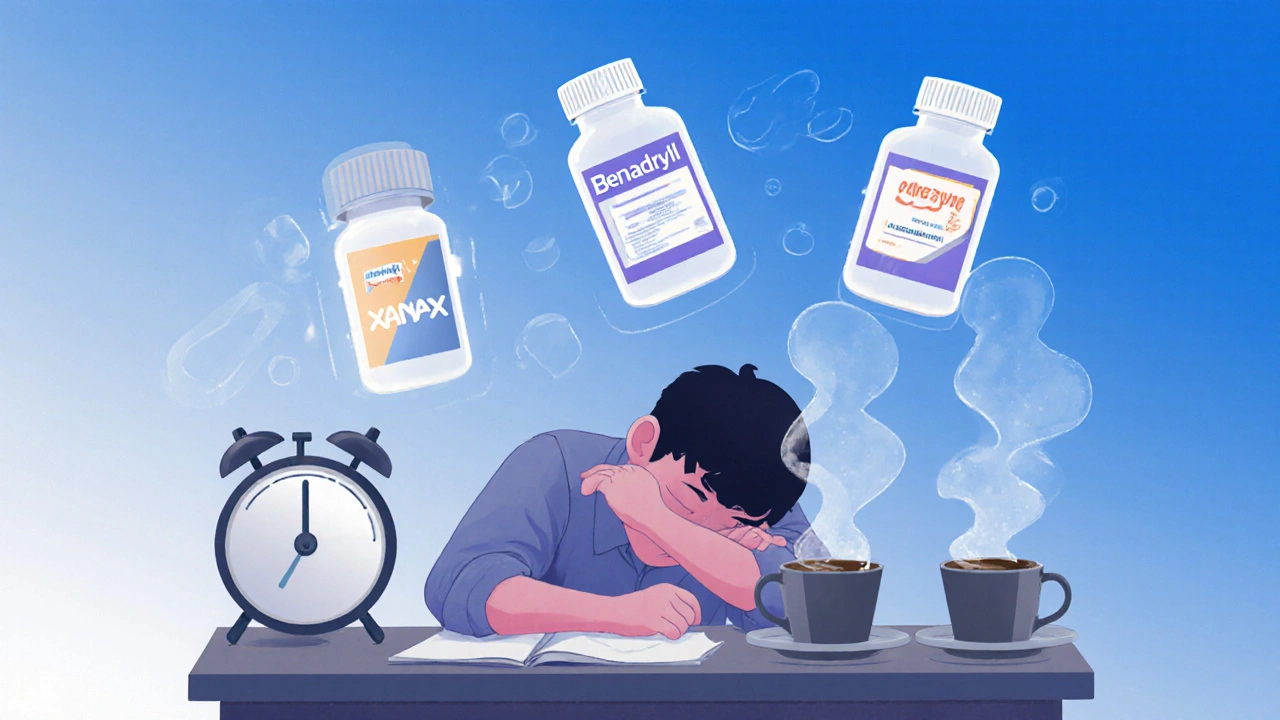
Medication-induced drowsiness affects 15-20% of adults and can impact safety, productivity, and quality of life. Learn the top causes, real-world fixes, and how to talk to your doctor without stopping your meds.

When you take a pill to feel better, the last thing you expect is to feel tiredness from pills—but it happens more than you think. Tiredness from pills, a common side effect caused by medications that affect the central nervous system or disrupt sleep-wake cycles. Also known as medication fatigue, it’s not laziness or poor sleep—it’s your body reacting to the chemistry in your drugs. This isn’t rare. Up to 40% of people on chronic meds report constant fatigue, and many assume it’s just part of aging or their condition. But it’s often the medicine itself.
It’s not just sleeping pills or antihistamines. Even antidepressants, blood pressure drugs, and painkillers can zap your energy. Antidepressants, especially SSRIs and SNRIs, often cause drowsiness as a side effect by altering serotonin and norepinephrine levels. Beta-blockers, used for heart conditions and anxiety, slow down your nervous system so hard that fatigue becomes unavoidable for many. Even something as simple as an antihistamine like cetirizine can make you sluggish, as shown in direct comparisons with its less sleepy cousin, levocetirizine. The problem? Most doctors don’t ask about energy levels unless you bring it up.
You might be taking a drug that’s working great for your condition but wrecking your day. That’s why switching meds or adjusting the dose—like with cross-tapering strategies—can make a huge difference. Some people find relief by changing the time they take their pills, avoiding bedtime doses that linger into morning. Others need a different class of drug entirely. It’s not about quitting treatment; it’s about finding the version that lets you live, not just survive.
And it’s not just about the drug itself. Sometimes it’s the combo. Taking a painkiller with a muscle relaxant? That’s a double hit on your energy. Or mixing an antibiotic with a sleep aid? That’s a recipe for exhaustion. The good news? You don’t have to guess. There are proven ways to track which meds are dragging you down—and what to swap them for. Whether it’s switching from one NSAID to another with fewer side effects, or adjusting your thyroid med to stop the afternoon crashes, the fix is often simpler than you think.
Below, you’ll find real, practical guides on how to spot the culprits, what alternatives exist, and how to talk to your doctor without sounding like you’re complaining. No fluff. No theory. Just what works when you’re too tired to get out of bed—but still need your meds to stay healthy.
Medication-induced drowsiness affects 15-20% of adults and can impact safety, productivity, and quality of life. Learn the top causes, real-world fixes, and how to talk to your doctor without stopping your meds.