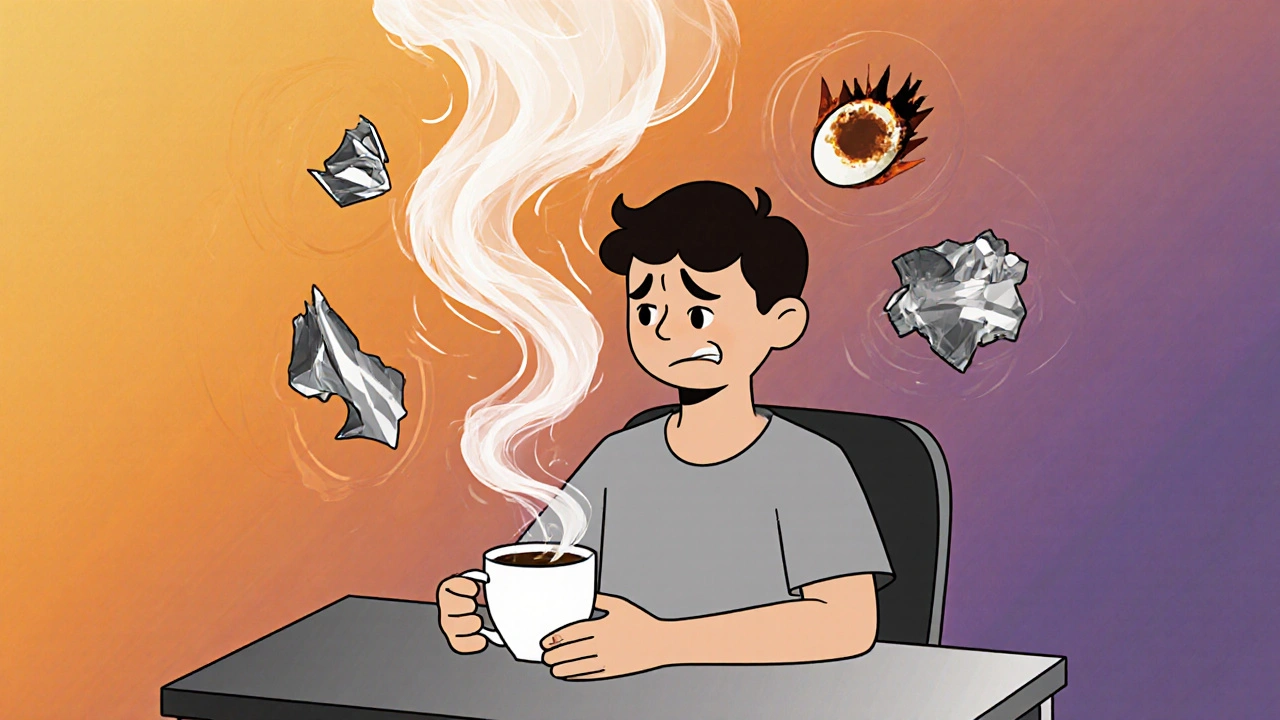
Many medications can cause strange smell changes called dysosmia-making food taste like metal or smoke smell constant. Learn which drugs cause it, how long it lasts, and what to do if it happens to you.

When you take a new pill, you might not think about your sense of taste or smell—until your favorite coffee tastes like metal, or you can’t smell your partner’s perfume anymore. This isn’t just in your head. taste and smell side effects, changes in how you perceive flavor or odor caused by medications. Also known as dysgeusia and anosmia, these are real, common, and often overlooked drug reactions. They don’t show up on blood tests, but they can ruin your quality of life faster than drowsiness or nausea.
These changes happen because many drugs interact with the nerves and receptors in your nose and mouth. Antidepressants like SSRIs, antibiotics like metronidazole, blood pressure meds like ACE inhibitors, and even zinc-based cold remedies can trigger them. Some people report everything tasting salty or bitter. Others lose smell completely for weeks after starting a new treatment. In some cases, the change sticks around long after stopping the drug. And it’s not just about food—it affects safety too. If you can’t smell smoke, gas, or spoiled milk, the risk goes up. These sensory side effects are more than annoying; they’re a hidden health concern.
What’s interesting is that not everyone gets them, even on the same drug. Genetics, age, and how long you’ve been taking the medication all play a role. Older adults are more likely to notice changes, and some people have a natural sensitivity to certain chemicals in pills. The good news? Many of these effects are temporary. Switching medications, adjusting the dose, or adding zinc supplements (in some cases) can help. But you won’t know unless you talk to your doctor—most won’t ask unless you bring it up.
Below, you’ll find real-world guides on how to spot these changes early, which drugs are most likely to cause them, and what steps actually work to get your senses back. Some posts cover how to manage taste changes while on chemotherapy. Others compare antihistamines that spare your smell versus ones that wreck it. You’ll also find advice on what to do when your meds make food taste like cardboard—and how to eat well anyway. These aren’t theories. They’re strategies people used to survive daily life while on tricky drug regimens.
Many medications can cause strange smell changes called dysosmia-making food taste like metal or smoke smell constant. Learn which drugs cause it, how long it lasts, and what to do if it happens to you.