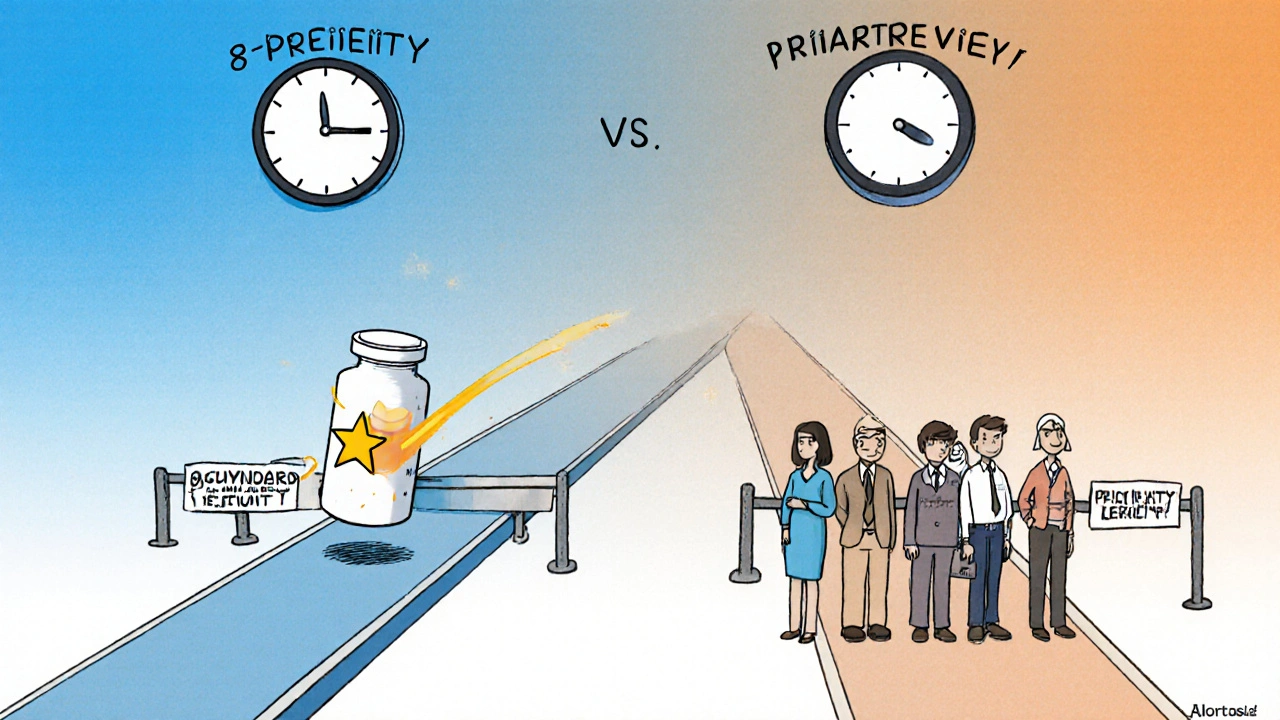
FDA Priority Review: What It Means for Fast-Track Medications and Patient Access
When the FDA priority review, a faster approval pathway for drugs that treat serious conditions with unmet medical needs. Also known as expedited review, it cuts the standard 10-month review time down to 6 months—giving patients quicker access to life-changing treatments. This isn’t just bureaucracy. It’s the difference between waiting a year for a new cancer drug or getting it in time to make a real difference.
Drugs that get this status usually target diseases with few or no good options—like rare cancers, severe autoimmune disorders, or antibiotic-resistant infections. The FDA, the U.S. agency responsible for regulating drugs, medical devices, and food safety doesn’t lower safety standards. Instead, it moves resources to review the most urgent applications first. You’ll often see these drugs listed in the FDA drug shortage database, the official source tracking medication availability across the U.S. because they’re in high demand and sometimes hard to keep in stock.
Many of the drugs you read about here—like new GLP-1 agents for weight loss or next-gen antidepressants—start with priority review. That’s why you see rapid updates on medications like retatrutide or zuranolone. The FDA doesn’t approve them lightly. They require strong evidence of benefit, and they’re closely watched after launch for unexpected side effects. That’s why reporting adverse drug reactions, serious side effects from medications that need official tracking through MedWatch matters. If a drug gets approved fast, early warnings from patients can catch problems before they spread.
But here’s the catch: fast approval doesn’t mean perfect drugs. Some come with risks—like steroid-induced psychosis, opioid-induced constipation, or unexpected smell changes from antibiotics. That’s why knowing how to spot medication red flags, warning signs that mean you need emergency care is just as important as knowing when a drug hits the market. The same system that speeds up access also demands you stay alert.
Whether you’re tracking a new treatment for osteoporosis, checking if your generic pill looks different because of trademark rules, or wondering why your medication is suddenly hard to find, FDA priority review is part of the story. It shapes what’s available, how fast you get it, and how much you need to know to use it safely. Below, you’ll find real-world guides on how to spot side effects, report fake drugs, manage withdrawal, and understand what’s really in your pills. These aren’t theoretical—they’re the tools you need to navigate a system that moves fast, but still needs you to stay informed.