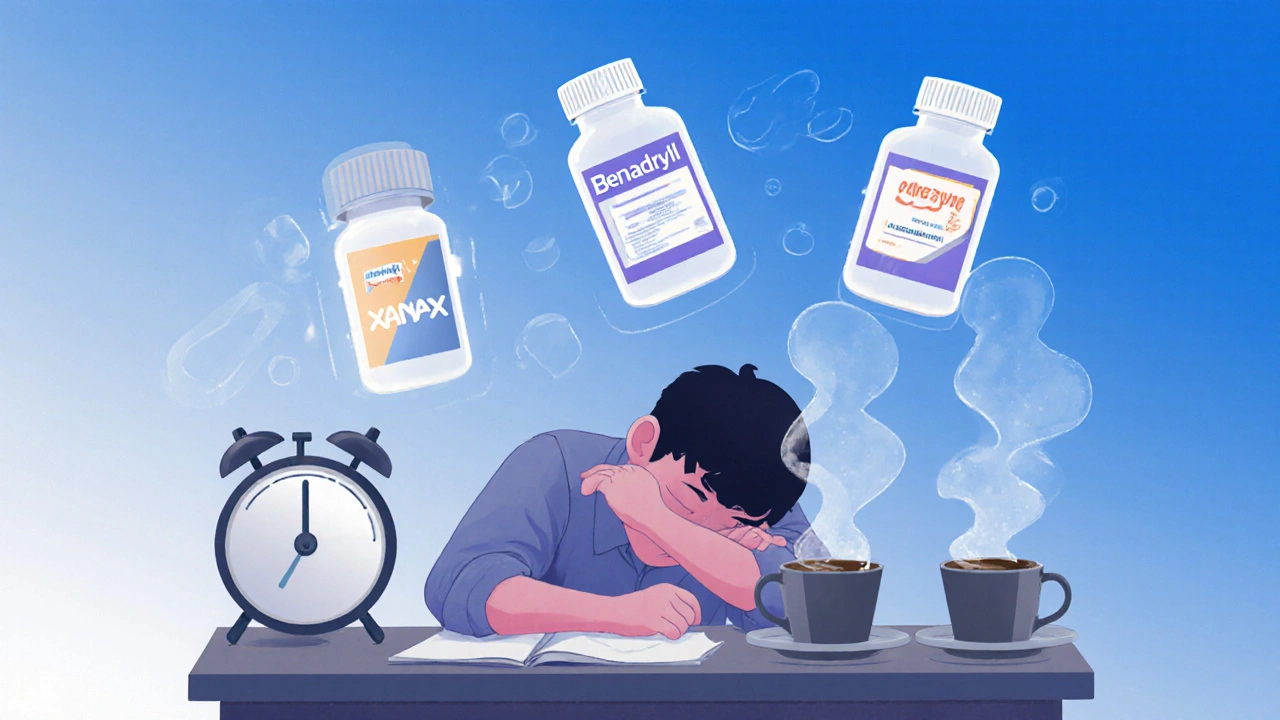
Medication-induced drowsiness affects 15-20% of adults and can impact safety, productivity, and quality of life. Learn the top causes, real-world fixes, and how to talk to your doctor without stopping your meds.

When a medication makes you drowsy, it’s not always just a minor annoyance—it can affect your safety, work, and quality of life. Drug-induced sleepiness, a side effect caused by medications that slow down central nervous system activity. Also known as medication-related drowsiness, it’s one of the most frequently reported issues among people taking prescription and over-the-counter drugs. This isn’t just about feeling tired after lunch. It’s a real, measurable reaction that can happen with antihistamines, antidepressants, painkillers, and even some sleep aids you might think are harmless.
Many people don’t realize how common this is. Antihistamines, like cetirizine and diphenhydramine, are designed to block histamine, a chemical involved in allergies—but histamine also helps keep you awake. That’s why Zyrtec can make you sluggish while Xyzal doesn’t. Antidepressants, especially older ones like amitriptyline or even newer ones like trazodone, often carry sedation as a built-in feature. Even opioids, used for chronic pain, slow brain activity enough to cause deep drowsiness. You might not connect the dots between your afternoon crashes and that pill you took at breakfast.
It’s not just about the drug itself—it’s about your body’s reaction, your dose, and what else you’re taking. Mixing alcohol with any sedating medication? That’s a dangerous combo. Taking a muscle relaxer with an anxiety med? That’s a recipe for heavy sleepiness. Even something as simple as switching from brand-name to generic can change how you feel if the formulation affects absorption. And if you’re a shift worker, a parent, or someone who drives for a living, this isn’t just inconvenient—it’s risky.
The good news? You don’t have to live with it. Some options swap out the sedating drug for a similar one that doesn’t knock you out. Others adjust timing—taking a sleepy-making pill at night instead of in the morning. Sometimes, a simple change in dosage makes all the difference. And in cases where the medication is necessary—like for chronic pain or depression—the side effect can be managed with lifestyle tweaks, like strategic naps or avoiding screens before bed.
Below, you’ll find real, practical guides on exactly which drugs cause the most drowsiness, how to tell if your meds are the problem, and what to do next. From comparing cetirizine and levocetirizine to understanding how opioids affect alertness, these posts give you the tools to take control—not just guess why you’re so tired.
Medication-induced drowsiness affects 15-20% of adults and can impact safety, productivity, and quality of life. Learn the top causes, real-world fixes, and how to talk to your doctor without stopping your meds.