
Prediabetes: Early Warning Signs and How to Reverse It
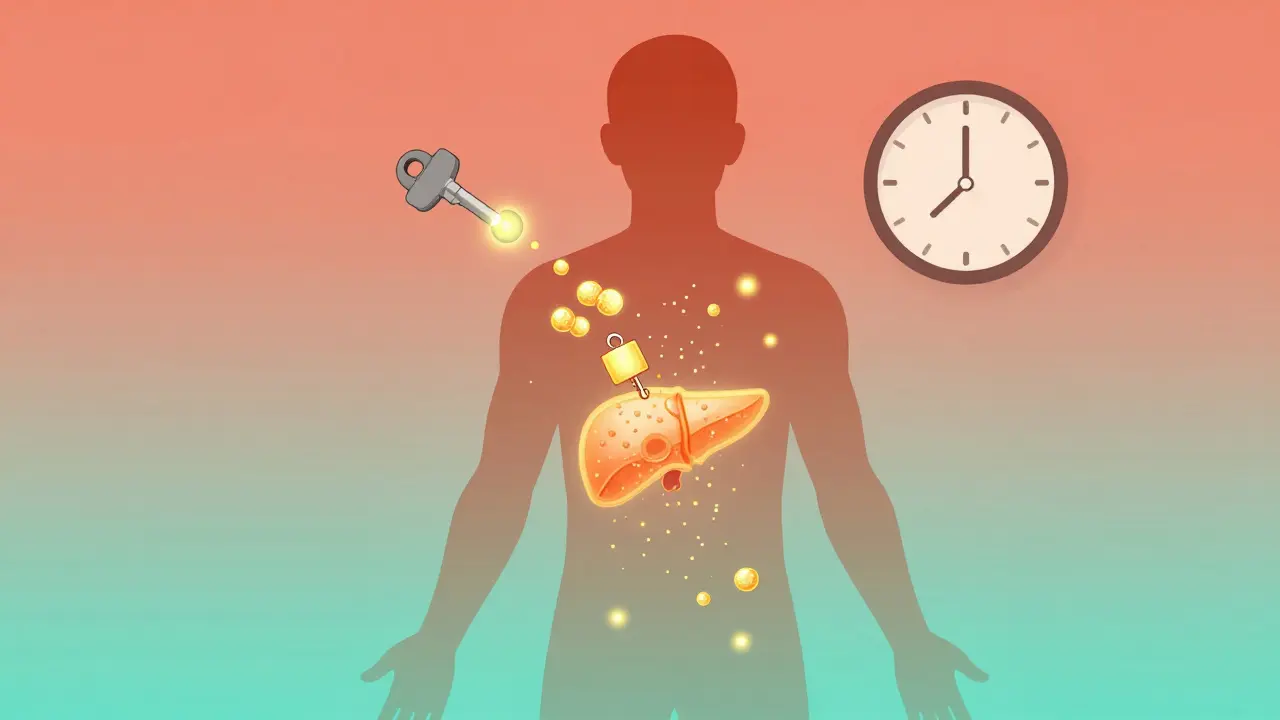
Most people with prediabetes don’t know they have it. That’s not because they’re ignoring their health-it’s because there are no obvious symptoms. But behind the scenes, your body is sending quiet signals that something’s off. Your cells are struggling to use sugar for energy. Your pancreas is working overtime. And if nothing changes, you’re on track to develop type 2 diabetes within five years. The good news? You can stop it. Right now.
What Prediabetes Really Means
Prediabetes isn’t just a label. It’s a metabolic warning light. Your blood sugar is higher than normal, but not high enough to be called diabetes yet. The American Diabetes Association sets clear thresholds: a fasting blood sugar between 100 and 125 mg/dL, an A1C between 5.7% and 6.3%, or a 2-hour glucose level of 140-199 mg/dL after a sugar drink test. These numbers aren’t guesses-they’re measured facts.
According to the CDC, 96 million American adults-nearly 4 in 10-have prediabetes. And more than 80% of them have no idea. That’s because, for most people, it doesn’t cause pain, fatigue, or obvious changes. But that doesn’t mean it’s harmless. Without action, 15-30% of people with prediabetes will develop type 2 diabetes within five years.
The real danger isn’t the number on the test. It’s what’s happening inside your body. Your cells are becoming resistant to insulin-the hormone that lets sugar enter your cells for energy. Your pancreas is pumping out more insulin to compensate. Over time, it burns out. That’s when blood sugar climbs into the diabetes range. But here’s the key: prediabetes is reversible. The landmark Diabetes Prevention Program showed that losing just 5-7% of your body weight and getting 150 minutes of exercise a week cuts your risk of diabetes by 58%.
Signs You Might Have Prediabetes (Even If You Feel Fine)
Yes, most people don’t feel anything. But some do. And when symptoms appear, they’re not random. They’re biological responses to high blood sugar.
- Constant thirst and frequent urination: When your blood sugar rises above 180 mg/dL, your kidneys can’t reabsorb all the sugar. It spills into your urine, pulling water with it. That’s why you’re drinking three liters of water a day and peeing every hour-even at night.
- Unexplained fatigue: If your cells can’t use glucose properly, they’re starved for energy. You’re not just tired-you’re running on empty, even after a full night’s sleep.
- Blurred vision: High sugar levels cause the lens of your eye to swell. Your vision gets fuzzy, especially after meals. It’s temporary, but it’s a red flag.
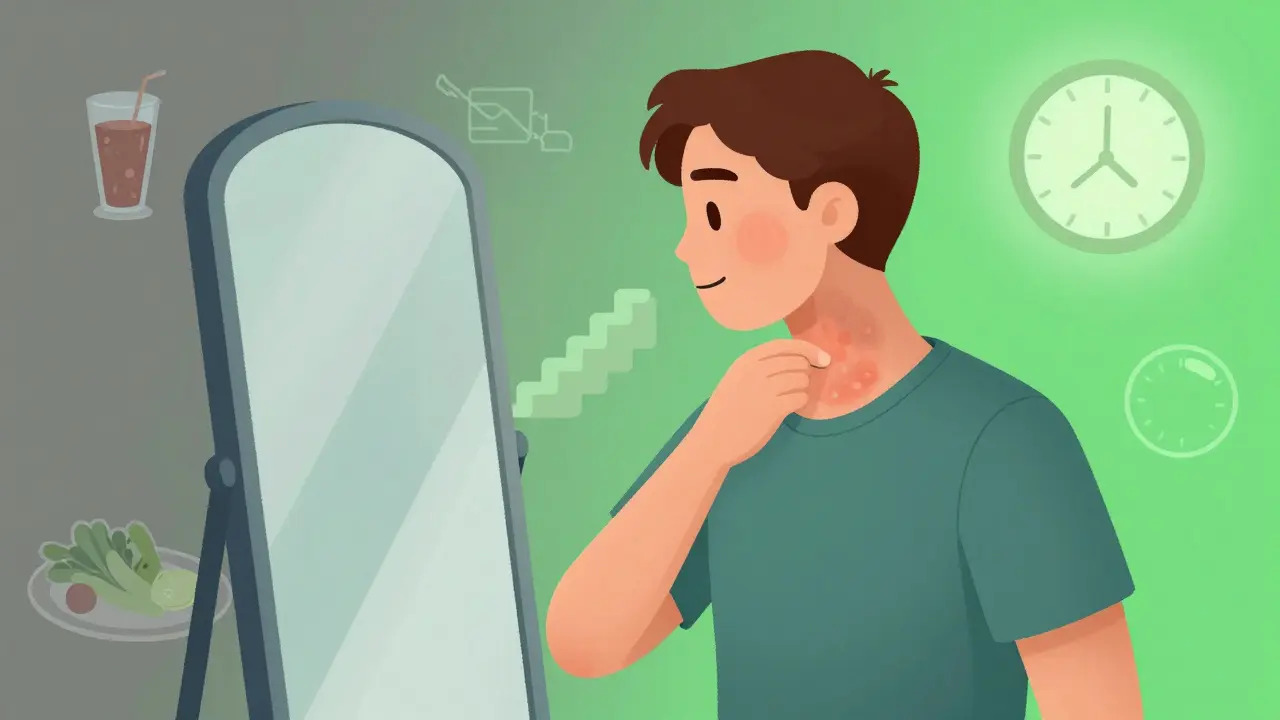
- Dark patches on skin: Acanthosis nigricans is a velvety, dark discoloration on your neck, armpits, or groin. It’s not dirt. It’s a sign your body is producing too much insulin.
- Increased hunger: Even if you’re eating normally, your body isn’t getting energy where it needs it. You feel hungry again an hour after eating.
- Slow-healing cuts or frequent infections: High sugar weakens your immune system. Cuts take longer to close. You get yeast infections more than three times a year. Urinary tract infections become common.
- Tingling or numbness in hands or feet: This is early nerve damage from prolonged high blood sugar. It starts subtly-like a sock that doesn’t quite fit right.
- Unexplained weight loss: If you’re losing more than 5% of your body weight without trying, your body may be breaking down muscle and fat because it can’t use sugar properly.
Women may also notice menstrual irregularities, vaginal dryness, or trouble getting pregnant. These aren’t just "hormonal issues." They’re signs your metabolism is out of balance.
Who Should Get Tested
You don’t need symptoms to have prediabetes. Screening is your best tool.
The U.S. Preventive Services Task Force recommends testing for:
- Adults over 35, regardless of weight
- Anyone with a BMI of 25 or higher (23 or higher for Asian Americans)
- Anyone with a family history of type 2 diabetes
- Anyone who had gestational diabetes
- Anyone with high blood pressure, low HDL cholesterol, or polycystic ovary syndrome (PCOS)
If you’ve been diagnosed before, get tested every year. If you’re at risk but haven’t been tested, ask your doctor for a simple blood test. It takes five minutes. The cost? Often $0 with insurance.
How to Reverse Prediabetes for Good
Reversing prediabetes isn’t about diets. It’s about habits you can live with.
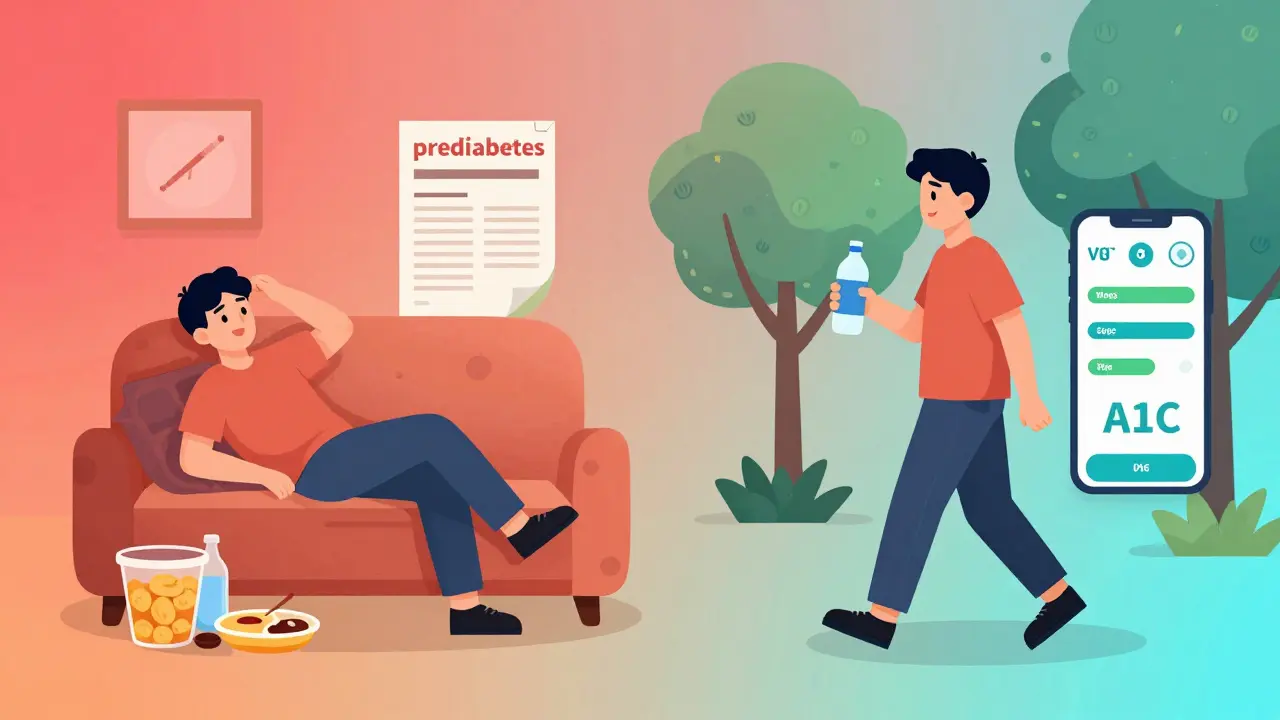
1. Lose 5-7% of your body weight. That’s 10-15 pounds for someone who weighs 200. You don’t need to starve. Cut out sugary drinks, processed snacks, and oversized portions. Swap white bread for whole grain. Eat more vegetables. A 2023 study in Diabetes Care showed that people who followed a Mediterranean-style diet with moderate calorie restriction reversed prediabetes at more than double the rate of those on a standard low-fat diet.
2. Move every day. You don’t need to run a marathon. Walk 30 minutes a day, five days a week. That’s 150 minutes. Break it into three 10-minute walks if you need to. Take the stairs. Park farther away. Dance while you cook. The goal is to get your heart rate up enough to talk but not sing.
3. Sleep and stress matter. Poor sleep raises cortisol, which raises blood sugar. Chronic stress does the same. Aim for 7-8 hours of sleep. Try breathing exercises, walking in nature, or journaling. One small study found that people who meditated for 10 minutes a day lowered their A1C by 0.5% in three months.
4. Use technology. Digital programs like Omada Health and Virta Health have shown 85% completion rates-far higher than traditional in-person programs. They use apps to track food, activity, and weight. They connect you with coaches. They make it personal. The FDA approved Virta’s app as a digital therapy for prediabetes in 2022. It worked for 60% of users.
5. Don’t go it alone. The CDC’s National Diabetes Prevention Program is a free or low-cost 16-week course offered nationwide-online and in person. It’s not a supplement. It’s a proven system backed by 20 years of research. Find one near you at cdc.gov/diabetes/prevention.
Why Most People Fail (And How to Avoid It)
Thirty to forty percent of people drop out of lifestyle programs. Why? Two reasons: time and hunger.
You’re busy. You’re tired. You’re hungry. You think, "I’ll start Monday." But Monday never comes. The fix isn’t willpower. It’s structure.
Start small. Pick one thing: swap soda for sparkling water. Walk after dinner. Take the stairs. Do it for two weeks. Then add another. Don’t try to overhaul your life. Build it one habit at a time.
And don’t wait for perfection. Miss a workout? Eat dessert? That’s okay. What matters is what you do tomorrow. Progress isn’t linear. But consistency is.
What Happens If You Do Nothing
If you ignore prediabetes, you’re not just risking diabetes. You’re increasing your chance of heart disease, stroke, kidney damage, nerve problems, and vision loss. The CDC estimates prediabetes costs the U.S. $44 billion a year in medical bills and lost work.
And the numbers are rising. By 2050, one in three Americans could have diabetes. But that’s not inevitable. The same study that showed 58% risk reduction also found that people who reversed prediabetes stayed in remission for over a decade.
It’s not about being perfect. It’s about being consistent. It’s not about a diet. It’s about your life.
Can You Really Reverse It?
Yes. And not just for a few months. Real reversal means your blood sugar returns to normal-and stays there. In the Diabetes Prevention Program Outcomes Study, 37% of participants maintained 7% weight loss after 10 years. Their A1C stayed below 5.7%. They didn’t need medication. They didn’t need to be "diabetic." They just changed how they lived.
And it’s not just weight. One 2023 trial found that a Mediterranean diet with exercise reversed prediabetes in 27.7% of people-without any weight loss at all. That’s because food quality matters as much as quantity. Healthy fats, fiber, and whole foods help your body use insulin better.
Reversal isn’t a miracle. It’s medicine. And it’s available to you today.
Can prediabetes be reversed without medication?
Yes. In fact, medication isn’t the first-line treatment. The CDC and American Diabetes Association recommend lifestyle changes-weight loss, exercise, and healthy eating-as the primary approach. Studies show that 58% of people can avoid diabetes through these changes alone. Some people even reverse prediabetes without losing much weight by improving diet quality and increasing activity.
How long does it take to reverse prediabetes?
You can see improvements in blood sugar in as little as 2-3 weeks with consistent changes. A1C levels typically drop within 3-6 months. Full reversal-where blood sugar returns to normal and stays there-often takes 6-12 months. The key is sustainability. People who stick with healthy habits for over a year are far more likely to keep their blood sugar in the normal range long-term.
Do I need to give up sugar completely?
No. You don’t need to eliminate sugar entirely. But you should cut out added sugars-soda, candy, pastries, sweetened coffee, and processed snacks. Natural sugars in fruit, yogurt, and milk are fine in moderation. The goal is to reduce the spikes in blood sugar that strain your body. One sugary drink a day can push you closer to diabetes. One less a day can help you reverse it.
Is prediabetes the same as insulin resistance?
Prediabetes is the result of insulin resistance. Insulin resistance means your cells don’t respond well to insulin, so sugar builds up in your blood. That’s what leads to elevated blood sugar levels-and that’s what defines prediabetes. Not everyone with insulin resistance has prediabetes yet, but most people with prediabetes have insulin resistance. Addressing insulin resistance through diet, movement, and sleep is the core of reversing prediabetes.
Can I rely on symptoms to know if I have prediabetes?
No. More than 80% of people with prediabetes have no symptoms. Waiting for signs like thirst, fatigue, or dark skin patches means you’re already far along. Blood tests are the only reliable way to know. If you’re over 35, overweight, or have a family history of diabetes, get tested-even if you feel fine.
Next Steps: What to Do Today
Here’s your simple action plan:
- Check your BMI. If it’s 25 or higher (23 for Asian Americans), you’re at risk.
- Ask your doctor for a fasting blood sugar or A1C test. If you’ve had one in the last year, get the results.
- If your numbers are in the prediabetes range, join a CDC-recognized program. They’re free or low-cost.
- Start walking 10 minutes after dinner. Every day.
- Replace one sugary drink with water, tea, or sparkling water. Do it for a week.
You don’t need to fix everything at once. Just start. Because the window to reverse prediabetes is open right now-and it won’t stay open forever.
about author

Virginia Seitz
Just swapped soda for sparkling water today 😊 Already feel less sluggish. Small win!
Salome Perez
It's astonishing how many people mistake metabolic dysfunction for aging or stress. The science is unequivocal: insulin resistance is not a fate-it’s a function. And like any function, it can be recalibrated. The Mediterranean diet, paired with daily movement, doesn’t just lower A1C-it restores cellular communication. This isn’t diet culture. It’s biochemistry.
What’s more, the CDC’s National DPP isn’t just a program-it’s a public health imperative. Yet fewer than 5% of eligible individuals enroll. Why? Because medicine still treats prevention as an afterthought. We fund drugs, not habits. That’s the real crisis.
Chris Van Horn
As a physician with a PhD in metabolic biochemistry, I must correct several egregious oversimplifications in this piece. The 58% risk reduction figure from the DPP is often misinterpreted-it applies to a highly supervised cohort with weekly coaching, not the general population. Moreover, the claim that prediabetes is "reversible" implies a binary state, when in reality, it's a dynamic continuum. Most individuals who "reverse" it eventually relapse without lifelong vigilance. And please, stop calling dark skin patches "not dirt"-that’s condescending pseudoscience.
Also, Virta Health? Their data is funded by venture capital, not independent peer review. And the FDA approval was for a "digital therapeutic," not a cure. Please, let’s stop marketing lifestyle changes as miracle cures. We’re not curing diabetes-we’re managing a chronic, progressive condition.
Evelyn Vélez Mejía
There’s a quiet violence in how we frame prediabetes-as if it’s a personal failure, a moral lapse in diet and discipline. But what of the food deserts? The 80-hour workweeks? The generational trauma that makes comfort food a survival mechanism? We pathologize the body while ignoring the systems that break it.
Yes, movement and whole foods help. But to tell a single mother working two jobs, with no access to fresh produce and sleeping four hours a night, that she just needs to "walk after dinner" is not medicine-it’s moral coercion.
Reversal isn’t just biochemical. It’s political. Until we treat metabolic health as a human right-not a privilege of time, money, and privilege-we’re just rearranging deck chairs on the Titanic.
Victoria Rogers
So now we're told to walk more and drink water? LOL. Next they'll say sunlight cures cancer. This whole prediabetes thing is just Big Pharma's way to sell more metformin. I've got a 100% natural cure: eat bacon, butter, and cheese. Keto saved me. Your carbs are poisoning you. Wake up sheeple.
Meghan O'Shaughnessy
I tested positive for prediabetes last year. Didn’t change much. Still eat pizza on Fridays. But I started walking with my dog every evening. Just 15 minutes. No app. No tracking. Just fresh air and quiet. My A1C dropped half a point. Maybe it’s not about perfection. Maybe it’s just about showing up.
Patrick A. Ck. Trip
Thank you for the clarity and evidence-based approach. I’ve shared this with my elderly parents, both of whom are at risk. The distinction between symptom-based detection and clinical testing is critical. Too many dismiss their risk because they "feel fine." Your emphasis on accessibility-free programs, simple steps, insurance coverage-is exactly what’s needed. This is public health done right.
Sam Clark
I’ve coached over 200 people through prediabetes reversal. The most common mistake? Trying to do it all at once. The most successful? Those who picked one tiny habit and stuck to it for 30 days. One person swapped their morning donut for an apple. That’s it. Three months later, they were sleeping better, had more energy, and didn’t even notice their A1C had dropped. Start small. Stay consistent. You don’t need to be perfect-you just need to keep going.