
How Medications Cross the Placenta and Affect the Fetus

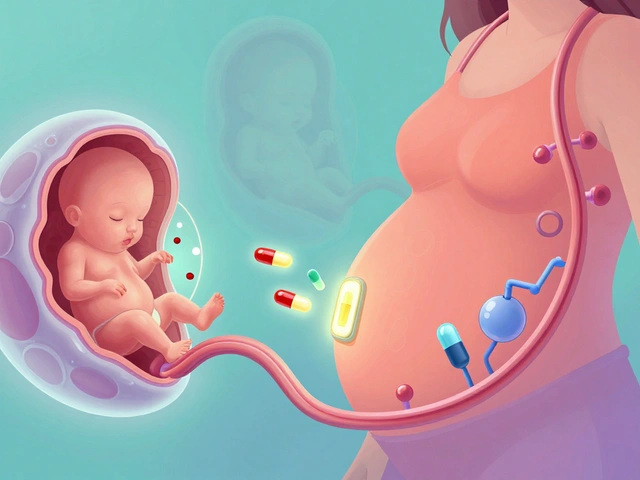
When a pregnant person takes a pill, gets an injection, or uses a patch, the medication doesn’t just stay in their body. It travels through the bloodstream-and then crosses into the placenta, the organ that connects mother and baby. This isn’t a wall. It’s more like a busy checkpoint, where some drugs slip through easily, others get blocked, and a few even get pushed back. What happens next can shape the health of the developing fetus in ways that aren’t always obvious until months or years later.
The Placenta Isn’t a Shield-It’s a Gatekeeper
For decades, doctors assumed the placenta acted like a filter, keeping harmful substances away from the baby. That idea changed forever after thalidomide, a drug given to pregnant women for morning sickness in the late 1950s, caused severe limb deformities in thousands of babies. It wasn’t the mother’s body that failed-it was the placenta’s inability to stop the drug from reaching the fetus. Today, we know the placenta is alive with activity. It weighs about half a kilogram, has a surface area the size of a small apartment floor, and is packed with channels, pumps, and gates. It doesn’t just passively let things through. It actively decides what gets in and what gets kicked back out.How Drugs Get Through: The Four Main Routes
Not all medications cross the placenta the same way. Four main mechanisms determine whether a drug reaches the baby-and how much:- Passive diffusion: The most common path. Small, fat-soluble molecules slip through cell membranes like water through a sieve. Ethanol (alcohol) and nicotine are classic examples-they cross quickly and reach near-equal levels in mother and baby.
- Active transport: Some drugs are carried by special proteins. For instance, the antibiotic azithromycin uses this route to enter the fetus more efficiently than expected based on its size alone.
- Efflux pumps: These are the placenta’s defense system. Proteins like P-glycoprotein (P-gp) and BCRP act like bouncers, shoving drugs back toward the mother’s side. HIV drugs like lopinavir and saquinavir get blocked this way, keeping fetal exposure low.
- Receptor-mediated endocytosis: Larger molecules, like some antibodies, get grabbed by receptors on the placental surface and pulled inside. This is how maternal IgG antibodies cross to protect newborns-but it’s also how some biologic drugs can reach the fetus.
What Makes a Drug More Likely to Reach the Fetus?
Not every drug crosses easily. Scientists look at five key traits to predict how much a medication will reach the baby:- Molecular weight: Anything under 500 daltons (Da) crosses more easily. Insulin, at 5,808 Da, barely gets through. But caffeine, at 194 Da, crosses freely.
- Lipid solubility: Drugs that dissolve in fat (log P > 2) slip through cell membranes faster. Methadone and buprenorphine are highly lipid-soluble-this is why they cross so well and cause neonatal withdrawal in up to 80% of exposed babies.
- Protein binding: Only the unbound portion of a drug can cross. Warfarin is 99% bound to proteins in the blood, so less than 1% reaches the fetus-even though it’s small and fat-soluble.
- Ionization: At the body’s normal pH (7.4), drugs that are charged (ionized) have trouble crossing. Most antidepressants are weak bases and stay uncharged in the fetus, which traps them there after crossing.
- Gestational age: Early in pregnancy, the placenta is more porous. In the first trimester, drug transfer can be two to three times higher than at term because protective pumps haven’t fully developed yet.

Real-World Examples: What Crosses-and What Doesn’t
Some drugs cross so easily they’re practically unavoidable. Others barely make a dent.SSRIs like sertraline: Cord-to-maternal blood ratios of 0.8 to 1.0 mean the baby gets nearly as much as the mother. About 30% of exposed newborns develop temporary symptoms like jitteriness, feeding trouble, or mild breathing issues-known as neonatal adaptation syndrome.
Antiseizure drugs: Valproic acid crosses easily and is linked to a 10-11% risk of major birth defects, including spina bifida and heart problems. Phenobarbital also crosses well, leading to sedation in newborns.
Opioids: Methadone reaches 65-75% of maternal levels. Babies born to mothers on opioids often need weeks of hospital care for neonatal abstinence syndrome-tremors, screaming, poor feeding, and seizures.
HIV medications: Zidovudine crosses well and has helped reduce mother-to-child HIV transmission to under 1%. But protease inhibitors like lopinavir are kept out by P-gp pumps, with fetal levels only 60% of maternal levels. That’s why doctors often combine drugs with different transport profiles.
Chemotherapy: Paclitaxel crosses in about 25-30% of cases, but that jumps to nearly 50% if P-gp is blocked. Methotrexate, used for ectopic pregnancies and autoimmune conditions, crosses poorly due to low transporter expression.
Why Animal Studies Don’t Tell the Whole Story
Many drug safety studies are done on mice or rats. But their placentas are very different. A mouse placenta has fewer layers and more direct contact between mother and fetus. A drug that seems safe in mice might be dangerous in humans-or vice versa.For example, thalidomide causes birth defects in humans but not in most lab animals. That’s why researchers now use human placental tissue in labs-perfused placentas, membrane vesicles, and even placenta-on-a-chip devices that mimic blood flow and transport activity. One 2022 study showed a new chip model matched real placental transfer data at 92% accuracy.

Regulations Are Catching Up
In the past, drug labels just said “Category C” or “possibly harmful.” Now, the FDA requires companies to test placental transfer during development. Since 2015, new drug labels must include detailed information on fetal exposure, transfer rates, and known risks.The European Medicines Agency now requires early assessment of placental transfer for any drug meant for women of childbearing age. Yet, nearly half of all prescription medications still lack solid safety data for pregnancy. That leaves doctors guessing.
What’s Next: Targeted Therapy and New Risks
Scientists are now designing drugs to cross the placenta on purpose-to treat fetal conditions like anemia, heart defects, or genetic disorders. Nanoparticles are being tested to deliver medicine directly to the fetus without flooding the mother’s system.But there’s a flip side. If nanoparticles get stuck in the placenta, they could cause inflammation or damage. Early studies show some nanoparticles accumulate in placental tissue, raising long-term safety questions.
There’s also a push to develop inhibitors that temporarily block placental pumps like P-gp, allowing life-saving drugs to reach the fetus during critical windows. Phase I trials for these modulators are set to begin in late 2024.
What You Need to Know If You’re Pregnant
If you’re pregnant and taking any medication-prescription, over-the-counter, or herbal-don’t stop without talking to your provider. Many drugs are safe. Others need dose changes or alternatives.Here’s what to ask:
- Is this drug known to cross the placenta?
- Are there safer alternatives for pregnancy?
- Should I get my blood levels checked (therapeutic drug monitoring)?
- What are the signs I should watch for in my baby after birth?
For high-risk medications like antiseizure drugs, antidepressants, or opioids, your doctor may recommend more frequent checkups, ultrasounds, or newborn monitoring.
The bottom line: The placenta is not a barrier. It’s a complex, dynamic system that responds to your body, your baby’s needs, and the drugs you take. What’s safe for you isn’t always safe for your baby-and what’s risky now might be necessary later. Knowledge, not fear, is the best tool.
Can medications taken during pregnancy cause birth defects?
Yes, some medications can increase the risk of birth defects, especially during the first trimester when organs are forming. Drugs like valproic acid, isotretinoin (Accutane), and thalidomide are known to cause major malformations. But many common medications-like certain antidepressants, thyroid hormones, and insulin-are considered low-risk when used under medical supervision. The key is knowing which drugs cross the placenta and how much.
Do all drugs cross the placenta equally?
No. Small, fat-soluble drugs like alcohol, nicotine, and methadone cross easily. Large or highly protein-bound drugs like insulin or warfarin barely cross. Some drugs are actively pushed back by placental pumps like P-glycoprotein, which is why HIV medications like lopinavir have low fetal exposure. The drug’s size, solubility, charge, and protein binding all matter.
Is it safe to take antidepressants while pregnant?
For many women, the benefits of treating depression outweigh the risks. SSRIs like sertraline cross the placenta but are among the safest options. Studies show a small increase in temporary newborn symptoms (like jitteriness or feeding issues), but no clear link to major birth defects. Untreated depression, however, raises risks of preterm birth, low birth weight, and postpartum complications. Always work with your doctor to choose the lowest effective dose.
Why do some drugs affect the fetus more than others?
It depends on the drug’s chemical properties and when it’s taken. Drugs that cross easily and are active in fetal tissues-like opioids and antiseizure meds-have stronger effects. Timing matters too: the first trimester is when organs form, so that’s the most vulnerable window. Later in pregnancy, drugs may affect brain development or cause withdrawal symptoms after birth. The fetus also has less ability to break down or eliminate drugs, so they can build up.
Can I use herbal supplements during pregnancy?
Many herbal products lack safety data for pregnancy. Some, like black cohosh or goldenseal, may stimulate uterine contractions. Others, like St. John’s wort, cross the placenta and can interfere with fetal serotonin levels. Unlike prescription drugs, supplements aren’t tested for placental transfer or fetal effects. Always check with your provider before using any herb, vitamin, or supplement.
What’s being done to improve drug safety in pregnancy?
Researchers are using advanced models like placenta-on-a-chip to test drug transfer more accurately. The NIH’s Human Placenta Project is developing non-invasive imaging to track real-time drug movement. Regulatory agencies now require placental transfer data before approving new drugs. But gaps remain-nearly half of all medications still lack clear safety data for pregnancy. Ongoing studies aim to close those gaps and make safer choices possible.
about author

sandeep sanigarapu
The placenta is not a wall, it's a smart gate. Many think if mom takes medicine, baby gets it all. But science shows it's selective. Small molecules yes, big ones no. This is why some drugs are safe and others not. Knowledge beats fear.
Ashley Skipp
So you're telling me my prenatal vitamins might be doing more harm than good because of some protein binding thing I never heard of before
Nathan Fatal
What's often missed is that the placenta isn't just a passive filter-it's an active organ with its own metabolism and signaling. It adapts to maternal stress, nutrition, even inflammation. That's why two women on the same drug can have wildly different fetal exposure. The real issue isn't the drug alone-it's the biological context. We need personalized placental pharmacology, not blanket warnings.
Adam Everitt
tho i get that the placenta is complex, it still feels kinda scary how little we really know. like, we're giving pregnant people drugs we barely tested on them. its not like we can just do a clinical trial on a fetus. but still... its a bit wild
wendy b
It is truly astounding that regulatory agencies have only recently begun to require placental transfer data. Prior to 2015, pharmaceutical companies were essentially operating under the assumption that maternal safety equated to fetal safety. This is not merely negligent-it is a systemic failure of medical ethics. One must question the integrity of any drug approved before this standard was implemented.
Rob Purvis
I love how this breaks down the science without fearmongering. Seriously, if you're pregnant and on meds, don't panic-ask the right questions. Is it small? Fat-soluble? Bound to proteins? Does it trigger efflux pumps? These aren't just buzzwords-they're tools. And if your doctor can't explain them, find one who can. Your baby deserves more than a shrug and a 'it's probably fine.'
Lawrence Armstrong
So if P-gp pumps block HIV meds, that’s why combo therapy works? 😮 That’s wild. Also, nanoparticles in the placenta? That’s like giving the baby a tiny drug delivery drone… that might get stuck. I’m both excited and terrified. 🤔
Donna Anderson
my friend took sertraline and her baby was fine but cried for 3 weeks straight. no one warned her about the jittery thing. we need more real talk not just science jargon
Levi Cooper
Let’s be real-this whole 'placenta is a gatekeeper' thing is just a fancy way of saying we still don’t know what we’re doing. We banned thalidomide because it mangled babies, but we’re still giving SSRIs to millions of pregnant women and calling it 'low risk.' If a drug crosses easily, it’s not 'low risk'-it’s a gamble. And who’s paying the price? The baby. We need to stop pretending science has all the answers when half the drugs on the market were never properly tested on pregnant people. This isn’t medicine-it’s trial and error with a human life on the line.