
Codeine and CYP2D6 Ultrarapid Metabolizers: What You Need to Know About Overdose Risk
CYP2D6 Risk Calculator
CYP2D6 Risk Assessment
This tool helps you understand your potential risk of being a CYP2D6 ultrarapid metabolizer based on ancestry and other factors.
Based on the FDA data, this calculator shows your estimated risk of being a CYP2D6 ultrarapid metabolizer.
Warning: A high risk score indicates you should avoid codeine and discuss alternatives with your doctor.
Codeine is a painkiller many people still think is safe because it’s mild and commonly prescribed. But for a small group of people, even a single dose can be deadly. This isn’t about misuse or addiction-it’s about genetics. Some people’s bodies turn codeine into morphine too fast, and that’s when things go wrong.
How Codeine Turns Into a Deadly Substance
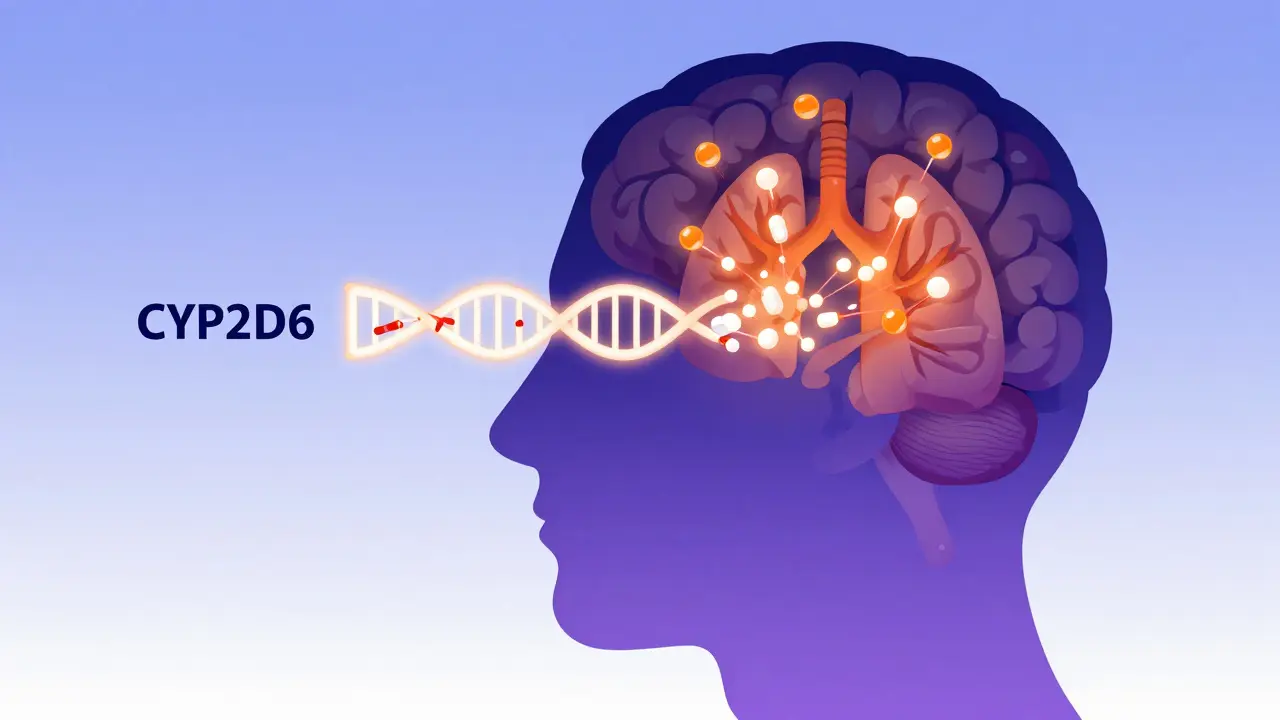
Codeine itself doesn’t relieve pain. It’s a prodrug, meaning it needs to be changed in the body to work. That change happens through an enzyme called CYP2D6. This enzyme converts codeine into morphine-the real painkiller. For most people, this process is slow and steady. But for ultrarapid metabolizers, it’s like turning a faucet on full blast.
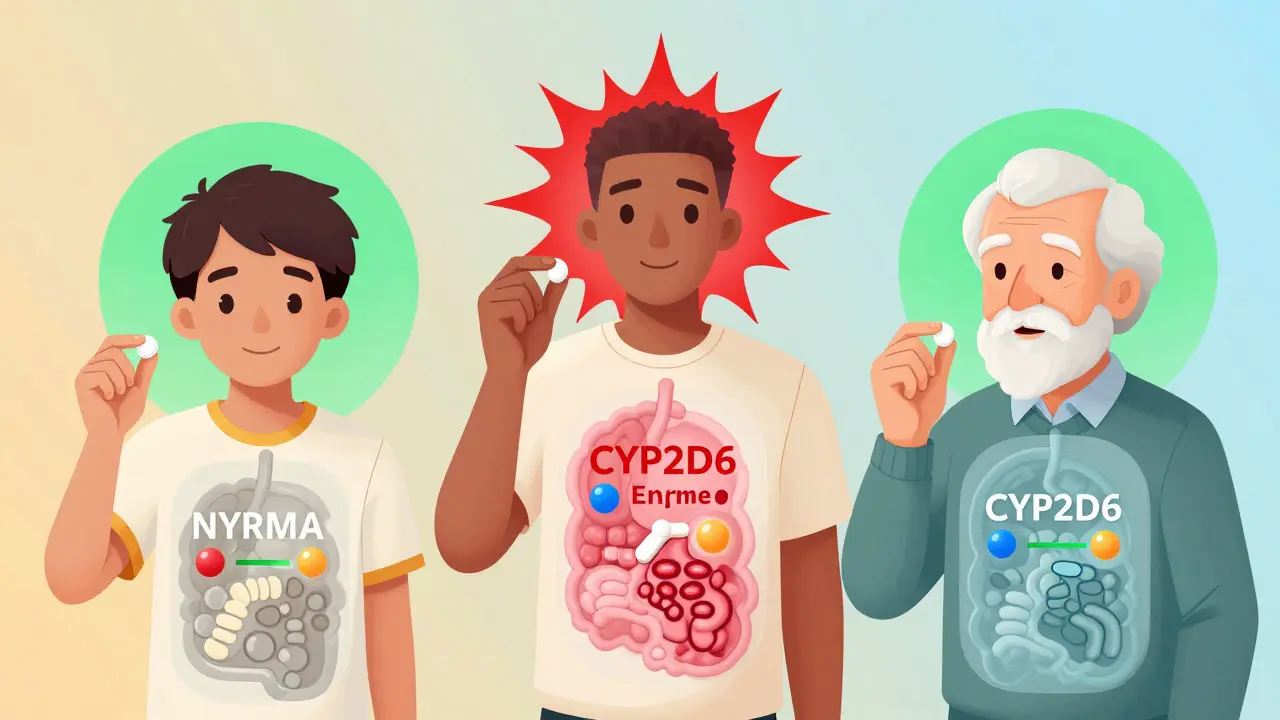
People with CYP2D6 ultrarapid metabolizer status have extra copies of the CYP2D6 gene. This means their bodies produce way more of this enzyme than normal. As a result, they turn codeine into morphine up to 4.5 times faster than average. That sudden flood of morphine can overwhelm the body, especially the brain’s ability to control breathing.
It’s not a guess. The FDA reviewed 64 cases of serious harm from codeine. In 24 of them, people died. And in 21 of those deaths, the victims were children under 12. Post-mortem tests showed these children were ultrarapid metabolizers. Their morphine levels were far above what’s considered safe-even though they were given the exact dose on the label.
Who’s at Risk?
Not everyone is at equal risk. The chance of being an ultrarapid metabolizer depends on your ancestry. In European populations, about 3 to 7% have this genetic profile. In North African and Ethiopian populations, it’s as high as 29%. That means if you’re from those backgrounds, your risk is significantly higher.
Even in places like Australia and the U.S., around 3% of people are ultrarapid metabolizers. That’s not rare. It’s common enough that every doctor prescribing codeine should consider it. And yet, most don’t. Genetic testing isn’t routine. Most people don’t know their CYP2D6 status until it’s too late.
Children are especially vulnerable. After surgery-like tonsillectomies-codeine was once commonly given for pain. But in one study, 7 out of 10 children who had bad reactions after surgery were ultrarapid metabolizers. Five of them died. That’s why the FDA banned codeine for children under 12 in 2013. The warning was clear: don’t give it to kids.
What Happens During an Overdose?
When morphine builds up too fast, the body can’t keep up. The first signs are subtle: extreme drowsiness, trouble waking up, slow or shallow breathing. Then comes nausea, vomiting, cold and clammy skin, and confusion. In severe cases, breathing stops completely. Heart failure follows. Death can happen within hours.
One case from the New England Journal of Medicine tells the story of a 15-month-old child who died after routine surgery. The child had been given a standard dose of codeine. Autopsy showed morphine levels more than double the lethal threshold. Genetic testing confirmed ultrarapid metabolizer status. This wasn’t an accident. It was predictable-and preventable.
Why Isn’t Everyone Tested?
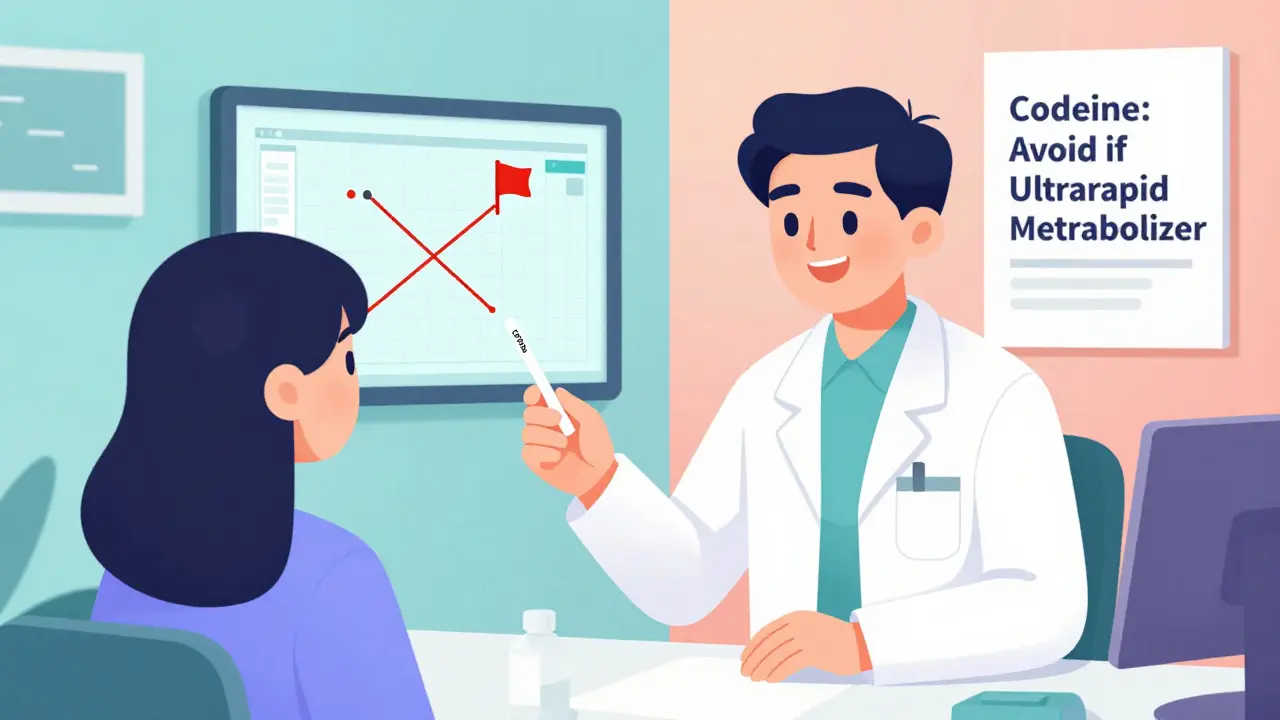
Testing for CYP2D6 status is available. Labs can do it with a simple cheek swab or blood sample. Results usually take 3 to 14 days. The cost? Between $200 and $500. Insurance often requires pre-approval. That’s a barrier for many.
But the bigger problem is awareness. Most doctors don’t think to test before prescribing codeine. Electronic health records rarely flag CYP2D6 status. Even when they do, many clinicians don’t know how to interpret the results.
Guidelines exist. The Clinical Pharmacogenetics Implementation Consortium (CPIC) has been clear since 2012: codeine should not be used in ultrarapid metabolizers. Their 2020 update reinforced it: avoid codeine and tramadol entirely if your CYP2D6 activity score is above 2.25. That’s not a suggestion. It’s a medical standard.
What Are the Alternatives?
If you’re an ultrarapid metabolizer-or you’re unsure-there are safer options. Morphine, hydromorphone, and fentanyl don’t rely on CYP2D6 to work. They’re already active. No conversion needed. No risk of overdose from genetic quirks.
For mild pain, non-opioid options like acetaminophen or ibuprofen are just as effective and far safer. For moderate to severe pain, oxycodone is often recommended, though it’s worth noting that oxycodone is also partially metabolized by CYP2D6. So even alternatives aren’t always perfect.
The Dutch Pharmacogenetics Working Group recommends morphine or fentanyl for ultrarapid metabolizers needing strong pain relief. For coughs, non-opioid suppressants like dextromethorphan (used carefully) or simple remedies like honey and warm tea are better choices.
The Bigger Picture: Why This Matters
This isn’t just about codeine. It’s about how we prescribe drugs. For decades, medicine treated everyone the same. One size fits all. But genetics proves that’s dangerous. A drug that helps one person can kill another. Codeine is the clearest example.
Since the FDA’s 2013 warning, pediatric codeine prescriptions in the U.S. dropped by 50%. That’s progress. But adults are still getting it. And in places without strict regulations, codeine is still sold over the counter in some countries.
Research shows that people with ultrarapid metabolizer status are more likely to develop codeine use disorder-not because they’re addicted, but because they feel the high more intensely. That’s not addiction. It’s pharmacology.
Experts like Dr. Mary Relling predict codeine will become obsolete within a decade. Why? Because we now know who it harms. And we have better tools to avoid it.
What Should You Do?
If you’ve been prescribed codeine, ask: Could this be dangerous for me?
- Have you ever had an unusual reaction to codeine or similar drugs?
- Do you have family members who had bad side effects from opioids?
- Are you of North African, Ethiopian, or European descent?
- Are you giving codeine to a child?
If you answered yes to any of these, talk to your doctor. Ask if genetic testing is right for you. If you’re already on codeine and feel unusually sleepy, confused, or have trouble breathing, get help immediately. Don’t wait.
For parents: Never give codeine to a child under 12. Even if it’s prescribed. Even if it’s from a trusted doctor. The risk isn’t worth it.
For anyone managing chronic pain: There are safer, more reliable options. Ask your doctor about them. Don’t assume codeine is the best choice just because it’s familiar.
Final Thought
Codeine isn’t evil. It’s a tool. But like any tool, it needs to be used correctly. For most people, it’s fine. For a small group, it’s a time bomb. The difference isn’t willpower. It’s DNA. And now that we know that, we have a responsibility to act on it.
Can codeine be safe if I’m an ultrarapid metabolizer?
No. Even standard doses can cause life-threatening morphine toxicity in ultrarapid metabolizers. The risk isn’t dose-dependent in the same way as other opioids. For this group, codeine should be avoided entirely. Safer alternatives like morphine, fentanyl, or non-opioid pain relievers are recommended.
How do I find out if I’m an ultrarapid metabolizer?
You can get tested through a genetic test that analyzes your CYP2D6 gene. These tests are available through specialized labs, often ordered by a pharmacist, genetic counselor, or doctor. Results typically take 3 to 14 days. Some hospitals and clinics now offer pre-emptive testing as part of routine care, especially before major surgeries.
Is this only a problem for children?
No. While children are at highest risk due to their smaller bodies and developing systems, adults can also overdose. Several adult deaths have been documented after codeine use, especially after surgery or in people with undiagnosed ultrarapid metabolizer status. The FDA warning applies to all ages, but the strongest restrictions are for children under 12.
Does tramadol carry the same risk?
Yes. Tramadol, like codeine, is converted into an active form by CYP2D6. The CPIC guidelines explicitly warn against using tramadol in ultrarapid metabolizers because it can lead to serotonin syndrome and respiratory depression. Many doctors still prescribe it without checking genetic status, which is a serious oversight.
Are there any countries where codeine is still widely used?
Yes. In some parts of Europe, Asia, and Africa, codeine remains available over the counter for coughs and mild pain. In these regions, the risk is higher because people don’t know their genetic status. Regulatory agencies like the EMA and Medsafe have issued warnings, but enforcement varies. Always check local guidelines before using codeine.
about author

Alana Koerts
Codeine is a death sentence for some people and we still prescribe it like it's aspirin. The FDA warning was 11 years ago. Why are adults still getting this? Because no one gives a damn.
pascal pantel
CPIC guidelines are clear: CYP2D6 activity score >2.25 = contraindication. Yet EHRs don't auto-flag it, pharmacists aren't mandated to screen, and prescribers are still operating in the pre-genomic era. This isn't negligence-it's systemic malpractice.
Gloria Parraz
I lost my cousin to this. She was 28, had a wisdom tooth extraction, got codeine because 'it's mild'. She never woke up. No one knew she was an ultrarapid metabolizer. Her mom still cries every time she sees a pharmacy. This isn't just data-it's grief.
Sahil jassy
My sister got codeine after delivery and slept for 18 hours straight. We thought she was just exhausted. Turns out she's a super metabolizer. Now she only takes tramadol if the doc checks her genes first. Always ask. Always check.
Kathryn Featherstone
I'm a nurse. I've seen this happen twice. Once in a 9-year-old after tonsillectomy. Once in a 45-year-old man after back surgery. Both died. Both had normal doses. Both had no family history of opioid issues. Genetics doesn't care about your story. It just is.
Nicole Rutherford
Of course they don't test. Big Pharma doesn't want you to know your genes. Why? Because codeine is cheap. And if you knew you were a walking time bomb, you'd demand safer meds. And that cuts profits.
Chris Clark
My dad’s from Nigeria. We found out he’s an ultrarapid metabolizer after he got sick from codeine cough syrup. He thought it was just bad luck. Turned out 1 in 4 people from his region are like this. Why isn’t this on every prescription label? Why isn’t it in med school?
Dorine Anthony
I read this whole thing and just sat there. I’ve been on codeine for migraines for 6 years. I’ve never had side effects. But now I’m scared. I’m getting tested tomorrow.
William Storrs
You’re not alone. This is terrifying-but you have power. Ask your doctor. Get tested. Swap the script. You’re not weak for needing help. You’re smart for avoiding a trap.
Guillaume VanderEst
My uncle died from codeine after a dental surgery in Canada. The doc said 'it's just a little painkiller'. We found out later he was an ultrarapid metabolizer. The coroner called it 'a preventable tragedy'. Now my whole family gets genetic screened before any opioid.
Dominic Suyo
Let’s be real-this is the pharmaceutical-industrial complex playing Russian roulette with human DNA. Codeine’s a $0.02 molecule that makes billions because nobody gives a shit about pharmacogenomics until someone’s dead. And even then, they’ll just blame the family for 'not reading the fine print'.
Janelle Moore
They’re hiding this. The government knows. The labs know. But they’re letting people die because testing costs money and insurance won’t cover it unless someone’s already dead. This is genocide by bureaucracy.
Henry Marcus
Wait-so if you're a CYP2D6 ultrarapid metabolizer, EVERYTHING that's metabolized by CYP2D6 is a potential death trap? Tramadol? SSRIs? Beta-blockers? Are we all just one pill away from a silent, genetic execution?!
Carolyn Benson
It's not about codeine. It's about the illusion of medical neutrality. We pretend science is objective, but we treat human bodies like interchangeable parts. The DNA you inherited is your biological fate-and the system refuses to acknowledge it until it's too late. We are not patients. We are variables in a profit-driven equation.
Chris porto
I think we need to stop seeing this as a 'drug safety' issue and start seeing it as a justice issue. People of African descent are at higher risk, and yet testing is least accessible where it's needed most. This isn't biology-it's inequality dressed up as medicine.