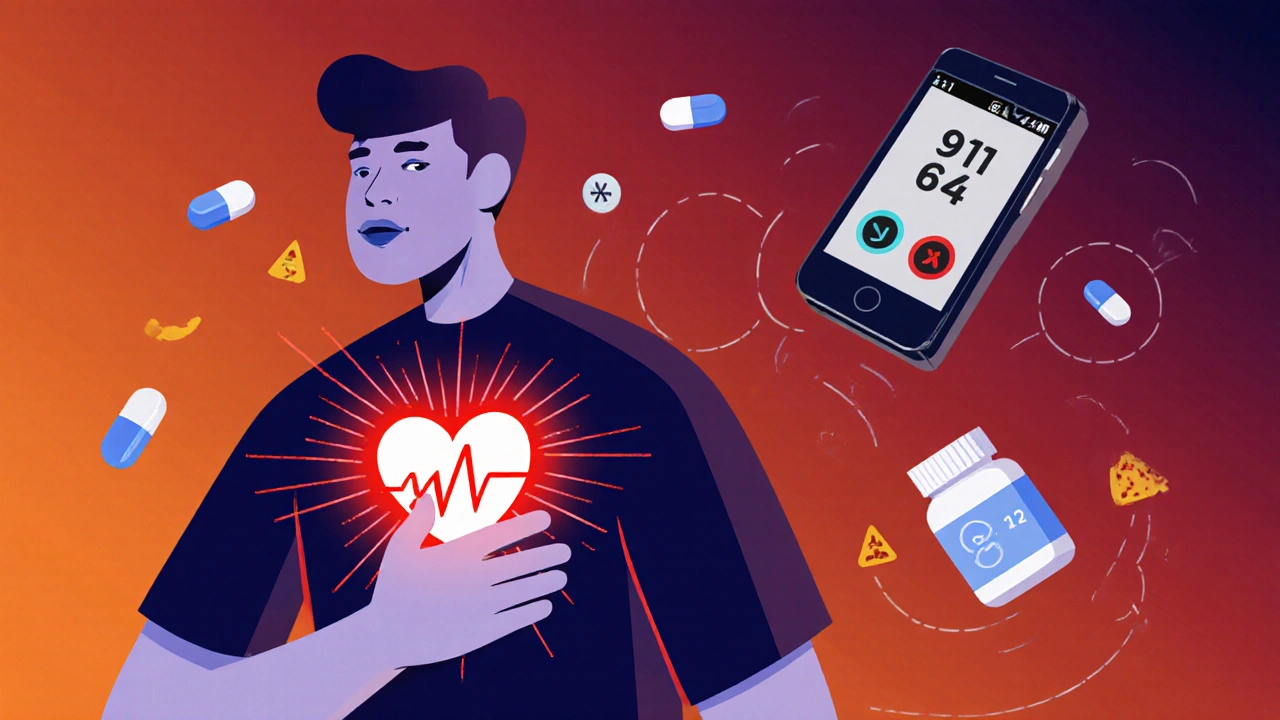
Learn the life-saving red flags that mean you need to go to the ER because of a medication reaction. From anaphylaxis to skin peeling and dangerous drug interactions, know when to act fast.

When you’re facing sudden, severe symptoms, knowing when to go to ER, the critical moment to seek emergency medical help for life-threatening conditions. Also known as emergency room visit, it’s not about being overly cautious—it’s about acting before it’s too late. Many people wait too long, hoping symptoms will pass. But some conditions worsen fast—and every minute counts.
For example, chest pain that feels like pressure, spreads to your arm or jaw, or comes with sweating and nausea could mean a heart attack. That’s not something to wait out. Same with sudden weakness on one side of your body, slurred speech, or trouble seeing—that’s a stroke. These aren’t vague warnings. They’re red flags that demand immediate action. Emergency room, a hospital department equipped to handle life-threatening conditions 24/7 is designed for these exact moments, not for mild flu or a bad headache.
Other situations that need the ER: difficulty breathing, severe allergic reactions with swelling or throat tightness, uncontrolled bleeding, head trauma with confusion or vomiting, or sudden, extreme abdominal pain. If you’re pregnant and bleeding heavily or having contractions before 37 weeks, don’t wait. Even if you’re unsure, it’s better to be checked. Urgent care vs ER, the difference between minor issues like ear infections and true emergencies like heart attacks matters. Urgent care is fine for a fever or sprain. The ER is for when your body is screaming for help.
You don’t need to be an expert to recognize danger. Trust your gut. If something feels wrong—like your body is shutting down or you’re losing control—that’s your signal. Don’t let fear of cost, embarrassment, or "it might be nothing" stop you. Emergency care exists because people survive because they showed up. The ER team sees hundreds of cases like yours every week. They’ve seen the worst and know how to act fast.
What you’ll find in the posts below are real, practical guides on symptoms that sneak up on you—like sudden confusion from medication changes, strange chest tightness after starting a new drug, or how steroid side effects can mimic a stroke. You’ll learn how to spot hidden emergencies, what to tell the ER staff so you’re taken seriously, and how to avoid common mistakes that delay care. These aren’t theory pieces. They’re from people who’ve been there—and lived to tell the story. If you’ve ever wondered whether to call 911 or drive yourself, these posts will give you the clarity you need.
Learn the life-saving red flags that mean you need to go to the ER because of a medication reaction. From anaphylaxis to skin peeling and dangerous drug interactions, know when to act fast.