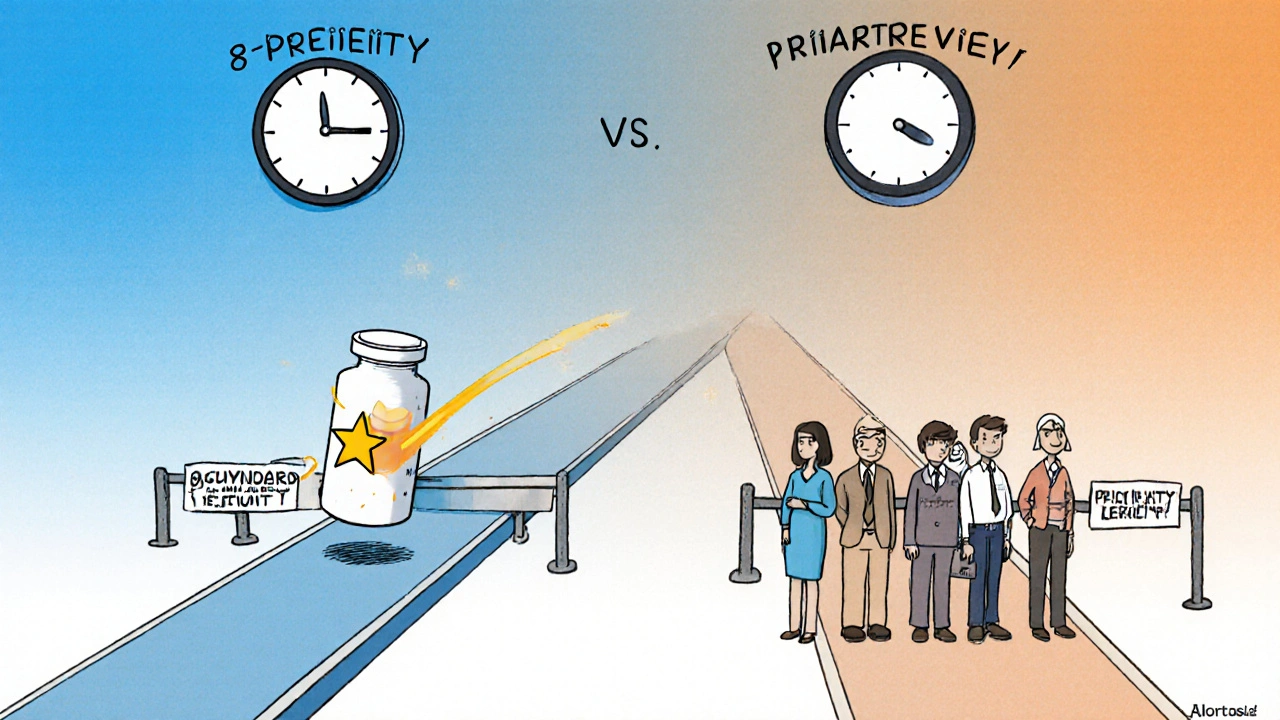
Standard Review FDA: What It Means for Your Medications and Safety
When you pick up a new prescription, you’re relying on the standard review FDA, the routine evaluation process the U.S. Food and Drug Administration uses to approve new drugs before they reach patients. Also known as routine review, this system ensures that medications are safe, effective, and properly labeled—without the accelerated timelines used for life-saving treatments. It’s not flashy, but it’s the backbone of every drug you take that isn’t an emergency breakthrough.
The FDA drug approval, the formal process by which the FDA authorizes a drug for sale in the U.S. doesn’t happen overnight. For drugs under standard review, the FDA has up to ten months to review all the data from clinical trials, manufacturing details, and risk plans. That’s longer than the six-month fast-track review, but it gives reviewers more time to spot hidden risks—like rare side effects that only show up in thousands of patients, or interactions with common medications you might not even think to mention to your doctor. This is why drugs like medication safety, the ongoing monitoring of how drugs affect real people after they’re on the market programs exist: because the standard review can’t catch everything before release.
What you don’t see is the paperwork. Thousands of pages of trial results, lab reports, and manufacturing audits. The FDA doesn’t test drugs themselves—they rely on data from the companies that make them. That’s why post-market reporting through FDA regulations, the legal framework that governs how drugs are tested, marketed, and monitored in the U.S. is so critical. If you notice something strange after starting a new pill—like a weird smell change, sudden drowsiness, or bladder issues—you’re not just complaining. You’re helping the FDA update its safety profile. That’s how they catch problems with drugs like ketorolac, GLP-1 agents, or even common cough medicines that might unexpectedly affect bones.
Standard review doesn’t mean a drug is perfect. It means it’s been checked against a baseline of safety and effectiveness. That’s why you’ll see posts here about switching meds safely, reporting fake pills, checking for shortages, or understanding why generics look different. All of it ties back to how the FDA evaluates drugs and how you can stay informed once they’re in your hands. Whether you’re managing chronic pain with aceclofenac, dealing with opioid constipation, or wondering if your new antidepressant is worth the side effects, the standard review is the starting point. What happens after that? That’s where your experience, your doctor, and your reports to MedWatch come in.