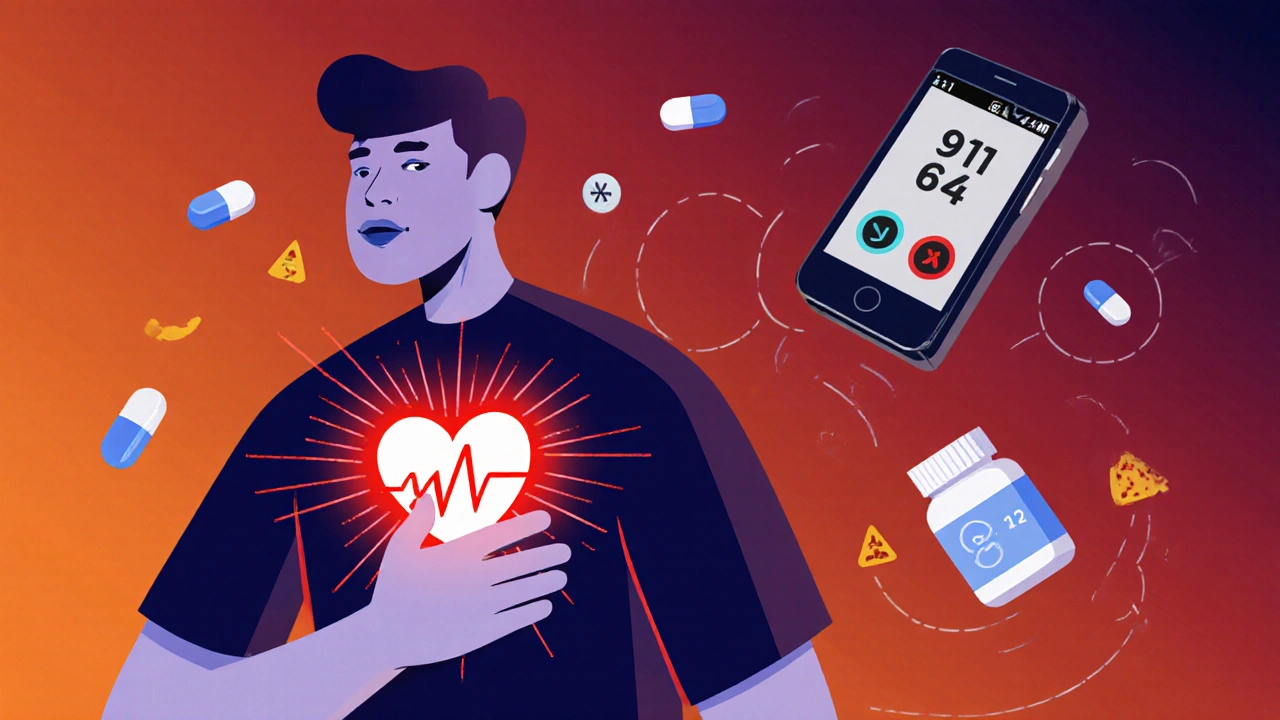
Learn the life-saving red flags that mean you need to go to the ER because of a medication reaction. From anaphylaxis to skin peeling and dangerous drug interactions, know when to act fast.

When your body reacts badly to a medicine you took on purpose, that’s an adverse drug reaction, an unintended and harmful response to a medication at normal doses. Also known as ADR, it’s not always an allergy—it can be anything from a rash to kidney damage, and it’s one of the leading causes of hospital visits in the U.S. You might think only new or strong drugs cause trouble, but even common pills like ibuprofen, antibiotics, or blood pressure meds can trigger reactions. The key isn’t avoiding meds—it’s understanding how your body responds to them.
Drug interactions, when two or more medications affect each other’s behavior in your body are a major reason for adverse reactions. For example, taking a blood thinner with an NSAID like ketorolac can lead to dangerous bleeding. Or, combining certain antidepressants with migraine meds can cause serotonin syndrome—a medical emergency. Even allergic reaction to medication, a specific immune system overreaction to a drug can show up days after starting a new pill, not instantly. That’s why a rash after two weeks of antibiotics isn’t always a coincidence.
Some reactions are predictable and listed in the patient leaflet—like drowsiness from antihistamines or stomach upset from NSAIDs. Others are rare but serious: steroid-induced psychosis, sudden loss of smell from antibiotics, or kidney stress from painkillers. These aren’t just side effects—they’re adverse drug reactions that need attention. And they’re not rare. One in five adults experiences a noticeable reaction to a drug, and many never report it.
What you can do? Track what you take. Note when symptoms start. Don’t assume a new headache is just stress—could it be the new blood pressure pill? Could your frequent urination be from a diuretic you’ve been on for months? If something feels off after starting a new med, talk to your doctor before stopping. Many reactions can be managed with dose changes, switching drugs, or adding a protective medication like a PPI for GI risk.
The posts below cover real cases—how people spotted reactions early, what drugs caused them, and how they fixed them. You’ll find guides on managing nausea from opioids, spotting smell changes from antibiotics, dealing with drowsiness from antihistamines, and even how to report dangerous fake pills. These aren’t theory—they’re experiences from patients and providers who’ve been there. If you’ve ever wondered, "Is this normal?" or "Should I be worried?"—you’ll find answers here.
Learn the life-saving red flags that mean you need to go to the ER because of a medication reaction. From anaphylaxis to skin peeling and dangerous drug interactions, know when to act fast.